The American Civil War remains the defining crucible of the United States, a cataclysmic four-year struggle from 1861 to 1865 that fundamentally reshaped the nation’s constitutional, social, and moral landscape. Often studied through the lens of legendary battles like Gettysburg or the towering leadership of Abraham Lincoln, this defining conflict contains layers of human complexity, systemic inequality, and surprising military realities that history textbooks frequently overlook. From the multi-ethnic makeup of the Union ranks to the covert intelligence operations of Harriet Tubman, uncovering these lesser-known American Civil War facts provides a much deeper, more authentic understanding of how a fractured republic survived its darkest hour and laid the groundwork for modern civil rights.
The Historical Background and Catalysts of Conflict
To understand the sheer scale of the Civil War, one must examine the deep-seated political, economic, and moral divisions that plagued the United States since its founding. For decades, the Northern and Southern states drifted apart. The North transitioned into a rapidly industrializing, urbanized economy powered by free labor and immigration, while the South remained a deeply agrarian society completely dependent on the brutal institution of chattel slavery to fuel its highly profitable cotton empire.
The core catalyst for secession was the contentious issue of slavery’s expansion into newly acquired Western territories. When Abraham Lincoln, the candidate of the anti-slavery Republican Party, won the presidential election of 1860, Southern leaders feared their political influence and slave-based economy were doomed. In December 1860, South Carolina became the first state to secede from the Union, soon followed by ten other Southern states to form the Confederate States of America, led by President Jefferson Davis. The war officially began on April 12, 1861, when Confederate forces opened fire on Fort Sumter in Charleston Harbor, South Carolina.
A Chronological Timeline of the Civil War (1861–1865)
The war progressed through several brutal phases, shifting from an initial expectation of a quick conflict to a devastating war of attrition:
- April 1861: The bombardment of Fort Sumter marks the official outbreak of hostilities.
- July 1861: The First Battle of Bull Run (Manassas) shatters illusions of a brief, bloodless war as Union forces suffer a stinging defeat.
- September 1862: The Battle of Antietam becomes the bloodiest single day in American military history, prompting Lincoln to issue the preliminary Emancipation Proclamation.
- January 1863: The Emancipation Proclamation officially takes effect, freeing enslaved people in Confederate-held territories and paving the way for Black soldiers to enlist.
- July 1863: The twin Union victories at Gettysburg and Vicksburg turn the tide of the war permanently in the North’s favor.
- Spring 1864: General Ulysses S. Grant launches the grueling Overland Campaign, engaging Robert E. Lee’s forces in continuous, bloody warfare in Virginia.
- April 1865: General Lee surrenders the Army of Northern Virginia to General Grant at Appomattox Court House, effectively ending the war. Abraham Lincoln is assassinated days later on April 14.
10 Surprising American Civil War Facts You Might Not Know
Beyond the well-known battles and political speeches lie extraordinary human stories that highlight the diverse and complex nature of the war. Here are ten surprising facts that illuminate the conflict in a new light:
1. The Union Army Was an International, Multicultural Force
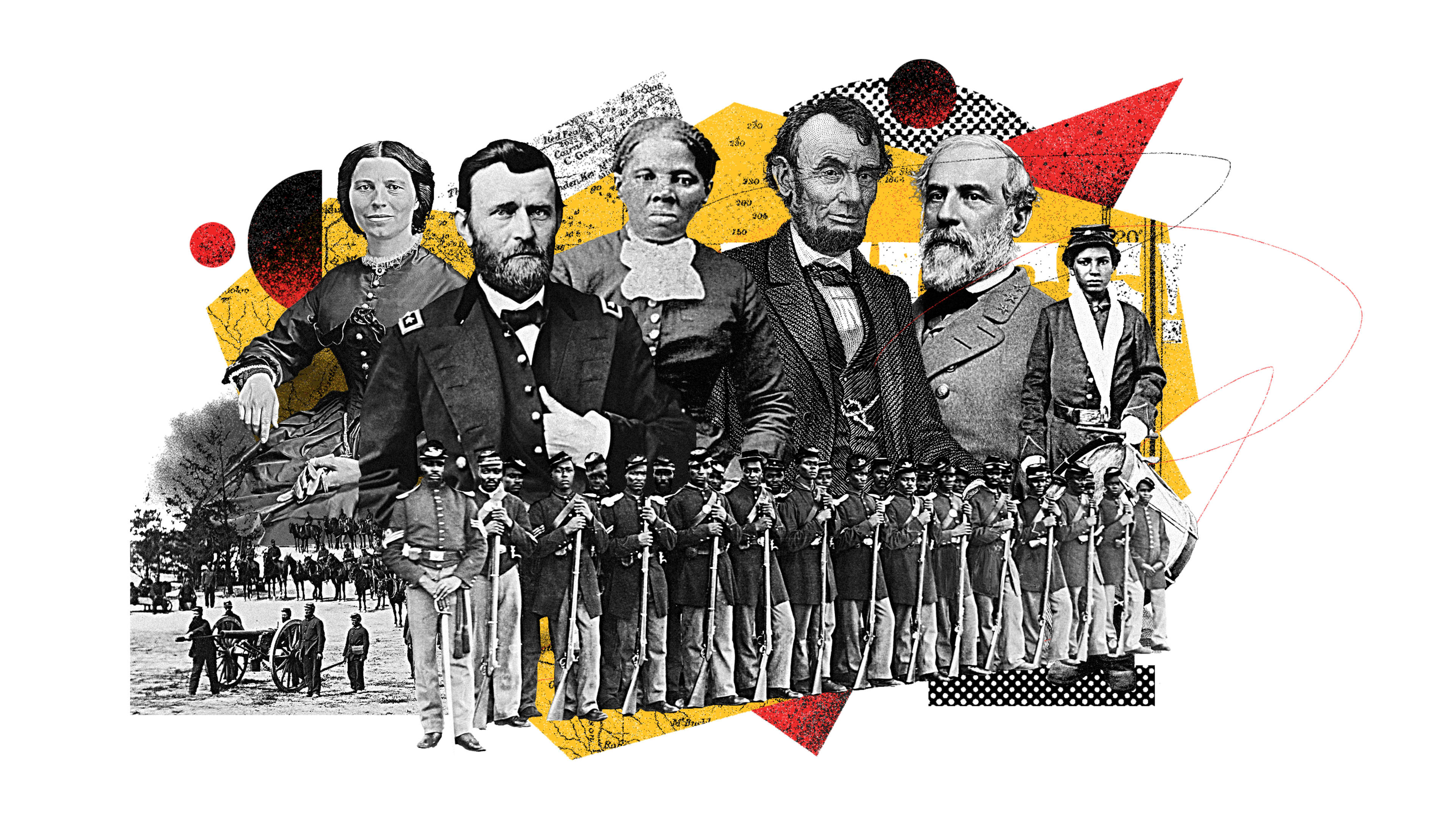
While the Civil War is often conceptualized as a domestic struggle between Americans, the Union Army was incredibly diverse. Immigrants made up roughly one-quarter of the federal forces. Large waves of German immigrants (representing about 10 percent of the army) marched in specialized regiments like the Steuben Volunteers, while Irish soldiers constituted about 7.5 percent of the ranks. Regiments also featured French, Italian, Polish, and English troops, creating a truly global coalition fighting for the preservation of the American republic.
2. Black Soldiers Refused Wages to Protest Pay Discrimination
When African American men were permitted to enlist in early 1863, they faced systemic discrimination even from the government they fought to defend. Black enlistees were paid a mere $10 per month, minus a $3 deduction for clothing, which left them with just $7. Meanwhile, white privates received $13 per month with no such deduction. To protest this insulting disparity, entire Black regiments refused to accept any wages at all for over a year. Thanks to their bravery on the battlefield and relentless pressure from abolitionists, Congress finally granted retroactive equal pay in September 1864, securing a major victory for civil rights within the military. These courageous men joined a proud lineage of black heroes throughout US military history who fought valiantly for a country that did not yet fully recognize their freedom.
3. Harriet Tubman Led an Armed Military Assault
Famous for her heroic rescues on the Underground Railroad, Harriet Tubman played an active, hazardous military role during the Civil War. Serving as a scout, spy, and nurse for the Union in South Carolina, Tubman gathered critical intelligence about Confederate troop movements. On June 1, 1863, she collaborated with Union Colonel James Montgomery to lead an armed assault along the Combahee River. Command of the gunboats and 300 Black Union soldiers allowed Tubman to bypass Confederate mines, destroy valuable plantations, and liberate over 720 enslaved people—making her the first woman in U.S. history to plan and lead an armed military raid.
4. Lincoln Narrowly Escaped an Assassination Attempt in 1863
Long before John Wilkes Booth’s fateful shot at Ford’s Theatre, Abraham Lincoln survived a terrifyingly close call. Late one evening in August 1863, Lincoln was riding his horse alone to the Soldiers’ Home, his family’s summer residence outside Washington. A sudden gunshot echoed near the foot of the hill, spooking his horse into a wild gallop. When guards retrieved the President’s missing hat, they discovered a bullet hole clean through the crown. Ever mindful of public morale, Lincoln requested the incident be kept secret to avoid panicking the public or distressing his wife, Mary Todd Lincoln.
5. General Sherman’s “Insanity” and His Unbreakable Bond with Grant
In 1861, General William Tecumseh Sherman requested 200,000 men to secure Kentucky, a demand that prompted Secretary of War Simon Cameron to label Sherman “insane” and strip him of command. Depressed and contemplating suicide, Sherman found an ally in General Ulysses S. Grant, who recognized his tactical genius. Sherman was reassigned under Grant, beginning one of the most successful partnerships in military history. Sherman famously defended Grant from critics, saying, “General Grant is a great general. He stood by me when I was crazy, and I stood by him when he was drunk; and now, sir, we stand by each other always.”
6. General Robert E. Lee’s Troops Suffered Higher Proportional Casualties
While Northern critics labeled Grant a “butcher” due to the high number of Union casualties during the Overland Campaign, it was Confederate General Robert E. Lee whose aggressive tactical style cost his army more dearly in relative terms. Lee favored decisive offensive assaults, which led to brilliant victories but devastatingly high loss rates. Over the course of the war, Lee’s Army of Northern Virginia suffered a higher percentage of casualties than the Union forces under Grant’s command, eventually draining the South of its limited manpower.


