Signed into law by President Abraham Lincoln during the height of the American Civil War, the Homestead Act of 1862 stands as one of the most transformative pieces of legislation in United States history. By offering 160 acres of public land to any citizen—or intended citizen—for a nominal filing fee, this monumental act fundamentally altered the demographic, economic, and geographic landscape of the nation. It turned a vision of widespread land ownership into a tangible reality, allowing over 1.6 million successful claimants to build lives in the rugged American West. However, this sweeping legislation was a double-edged sword; while it democratized property ownership for women, immigrants, and formerly enslaved people, it simultaneously triggered the systematic displacement of Native American tribes from their ancestral homelands. To truly understand the trajectory of modern America, one must explore the intricate details, major turning points, and complex legacy of the Homestead Act of 1862.
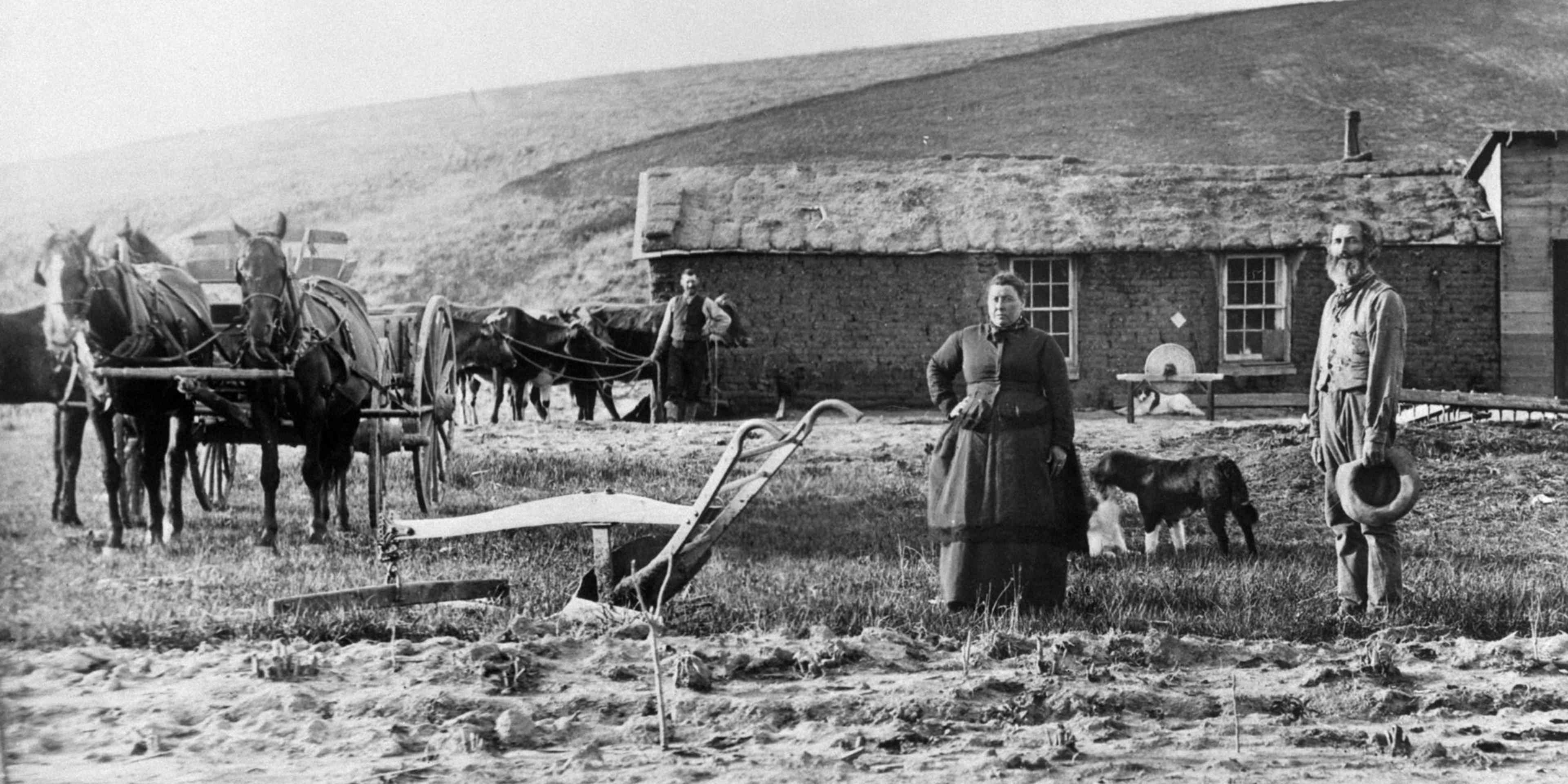
Historical Background and the Vision of a New America
In the early decades of the 19th century, the United States was a rapidly growing nation looking past its original eastern boundaries. When the country first emerged from the 13 colonies, land ownership was often concentrated in the hands of wealthy elites. As the frontier expanded westward through acquisitions like the Louisiana Purchase, a fierce political debate erupted over how to distribute these vast public lands. Northern reformers and “Free Soil” advocates envisioned a society composed of independent, small-scale family farmers. They believed that distributing land to ordinary citizens would foster civic virtue, individual liberty, and economic self-sufficiency. This philosophy directly challenged the Southern plantation model, which relied on slave labor and large estates. For years, Southern congressmen blocked any homestead legislation, fearing it would lead to the creation of new free states and tip the balance of power in Washington. It was only when the Southern states seceded at the onset of the Civil War that the legislative deadlock was finally broken, clearing the way for a revolutionary land policy.
The Core Causes and Geopolitical Context
The primary catalyst for the passage of the Homestead Act of 1862 was the geopolitical struggle between free-labor advocates and the slaveholding South. Agrarian reformers had petitioned Congress for decades, arguing that the federal government had a duty to make public lands accessible to everyday citizens rather than wealthy land speculators. These ideas echoed the philosophies of the Founding Fathers, particularly Thomas Jefferson, who believed that a strong democracy was built on a foundation of independent, land-owning yeoman farmers. When the Civil War began in 1861, the Lincoln administration sought ways to secure the loyalty of the West, generate economic growth, and provide tangible incentives for Union soldiers and northern laborers. By offering free land, the federal government hoped to accelerate the settlement of western territories, integrate them into the national economy, and establish a network of free states that would support the Union’s future.
Key Events Timeline of the Homestead Act
- 1840s-1850s: The Free Soil movement gains traction, advocating for “Free Soil, Free Speech, Free Labor, and Free Men.” Multiple homestead bills are introduced in Congress but repeatedly blocked by Southern legislators.
- May 20, 1862: President Abraham Lincoln signs the Homestead Act into law, scheduled to take effect the following year.
- January 1, 1863: The Homestead Act officially goes into effect on the exact same day that the Emancipation Proclamation takes effect. Daniel Freeman, a Union soldier, files the very first homestead claim near Beatrice, Nebraska.
- 1863-1890s: Millions of people migrate to the Great Plains and the West, resulting in a dramatic spike in new claims, towns, and railroad construction.
- 1934: President Franklin D. Roosevelt signs the Taylor Grazing Act, regulating grazing on federal public lands and effectively bringing unregulated homesteading to a halt.
- 1976: Congress passes the Federal Land Policy and Management Act, officially repealing the Homestead Act in the contiguous United States and shifting public land policy toward federal retention and conservation.
- 1986: The ten-year extension of the Homestead Act in Alaska officially expires, ending the era of public land claims in the state.
- May 1988: Vietnam War veteran Kenneth Deardorff receives his land patent for 80 acres in Alaska, becoming the last person to officially secure land under the 1862 act.
Important Figures and Their Lasting Impact
Several key historical figures played instrumental roles in the creation, passage, and execution of the Homestead Act of 1862:
- Abraham Lincoln: As the 16th President of the United States, Lincoln was a staunch supporter of free labor. He viewed the Homestead Act as a way to “give everyone an unfettered start and a fair chance in the race of life,” aligning the policy with his broader goals of national preservation and human dignity.
- Galusha A. Grow: A prominent politician from Pennsylvania and Speaker of the House of Representatives, Grow was the primary legislative champion of homestead bills. He spent over a decade advocating for land reform, arguing that every citizen had a natural right to a portion of the soil.
- Daniel Freeman: A Union soldier and schoolteacher, Freeman became a symbol of the pioneer spirit when he filed the first claim under the act. His homestead site in Nebraska now serves as the Homestead National Historical Park.
- Kenneth Deardorff: As the final homesteader to receive a patent in 1988, Deardorff closed a 124-year-old chapter of American history, demonstrating the extraordinary longevity of this Civil War-era legislation.
Major Turning Points and the Dark Side of Westward Expansion
While the Homestead Act of 1862 succeeded in distributing millions of acres of land, it also served as a major turning point that brought devastating consequences for Native American communities. In order to provide land for homesteaders, the federal government had to clear the plains. This was achieved through a series of forced treaties, military campaigns, and the systematic destruction of the American bison, which served as the primary food supply for indigenous peoples. Tens of thousands of Native Americans were forcibly relocated to Indian reservations, stripping them of their ancestral homelands, sovereign rights, and traditional ways of life.
Furthermore, the act changed the environmental landscape of the Great Plains. Millions of acres of native prairie grasses were plowed under to plant wheat and corn. While this turned the region into the “breadbasket of the world,” it also disrupted fragile ecosystems, leading to long-term soil erosion and eventually contributing to the ecological disaster known as the Dust Bowl in the 1930s.
Long-Term Impact on America
The long-term structural, cultural, and societal impacts of the Homestead Act of 1862 are still felt today. Over its 124-year lifespan, the act resulted in the distribution of 270 million acres—roughly ten percent of all land in the United States. It fueled the rapid admission of new states like Montana, North Dakota, Colorado, and Nebraska, transforming the geopolitical map of the country. The influx of homesteaders spurred the expansion of transcontinental railroads, which connected eastern markets to western agricultural producers. Additionally, the act fostered a cultural mythology of rugged individualism and the “American Dream,” cementing the idea that hard work and perseverance on the land could lead to economic independence and prosperity.
Lesser-Known Facts and Anecdotes
- The “Inches vs. Feet” Loophole: The law required homesteaders to build a dwelling of at least “12 by 14” on their land, but failed to specify the unit of measurement. Clever land speculators and dishonest claimants built tiny miniature houses measuring 12 by 14 inches to technically fulfill the requirement while committing land fraud.
- A Breakthrough for Women and Former Slaves: The Homestead Act did not discriminate based on gender or race, as long as the applicant was the head of a household or 21 years old and had never borne arms against the United States. This allowed thousands of single women, widows, and newly freed African Americans to become independent landowners decades before they gained other fundamental civil rights.
- The Union Soldier Discount: To support those who fought for the country, the government allowed Union soldiers to subtract their time of military service in the Civil War from the five-year residency requirement, helping them secure land titles much faster.
Why It Still Matters Today
The Homestead Act of 1862 remains highly relevant to modern discussions about property, wealth inequality, and federal land stewardship. Scholars estimate that approximately 46 million living Americans—roughly a quarter of the adult population—are descendants of original homesteaders, demonstrating how the act laid the foundation for generational wealth in many families. Conversely, the legacy of indigenous land dispossession continues to shape contemporary debates over tribal sovereignty, land-back movements, and historical justice. Finally, the repeal of the Homestead Act in 1976 marked a fundamental shift in how the United States views public lands, transitioning from a policy of rapid privatization to one of public preservation managed by agencies like the Bureau of Land Management.
People Also Ask
Who was eligible for the Homestead Act of 1862?
Any person who was the head of a household or at least 21 years of age could apply. They had to be a U.S. citizen or file a declaration of intent to become one, and they had to certify that they had never taken up arms against the United States government.

How much did it cost to claim land under the act?
Claimants had to pay a total filing fee of $18, which covered the initial application, land agent commissions, and the final patent fee. Alternatively, they could purchase the land for $1.25 per acre after six months of residence.
Why was the Homestead Act of 1862 repealed?
The act was repealed by the Federal Land Policy and Management Act of 1976 because the federal government shifted its policy from land disposal to land retention and management, realizing that remaining public lands were better off preserved under federal control.
Conclusion
The Homestead Act of 1862 was a monumental piece of legislation that reshaped the destiny of the United States. By democratizing land ownership, it fulfilled the dreams of millions of settlers, immigrants, and formerly enslaved people seeking a better life on the frontier. Yet, this great American success story remains deeply intertwined with the tragic displacement of indigenous nations and the dramatic transformation of the western ecosystem. Ultimately, the Homestead Act stands as a powerful testament to the complexities of American progress, reflecting both the highest ideals of democratic opportunity and the challenging realities of national expansion.


