The early history of European colonization in North America is often told from the perspective of the arriving settlers, but the true master of early Atlantic diplomacy and warfare was an Indigenous leader who nearly brought two of the world’s greatest empires to their knees. In the mid-sixteenth century, an Indigenous youth named Paquiquineo was abducted from his home in the Chesapeake Bay tidewater region by Spanish explorers. Rather than submitting to his captors, he embarked on an extraordinary global odyssey, traversing the royal courts of Spain and the bustling centers of colonial Mexico under the name Don Luis de Velasco. Having studied the strategies, languages, and mindsets of his captors at close range, he returned to his homeland to lead a brilliant campaign of indigenous resistance. Later emerging as the legendary warrior Chief Opechancanough, he co-founded the powerful Powhatan Confederacy and orchestrated massive, coordinated uprisings against the Jamestown colony. His life represents one of the most formidable defenses of sovereign territory in American colonial history, yet his achievements remain a hidden gem of early American legacy.
Historical Background: From the Chesapeake to the Spanish Court
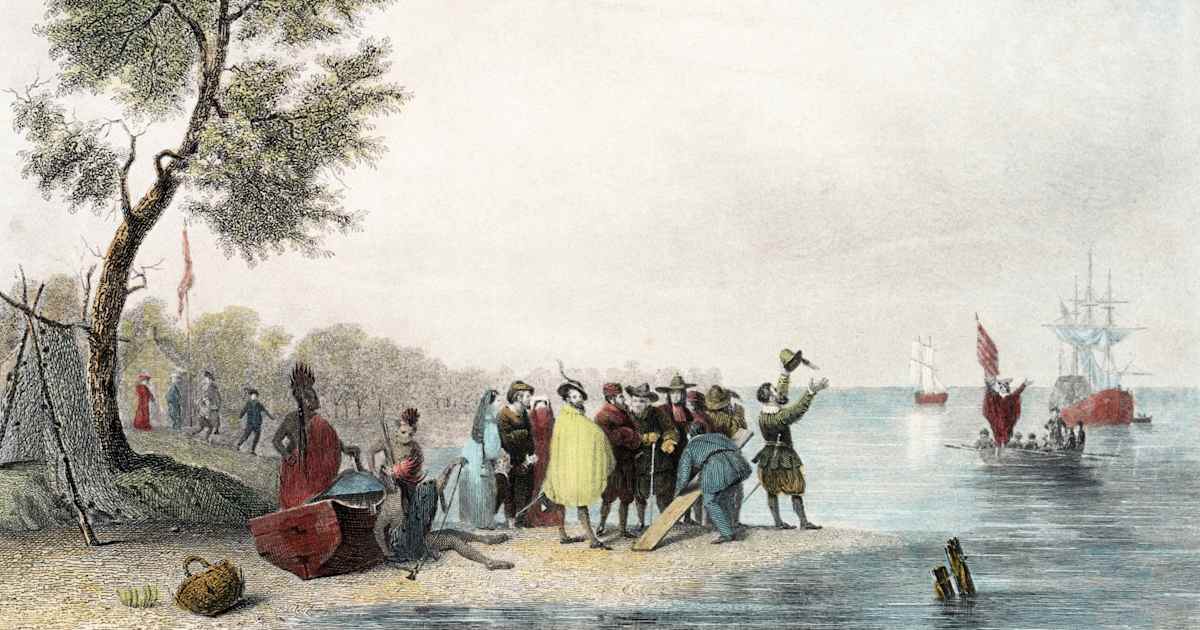
The story of Paquiquineo begins in the summer of 1561 when Spanish explorers landed in the Chesapeake Bay. Seeking local guides to aid in their territorial expansion and to locate potential gold and silver reserves, the Spaniards abducted the young Powhatan nobleman. This single act of imperial opportunism ignited a geopolitical chain reaction that would reshape the map of the Mid-Atlantic.
Transported across the Atlantic, Paquiquineo was presented to the Spanish royal court of King Philip II in Madrid. Recognizing his intelligence and high social standing, the Spanish authorities baptized him, naming him Don Luis de Velasco after the viceroy of New Spain. Over the next nine years, Don Luis traveled through Seville, Mexico City, Havana, and Florida. He received a formal Catholic education, mastered the Spanish language, and witnessed firsthand the brutal realities of Spanish colonial conquest. While his captors believed they were training a cooperative indigenous elite to facilitate the conversion of his homeland, Don Luis was carefully observing the exact mechanisms of European imperial expansion.
Causes and Context: The Clash of Global Ambitions
The geopolitical landscape of the late sixteenth century was defined by intense European rivalry and religious zeal. For Spain, the Chesapeake region—which they called Ajacán—held immense strategic value. King Philip II viewed the area as a crucial buffer zone north of Spanish Florida and a potential entryway to a passage to the Pacific Ocean. More importantly, the deeply religious monarch saw it as his sacred duty to convert the Indigenous populations to Catholicism, establishing religious missions as the vanguard of Spanish settlement.
However, the Spanish strategy ignored the sovereign reality of the Indigenous peoples of the Tidewater. Don Luis understood that the establishment of a Catholic mission was merely the prelude to full-scale conquest, military occupation, and the destruction of his people’s way of life. Having lived in Mexico City and observed the devastating impacts of Spanish rule on the Aztec and other Mesoamerican civilizations, Don Luis recognized that his ancestral land faced existential erasure if he did not intervene.
Major Turning Points: The Destruction of the Ajacán Mission (1570–1571)
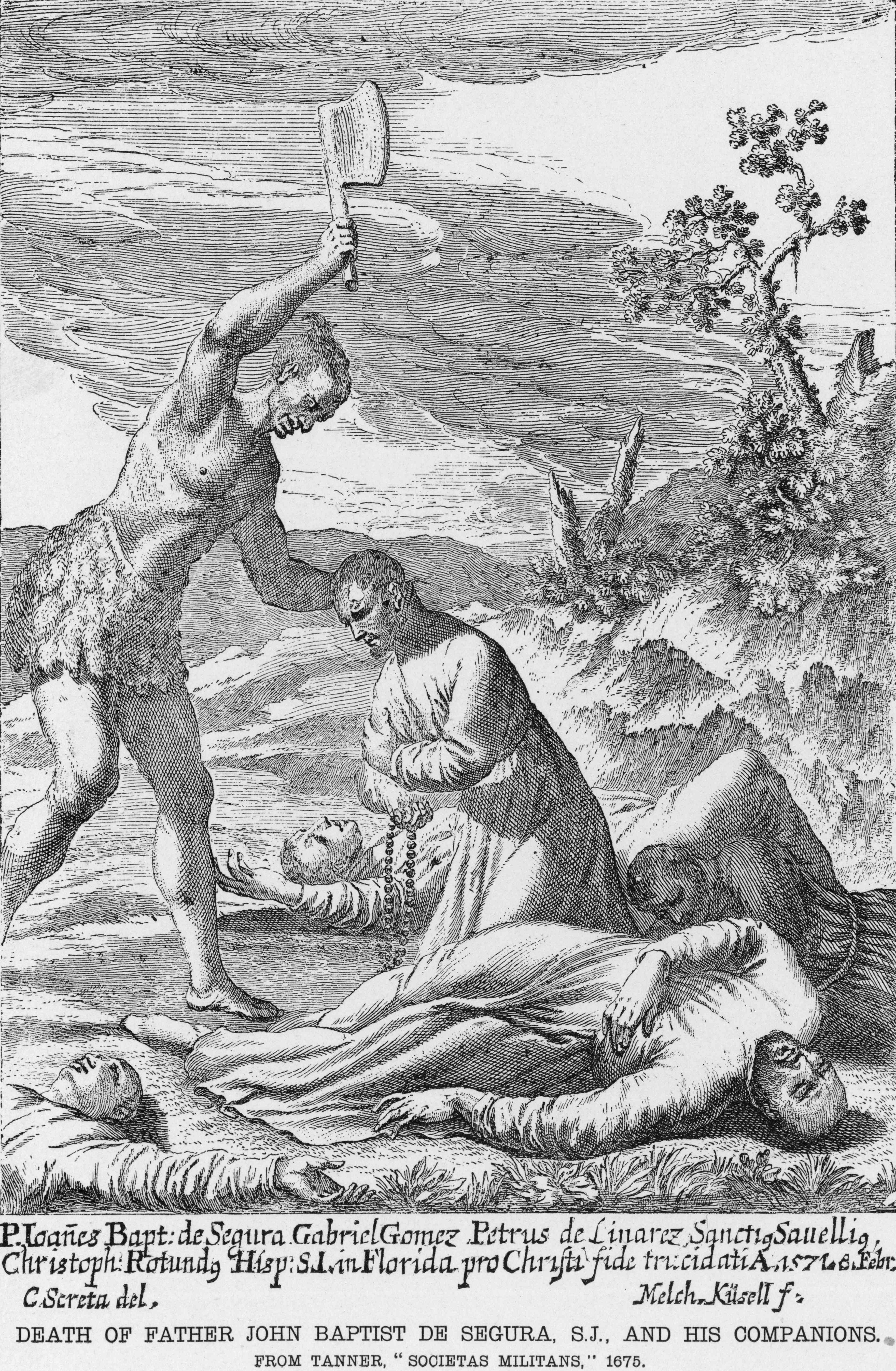
In 1570, Don Luis finally secured his return to the Chesapeake. He accompanied a group of Spanish Jesuit missionaries led by Father Juan de Segura. Confident in Don Luis’s Christian piety, the Jesuits allowed themselves to be guided deep inland into the York River basin without military protection. This misplaced trust proved fatal to Spain’s northernmost colonial ambitions.
Within months of landing, Don Luis abandoned the Spanish priests and reunited with his family and Algonquian-speaking kin. Recognizing that the mission would serve as a beachhead for future Spanish armies, Don Luis orchestrated a swift and decisive attack. In February 1571, he led a native war party that killed all eight Jesuit missionaries, sparing only a young Spanish servant boy named Alonso de Olmos. When a Spanish supply ship arrived the following year, they found the mission entirely destroyed. This tactical masterstroke successfully drove Spanish colonization efforts out of the Chesapeake Bay permanently, leaving a geographical vacuum that would remain unchallenged by Europeans for over three decades.
Key Events Timeline (1561–1646)
- 1561: Paquiquineo is abducted by Spanish explorers in the Chesapeake Bay and taken to Europe.
- 1562–1569: He is educated in Madrid, Mexico City, and Cuba, taking the name Don Luis de Velasco.
- 1570: Don Luis returns to Virginia with Spanish Jesuit missionaries to establish the Ajacan Mission.
- 1571: Don Luis rejects his Spanish captivity, destroys the Ajacán Mission, and halts Spanish colonization.
- 1575–1606: Re-emerging as Opechancanough, he helps his brother Chief Powhatan build the Powhatan Confederacy (Tsenacommacah).
- 1607: English colonizers establish the Jamestown colony on the James River.
- 1609–1614: The First Anglo-Powhatan War erupts; Opechancanough rises as the paramount war chief.
- 1618: Chief Powhatan dies; Opechancanough assumes leadership of the Confederacy.
- March 22, 1622: Opechancanough coordinates a massive surprise attack, nearly destroying the Virginia colony.
- 1644: Now near 100 years old, Opechancanough launches a final major uprising against the English.
- 1646: Opechancanough is captured, taken to Jamestown, and assassinated by an English guard, ending his 85-year resistance.
The Rise of Tsenacommacah and the Clash with Jamestown
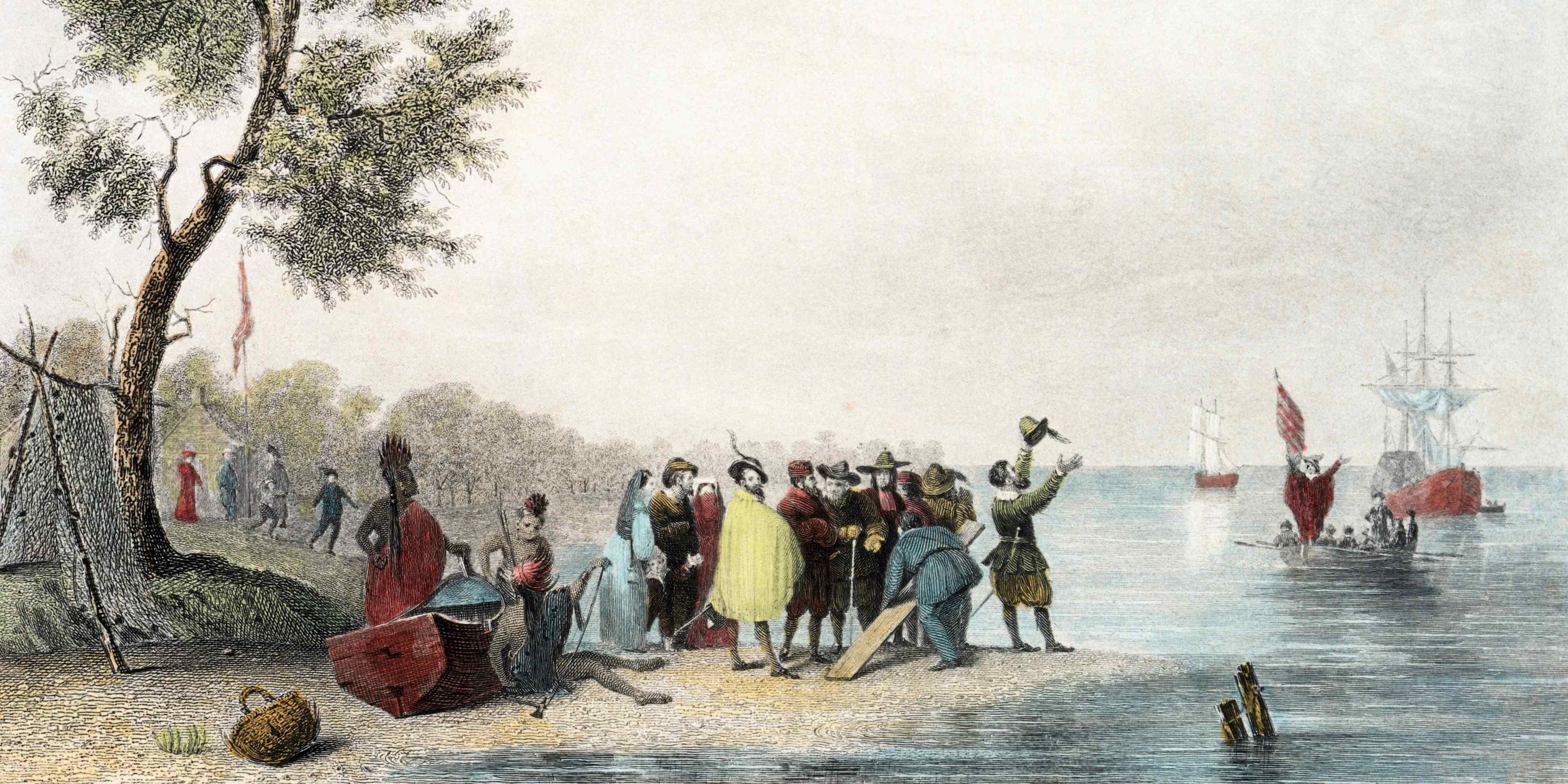
Following the expulsion of the Spanish, Don Luis integrated back into his ancestral community. Armed with a profound understanding of European geopolitics, he and his brother, Chief Powhatan (Wahunsenacawh), began constructing a massive paramount chiefdom known as Tsenacommacah. This sophisticated political alliance united more than 30 different Algonquian-speaking tribal groups, creating a unified front that stretched from the James River to the Potomac River.
When English colonizers arrived in May 1607 to establish Jamestown, they encountered a formidable, highly organized indigenous state. Opechancanough, as he was known to the English, adopted a dual-track strategy. He engaged in diplomacy and trade to assess the colonists’ strengths while preparing his warriors for the inevitable conflict. Following the First Anglo-Powhatan War (1609–1614), which ended in a fragile peace sealed by the marriage of Pocahontas to John Rolfe, Opechancanough took control of the confederacy after his brother’s death in 1618. He knew that the English hunger for land to grow tobacco posed an existential threat, and he prepared a devastating defense.
The Great Assault of 1622: A Masterstroke of Indigenous Strategy
Opechancanough’s tactical brilliance culminated in the legendary surprise attack of March 22, 1622. Drawing on his deep understanding of European psychology, he lulled the Jamestown leadership into a false sense of security. He maintained friendly relations, encouraged trade, and even hinted that his people were on the verge of converting to Protestantism.
On the morning of the attack, Powhatan warriors entered English settlements unarmed, carrying food and trade goods as they had done for years. At precisely 8:00 a.m., the warriors seized the settlers’ own tools and weapons, launching a synchronized assault across dozens of plantations along the James River. Approximately 350 English settlers—roughly a quarter to a third of the colony’s entire population—were killed in a single morning. The attack shattered the English illusion of dominance, forced the abandonment of outlying plantations, and nearly compelled the colonists to abandon Virginia entirely.
Important Figures and Their Historical Impact
- Opechancanough (Paquiquineo / Don Luis): The premier strategist of early America who leveraged his trans-Atlantic experiences to protect his homeland from two separate European empires.
- King Philip II of Spain: The Spanish monarch whose global ambitions inadvertently educated the very leader who would thwart Spanish expansion in the Mid-Atlantic.
- Chief Powhatan (Wahunsenacawh): The architect of Tsenacommacah, who built the political infrastructure that allowed Opechancanough to mobilize thousands of warriors.
- Governor Sir Francis Wyatt: The English governor of Virginia who survived the 1622 attack and orchestrated the subsequent consolidation and counter-offensives against the Powhatan people.
Lesser-Known Facts about Chief Opechancanough
- The First Trans-Atlantic Indigenous Leader: Decades before Pocahontas traveled to England, Opechancanough (as Don Luis) had already lived in Madrid and Mexico City, making him one of the most widely traveled and worldly figures in early colonial America.
- A Selective Sparing of Life: During the destruction of the Ajacán Mission in 1571, Opechancanough deliberately spared only one Spanish survivor: the young altar boy Alonso de Olmos. This act demonstrated that his war was not an act of random violence, but a calculated political strike against the colonial leadership.
- The Centenarian Warrior: When Opechancanough launched his final major military uprising against the English in 1644, he was believed to be nearly 100 years old. He was so frail that his warriors had to carry him into battle on a litter, and his attendants had to manually peel back his eyelids so he could view the battlefield.
Long-Term Impact on America
The resistance led by Opechancanough had profound structural impacts on the development of British North America. The devastating loss of life and capital during the 1622 uprising led directly to the bankruptcy of the Virginia Company of London. In 1624, King James I revoked the company’s charter, transforming Virginia into a Royal Colony under the direct control of the English Crown. This shift set the administrative model for British colonial rule across North America.
Furthermore, the conflict hardened English attitudes toward Indigenous populations, initiating a cycle of displacement, treaty-making, and warfare that would characterize the westward expansion of the United States for the next two centuries. By halting Spanish expansion in 1571, Opechancanough also ensured that the Mid-Atlantic region would eventually be settled by English, rather than Spanish, colonizers, altering the cultural, linguistic, and political trajectory of the entire continent.
Why It Still Matters Today
Opechancanough’s legacy challenges the traditional, Eurocentric narrative of American history. His story reframes early Indigenous peoples not as passive victims of colonial destiny, but as active, sophisticated geopolitical players who operated on a global stage. In modern discussions of indigenous sovereignty, treaty rights, and colonial legacy, Opechancanough stands as a symbol of brilliant resistance, intellectual adaptability, and an unyielding commitment to self-determination.
People Also Ask
Who was Opechancanough in Native American history?
Opechancanough was the paramount chief of the Powhatan Confederacy (Tsenacommacah) who led his people during the early seventeenth century. He is widely recognized as one of the most brilliant military strategists in early American history, directing major campaigns against both Spanish and English colonizers in Tidewater Virginia.
Are Opechancanough and Don Luis de Velasco the same person?
While some historical debate remains, prominent historians such as Carl Bridenbaugh and James Horn have compiled compelling circumstantial evidence suggesting that Paquiquineo (Don Luis de Velasco) and Chief Opechancanough were indeed the same individual. The timeline of his disappearance from Spanish records in 1572 perfectly aligns with his emergence as a key leader in Tidewater Virginia.
What was the outcome of the 1622 attack on Jamestown?
The attack of March 22, 1622, resulted in the deaths of approximately 350 English settlers (nearly a third of the colony) and the destruction of numerous outlying plantations. While the attack failed to completely expel the English, it bankrupted the Virginia Company, leading Virginia to become a Royal Colony under the English Crown.
Conclusion
The life of Chief Opechancanough is a testament to the power of resistance and the complexity of the early American frontier. By leveraging his unique understanding of European culture, religion, and military tactics, he successfully defended his homeland against two of the era’s greatest global empires for nearly half a century. His extraordinary legacy deserves to be remembered alongside the most prominent leaders of American history.


