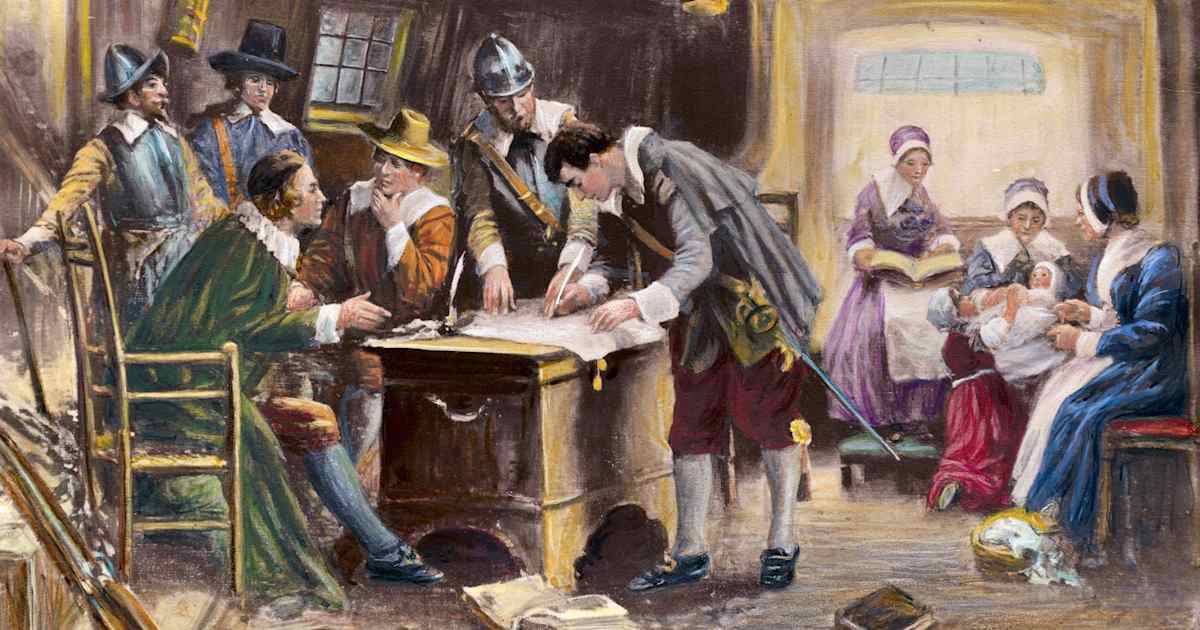
In the late autumn of 1620, a battered merchant ship named the Mayflower anchored in the unfamiliar, wind-swept harbor of Cape Cod, far north of its intended destination in Virginia. Aboard this vessel, a fragile coalition of religious separatists and secular adventurers faced not only a harsh, impending winter but also the imminent collapse of their social order. To prevent mutiny and establish law in a territory without a functioning government, 41 adult male passengers signed a short but revolutionary agreement known to history as the Mayflower Compact. This historic covenant was not just a temporary solution to a localized crisis; it represented the first framework of self-governance ever written in the New World. By establishing the principle that a government’s authority derives from the consent of the governed, the document set a profound precedent that would eventually echo through the Declaration of Independence and the United States Constitution. Understanding the Mayflower Compact is essential to grasping the origins of American democracy, the complexities of early colonial settlement, and the delicate, often tragic relationships forged with the indigenous populations of the Americas.
Historical Background and the Journey of 1620
To fully understand the drafting of the Mayflower Compact, we must look back at the turbulent political and religious landscape of 17th-century England. Under the reign of King James I, the Church of England maintained strict conformity, punishing those who dared to practice Christianity outside the state-approved framework. Among these dissidents were the Separatists—later known to history as the Pilgrims—who believed the Church of England was too corrupt and Catholic-leaning to be reformed from within. Seeking religious freedom, they initially fled to Leiden in the Dutch Republic. However, after a decade, they feared losing their English cultural identity, struggled with economic hardships, and worried about the secular influences on their children. Thus, they made the monumental decision to cross the Atlantic.
To finance this perilous venture, the Separatists secured backing from the Company of Merchant Adventurers of London and recruited a diverse group of secular merchants, craftsmen, and laborers—referred to by the religious Separatists as “strangers”. In September 1620, these two distinct groups embarked on the Pilgrims’ miserable journey aboard the Mayflower, enduring sixty-six days of tempestuous seas, cramped living quarters, and rampant sickness before finally sighting land.
Causes and Context: Why the Compact Was Created
The primary catalyst for the Mayflower Compact was a geographical mistake that threatened to tear the fledgling colony apart before it even began. The settlers had legal permission via a patent from the Virginia Company to establish a plantation near the mouth of the Hudson River (then considered northern Virginia). However, heavy storms, treacherous shoals, and navigation errors forced them to anchor at Cape Cod, in modern-day Massachusetts—a region completely outside the jurisdiction of the Virginia Company.
This sudden displacement triggered an immediate political crisis. Several of the secular “strangers” argued that because they were landing outside of Virginia territory, their charter was null and void. They claimed that once they stepped ashore, no one would have legal authority over them, famously declaring that they would “use their own liberty”. Realizing that an lawless, fractured community would never survive the brutal New England winter, Pilgrim leaders like William Bradford and William Brewster recognized the urgent need for a binding social contract. To quell the brewing mutiny and secure mutual cooperation, they drafted a temporary covenant of self-governance.
To explore the deeper religious and social motivations of this voyage, one must examine the fundamental reasons why did the Pilgrims come to America, which centered on creating a self-governing Christian commonwealth free from Anglican hierarchy.
A Chronological Timeline of the Plymouth Colony’s Birth
To trace the sequence of events surrounding this historic document, let us look at the key milestones of 1620 and 1621:
- September 16, 1620: The Mayflower departs from Plymouth, England, carrying 102 passengers and approximately 30 crew members.
- November 19, 1620: Land is sighted at Cape Cod, prompting attempts to sail south toward the Hudson River, which are thwarted by dangerous shoals.
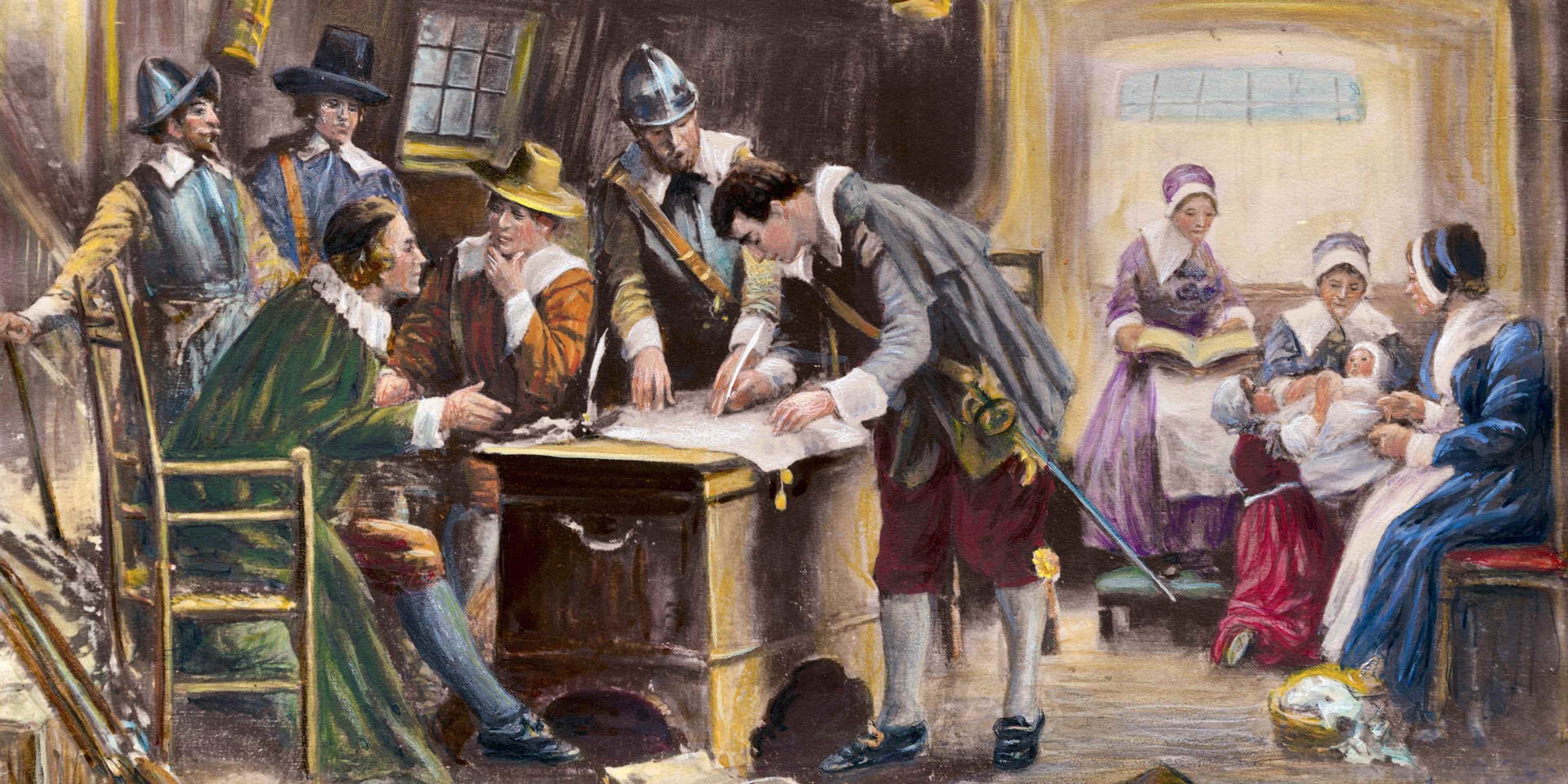
- November 21, 1620 (November 11, Old Style): The Mayflower anchors in Provincetown Harbor. On this day, 41 adult male passengers sign the Mayflower Compact, and John Carver is chosen as the colony’s first governor.
- Late November – December 1620: Exploration parties go ashore to find a suitable settlement site, eventually selecting Plymouth.
- Winter 1620–1621: The colonists endure a brutal first winter; nearly half of the passengers and crew perish from disease, exposure, and malnutrition.
- April 1621: Governor John Carver dies and is succeeded by William Bradford, who leads the colony for most of the next three decades.
- November 1621: The surviving colonists celebrate a successful harvest alongside the Wampanoag people, an event later remembered as the “First Thanksgiving.”
Prominent Figures Involved in the Covenant
Several individuals played irreplaceable roles in the creation, execution, and legacy of the Mayflower Compact:
- William Brewster: A highly educated elder and spiritual leader of the Separatist congregation. Though he did not hold civic office, Brewster is widely believed to have been the primary author of the Compact’s elegant, covenant-style language.
- John Carver: A wealthy merchant who helped secure funding and organization for the voyage. Carver was the first signer of the Compact and was immediately elected as the colony’s first governor, serving until his untimely death in the spring of 1621.
- William Bradford: A dedicated Separatist leader who succeeded Carver as governor. Bradford kept meticulous records of the colony’s early years in his famous journal, Of Plymouth Plantation. His transcript is the primary reason the text of the Mayflower Compact survived, as the original physical document was lost to history.
- Myles Standish: A professional English military officer hired by the Pilgrims to handle defense. Standish was a key signatory who enforced the laws of the Compact and negotiated defensive strategies, maintaining order within the community.
Analysis of the Text and Its Core Principles
The Mayflower Compact is a remarkably brief document, spanning just over 200 words, yet its legal and philosophical implications are immense. It can be broken down into four foundational principles:
- Loyalty to the Crown: Despite their desire for religious separation and localized self-governance, the signers took care to declare themselves “loyal subjects” of King James I. This was a crucial political move to avoid charges of treason or rebellion against England.
- Creation of a “Civil Body Politic”: The signers agreed to combine themselves into a unified governing body. This was an early expression of the social contract theory, where individuals willingly surrender absolute individual freedom in exchange for collective order and protection.
- Rule of Law: The signatories pledged to enact “just and equal laws, ordinances, acts, constitutions, and offices” for the overall good of the colony, promising “all due submission and obedience” to these laws.
- Religious Purpose: The document explicitly states that the voyage was undertaken “for the glory of God, and advancement of the Christian faith,” reflecting the deeply religious worldview of its Puritan Separatist creators.
Major Turning Points and Tribal Interactions
The signing of the Compact on November 21, 1620, was the first major turning point, converting a potential mutiny into a cooperative democratic experiment. However, the true test of this agreement lay in the colonists’ ability to survive. The brutal winter of 1620–1621 took a devastating toll, claiming the lives of 50 of the 102 passengers.
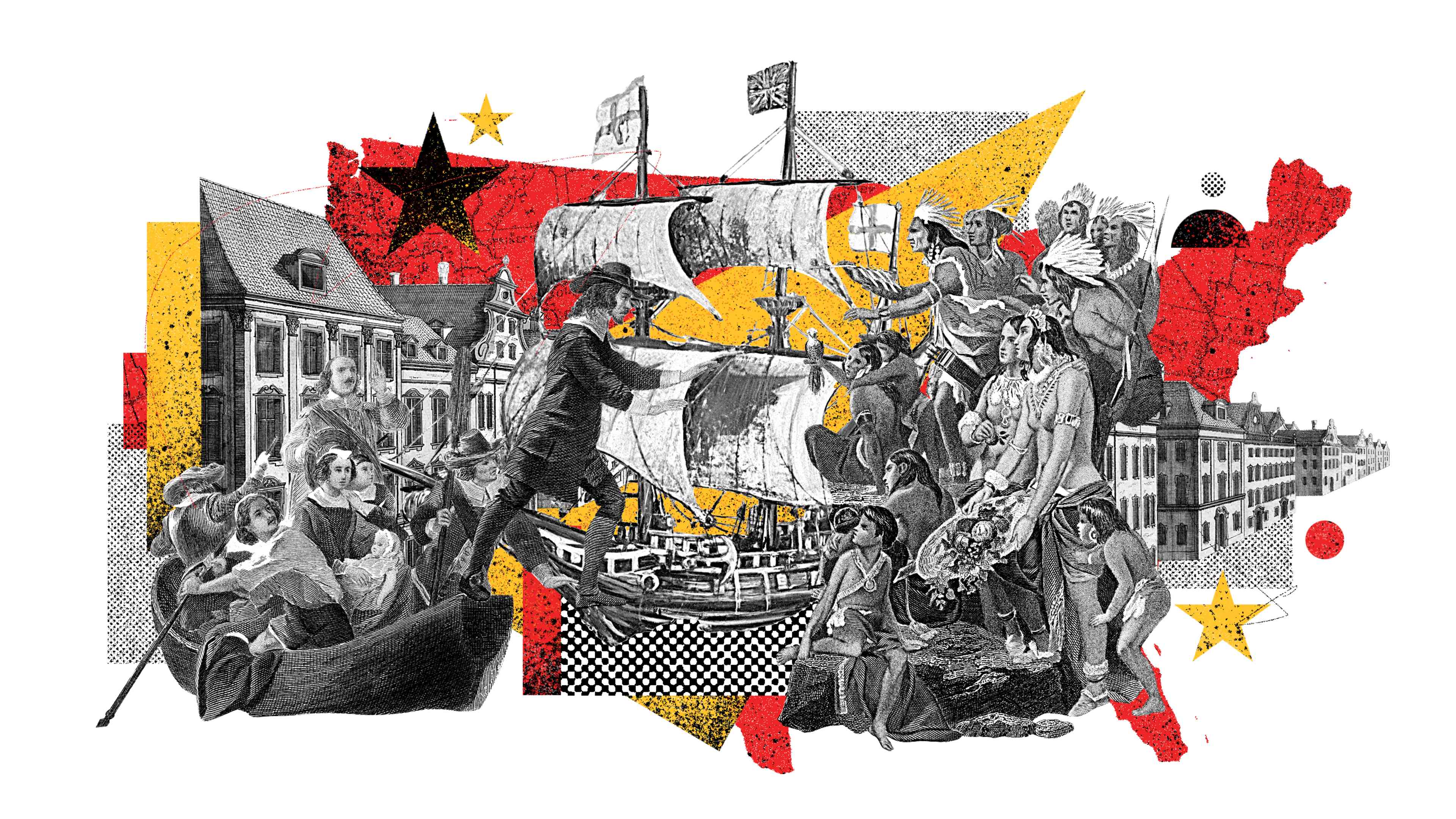
The survival of the remaining colonists was heavily dependent on another turning point: their diplomatic relationship with the indigenous Wampanoag people. Led by Ousamequin (commonly known as the Massasoit) and aided by Tisquantum (Squanto), who spoke fluent English, the Wampanoag negotiated a peace treaty with Governor Carver in March 1621. Under the rules of cooperation established by the Compact, the Pilgrims honored this alliance, which provided them with crucial agricultural knowledge. Without this indigenous partnership, the Plymouth Colony, despite its legal Compact, likely would have met the same tragic fate as other failed early settlements.
Long-Term Impact on American Democracy
The historical legacy of this humble shipboard agreement cannot be overstated. Modern scholars frequently analyze how the Mayflower Compact laid a foundation for democracy in the American colonies. It proved that ordinary citizens could successfully organize, govern themselves, and maintain civil order without the direct supervision of a monarch or a pre-established noble class.
This early experiment in representative government set a precedent that spread throughout the New England colonies, influencing town hall meetings, the Fundamental Orders of Connecticut, and eventually the democratic philosophy of the founding fathers during the American Revolution. The basic premise of the Compact—that legitimate political authority arises from a covenant among the people—is the exact philosophical cornerstone of the United States Constitution.
Lesser-Known and Surprising Facts
- The Original Document is Lost: Despite its monumental importance, the original document signed on the Mayflower has been lost to history. It is believed to have disappeared during the chaotic years of the American Revolutionary War. The text we read today survives through copies made by William Bradford and Nathaniel Morton.
- It Wasn’t Called the “Mayflower Compact” Initially: For over a century, the agreement was referred to simply as “The Agreement” or “The Covenant”. The phrase “Mayflower Compact” did not gain widespread popularity until the late 18th century, as the emerging United States began looking for early historical symbols of national unity and democratic origin.
- Not Everyone Signed It: While 41 of the 101 or 102 passengers signed the document, several adult men did not. Some of these were sailors contracted for only one year, while others were likely too sick to sign. Women and children were completely excluded from signing due to the societal and legal customs of the 17th century.
Why the Mayflower Compact Matters Today
In the modern era, the Mayflower Compact serves as a powerful reminder of the delicate balance between individual liberty and collective responsibility. At a time when democratic institutions worldwide are frequently debated and tested, this 1620 agreement highlights the fundamental truth that a successful society requires a shared commitment to the rule of law and mutual respect. It prompts contemporary citizens to reflect on their own “social contract” and the ongoing, highly complex narrative of how a diverse group of people can peacefully coexist and govern themselves for the common good.
People Also Ask (FAQ)
What was the main purpose of the Mayflower Compact?
The main purpose was to prevent a mutiny and establish a temporary, self-governing legal framework for the Plymouth colonists, who had landed outside the jurisdiction of their official charter from the Virginia Company.
Who actually wrote the Mayflower Compact?
While there is no definitive historical record of the author, historians generally credit Elder William Brewster, a well-educated Separatist leader, with drafting the document, potentially with input from John Carver and William Bradford.
Did any women sign the Mayflower Compact?
No, women did not sign the document. In accordance with the prevailing legal and cultural norms of 17th-century Europe, only adult men (including a few indentured servants) were permitted to sign legal covenants.
How long did the Mayflower Compact remain in effect?
The Mayflower Compact remained the governing framework for Plymouth Colony until 1691, when the colony was officially absorbed into the Massachusetts Bay Colony under a royal charter.
Conclusion
The Mayflower Compact remains one of the most enduring symbols of early American history and democratic development. What began as an emergency measure to prevent discord among a cold, exhausted, and displaced group of travelers became a foundational milestone for self-rule. By prioritizing the collective good, establishing the consent of the governed, and creating a resilient framework of law, the signatories of the Mayflower Compact unknowingly sowed the seeds of a democratic experiment that would eventually shape the destiny of a nation.


