The voyage of the Mayflower in the autumn of 1620 remains one of the most defining, yet grueling, chapters in early American colonial history. Boarded by a fragile coalition of religious Separatists seeking spiritual autonomy and secular “Strangers” looking for economic opportunity, this small wooden merchant vessel braved the unforgiving North Atlantic. For 66 days, 102 passengers—including pregnant women and small children—endured cramped, dark, and unsanitary conditions that tested the very limits of human resilience. Driven by a desire to escape the religious constraints of King James I’s England, these travelers embarked on a journey that would fundamentally reshape the geopolitical landscape of North America. Understanding the harrowing reality of their transatlantic crossing is essential to grasping the origins of democratic governance and the complex, often tragic, legacy of European colonization.
Historical Background: The Push and Pull of 1620
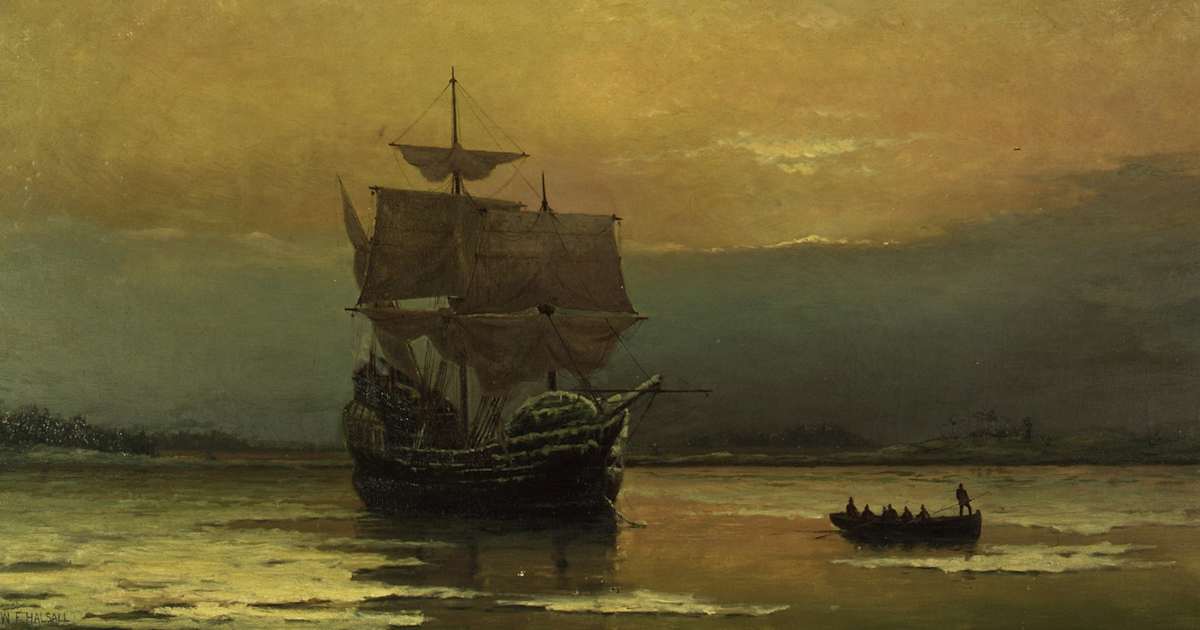
To understand why 102 people squeezed themselves into the dark underbelly of a merchant ship, one must examine the socio-religious upheaval of 17th-century England. Following the English Reformation, the Church of England became the state-mandated religion. However, a radical faction of Puritans, known as Separatists, believed the national church was too corrupt to be salvaged. They advocated for complete separation to worship according to their own conscience.
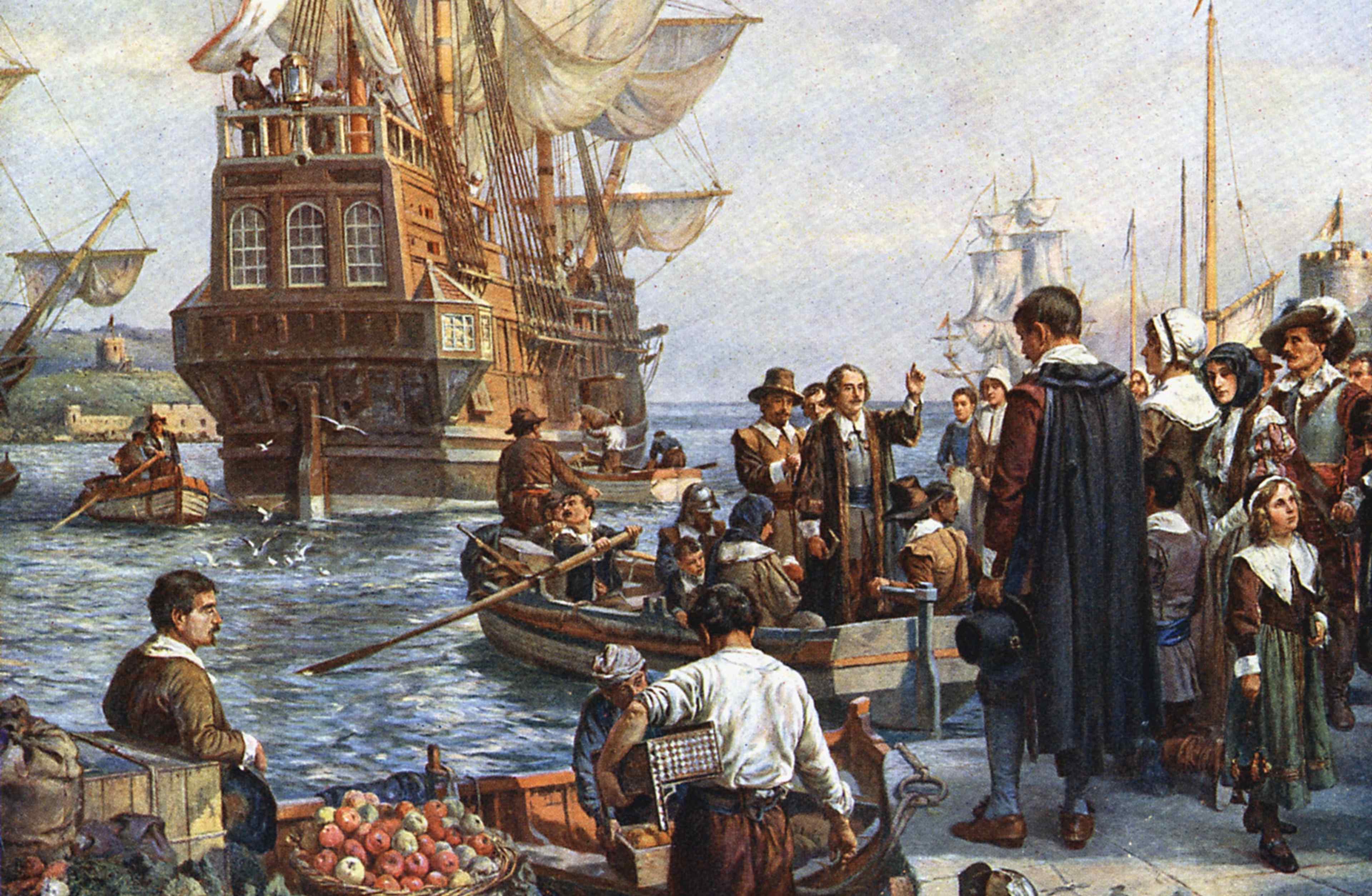
Fearing persecution and imprisonment under King James I, a group of these Separatists fled to Leiden, Holland, in 1608. While they enjoyed religious freedom there, they struggled with severe economic hardship, grueling manual labor, and the fear that their children were losing their English identity. By 1617, their congregation leader, William Brewster, along with other prominent members, decided to secure a patent to establish a colony in the northern parts of Virginia, which at the time extended as far north as the Hudson River in modern-day New York.
Causes and Context: A Merchant Ship Not Built for Passengers
The *Mayflower* was never intended to transport human passengers. Built as a typical 17th-century merchant vessel, the ship spent its early years hauling lumber, fish, and heavy casks of French wine. It was about 100 feet long from stem to stern and only 24 feet wide. Its high, castle-like structures at the bow and stern were designed to maximize cargo space and defend against pirates, but they made the ship highly unwieldy in the open ocean. Sailing against the fierce, prevailing Westerly winds of the North Atlantic, the *Mayflower*’s square-rigged design acted as a massive sail-brake, turning the journey into an agonizingly slow struggle.
Furthermore, the passengers themselves were a deeply divided group. Out of the 102 travelers, only about 41 were religious Separatists (whom we now call “Pilgrims”). The remaining 61 passengers were dubbed “Strangers” by the religious faction. These were skilled craftsmen, laborers, and indentured servants hired by the colony’s financial backers, the Merchant Adventurers of London, to ensure the colony’s economic viability. Forging cooperation between these two culturally distinct groups in a cramped, stressful environment would prove to be one of the expedition’s greatest challenges.
Chronology of the Perilous Journey: A Timeline of the Mayflower Voyage
The journey to the New World was plagued by delays, structural failures, and bad luck long before the *Mayflower* ever departed the English coastline. Below is a detailed chronological breakdown of the historic voyage:
- July 22, 1620: The Separatists depart Delfshaven, Holland, aboard a smaller companion ship named the Speedwell, sailing to Southampton, England, to meet the Mayflower.
- August 6, 1620: Both the Mayflower and the Speedwell set sail from Southampton, aiming for a late-summer crossing.
- Mid-August 1620: The Speedwell begins to leak severely, forcing both ships to divert to Dartmouth for repairs.
- August 24, 1620: After repairs, the ships set sail again, but the Speedwell springs another major leak 300 miles out. They are forced to return to Plymouth, England, where the decision is made to abandon the Speedwell.
- September 6, 1620: The *Mayflower* officially departs Plymouth alone. By this point, passengers had already lived on board the ships for nearly six weeks, consuming valuable provisions.
- October 1620: The ship encounters a series of violent autumnal storms in the mid-Atlantic, causing severe structural damage and blowing the ship far north of its original destination.
- November 9, 1620: Lookouts spot the sandy cliffs of Cape Cod. Realizing they are hundreds of miles north of their legal patent in Virginia, they try to sail south but are turned back by dangerous shoals.
- November 11, 1620: The *Mayflower* anchors in Provincetown Harbor, and 41 male passengers sign the historic Mayflower Compact before stepping ashore.
Life Below Decks: The Gritty Reality of the Crossing
During the 66-day open-ocean crossing, the 102 passengers were confined to the “gun deck” or “between decks” (the ‘tween deck). This windowless, suffocating space sat directly above the cargo hold and below the main deck. With a ceiling height of just five feet, adult passengers could never stand fully upright. To make matters worse, this small space was shared with a disassembled 30-foot wooden sailboat (a shallop) and the baggage of all 102 travelers, leaving a functional living space of only 58 feet by 24 feet.
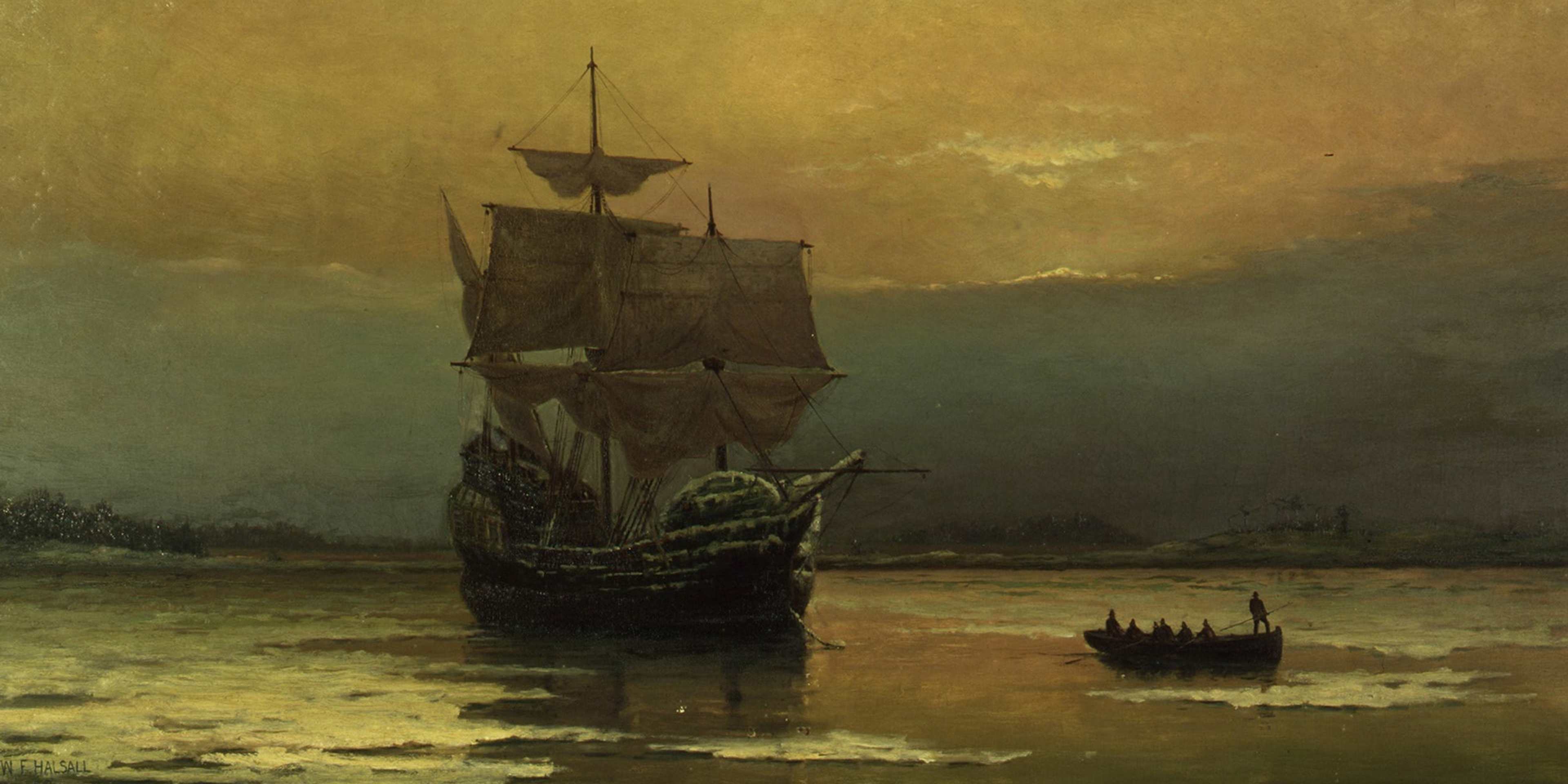
Privacy was non-existent. Families erected small, makeshift wooden dividers or hung damp blankets to separate themselves. As the autumn storms rolled in, the ship’s upper works began to leak, dripping cold, salty water constantly onto the passengers below. The combination of poor ventilation, damp clothes, and the violent rolling of the ship created a foul atmosphere thick with the stench of human waste and severe seasickness. The crew, worried about passengers being swept overboard in the rough weather, rarely allowed them onto the main deck for fresh air, treating them essentially as livestock.
The dietary situation was equally grim. Lacking refrigeration, the cooks relied on heavily salted pork, dried fish, and hardtack—extremely hard, dry biscuits made of flour and water that were notoriously difficult to chew and often infested with weevils. Because freshwater stored in wooden casks quickly became slimy and contaminated with bacteria, beer was the primary beverage of choice for everyone, including young children. This highly acidic, low-nutrient diet left the passengers severely dehydrated, malnourished, and increasingly susceptible to scurvy.
Pivotal Turning Points: Miracles on the High Seas
The Mayflower voyage was nearly cut short by a series of near-disaster moments that could have changed the course of world history forever. Two major events stand out in historical records, primarily documented in William Bradford’s journal, Of Plymouth Plantation:
The Cracked Main Beam
During a particularly violent storm in October, a massive wooden beam in the midships of the ship cracked and bowed. Fearing the vessel would collapse and sink, the crew and passenger leaders held a dramatic meeting to debate whether to turn back to England. Fortunately, the passengers had brought a “great iron screw” from Holland (historians debate whether this was a heavy jack for house construction or part of a printing press). Using this screw, they successfully jacked the cracked beam back into place, securing it with a post and allowing the voyage to continue.
The Miraculous Survival of John Howland
In another terrifying incident during a fierce tempest, a young indentured servant named John Howland went up to the main deck to escape the suffocating air below. A sudden, violent pitch of the ship threw him into the freezing, turbulent ocean. By sheer luck, as he swept downward, he managed to grab hold of a trailing halyard (a rope used to raise sails) that was dragging in the water. He held on desperately, sinking several fathoms deep, until the crew used a boat hook to haul him back on deck. Howland survived and would go on to become a prominent, wealthy citizen of the Plymouth Colony, leaving behind a massive lineage of descendants, including several U.S. presidents.
Prominent Figures of the Voyage
- William Bradford: A deeply devout leader of the Separatist congregation. He would later serve as the governor of Plymouth Colony for over thirty years. His detailed manuscript, Of Plymouth Plantation, remains the definitive eyewitness account of the voyage and the early years of the settlement.
- Captain Christopher Jones: The experienced master and co-owner of the *Mayflower*. Despite having no personal sympathy for the Separatists’ religious views, his expert navigation and calm leadership during the Atlantic storms saved the ship from destruction. He also made the crucial decision to keep the ship anchored in Plymouth through the devastating first winter to shelter the colonists.
- Myles Standish: A professional English military officer hired by the Pilgrims to organize the colony’s defenses. His tactical knowledge was instrumental in the physical survival of the settlement against potential threats.
- Elizabeth Hopkins: One of the three pregnant women on board. She successfully gave birth to a son, aptly named Oceanus Hopkins, in the middle of the Atlantic Ocean.
Long-Term Impact on America
The arrival of the *Mayflower* in November 1620 set in motion forces that would permanently alter the history of North America. Because they landed outside the jurisdiction of the Virginia Company, some of the secular “Strangers” argued that they were no longer bound by any legal authority. To prevent anarchy, the leaders drafted the Mayflower Compact. Signed by 41 adult men, this document established a self-governing colony based on the consent of the governed—a revolutionary concept that served as a foundational building block for the U.S. Constitution and modern American democratic values.
However, the long-term impact on the region’s indigenous population was complex and devastating. The Pilgrims settled on the site of Patuxet, a Wampanoag village that had been completely decimated by a plague introduced by European traders just years prior. While the famous alliance with Massasoit and Tisquantum (Squanto) brought a temporary, uneasy peace, the subsequent flood of European colonizers led to systemic land dispossession, devastating epidemics of smallpox, and bloody conflicts, culminating in King Philip’s War (1675–1676) which forever altered native societies in New England.
Lesser-Known Facts About the Mayflower
- The Speedwell Sabotage: Many modern maritime historians believe the crew of the companion ship Speedwell deliberately rigged their ship with oversized masts to cause leaks, giving them a legal excuse to back out of a dangerous, year-long contract.
- The Mayflower’s Fate: After returning to England in 1621, the *Mayflower* lay idle in the River Thames. Following the death of Captain Christopher Jones in 1622, the ship was declared in ruins and appraised for its scrap value—valued at a meager £128—before being broken up for lumber.
- Only One Death at Sea: Despite the horrendous conditions, only one passenger died during the actual 66-day voyage: a young indentured servant named William Butten, who succumbed to illness just three days before land was sighted.
Why It Still Matters Today
The story of the *Mayflower* is not merely a dusty tale of buckles and black hats; it is a live debate about the core identity of the United States. It forces modern citizens to grapple with the dual legacy of American origins: the inspiring quest for religious freedom and self-determination on one hand, and the painful history of colonialism and its impact on Indigenous communities on the other. By studying the raw, unvarnished history of the *Mayflower*, we gain a deeper appreciation for the immense human cost that laid the foundations of modern America.
People Also Ask
How many people died on the Mayflower voyage?
During the 66-day ocean crossing, only one passenger, a young servant named William Butten, died. However, the subsequent winter of 1620–1621 was catastrophic. Due to exposure, scurvy, and outbreaks of infectious disease while living aboard the ship, nearly half of the passengers and crew died before spring.
What did the passengers eat on the Mayflower?
The passengers subsisted entirely on preserved rations: salted pork, dried beef, dried fish, oatmeal, and hardtack biscuits. Since freshwater spoiled quickly, both adults and children drank weak beer as their primary source of hydration.
Why did the Mayflower land in New England instead of Virginia?
The Pilgrims originally intended to land near the mouth of the Hudson River (then part of the northern Virginia patent). However, fierce autumn storms pushed the ship far off course to Cape Cod. When they tried to sail south, dangerous shoals and strong currents forced them to turn back and anchor in New England.
Conclusion
The journey of the *Mayflower* was an extraordinary testament to human endurance against overwhelming odds. Stripped of the romanticized myths of history, the reality of the 1620 crossing was a dark, wet, and terrifying ordeal that tested the physical and spiritual resolve of its passengers. Yet, out of this miserable journey emerged the Mayflower Compact, a blueprint for democratic self-governance that would eventually guide a new nation. By examining both the triumphs and the tragedies of the *Mayflower* voyage, we find a more honest, comprehensive understanding of the complex roots of the American story.


