When early colonists stepped off their wooden ships onto the rocky shores of New England, they brought with them dreams of self-reliance, religious freedom, and boundless opportunity. However, they quickly discovered that the harsh realities of the New World—such as unforgiving winters, crop failures, and rampant illness—spared no one. Poverty, disability, and unemployment followed them across the Atlantic, forcing communities to confront a critical question: how should a society care for its most vulnerable members? Long before the modern welfare state, subsidized housing, or Medicaid, early American settlers devised localized, often punitive systems of public relief known as Poor Laws. Heavily adapted from the English Elizabethan Poor Law Act of 1601, these early statutes established a complex, centuries-long legacy of taxation, institutionalization, and moral judgment that laid the groundwork for America’s modern debates on social welfare and economic inequality.
Historical Background: The English Roots of American Poor Laws
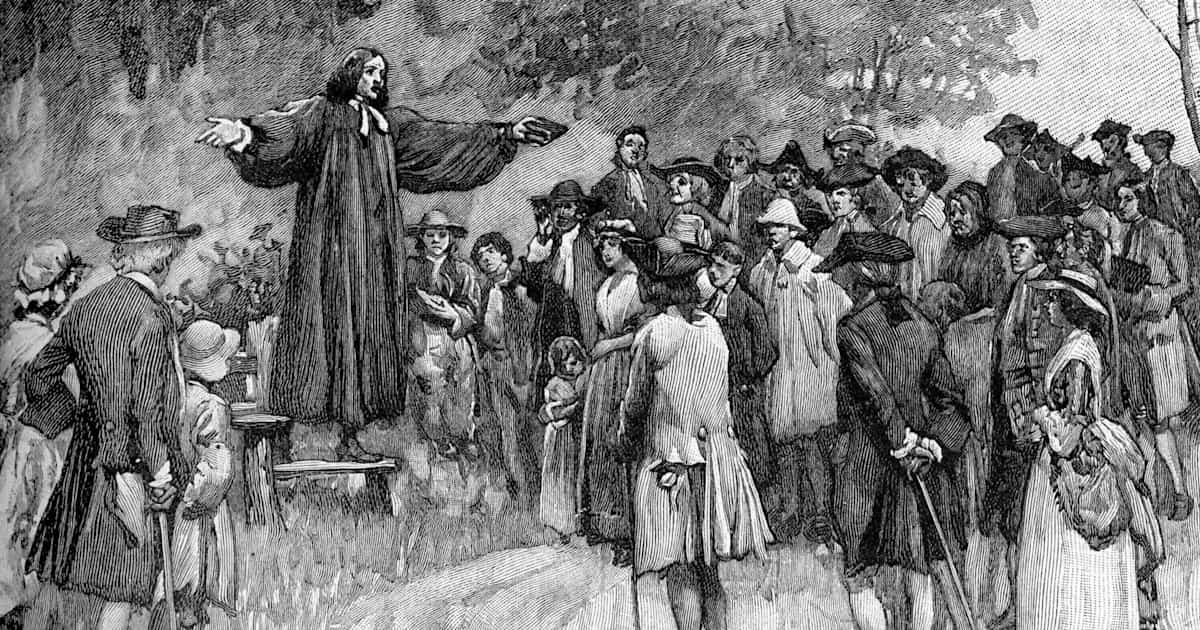
The origin of American social welfare did not begin in the colonies, but rather in the turbulent socio-economic landscape of 16th-century Tudor England. The transition from feudalism, the rapid enclosure of common lands, and the dissolution of the monasteries under King Henry VIII left hundreds of thousands of English peasants displaced, landless, and impoverished. When the sheer volume of destitution threatened public order, Queen Elizabeth I’s administration realized that leaving poor relief to haphazard private charity was no longer viable. This crisis culminated in the passage of the Elizabethan Poor Law Act of 1601, which established the principle of government responsibility for the welfare of its citizens.
When understanding why early English settlers crossed the Atlantic, it becomes clear that they carried not only their religious and commercial ambitions but also their legal habits. The English Poor Laws became the blueprint for early American social policy. The colonists believed that while America was a land of abundance, poverty was an inevitable aspect of human society, and therefore, local governments had a legal and moral duty to manage it.
Categorizing the Needy: The Crucial Split of ‘Worthy’ vs. ‘Unworthy’
Central to both the Elizabethan Poor Law and its American adaptations was the moral categorization of those in need. The law did not view poverty as a systemic or economic failure, but rather as an individual condition. Consequently, the destitute were strictly divided into three primary categories:
- The Impotent Poor (The “Worthy” Poor): This group included the elderly, the blind, the physically disabled, widows, and young orphans. Because their inability to work was deemed beyond their control, they were viewed as deserving of community compassion and direct aid, known as “outdoor relief” (assistance provided in their own homes, such as small cash stipends, firewood, or food).
- The Able-Bodied Poor (The “Unworthy” Poor): This group consisted of healthy adults who were unemployed. In the eyes of colonial authorities, idleness was a sin and a threat to the community. Able-bodied individuals who begged or refused to work were categorized as “vagrants” or “sturdy beggars” and faced brutal punishments, including public whipping, branding, forced labor, and even imprisonment.
- Dependent Children: Orphaned or impoverished children were often apprenticed out to local families. While this spared the town the cost of their direct upkeep, it frequently subjected young children to unpaid, arduous labor until they reached adulthood.
The Geography of Relief: How the Original Thirteen Colonies Managed Poverty
Unlike modern national welfare programs, colonial poor relief was intensely localized. Each town, parish, or municipality was solely responsible for caring for its own legal residents. This hyper-local focus meant that your access to aid depended entirely on your geographic location within the establishment of the original thirteen colonies.
Because towns funded poor relief through mandatory local property taxes, local leaders were highly protective of their municipal budgets. To prevent poor people from moving to their towns to claim benefits, colonial legislatures introduced strict transiency laws. If a stranger arrived in a town and appeared likely to become a public charge, the town authorities would invoke a practice known as “warning out.” This formal legal notice ordered the newcomer to leave immediately, absolving the town of any financial responsibility should that person fall into destitution.
A Timeline of Poverty Relief in Early America
To understand how these systems evolved over time, we can trace the development of public relief policies through several major milestones:
- 1601: The English Parliament passes the Elizabethan Poor Law Act, cementing the state’s role in managing poverty and establishing local taxation for relief.
- 1642: Plymouth Colony formally adopts poor relief provisions, marking one of the earliest colonial codifications of public welfare responsibility in New England.
- 1690s: As transiency increases, colonies like Rhode Island and Massachusetts pass strict transiency and “warning out” laws to expel nonresident indigents.
- 1713: The city of Boston constructs its first almshouse, signaling a shift from outdoor relief (home aid) to indoor relief (institutionalized care).
- 1731: Philadelphia establishes its first Almshouse and House of Employment to consolidate the care of the sick, poor, and insane.
- 1935: After centuries of local and often abusive relief systems, President Franklin D. Roosevelt signs the Social Security Act, shifting the burden of social welfare from local communities to the federal government.
Cruel Systems of Care: Contracts, Auctions, and the Rise of Poorhouses
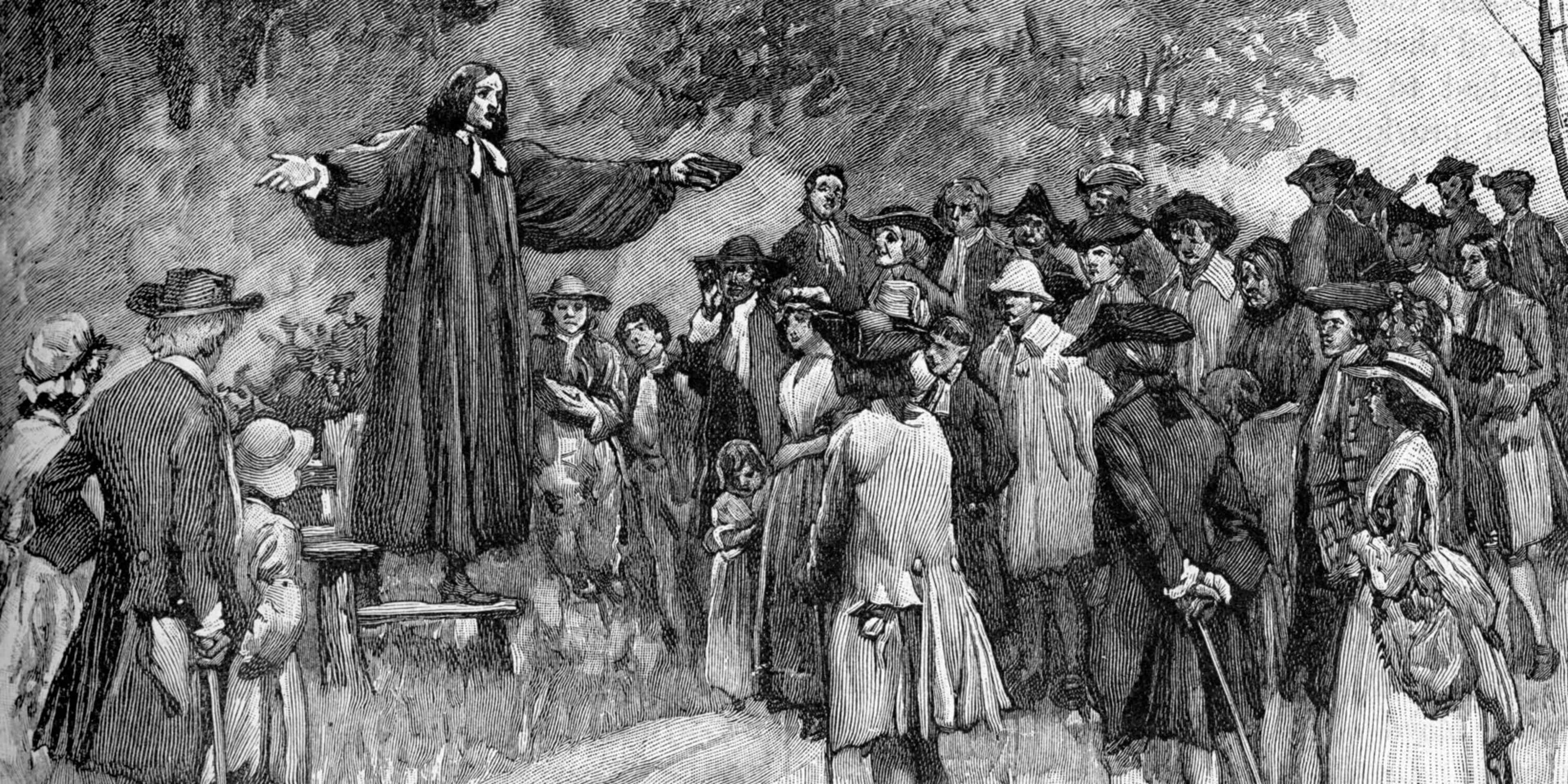
As colonial populations swelled and poverty rates climbed, towns struggled to manage the mounting costs of outdoor relief. In response, local leaders turned to increasingly desperate and economically cruel methods of managing the poor:
1. The Contract System
Under this system, town leaders would contract with a local farmer or homeowner to house and feed an impoverished individual for a fixed annual fee. While simple to administer, this system offered zero oversight, leaving the indigent person vulnerable to extreme neglect and isolation.
2. The Auctioning System
In one of the most shocking practices of the era, indigent families and individuals were literally auctioned off in the town square. Unlike slave auctions, these individuals were auctioned to the lowest bidder—the person who demanded the least amount of public money from the town to feed, clothe, and house them. In exchange, the winning bidder put the poor person to work. This system essentially legalized abusive, near-starvation forced labor.
3. The Rise of the Almshouse (Poorhouse)
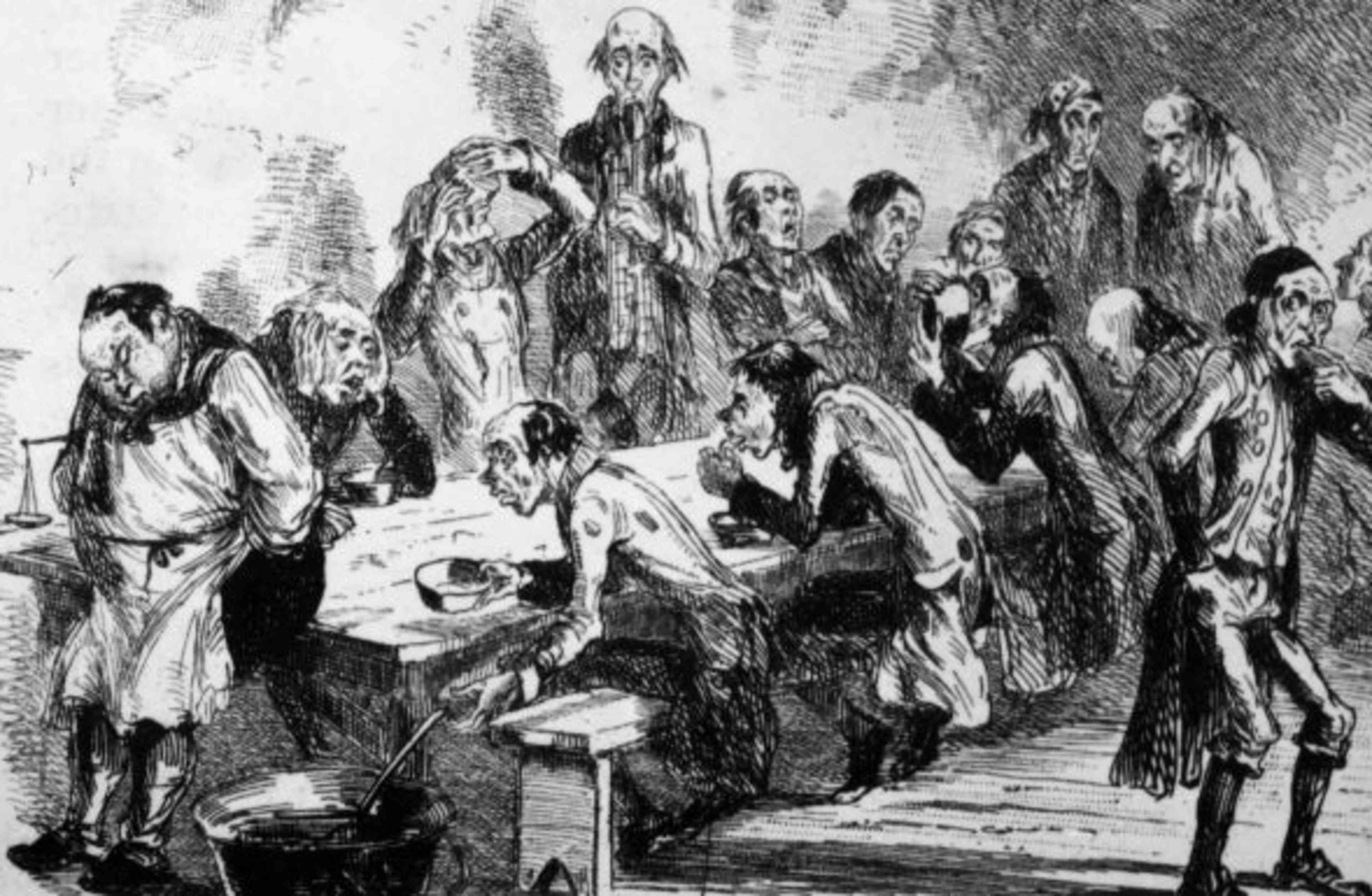
By the late 18th and early 19th centuries, social reformers argued that “indoor relief”—forcing the poor into centralized institutions—would be cheaper, more orderly, and would deter people from asking for help. Thus, the poorhouse (or almshouse) was born. However, these institutions quickly degenerated into houses of horror. Inside, the “worthy” poor (such as frail elderly, orphans, and the sick) were mixed indiscriminately with the “unworthy” poor, the mentally ill, and criminals. In these damp, crowded, and underfunded structures, the residents lacked even the basic daily life and material culture in early America, living instead in squalid conditions defined by filth, disease, and routine physical abuse.
Key Historical Scholars and Figures of Welfare History
Several prominent historians and scholars have meticulously documented this dark chapter of American history, providing critical insights into how these early systems functioned:
- Walter I. Trattner: In his seminal book From Poor Law to Welfare State, Trattner details how the modern institution of social welfare emerged directly from the failures and structures of the colonial Poor Laws, highlighting the transition of welfare from a local religious obligation to a structured state function.
- Michael B. Katz: A leading social historian, Katz’s book In the Shadow of the Poorhouse exposes the institutionalized cruelty and systemic failures of the almshouses, arguing that they were designed more to deter the poor from seeking aid than to actually alleviate their suffering.
- John E. Hansan: Through his extensive research on early American welfare history, Hansan has highlighted the severe human costs of the auction and contract systems, documenting how they institutionalized near-starvation conditions under the guise of municipal thrift.
Lesser-Known Facts About Colonial Poverty Relief
Beyond the primary historical narrative, several surprising and lesser-known aspects of colonial poor relief reveal the deep social anxieties of the era:
- The “Pauper” Badge: In some colonial municipalities, anyone receiving public assistance was legally required to wear a large, bright letter “P” (for pauper) sewn onto their right sleeve. This public shaming was designed to discourage people from seeking aid unless they were truly desperate.
- The “Warning Out” Ritual: Getting “warned out” did not always mean immediate physical expulsion. Often, it was a legal maneuver recorded in town books. If a family stayed in the town and eventually went broke, the town could refuse to pay for their relief because they had formally “warned” them years prior.
- The Insane and the Poorhouse: Before the creation of dedicated psychiatric hospitals in the mid-19th century, mentally ill individuals who could not care for themselves were routinely locked in poorhouse basements, chained to walls, or kept in unheated outhouses.
Long-Term Impact: The Birth of Modern Social Safety Nets
The legacy of the colonial Poor Laws did not vanish when the United States declared independence. Instead, the basic tenets of the Elizabethan system persisted well into the 20th century. It took the catastrophic economic collapse of the Great Depression in the 1930s to finally shatter the myth that poverty was simply a moral failing or a local issue. When millions of hard-working, able-bodied Americans lost their jobs, homes, and savings, it became undeniably clear that local charities and county poorhouses were entirely inadequate.
In response, President Franklin D. Roosevelt introduced the New Deal. The signature achievement of this era, the Social Security Act of 1935, fundamentally redefined the relationship between American citizens and their government. By establishing federal old-age pensions, unemployment insurance, and direct aid for dependent children, the Act systematically dismantled the archaic, localized poorhouse system and laid the groundwork for the modern American social safety net.
Why the History of Poor Laws Matters Today
Understanding the history of colonial Poor Laws is not just an academic exercise; it is crucial for understanding contemporary political and social debates in the United States. Modern discussions surrounding welfare reform—such as implementing work requirements for Medicaid, drug testing TANF recipients, or debating the eligibility of immigrants for public services—are deeply rooted in the 400-year-old distinction between the “worthy” and “unworthy” poor.
Whenever society debates whether public assistance encourages “laziness” or whether aid should be restricted to those who “deserve” it, we are directly channeling the language and logic of the Elizabethan Poor Law of 1601. By examining this history, we can critically analyze our current institutions and strive to build a more compassionate, equitable, and effective social safety net.
People Also Ask
What were the Poor Laws in colonial America?
Colonial Poor Laws were localized public assistance policies heavily adapted from the English Elizabethan Poor Law Act of 1601. They established local taxes to fund relief for the destitute, but also introduced punitive measures like forced labor, public shaming, and physical punishment for those deemed capable of working but unemployed.
What is the difference between “worthy” and “unworthy” poor?
The “worthy” poor were individuals who could not work due to circumstances beyond their control, such as the elderly, disabled, widows, and orphans. They were deemed deserving of community help. The “unworthy” poor were able-bodied adults who were unemployed; they were viewed as lazy or sinful and were subjected to forced labor or punishment instead of direct aid.
Why did the United States phase out poorhouses?
Poorhouses were phased out because they were deeply abusive, crowded, disease-ridden, and failed to solve the systemic causes of poverty. The catastrophic impact of the Great Depression forced the federal government to step in, leading to the passage of the Social Security Act of 1935, which replaced local almshouses with federal social safety net programs.
Conclusion
The history of how colonial America tackled poverty through the Poor Laws reveals a complex and often contradictory legacy. While these early systems acknowledged a fundamental public responsibility to care for the destitute, they did so through a lens of moral judgment, local protectionism, and institutionalized cruelty. From the humiliation of public auctions to the squalor of crowded almshouses, the colonial approach to poverty relief was defined by a constant tension between compassion and deterrence. As we navigate modern challenges of economic inequality and social welfare, understanding this historical foundation allows us to recognize how deeply our past continues to shape our present and to strive for a future that prioritizes human dignity over moral condemnation.


