Long before the United States became a global superpower spanning fifty diverse states, its geopolitical foundation was laid by the 13 colonies established along the rugged Atlantic seaboard during the seventeenth and eighteenth centuries. These early settlements—founded under the banner of the British Empire—were not monolithic; they were a complex mosaic of commercial ventures, religious sanctuaries, and diverse cultures interacting dynamically with established Indigenous societies. Understanding the history of the 13 colonies requires examining not just the maps and colonial charters, but the complex interactions, economic forces like mercantilism, and societal structures that ultimately catalyzed the American Revolution. By exploring how these disparate outposts united to challenge the world’s most powerful empire, we uncover the roots of modern American political, social, and constitutional identity.
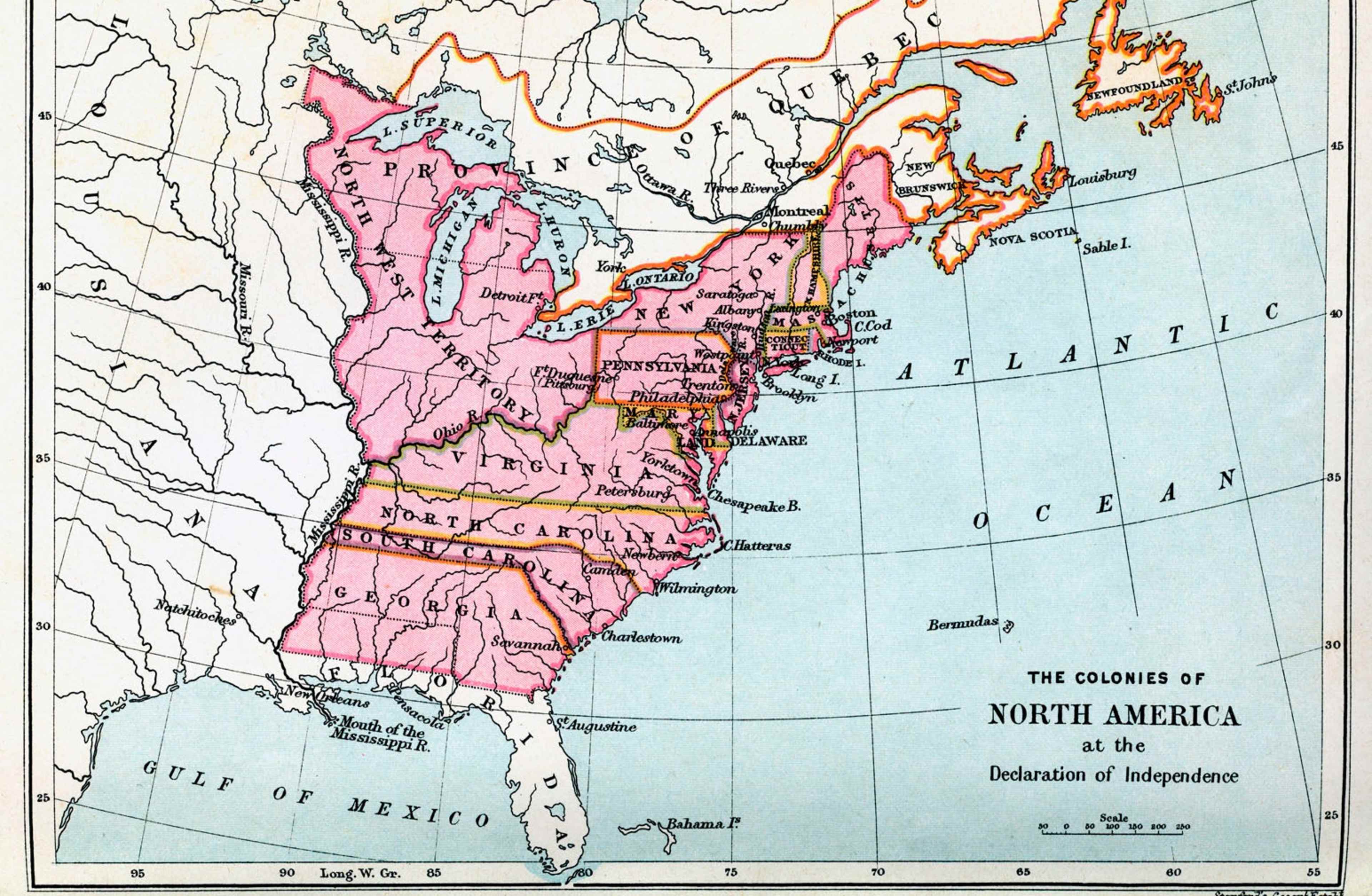
The Regional Triad: Mapping the 13 Colonies
The 13 colonies are historically grouped into three distinct geographic and cultural regions: New England, the Middle Colonies, and the Southern Colonies. Each region’s unique geography, climate, and soil conditions shaped its economic engine and societal structure.
The New England Colonies: Massachusetts, New Hampshire, Connecticut, and Rhode Island
New England was characterized by its rocky soil, dense forests, and long, harsh winters, which made large-scale agriculture virtually impossible. Instead, the colonists turned to the sea, building thriving economies based on shipbuilding, cod fishing, whaling, and maritime trade. Culturally, New England was deeply shaped by English Puritans. These religious dissenters fled persecution in England not to establish universal religious freedom, but to build a self-governing “City upon a Hill” that strictly conformed to their theological views. While Massachusetts maintained a rigid theocratic structure, this strictness bred dissent. Roger Williams and Anne Hutchinson were banished, leading to the creation of Rhode Island as a beacon of true religious liberty. Before the arrival of the Mayflower in 1620, these lands were the ancestral homes of Indigenous nations, including the Wampanoag, Pequot, and Narragansett. While early survival was aided by Indigenous figures like Tisquantum (Squanto), colonial expansion rapidly led to devastating conflicts, such as the Pequot War (1636–1638) and King Philip’s War (1675–1676), which decimated local Indigenous populations and permanently altered the landscape.
The Middle Colonies: New York, New Jersey, Pennsylvania, and Delaware
Often referred to as the “Breadbasket Colonies,” the Middle Colonies featured fertile soil, moderate climates, and deep, navigable rivers like the Hudson and the Delaware. The economy thrived on the cultivation of grains, particularly wheat, rye, and barley, alongside robust fur-trading networks. What truly distinguished the Middle Colonies was their unprecedented diversity. Originally settled by the Dutch as New Netherland and the Swedes as New Sweden, the English absorbed these territories in the mid-seventeenth century. Rather than purging the existing populations, they allowed Dutch, Swedish, German, French Huguenot, and Jewish communities to remain. Pennsylvania, founded by the Quaker William Penn in 1681, became a model for egalitarianism and religious tolerance. Penn made conscious efforts to maintain peaceful relations with the local Lenni Lenape (Delaware) nation, purchasing land through fair treaties rather than seizing it by force—a respectful coexistence that, unfortunately, was systematically dismantled by his successors in subsequent decades.
The Southern Colonies: Maryland, Virginia, North Carolina, South Carolina, and Georgia
The Southern Colonies boasted a warm climate, abundant rainfall, and a long growing season, perfect for cash-crop agriculture. Unlike the diverse economies of the North, the Southern economy was intensely agrarian, dominated by massive plantations cultivating highly profitable cash crops: tobacco in Virginia and Maryland, and rice and indigo in the Carolinas and Georgia. This economic model drove a massive demand for labor. Initially, planters relied heavily on European indentured servants. However, by the late seventeenth century, the labor force shifted heavily toward the institutionalized chattel slavery of kidnapped Africans. The first group of enslaved Africans arrived in Jamestown in 1619. This horrific system of human exploitation became the economic backbone of the South, creating a starkly stratified society where a wealthy planter aristocracy wielded absolute political and economic power. The Southern colonies were carved out of lands occupied by the Powhatan Confederacy, the Tuscarora, the Yamasee, and the Cherokee. As tobacco plantations expanded rapidly, devouring fertile river valleys, intense conflicts erupted, including the Anglo-Powhatan Wars, which culminated in the dispossession and fragmentation of these ancient Indigenous confederacies.
Chronological Timeline of the Colonial Era
To understand how the 13 colonies evolved from fragile wilderness outposts into a unified revolutionary force, we must examine the pivotal milestones:
- 1587: Sir Walter Raleigh establishes the ill-fated Roanoke Colony off the coast of North Carolina; by 1590, the entire settlement vanishes mysteriously.
- 1607: The Virginia Company of London founds Jamestown, the first permanent English settlement in North America.
- 1619: The first legislative assembly, the House of Burgesses, convenes in Virginia; the same year, the first enslaved Africans arrive in the colony.
- 1620: The Pilgrims sign the Mayflower Compact and establish Plymouth Colony in Massachusetts.
- 1630: The Massachusetts Bay Colony is founded by a large wave of Puritan settlers led by John Winthrop.
- 1632: King Charles I grants a charter to Cecilius Calvert (Lord Baltimore) to found Maryland as a haven for English Catholics.
- 1664: The English seize New Netherland from the Dutch, renaming it New York.
- 1681: William Penn receives a charter for Pennsylvania, establishing a sanctuary for Quakers and promoting religious tolerance.
- 1732: James Oglethorpe founds Georgia, the final of the 13 colonies, serving as a social experiment for debtors and a military buffer against Spanish Florida.
- 1754–1763: The French and Indian War rages, ending with British victory but leaving the Crown with massive war debt.
- 1765: Parliament passes the Stamp Act, triggering widespread protests and the rallying cry: “No taxation without representation!”
- 1773: Colonists dump British tea into Boston Harbor during the Boston Tea Party to protest the Tea Act.
- 1775: The Battles of Lexington and Concord mark the outbreak of the American Revolutionary War.
- 1776: The Continental Congress adopts the Declaration of Independence on July 4, formally severing ties with Great Britain.
- 1783: The Treaty of Paris is signed, officially recognizing the independence of the United States.
Crucial Historical Figures and Their Legacies
Several visionary, controversial, and influential figures shaped the destiny of the colonies:
- John Smith (1580–1631): A battle-hardened soldier who took control of the struggling Jamestown colony in 1608. His famous decree, “He that will not work shall not eat,” saved the colony from starvation. His interactions with Chief Powhatan and his daughter Pocahontas established a tenuous, highly complex peace that allowed the colony to survive its earliest years.
- William Penn (1644–1718): A philosopher, Quaker leader, and founder of Pennsylvania. Penn designed his colony as a “Holy Experiment,” drafting a progressive constitution that guaranteed freedom of worship, a representative assembly, and fair trials. His respectful treaties with the Lenni Lenape stood out as a rare example of peaceful cohabitation in colonial history.
- Roger Williams (1603–1683): A staunch advocate for religious liberty and the complete separation of church and state. Banished from Massachusetts for his “dangerous opinions,” Williams founded Rhode Island, creating a sanctuary where all faiths—including Jews, Quakers, and freethinkers—could worship freely without government interference. He also learned Indigenous languages and advocated for the fair purchase of native lands.
- Lord Baltimore (Cecilius Calvert, 1605–1675): The proprietor of Maryland who sought to create a safe haven for Catholics fleeing English persecution. He drafted the landmark Maryland Toleration Act of 1649, which protected Trinitarian Christians of all denominations, laying early legal groundwork for religious freedom in America.
The Economic and Geopolitical Crucible: Mercantilism and Empire
The founding and growth of the 13 colonies must be understood within the global context of European imperialism. In the seventeenth and eighteenth centuries, European superpowers operated under the economic philosophy of mercantilism. This highly competitive theory asserted that a nation’s wealth and power depended on accumulating gold and maintaining a positive balance of trade. Under mercantilism, colonies existed solely to enrich the mother country. They served two primary functions: providing cheap raw materials (such as timber, tobacco, iron, and cotton) and acting as a captive market for manufactured goods produced in Britain. To enforce this, the British Parliament passed the Navigation Acts starting in 1651, requiring all colonial trade to be carried on British ships and directing key colonial exports strictly to English ports. While these laws guaranteed the colonies a steady market, they also severely restricted economic freedom, fueling an underground culture of smuggling. The economic pressure became a simmering source of resentment, setting the stage for future rebellion when the Crown attempted to enforce these trade restrictions more aggressively.
Key Turning Points on the Path to Revolution
For over a century, the 13 colonies operated with a high degree of “salutary neglect”—a British policy of loose oversight that allowed colonists to govern themselves and manage their own local taxes. However, a series of seismic events shattered this status quo:
- The French and Indian War (1754–1763): Known globally as the Seven Years’ War, this conflict pitted the British and their colonial allies against the French and their Indigenous allies. Although Britain emerged victorious, securing Canada and all lands east of the Mississippi River, the war left the empire with a staggering national debt.
- The End of Salutary Neglect: Believing the colonists should help pay for the military defense that protected them, Parliament abandoned its policy of neglect and enacted a series of direct taxes, including the Stamp Act of 1765 and the Townshend Acts of 1767. This triggered fierce ideological resistance, as colonists argued that only their elected colonial assemblies—not a distant Parliament where they had no representatives—had the right to tax them.
- The Escalation to Violence: Tensions exploded on March 5, 1770, during the Boston Massacre, when British soldiers fired into an angry mob, killing five colonists. Three years later, the Boston Tea Party of December 16, 1773, saw the Sons of Liberty dump 342 chests of British tea into the harbor. The Crown retaliated with the Coercive Acts (called the “Intolerable Acts” in America), closing Boston Harbor and suspending Massachusetts’ self-government, which pushed the colonies to unite and form the First Continental Congress.
The Long-Term Structural Legacy of Colonial America
The institutional, cultural, and political developments of the colonial era left deep, permanent marks on the United States:
- The Blueprint for Federalism: The distinct regional identities and systems of self-governance developed by the colonies laid the groundwork for the US Constitution. The balance of power between individual states and the federal government, as well as the creation of a bicameral legislature, directly reflects the colonial experience of balancing localized interests with central authority.
- The Paradox of Liberty and Slavery: The American Revolution was fought on the grand principle that “all men are created equal.” Yet, the very economy that allowed the colonies to prosper was deeply reliant on the brutal exploitation of enslaved Africans. This foundational contradiction between liberty and systemic racial oppression created structural fractures that led to the American Civil War and continue to shape the struggle for civil rights today.
- Indigenous Dispossession: The rapid demographic expansion of European settlers led to the systematic displacement, military defeat, and cultural suppression of Native American nations. The colonial era established a legal and geographical pattern of treaties made and broken, permanently altering the demographic and cultural map of North America.
Surprising Lesser-Known Facts About the 13 Colonies
- New Hampshire Was the Pioneer of American Potatoes: While potatoes originated in South America, they did not become a staple in the colonies until 1719, when Scotch-Irish immigrants planted the very first permanent American potato patches in Londonderry, New Hampshire. Today, the potato is recognized as the official state vegetable of New Hampshire!
- The Mystery of the “Lost Colony” of Roanoke: Before Jamestown, a group of 117 English settlers established a colony on Roanoke Island in 1587. When their leader, John White, returned three years later after being delayed by the Anglo-Spanish War, the entire colony had vanished without a trace, leaving behind only the word “CROATOAN” carved into a wooden post. Its fate remains one of history’s greatest unsolved mysteries.
- The First American-Born Child of English Parents: Virginia Dare was born on Roanoke Island on August 18, 1587, to Eleanor and Ananias Dare. Her mysterious disappearance along with the rest of the Roanoke colonists has made her a legendary figure in early American folklore.
Why Colonial History Still Matters Today
The legacy of the 13 colonies is not confined to the pages of history books; it actively shapes the modern United States. The cultural and economic divides of the three colonial regions are still visible in modern American political voting patterns, economic bases, and regional dialects. Furthermore, the debate over state versus federal power, which originated with the colonial fear of a distant, tyrannical central government, remains at the heart of contemporary American political discourse. By examining this critical era, we gain an authentic, unvarnished look at the triumphs and tragedies that built the nation. It forces modern citizens to confront the complex duality of a country born out of a noble quest for self-determination and religious freedom, yet built alongside the harsh realities of Indigenous displacement and systemic slavery.
People Also Ask (FAQ)
What were the 13 original colonies?
The 13 original colonies were New Hampshire, Massachusetts, Connecticut, Rhode Island, New York, New Jersey, Pennsylvania, Delaware, Maryland, Virginia, North Carolina, South Carolina, and Georgia. They were established along the East Coast of North America by Great Britain during the 17th and 18th centuries.
Which was the first and last of the 13 colonies?
Virginia was the first colony, established with the founding of Jamestown in 1607. Georgia was the thirteenth and final colony, founded by James Oglethorpe in 1732 as a military buffer against Spanish Florida and a refuge for English debtors.
Why did the 13 colonies rebel against Great Britain?
The colonies rebelled primarily due to economic and political disputes. Following the French and Indian War, Great Britain ended its policy of “salutary neglect” and imposed new taxes (such as the Stamp Act and Townshend Acts) without giving the colonists representation in Parliament. This led to intense protests, civil unrest, and ultimately the Revolutionary War under the slogan “No taxation without representation.”
How did geography affect the colonial economies?
Geography was the primary driver of colonial economies. The rocky soil and harsh winters of New England led to maritime economies focused on shipbuilding, fishing, and trade. The fertile soil and moderate climate of the Middle Colonies allowed them to become the “breadbasket,” producing grain. The warm climate and fertile plains of the Southern Colonies fostered a plantation economy entirely dependent on cash crops like tobacco, rice, and indigo, which relied heavily on enslaved labor.
Conclusion: The Unification of the 13 Colonies
The journey of the 13 colonies from disparate, often rival settlements into the United States of America is a testament to the power of shared interest and political determination. Though divided by geography, religion, and economic models, their collective resistance to British overreach forged a new national identity. By understanding this rich history—with all its innovative triumphs, revolutionary ideals, and deep-seated systemic injustices—we gain a clearer understanding of the ongoing experiment that is American democracy.


