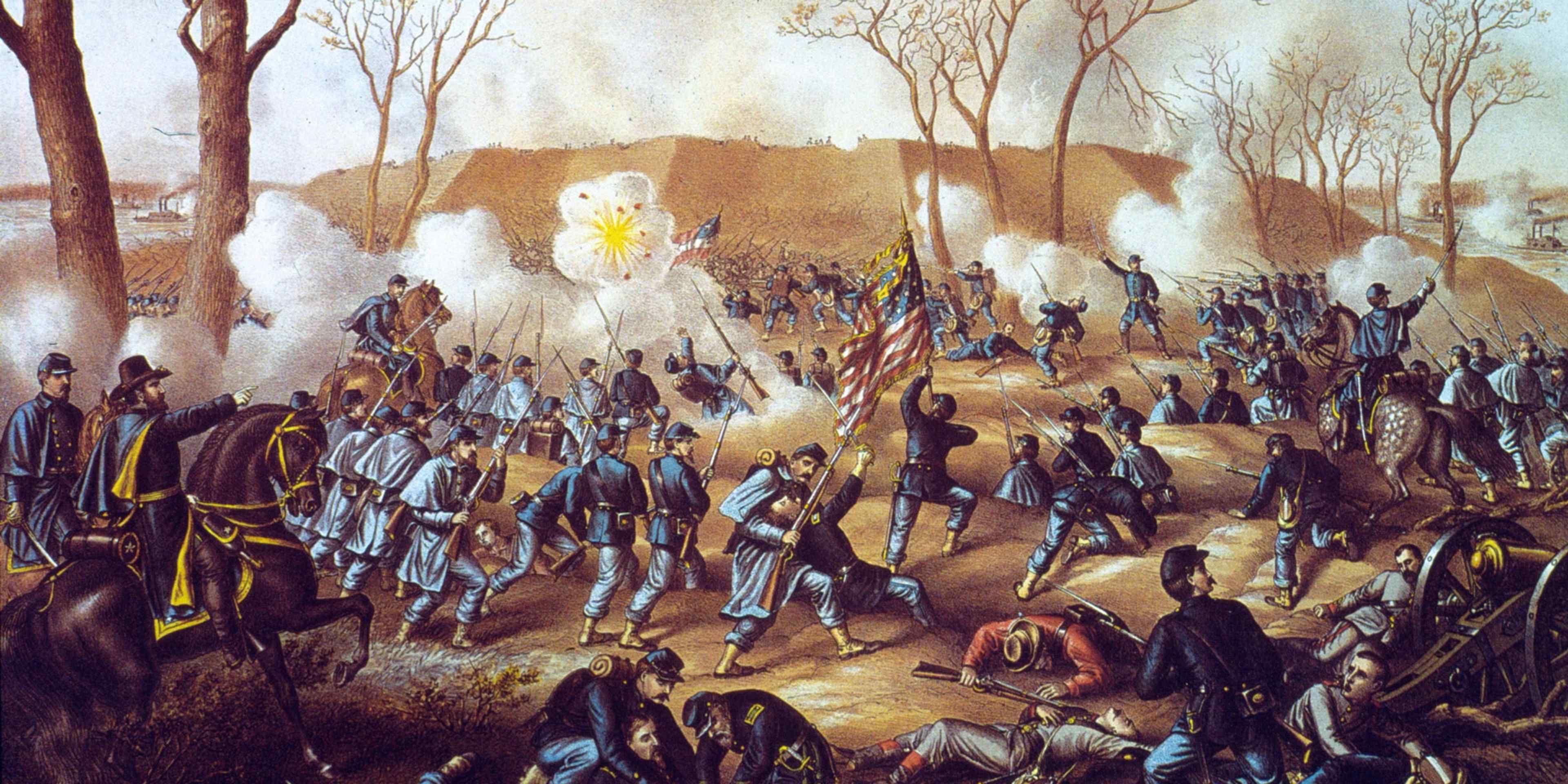
The American Civil War had reached a frustrating stalemate by early 1862, with Union forces desperately searching for a breakthrough in the Western Theater to fracture the Confederate defensive line. That defining moment arrived during the frozen, brutal winter weeks of February 11–16, 1862, in Stewart County, Tennessee, at the Battle of Fort Donelson. This pivotal clash along the Cumberland River marked the Union’s first major, game-changing victory of the war. Under the aggressive leadership of Brigadier General Ulysses S. Grant, Union forces besieged the heavily fortified Confederate stronghold. The fall of Fort Donelson not only shattered the Rebel defensive line in Kentucky and Tennessee but also introduced the nation to Grant’s unrelenting combat philosophy of “unconditional surrender.” As a historic turning point that secured Kentucky’s loyalty to the Union and opened up the heart of the Confederacy to Northern advances, this battle fundamentally reshaped the course of American history. It demonstrated the lethal effectiveness of joint land-and-river military operations and elevated an obscure Union commander to national prominence, setting a trajectory that would ultimately save the United States from permanent dissolution.
Historical Background and Strategic Causes
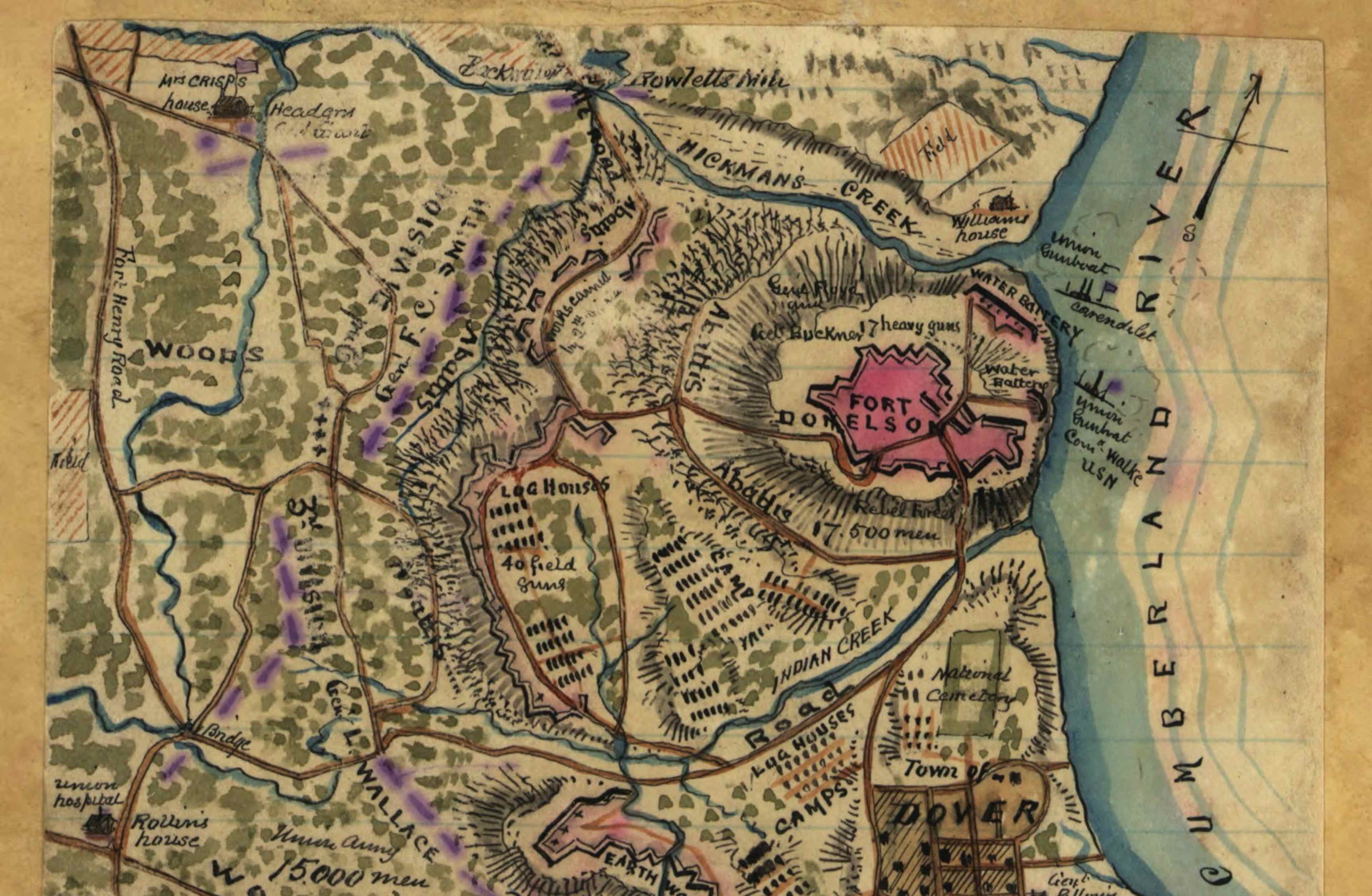
In early 1862, the Confederate Western defense line, commanded by General Albert Sidney Johnston, was incredibly vast but critically thin. Spanning from southwestern Missouri through Kentucky to the Appalachian Mountains, this line relied heavily on two major rivers to protect the Southern heartland: the Tennessee River and the Cumberland River. Understanding that control of these waterways would allow Union forces to bypass overland Confederate defenses, Union commanders conceived a bold joint army-navy offensive. The initial move was the capture of a poorly situated fort downriver, which fell easily during the Battle of Fort Henry on February 6, 1862. Knowing that Fort Donelson, located only 12 miles away on the high bluffs of the Cumberland River, was a much more formidable obstacle, Ulysses S. Grant immediately set his sights on it. The siege of Fort Donelson was driven by a crucial strategic imperative: if the Union could seize the fort, they would gain an open highway into Tennessee, force the evacuation of Nashville, and isolate Confederate forces in Kentucky.
Key Events Timeline of the Siege (February 11–16, 1862)
The Battle of Fort Donelson unfolded over several grueling winter days, marked by bitter cold, freezing rain, and tactical miscalculations on both sides. Below is a chronological breakdown of how the historic siege progressed:
- February 11–12, 1862: Grant marches his troops overland from Fort Henry. He positions his divisions around the landward sides of Fort Donelson, initiating a loose siege.
- February 13, 1862: Union Brigadier General John McClernand launches an unauthorized, unsuccessful assault against a Rebel battery on the fort’s outer works, resulting in heavy Union casualties. Temperatures plummet overnight, and a blizzard leaves soldiers freezing without campfires to avoid revealing their positions.
- February 14, 1862: Union Flag Officer Andrew H. Foote leads his flotilla of ironclads up the Cumberland River to shell the fort. However, Fort Donelson’s elevated water batteries decimate the Union gunboats, forcing them to retreat with heavy damage and wounding Foote.
- February 15, 1862 (Morning): Sensing they are surrounded, Confederate Generals launch a massive, surprise breakout attack on the Union right flank. They successfully push back McClernand’s division and open an escape route to the south.
- February 15, 1862 (Afternoon): In a stunning turn of events, Confederate General Gideon Pillow orders his victorious troops back into their trenches rather than escaping. Grant, realizing the enemy is disorganized, launches a ferocious counterattack, seizing the Confederate outer works on the Union left.
- February 16, 1862: Realizing escape is impossible, Confederate commanders ask for surrender terms. Grant replies with his famous demand for “unconditional and immediate surrender,” which Simon Bolivar Buckner accepts, resulting in the capture of over 12,000 Confederate soldiers.
Key Figures and Their Lasting Legacies
The battle brought together an array of fascinating historical figures, some of whom achieved immortality, while others ruined their reputations forever:
- Ulysses S. Grant: Grant’s aggressive instincts and resilience at Donelson proved he was one of America’s most brilliant military leaders. While other Union generals hesitated, Grant took calculated risks. His victory earned him promotion to major general and the enduring moniker “Unconditional Surrender” Grant.
- Andrew H. Foote: The brave Union Navy Flag Officer whose ironclads played a critical role in the river campaigns, though his fleet suffered severe damage during the naval battle at Donelson.
- John B. Floyd: The senior Confederate commander at the fort and former U.S. Secretary of War. Fearing prosecution for treason if captured by the Union, Floyd turned over command to his subordinates and fled by boat before the surrender.
- Gideon J. Pillow: The second-in-command of the Confederate forces. After orchestrating the successful breakout attempt on February 15, his fatal indecision and subsequent retreat back to the trenches sealed the fort’s fate. Like Floyd, Pillow escaped by boat, leaving his men behind.
- Simon Bolivar Buckner: The third-in-command who was left with the painful duty of surrendering the garrison. Despite being a personal pre-war friend of Grant, Buckner was forced to accept Grant’s harsh surrender terms.
The Turning Point: The Flawed Confederate Breakout
The pivotal turning point occurred on February 15, 1862. The Confederates had executed a brilliant tactical breakout, opening the road to Nashville and safety. Had they retreated then, they would have preserved their army. However, General Pillow believed they should reform and refit before marching. This hesitation allowed Grant, who had been away meeting with Foote, to return to the field and assess the situation. Recognizing that the Confederates were fighting with knapsacks packed for a retreat, Grant realized they were trying to escape rather than hold the fort. He ordered a decisive counterattack on the Confederate right, led by Brigadier General Charles F. Smith. Smith’s men successfully seized the outer Confederate trenches, rendering the fort indefensible. This sequence of events cemented Lincoln and Grant’s partnership, as the President realized he had finally found a general who was willing to fight and win.
Long-Term Impact on America & the Confederacy
The fall of Fort Donelson was an unmitigated disaster for the Confederacy. Politically, it shattered the illusion of Southern military invincibility in the West and secured Kentucky’s alignment with the Union. Geographically, it forced the Confederates to abandon Nashville—making it the first Confederate state capital to fall to Union forces. Economically and logistically, the Cumberland and Tennessee rivers became major Union supply highways, enabling deep penetrations into the Southern heartland that would culminate in the Battle of Shiloh and the capture of Vicksburg. Demographically, the capture of over 12,000 Confederate troops was a devastating loss of manpower that the South could ill afford to lose early in the war.
Lesser-Known Facts & Surprising Anecdotes
- Nathan Bedford Forrest’s Daring Escape: While Generals Floyd and Pillow fled by boat, the aggressive Confederate cavalry leader Nathan Bedford Forrest refused to surrender. He led his cavalrymen and several hundred infantrymen through frozen, waist-deep swamps to escape before the surrender was finalized, preserving his force to fight another day.
- A Friendship Put on Hold: Simon Bolivar Buckner and Ulysses S. Grant were close pre-war friends. Years earlier, when Grant resigned from the U.S. Army and was destitute, Buckner had generously loaned him money to travel home. Buckner expected Grant to offer him honorable, lenient surrender terms out of friendship, but Grant remained strictly professional, demanding “unconditional and immediate surrender.”
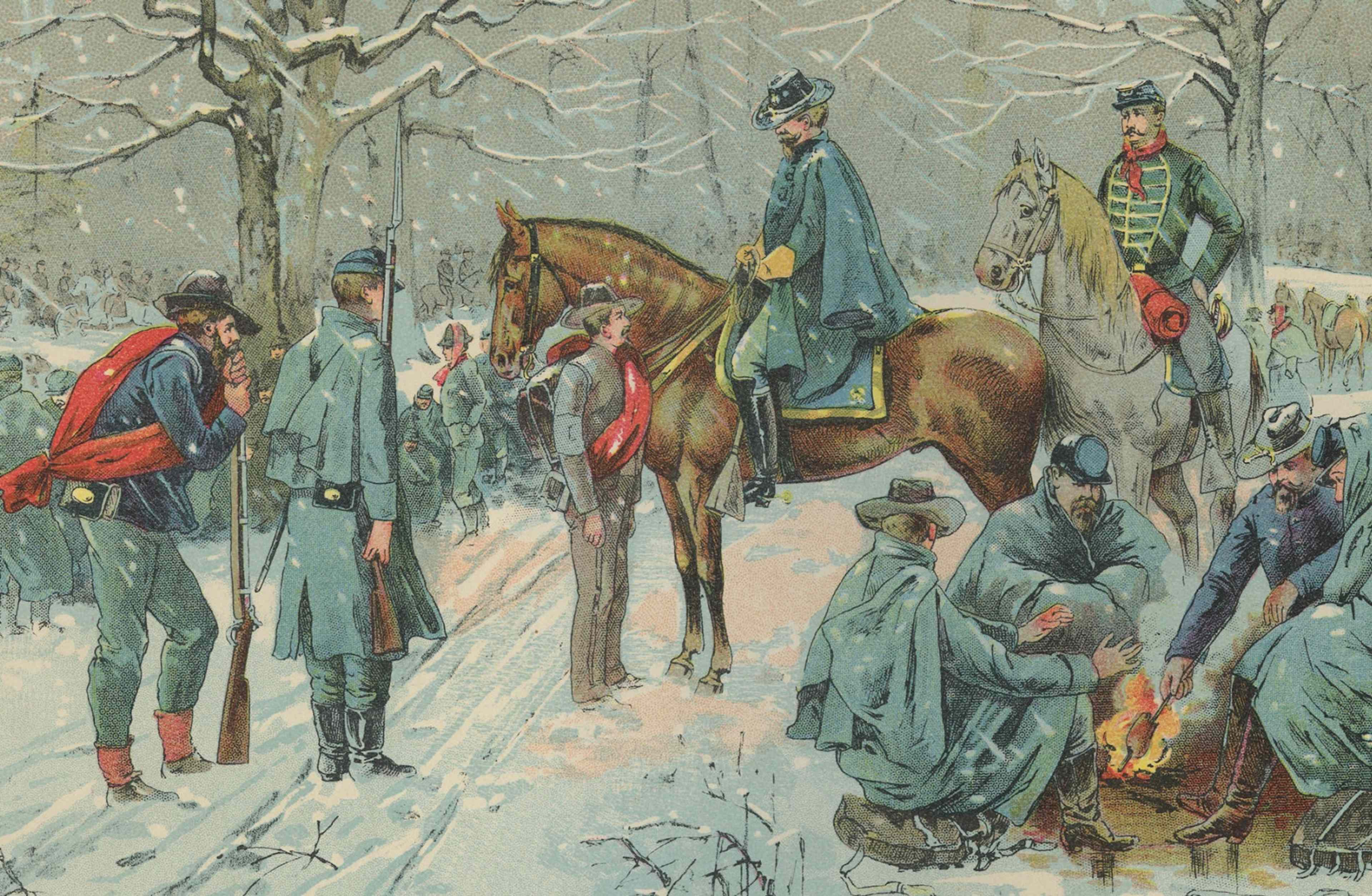
- The Winter of Misery: The weather during the battle was exceptionally brutal. Temperatures dropped from a mild 60 degrees to below freezing, accompanied by sleet and snow. Many soldiers had discarded their heavy coats and blankets during the march from Fort Henry to travel light, leading to severe frostbite and hypothermia on both sides.
Why It Still Matters Today
The Battle of Fort Donelson remains highly relevant today as a prime historical case study in joint-service military operations. The seamless coordination between the Union Army and Navy during the river campaigns revolutionized modern warfare doctrine. Furthermore, the battle marked the beginning of Ulysses S. Grant’s ascent to supreme command, a journey that eventually led to his presidency and the preservation of the United States. Today, the Fort Donelson National Battlefield in Dover, Tennessee, serves as a poignant monument, reminding us of the immense sacrifices made to forge a unified nation and the tragic human cost of the Civil War.
People Also Ask
Who won the Battle of Fort Donelson?
Union forces commanded by Brigadier General Ulysses S. Grant won a decisive victory, capturing the fort and over 12,000 Confederate soldiers.
Where and when did the Battle of Fort Donelson take place?
The battle was fought from February 11 to February 16, 1862, along the Cumberland River near Dover, Tennessee, close to the Kentucky border.
What was the significance of the Battle of Fort Donelson?
It opened up the Cumberland and Tennessee rivers as Union invasion routes, forced the Confederates to abandon Nashville, kept Kentucky in the Union, and established Ulysses S. Grant as a premier Union general.
How many casualties were there in the Battle of Fort Donelson?
The Union suffered around 2,691 casualties, while the Confederates suffered approximately 13,846 casualties, the vast majority of whom were taken as prisoners of war.
Conclusion
The Battle of Fort Donelson was far more than a local tactical victory; it was the catalyst that shook the Confederacy to its foundations in the Western Theater. By securing the vital waterways of the Cumberland and Tennessee rivers, the Union dismantled the South’s northern defensive line and paved the way for subsequent invasions deep into Dixie. It also forged the legend of Ulysses S. Grant, whose resolute demand for unconditional surrender provided a war-weary North with the bold leadership it desperately needed. As we look back on this chilly, blood-soaked struggle of February 1862, we recognize it as the moment the tide began to turn in the West, setting the stage for the ultimate preservation of the American Union.


