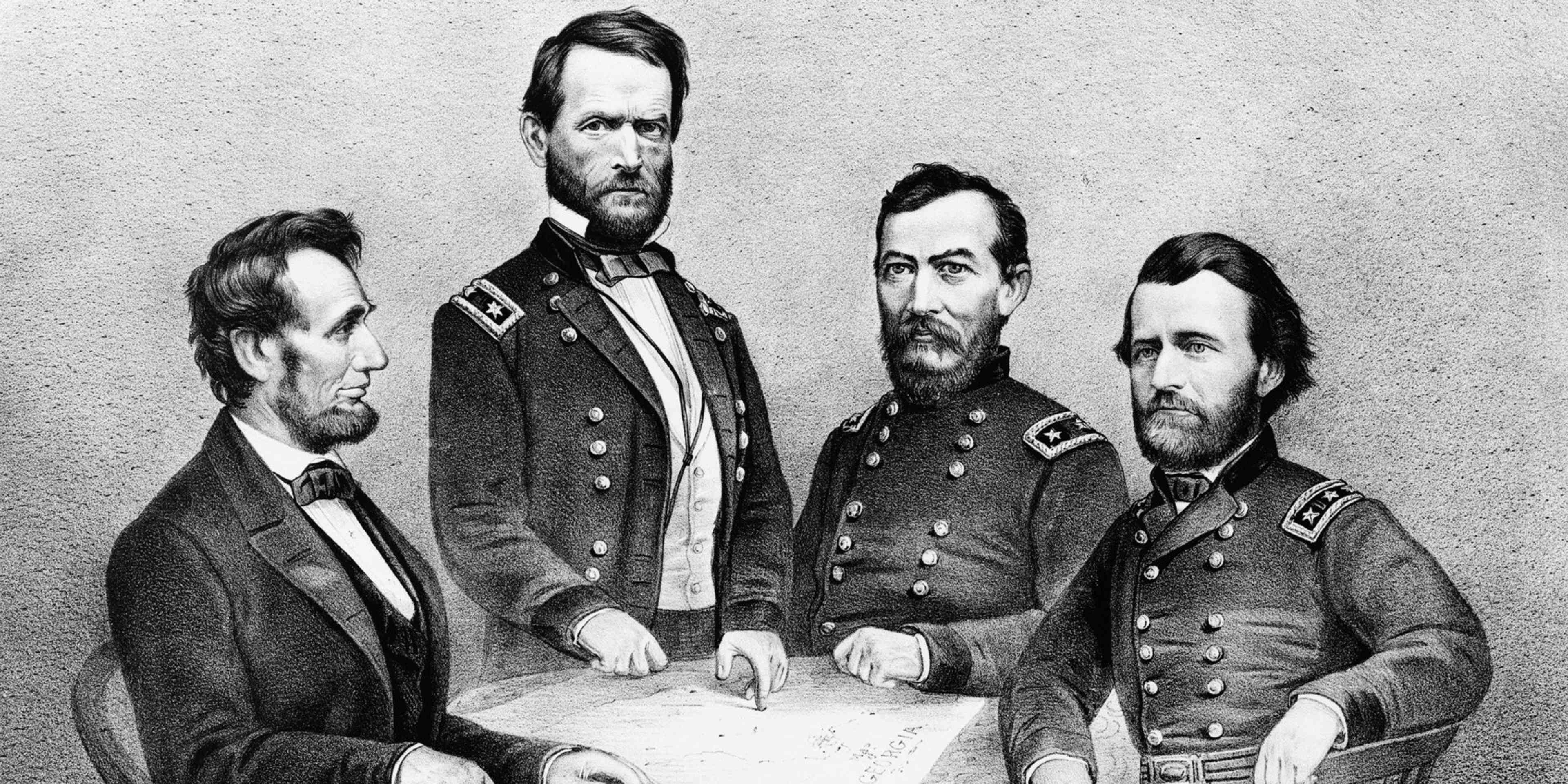
The American Civil War was the most convulsive epoch in the history of the United States, a bloody struggle that threatened to tear the fabric of the young republic apart. At the center of this existential crisis stood two men from humble Midwestern roots: President Abraham Lincoln and General Ulysses S. Grant. While their physical meetings were remarkably rare, their profound mutual respect, shared strategic vision, and relentless determination forged a partnership that ultimately preserved the Union and redefined American democracy. Through the crucible of devastating battlefield losses, intense political scrutiny, and deep personal hardships, Lincoln and Grant constructed a unified command structure that had eluded the Union for the first three years of the conflict. This article explores how their symbiotic relationship overcame political division, military stagnation, and societal exhaustion to secure a hard-fought victory.
Historical Background: A Nation Divided and a President Undone by Hesitation
When the first shots of the Civil War were fired at Fort Sumter in April 1861, the United States was plunged into uncharted territory. President Abraham Lincoln, newly elected and facing the secession of eleven Southern states, held the monumental responsibility of preserving the Union. However, Lincoln was not a military man by training. He relied heavily on his professional officer corps, only to be met with a succession of cautious, hesitant, and politically ambitious generals.
For the first three years of the war, the Eastern theater was defined by the frustrating inactivity of the Army of the Potomac. General George B. McClellan, while an excellent organizer and beloved by his men, was paralyzed by overcaution, constantly overestimating enemy strength and refusing to risk his forces in decisive engagements. Other commanders, such as Ambrose Burnside and Joseph Hooker, suffered catastrophic defeats that severely damaged Northern morale. During the agonizingly slow progress of the war’s early years, public morale in the North plummeted, sparking significant opposition to the conflict, which remains a key chapter in the broader history of anti-war movements in the United States. Lincoln desperately needed a commander who understood that defeating the Confederacy required destroying its armies, not just capturing its cities.
The Rise of Ulysses S. Grant: From Obscurity to Lincoln’s Attention
While the Eastern theater stagnated, a very different kind of warfare was taking shape in the Western theater. Ulysses S. Grant, a West Point graduate who had left the peacetime army under a cloud of rumors regarding alcoholism, had spent the pre-war years struggling as a leather goods salesman in Galena, Illinois. When the war began, Grant volunteered, quickly demonstrating a natural aptitude for logistics, rapid movement, and aggressive combat.
Grant’s early victories in Tennessee at Fort Henry and Fort Donelson in February 1862 marked the first major Union successes of the war. It was at Fort Donelson that Grant earned his famous moniker, “Unconditional Surrender” Grant, after refusing any terms other than immediate and unconditional capitulation from the Confederate garrison. Lincoln, watching from Washington, noted Grant’s decisive, uncompromising nature—a stark contrast to the timidity of McClellan.
Key Events Timeline: The Path to Unified Victory
The partnership between Lincoln and Grant developed incrementally, cemented by crucial campaigns that turned the tide of the war:
- April 6–7, 1862 – The Battle of Shiloh: Grant’s forces survived a massive Confederate surprise attack. Despite high casualties and immediate public calls for Grant’s removal, Lincoln defended him, famously stating, “I can’t spare this man. He fights.”
- July 4, 1863 – The Fall of Vicksburg: After a brilliant, highly unconventional campaign, Grant captured the Confederate stronghold of Vicksburg, Mississippi. This victory split the Confederacy in two and gave the Union complete control of the Mississippi River.
- November 1863 – The Chattanooga Campaign: Grant rescued besieged Union forces in Tennessee and routed Confederate armies, clearing the way for an invasion of the Deep South.
- March 1864 – Elevation to General-in-Chief: Lincoln revived the rank of Lieutenant-General, previously held only by George Washington, and placed Grant in command of all Union armies.
- May–June 1864 – The Overland Campaign: Grant launched a relentless, synchronized offensive. Despite horrific casualties at the Wilderness, Spotsylvania, and Cold Harbor, Grant refused to retreat, maintaining constant pressure on Robert E. Lee’s forces.
- June 1864–April 1865 – Siege of Petersburg: Grant locked Lee’s army into a grueling war of attrition outside Richmond, cutting off Confederate supply lines.
- April 9, 1865 – Surrender at Appomattox: General Robert E. Lee surrendered the Army of Northern Virginia to Grant, effectively ending the military capability of the Confederacy.
The Dynamics of the Lincoln-Grant Partnership
What made the relationship between Lincoln and Grant so historically significant was their mutual understanding of their respective roles. Unlike previous generals who treated Lincoln’s inquiries as political interference, Grant welcomed the president’s backing and respected civilian authority. He recognized that Lincoln bore the immense burden of maintaining political consensus in a divided North.
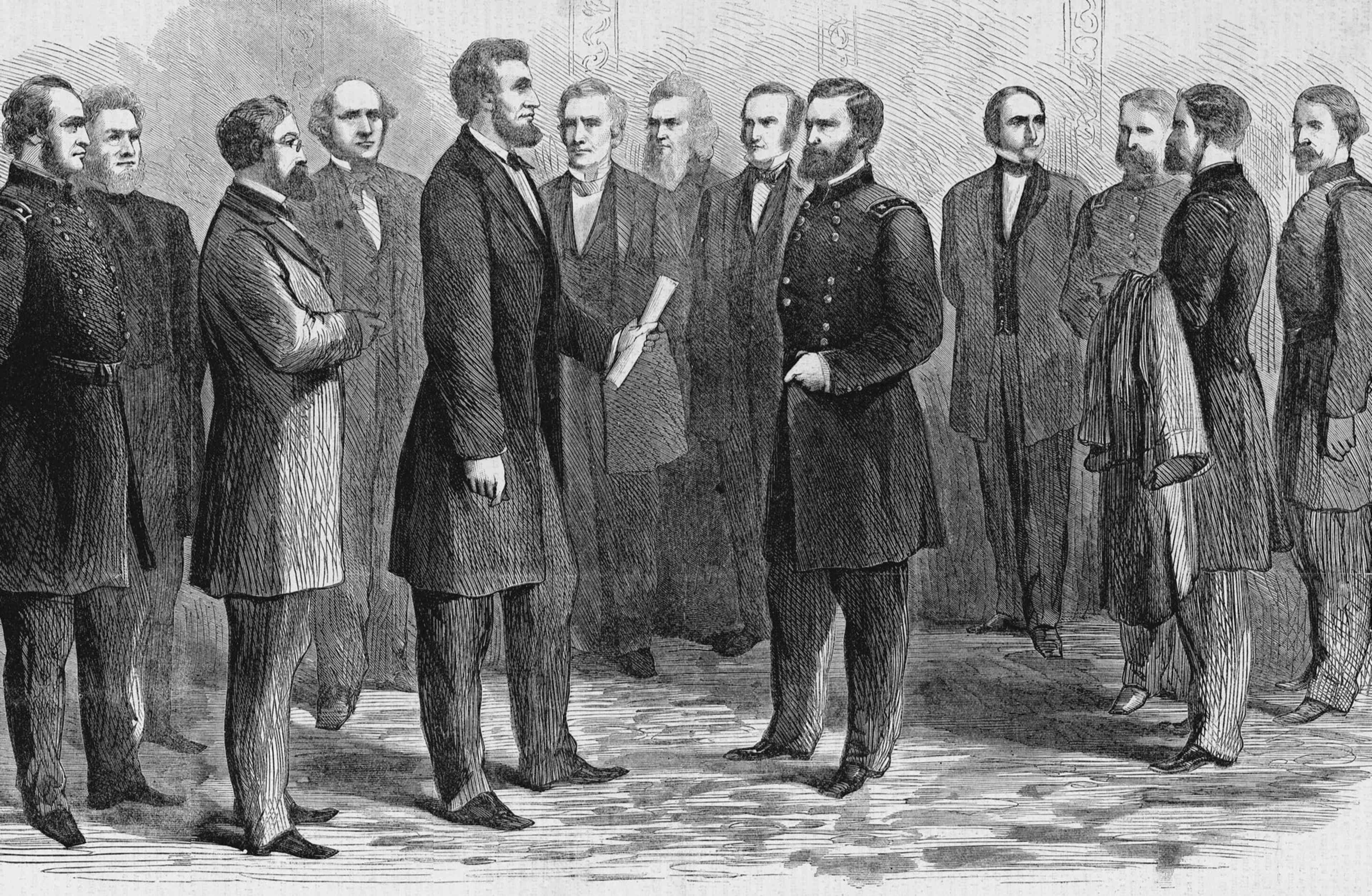
In return, Lincoln gave Grant unprecedented operational freedom. Upon presenting Grant with his commission as Lieutenant-General in March 1864, Lincoln remarked that he did not want to know the specific details of Grant’s military plans; he simply wanted someone who would take the responsibility and act. This trust allowed Grant to design a multi-theater, coordinated strategy that targeted the Confederacy’s infrastructure and armies simultaneously, utilizing General William Tecumseh Sherman to strike through Georgia while Grant personally confronted Lee in Virginia.
Grant and Lincoln’s strategic overhaul also integrated the crucial contribution of United States Colored Troops (USCT). Following the Emancipation Proclamation, thousands of African American soldiers joined the Union army, fighting courageously to secure their freedom and preserve the nation, cementing their place among the most honorable black military heroes throughout US history.
Lesser-Known Facts and Anecdotes
1. The Spurned Theater Invitation
On the morning of April 14, 1865, a victorious President Lincoln invited General Grant and his wife, Julia, to join him at Ford’s Theatre to watch the play Our American Cousin. Lincoln wanted the public to see the architect of victory and the commander-in-chief side-by-side. However, Julia Grant had experienced the sharp edge of Mary Todd Lincoln’s volatile temper and jealousy just weeks earlier during a military review. Eager to avoid another uncomfortable social encounter, Julia urged her husband to decline. Grant made an excuse about visiting his children in New Jersey, saving him from being present—and potentially targeted—at the scene of Lincoln’s tragic assassination.
2. A Kiss for the President’s Messenger
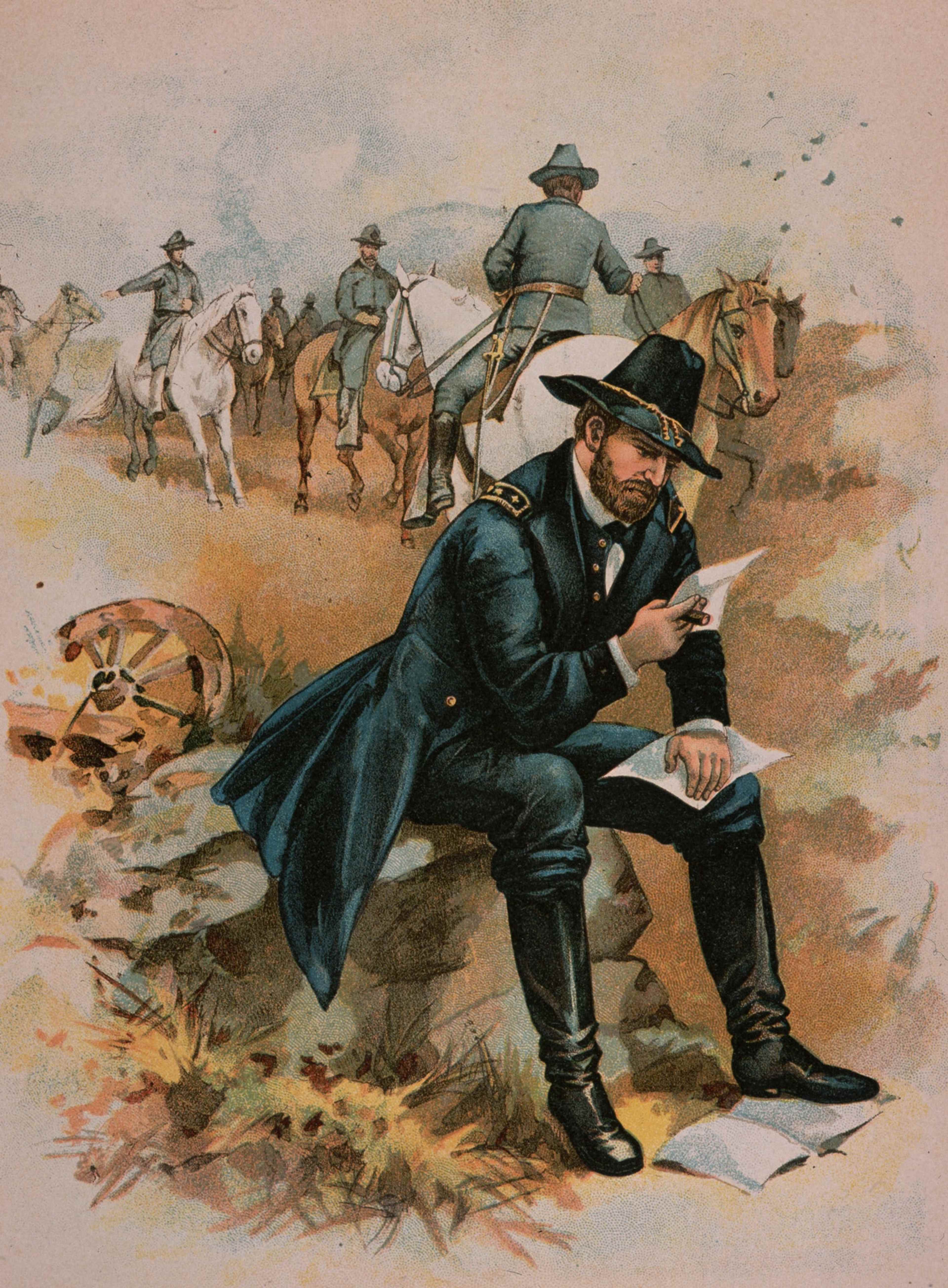
During the bloody Overland Campaign in May 1864, Grant’s forces suffered devastating casualties at the Battle of the Wilderness. Under previous commanders, such losses would have prompted a retreat across the Rappahannock River to reorganize. Instead, Grant ordered his troops to march south, deeper into Confederate territory. He dispatched a journalist to deliver a simple, ironclad message to Lincoln: “There will be no turning back.” Upon receiving this confirmation that he finally had a general who would press the fight to the finish, an emotional Lincoln kissed the messenger in sheer relief.
3. Grant was Originally “No Lincoln Man”
Before the outbreak of the Civil War, Grant did not identify as a political supporter of Abraham Lincoln. Raised in a politically conservative environment, Grant confessed in his personal memoirs that he had not voted for Lincoln in the 1860 election. However, the experience of fighting to preserve the country under Lincoln’s steadfast leadership completely transformed Grant’s perspective. By the end of the war, Grant had wept openly at Lincoln’s casket, writing that to know Lincoln personally was to “love and respect him for his great qualities of heart and head.”
The Long-Term Impact on America
The successful collaboration between Lincoln and Grant did far more than simply win the Civil War; it fundamentally reshaped the structure of the American government and society. By prioritizing unconditional victory, they ensured the permanent eradication of chattel slavery through the passage of the Thirteenth Amendment, transforming millions of formerly enslaved individuals into citizens.
Furthermore, the war consolidated federal authority over individual state sovereignty, establishing once and for all that the United States was a singular, indivisible nation rather than a loose confederation of states. The template of military-civilian cooperation they established became the bedrock of modern American defense policy. As the war neared its end, the question of how to treat the defeated Confederates loomed large. Lincoln’s plans for a forgiving Reconstruction highlighted the vast authority of the executive branch, including the constitutional power to forgive former rebels, illustrating how American presidents acquired the power to pardon.
Why It Still Matters Today
The partnership between Lincoln and Grant remains a masterclass in crisis leadership, organizational trust, and resilience. In an era where institutional trust is frequently tested, their story demonstrates the power of setting aside personal ego and political differences to achieve a transcendent common goal. They proved that effective leadership does not require micromanagement, but rather finding the right people, empowering them with clear authority, and standing by them through the inevitable storms of adversity.
People Also Ask (FAQ)
Why did Abraham Lincoln trust Ulysses S. Grant when others didn’t?
Lincoln trusted Grant because Grant was proactive, highly confident, and took full responsibility for his battlefield decisions. Unlike other Union generals who blamed the administration or demanded more reinforcements before fighting, Grant adapted to the resources he had and kept moving forward.
How did Lincoln and Grant’s partnership change the course of the Civil War?
Before their partnership, Union military efforts were fragmented, with generals in different regions acting independently. Grant and Lincoln established a unified command structure that launched coordinated offensives across multiple theaters, ultimately exhausting the Confederacy’s resources and forcing a surrender.
Did Lincoln and Grant get along personally?
Yes, they shared deep mutual respect. Both came from modest Midwestern backgrounds, possessed a democratic ethos, and felt comfortable around common soldiers. Although their professional duties kept them physically apart for much of the war, their personal bond was strong and emotionally resonant.
Conclusion: The Legacy of a Shared Vision
Ultimately, the union of Lincoln’s political wisdom and Grant’s military genius proved to be the decisive element that saved the United States during its darkest hour. By forging a relationship rooted in trust, accountability, and a shared dedication to the democratic experiment, they guided the nation through the fires of war and laid the foundation for a stronger, more unified America. Their legacy stands as an enduring monument to what can be achieved when courageous leadership meets absolute resolve.


2 comments