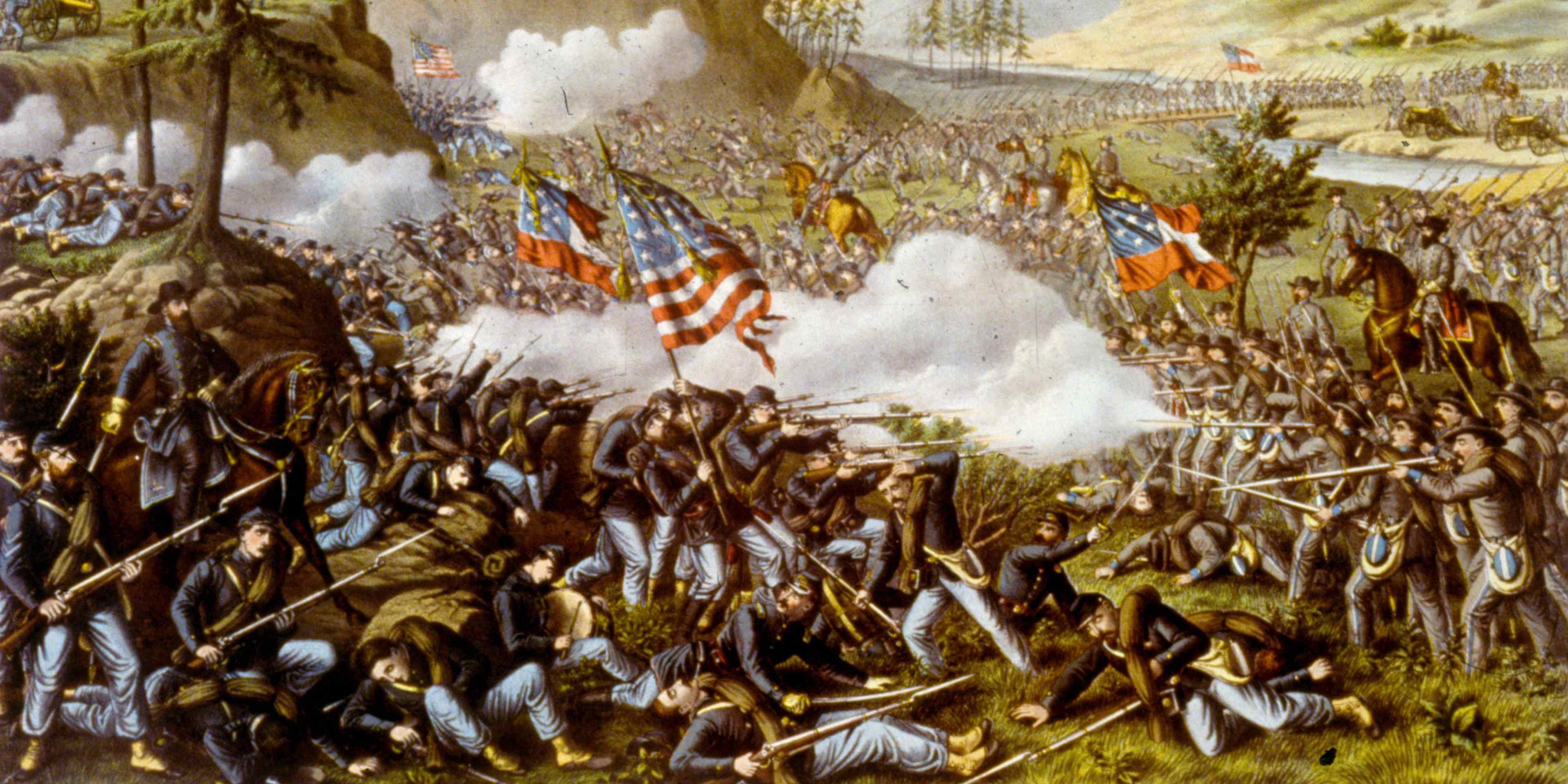
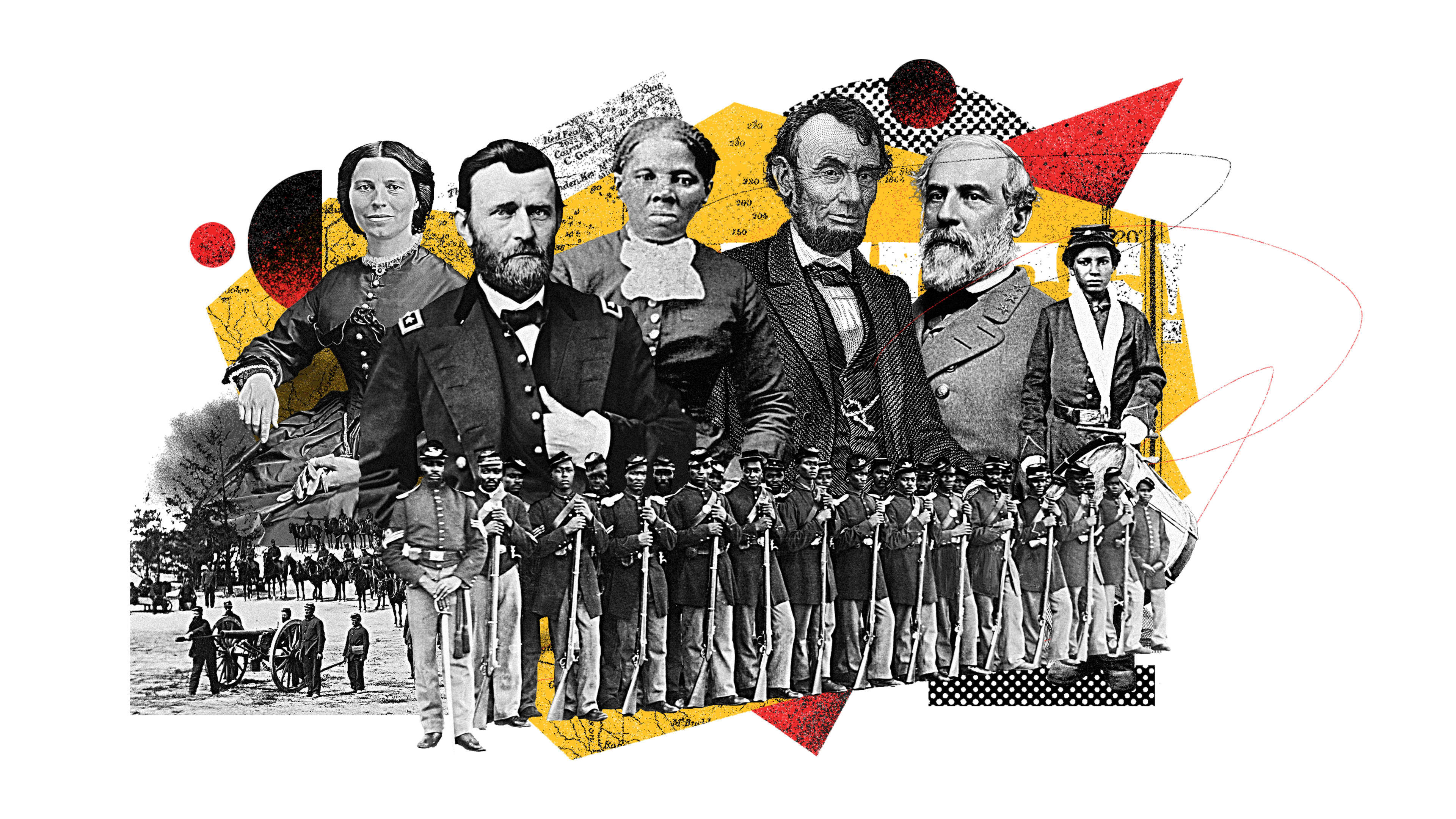
The Battle of Chickamauga, fought between September 18 and 20, 1863, stands as one of the most brutal, chaotic, and strategically pivotal clashes of the American Civil War. Occurring in the dense, tangled forests of northwestern Georgia near the banks of West Chickamauga Creek, this colossal confrontation pitted Major General William S. Rosecrans’ Union Army of the Cumberland against General Braxton Bragg’s Confederate Army of Tennessee. As the second-bloodiest battle of the entire war—surpassed only by Gettysburg—Chickamauga became a crucible that tested military leadership, technology, and sheer human endurance. The conflict arose from a high-stakes campaign for control of Chattanooga, Tennessee, a critical railroad junction known as the “Gateway to the Deep South”. The dramatic events that unfolded here not only shaped the Western Theater of the war but also left an indelible mark on the American consciousness. Indeed, the American Civil War was defined by bloody struggles that ultimately secured great strides for freedom across the nation, reshaping the legal and social fabric of the United States forever. Understanding this battle means examining a story of devastating communication failures, incredible defensive heroism, and a legacy that echoes into modern military preservation.
Historical Background: The Campaign for Chattanooga
To understand why the Battle of Chickamauga occurred, one must examine the strategic landscape of late summer 1863. While the Union celebrated major victories in the East at Gettysburg and in the West at Vicksburg, the Confederate Army in Tennessee remained a potent threat. The Union war effort sought to capture Chattanooga, Tennessee, a vital rail hub that linked the eastern and western parts of the Confederacy. Recognizing this, Major General William S. Rosecrans executed the brilliant Tullahoma Campaign in June 1863, outmaneuvering General Braxton Bragg and forcing the Confederates to abandon Chattanooga without a major battle.
Flushed with success, Rosecrans mistakenly assumed Bragg’s Army of Tennessee was in a demoralized and disorganized retreat. He pursued the Confederate forces across the Georgia border into Catoosa and Walker counties. However, Bragg was far from defeated; he was concentrating his troops and eagerly awaiting major reinforcements. Lieutenant General James Longstreet arrived with two seasoned divisions from the Army of Northern Virginia, boosting Bragg’s numbers and setting the stage for a massive counteroffensive.
Causes and Context: The Geopolitical and Military Importance
The control of Chattanooga was the ultimate prize. Nestled along the Tennessee River, Chattanooga was surrounded by mountains, making it a natural fortress and a primary gateway for any northern invasion into the deep southern states of Georgia, Alabama, and the Carolinas. Abraham Lincoln famously emphasized that capturing Chattanooga was just as critical as capturing Richmond, the Confederate capital. For the South, losing Chattanooga meant a devastating disruption to their supply lines and communications. For the North, its capture would divide the Confederacy and pave the way for a decisive campaign into Georgia. This high-stakes reality created an environment where neither side could afford to yield, setting up a brutal clash of iron wills in the dense Georgia woods.
Chronological Timeline of the Battle
- September 18, 1863: Preliminaries and Creek Crossings – The battle begins with heavy skirmishing as Bragg’s forces attempt to cross West Chickamauga Creek at Reed’s and Alexander’s bridges. Union cavalry and mounted infantry, armed with new repeating rifles, mount a stubborn defense to delay the Confederate advance.
- September 19, 1863: The First Day of Full Scale Combat – In the dense, low-visibility underbrush, the two armies stumble into each other. Chaotic, piecemeal fighting erupts along a battlefront spanning several miles. Bragg repeatedly assaults the Union left flank to cut Rosecrans off from Chattanooga, but Union troops hold their ground.
- September 20, 1863: The Fateful Breakthrough and Union Retreat – The decisive day of the battle. A critical misunderstanding in the Union chain of command creates a massive gap in the center of their line. Confederate General James Longstreet immediately exploits this gap, routing the Union right and center. While Rosecrans retreats to Chattanooga, General George H. Thomas leads a desperate, heroic stand on Horseshoe Ridge, allowing the army to retreat in an orderly fashion.
Key Figures and Their Lasting Impact
General Braxton Bragg (Confederacy)
Commanding the Confederate Army of Tennessee, Braxton Bragg was a strict disciplinarian whose difficult personality often alienated his subordinates. Although Chickamauga was his greatest tactical victory, his cautiousness and failure to aggressively pursue the defeated Union army allowed them to fortify Chattanooga. This inaction ultimately turned his tactical triumph into a strategic defeat.
Major General William S. Rosecrans (Union)
Sought after for his organizational and logistical brilliance, Rosecrans commanded the Army of the Cumberland. However, his performance at Chickamauga was marred by panic and communication failures. The disastrous order he issued on September 20 destroyed his reputation, leading to his replacement by Ulysses S. Grant shortly after the battle.
Major General George H. Thomas (Union)
A Virginia native who remained fiercely loyal to the Union, Thomas proved to be the savior of the Army of the Cumberland. His stubborn defense of Snodgrass Hill and Horseshoe Ridge earned him the legendary moniker “The Rock of Chickamauga”. He succeeded Rosecrans as commander of the Army of the Cumberland.
Brigadier General James A. Garfield (Union)
Serving as Rosecrans’ chief-of-staff, Garfield made a heroic ride through heavy gunfire to carry vital messages to General Thomas. He used his military record at Chickamauga to propel his political career in Ohio, eventually being elected the 20th President of the United States in 1880.
The Fatal Blunder: Wood’s Withdrawal
On the morning of September 20, a combination of heavy smoke and dense foliage severely limited visibility. A Union scout erroneously reported that a gap existed in the Union line near General John Brannan’s division. Believing the report, Rosecrans issued a hasty written command to General Thomas J. Wood, ordering him to close the gap.
Wood was fully aware that there was no gap and that Brannan’s division was actually in place. However, Wood had recently received a harsh, public reprimand from Rosecrans for not moving quickly enough. To avoid further trouble, Wood chose to obey the letter of the order immediately. He pulled his division out of the line to march around Brannan, opening a real and massive gap in the Union defense. By sheer coincidence, Confederate General James Longstreet launched a powerful, eight-brigade assault column at that exact sector. The Confederates poured through the opening, cutting the Union army in half and causing a chaotic rout.
The Rock of Chickamauga: The Stand on Horseshoe Ridge
As the Union army crumbled, George H. Thomas refused to yield. Retreating to the high ground of Snodgrass Hill and Horseshoe Ridge, Thomas gathered fragments of routed regiments to form a makeshift defensive perimeter. For hours, his men repulsed wave after wave of desperate Confederate assaults. While historians often study brilliant military retreats for their strategic value, Thomas’s stand at Horseshoe Ridge was a masterclass in defensive resilience. His stubborn defense prevented the complete destruction of the Union army and bought valuable time for the rest of the forces to organize a secure retreat into the fortifications of Chattanooga.
Lesser-Known and Fascinating Facts
Braxton Bragg and the Trail of Tears
Decades before he commanded the Confederate army at Chickamauga, Braxton Bragg was a young West Point graduate attached to the U.S. Artillery. In 1838, his unit was tasked with rounding up members of the Cherokee Nation near Chattanooga and Chickamauga for forced removal and resettlement in the American West. This dark chapter, which occurred along the brutal 1,200-mile journey known as the Trail of Tears, resulted in the tragic deaths of more than 5,000 Cherokee from disease, exposure, and starvation. It remains a somber reminder of the historical trauma inflicted upon the indigenous peoples of this region.
James Garfield’s Tragic Coincidence
James Garfield used his actions at Chickamauga to advance his political ambitions, exaggerating his role at the expense of his former commander, Rosecrans. Elected president in 1880, Garfield’s term was tragically short. He was shot by an assassin just four months after his inauguration and passed away on September 19, 1881—the exact 18th anniversary of the first day of the Battle of Chickamauga. This tragic alignment represents one of the most famous coincidences in American presidential history.
The Firepower of the Lightning Brigade
Colonel John T. Wilder’s “Lightning Brigade” of mounted Union infantry was equipped with the revolutionary Spencer repeating rifle. Capable of firing up to 20 rounds per minute—more than double the rate of standard muzzleloaders—these weapons allowed Wilder’s men to unleash a devastating barrage of gunfire. During the battle, the firepower was so intense that Confederate General James Longstreet mistakenly believed he was facing a massive, fresh Union reinforcement column.
The Deadlier Sequel of Camp George H. Thomas
In 1898, during the Spanish-American War, the old Chickamauga battlefield was converted into a massive training facility named Camp George H. Thomas. Poor sanitation, crowded conditions, and a severe heatwave led to a catastrophic typhoid outbreak. More than 400 soldiers died of disease at the camp—exceeding the total combat deaths suffered by the United States during the entire Spanish-American War.
Long-Term Impact on America
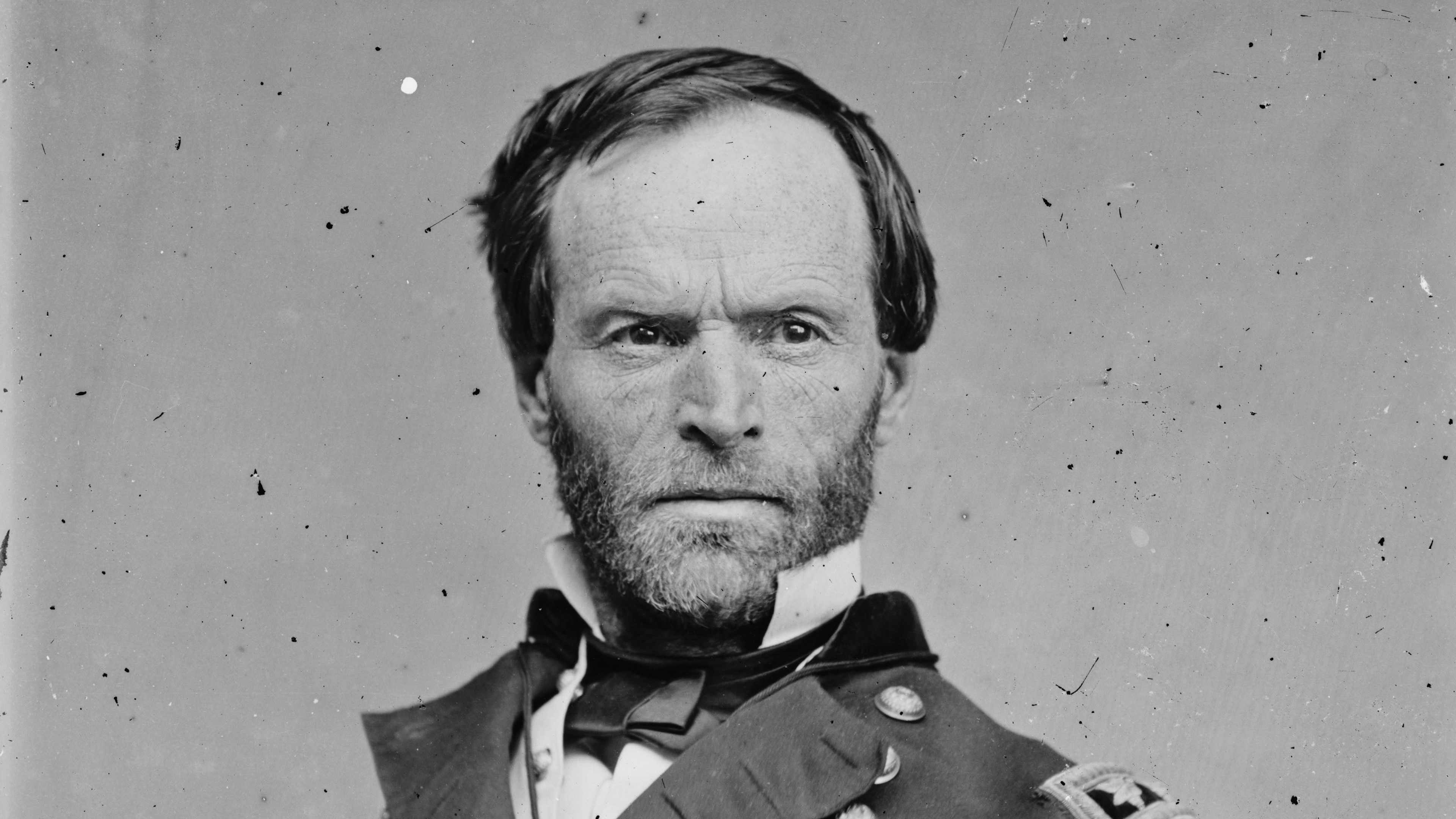
Though the battle ended in a stunning Confederate tactical victory, it was achieved at an unsustainable cost. The Confederates suffered over 18,000 casualties, while the Union suffered 16,000. Bragg’s failure to exploit his victory allowed the Union to securely hold Chattanooga. By late November, General Ulysses S. Grant arrived with reinforcements, broke the Confederate siege, and drove Bragg’s forces away. With Chattanooga permanently secured, the city became the vital staging ground for General William Tecumseh Sherman’s Atlanta Campaign in 1864, which ultimately sealed the fate of the Confederacy.
Furthermore, Chickamauga holds a unique place in American heritage as the birthplace of the National Military Park system. In the late 1880s, veterans from both the Union and Confederate armies joined forces to preserve the historic landscape. Officially dedicated in 1895, the Chickamauga and Chattanooga National Military Park was the first of its kind, serving as the model for future preservation efforts at Gettysburg, Vicksburg, and Shiloh.
People Also Ask
Who won the Battle of Chickamauga?
The Battle of Chickamauga was a decisive tactical victory for the Confederate Army of Tennessee, led by General Braxton Bragg. However, because Bragg failed to immediately pursue the retreating Union forces, the Union army safely reorganized in Chattanooga.
Why is it called the Battle of Chickamauga?
The battle was named after West Chickamauga Creek, which flows near the battlefield in northwestern Georgia. The word “Chickamauga” is believed to be derived from a Cherokee term, often translated as “river of death” or “sluggish water.”
Why was the Battle of Chickamauga so significant?
It was the second-deadliest battle of the American Civil War, surpassed only by Gettysburg. It represented the peak of Confederate military success in the Western Theater, but its pyrrhic nature and the subsequent Union recovery at Chattanooga paved the way for Sherman’s invasion of the Deep South.
Conclusion
The Battle of Chickamauga remains a profound chapter in American history, characterized by intense bravery, critical human error, and immense sacrifice. It serves as a reminder of how quickly the tides of war can turn due to a single communication failure. Today, the preserved battlefields of Chickamauga do more than honor the thousands of soldiers who fought and died there; they stand as an enduring symbol of national reconciliation, bridging the deep divides of the past to foster a shared understanding of America’s complex journey.


