The Compromise of 1877 remains one of the most controversial, consequential, and heavily debated backroom deals in the history of American democracy. Following the devastating carnage of the American Civil War, the nation entered a tumultuous period known as the Reconstruction era. This was a fragile time meant to rebuild the shattered Union and, crucially, secure the fundamental civil rights of newly emancipated African Americans. However, by the late 1870s, political fatigue, economic depression, and intense partisan division culminated in the highly disputed presidential election of 1876 between Republican Rutherford B. Hayes and Democrat Samuel J. Tilden. With the presidency hanging in the balance and threats of a second civil war looming, politicians from both parties met in secret to broker a deal that would forever alter the course of American history. The resulting agreement resolved the election deadlock but effectively abandoned millions of Black Americans to decades of state-sanctioned oppression, marking a tragic pivot point from the idealistic promises of freedom to the dark reality of the Jim Crow South.

Historical Background: A Nation at a Crossroads
To understand the gravity of the Compromise of 1877, one must examine the socio-political climate of post-Civil War America. Following the Union victory, the federal government embarked on Reconstruction (1863–1877), a bold effort to integrate the former Confederate states back into the Union and protect the newly won liberties of formerly enslaved individuals. Under the protection of federal troops stationed throughout the South, African Americans made historic strides. They voted in massive numbers, ran for public office, and established schools, churches, and communities. This was a revolutionary shift in the American landscape, bringing the nation closer to the founding principles of liberty and justice championed during the country’s birth.
However, this progressive era faced fierce and violent resistance from white Southern Democrats, often calling themselves “Redeemers,” who sought to restore the antebellum racial hierarchy. Organizations like the Ku Klux Klan waged campaigns of terror to suppress the Black vote and dismantle Republican state governments in the South. By the mid-1870s, Northern public opinion was shifting. A devastating economic panic in 1873 had distracted Northern voters, who became increasingly fatigued by the ongoing military occupation of the South and the endless political scandals surrounding the administration of President Ulysses S. Grant. The stage was set for a political showdown that would decide not only the next president but the very fate of Reconstruction itself.
The Deadlock: The Disputed Election of 1876
The catalyst for the Compromise of 1877 was the presidential election of November 7, 1876. The Democrats nominated Samuel J. Tilden, the reform-minded Governor of New York who had famously dismantled the corrupt Tweed Ring. The Republicans chose Rutherford B. Hayes, the respected three-term Governor of Ohio. When the initial votes were counted, Tilden won the popular vote by a clear margin of approximately 250,000 votes and secured 184 electoral votes—just one vote shy of the 185 needed for victory. Hayes stood at 165 electoral votes.
However, 20 electoral votes remained in dispute. These disputed votes came from Oregon (where one elector’s eligibility was challenged) and three Southern states still under federal military occupation: Florida, Louisiana, and South Carolina. In these three Southern states, both parties claimed victory. Republican-controlled election boards threw out thousands of Democratic votes, alleging widespread intimidation, violence, and fraud against Black voters. Meanwhile, Democrats accused Republicans of stealing the election. With two competing sets of electoral returns sent to Washington, D.C., the United States faced an unprecedented constitutional crisis. The Constitution offered no clear mechanism for resolving a dispute where Congress’s two chambers were split—the House was controlled by Democrats, while the Senate was controlled by Republicans.
Key Events Timeline: The Path to the Compromise
- November 7, 1876: Election Day concludes with Samuel J. Tilden leading the popular vote, but the electoral votes in Florida, Louisiana, and South Carolina remain heavily contested.
- December 1876: Dual sets of electoral certificates are submitted by both parties to Congress from the disputed states.
- January 29, 1877: To break the deadlock, Congress passes a bill creating a temporary 15-member Electoral Commission. It consists of five Senators, five Representatives, and five Supreme Court Justices, designed to have an equal partisan split.
- February 1877: Independent Supreme Court Justice David Davis resigns from the commission and is replaced by Republican Justice Joseph P. Bradley, giving Republicans an 8-7 majority. The commission subsequently votes 8-7 along party lines to award all disputed electoral votes to Hayes.
- February 26, 1877: With Democrats threatening to filibuster the final electoral count, key representatives from both camps meet secretly at the Wormley House hotel in Washington, D.C., to negotiate a settlement.
- March 2, 1877: Congress officially declares Rutherford B. Hayes the winner of the presidency by an electoral vote of 185 to 184.
- March 4–5, 1877: Rutherford B. Hayes is privately sworn in as the 19th President of the United States, followed by a public inauguration.
- April 1877: President Hayes orders the withdrawal of the remaining federal troops from South Carolina and Louisiana, effectively ending Reconstruction.
Important Figures and Their Historical Roles
Rutherford B. Hayes
As the Republican nominee, Rutherford B. Hayes was a moderate who favored civil service reform and “home rule” for the South. While he did not directly participate in the backroom negotiations of the Compromise, his representatives made the promises that secured his presidency. Hayes believed that the Southern state governments would voluntarily honor the constitutional amendments protecting Black citizens—a hope that proved tragically naive.
Samuel J. Tilden
The Democratic nominee, Samuel J. Tilden, was a brilliant lawyer and reformer. Despite winning the popular vote and coming incredibly close to the presidency, Tilden chose to accept the rulings of the Electoral Commission rather than contest the results through violence, prioritizing the peaceful transition of power over his personal political ambitions.

Ulysses S. Grant
The outgoing president, Ulysses S. Grant, worked diligently behind the scenes to maintain peace in Washington during the tense months of the dispute. Though he had previously used federal troops to protect Black voters, Grant recognized the growing Northern fatigue and supported a peaceful compromise to prevent another civil outbreak.
James Wormley
James Wormley was a wealthy and highly respected Black businessman in Washington, D.C., who owned the Wormley House hotel where the final, decisive negotiations took place. Ironically, the very deal that dismantled federal protections for African Americans was finalized in an establishment owned by a prominent African American civic leader.
Causes and Context of the Secret Agreement
The underlying issues that set the stage for the Compromise of 1877 were rooted in economic desperation and political pragmatism. The Panic of 1873 had plunged the United States into a severe depression, causing widespread unemployment and business failures. Northern industrialists and financiers were desperate for economic stability and feared that a prolonged political crisis would devastate the markets further. They lobbied heavily for “peace at any price,” prioritizing commerce over civil rights. At the same time, Southern Democrats desired federal subsidies for internal improvements, such as the Texas and Pacific Railway, and wanted to regain complete local political control—known as “home rule”—free from northern interference.
Major Turning Points and “The Bargain”
The critical turning point occurred during the late-night sessions at the Wormley House on February 26, 1877. To prevent a catastrophic filibuster by Northern and Southern Democrats that would halt the certification of the election, Hayes’s allies offered a series of concessions to Southern Democrats. In exchange for allowing Hayes to peacefully ascend to the presidency, the Republicans agreed to several key demands:
- The immediate withdrawal of all remaining federal troops from the South, specifically from the statehouses of Louisiana and South Carolina.
- The appointment of at least one Southern Democrat to Hayes’s cabinet.
- Federal aid for Southern transcontinental railroad projects and other internal economic developments.
- The right of Southern states to govern their own internal affairs without federal intervention.
This informal, unwritten agreement, often called “The Bargain of 1877,” successfully averted a constitutional crisis but marked the formal end of the Reconstruction era.
Long-Term Impact on America
The long-term impact of the Compromise of 1877 on American society was catastrophic, particularly for Black Americans living in the South. With the removal of federal troops, the Republican state governments collapsed, and Southern Democrats—the “Redeemers”—swept back into power. Over the next several decades, these governments systematically dismantled the political, social, and economic gains made by Black Americans during Reconstruction. This abandonment highlighted the tragic cycle of freedom and bondage that Black Americans faced across different eras of U.S. history.
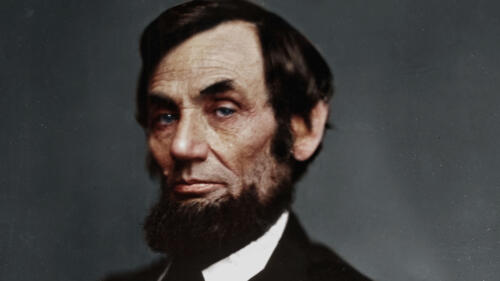
Southern states instituted Jim Crow laws, which legally mandated racial segregation in public spaces, schools, and transportation. To prevent Black citizens from exercising their constitutional right to vote, states implemented literacy tests, poll taxes, and grandfather clauses. Those who attempted to resist this oppression faced extreme violence, disenfranchisement, and terror, including the horrors of lynching. The federal government, having retreated from its commitment to civil rights, largely turned a blind eye. This betrayal overshadowed the courageous contributions of Black heroes throughout U.S. history who had fought bravely to preserve the Union, leaving a legacy of institutionalized racism that would persist for nearly a century until the Civil Rights Movement of the 1950s and 1960s forced a modern reckoning.
Lesser-Known Facts About the Compromise of 1877
- The Wormley Irony: James Wormley, the owner of the hotel where the compromise was forged, was a former slave who became one of the wealthiest Black men in Washington. He was also a passionate advocate for Black education, making it deeply ironic that his luxurious establishment hosted the destruction of Southern Reconstruction.
- The Filibuster That Almost Broke the Nation: Some radical Northern Democrats wanted to delay the electoral count past the March 4 inauguration date to force a new election or spark an uprising. It was the Southern Democrats who broke ranks and stopped the filibuster, choosing “home rule” over Tilden’s presidency.
- No Official Paperwork: Despite its monumental impact, no single official document containing the terms of the Compromise of 1877 exists. The entire deal was arranged through letters, private conversations, and informal handshakes.
Why It Still Matters Today
The Compromise of 1877 serves as a cautionary tale about the fragility of democratic institutions and the cost of political opportunism. It illustrates how easily constitutional protections can be sacrificed in the name of national unity, economic stability, and partisan gain. Modern debates over voting rights, electoral integrity, and the role of the federal government in protecting civil liberties are direct descendants of the unresolved issues of the Reconstruction era. Understanding this critical compromise helps us recognize that progress is not always linear and that protecting the rights of all citizens requires constant vigilance and institutional commitment.
People Also Ask
What was the main outcome of the Compromise of 1877?
The main outcome of the Compromise of 1877 was that Republican Rutherford B. Hayes was awarded the presidency in exchange for the withdrawal of federal troops from the South, which effectively ended the Reconstruction era and allowed Southern Democrats to regain political control of the region.
How did the Compromise of 1877 affect African Americans?
The compromise devastated African Americans in the South. Without federal military protection, their political power vanished, leading to widespread disenfranchisement, racial violence, and the establishment of oppressive Jim Crow segregation laws that lasted for nearly a century.
Who won the popular vote in the election of 1876?
Democrat Samuel J. Tilden won the popular vote by approximately 250,000 votes, but he lost the presidency by a single electoral vote (185 to 184) after the disputed electoral votes were awarded to Rutherford B. Hayes through the Compromise of 1877.
Conclusion
The Compromise of 1877 stands as a stark reminder of the delicate balance between peace and justice in American history. While it successfully averted a second civil war and restored political stability to a fractured Washington, it did so by sacrificing the constitutional rights and safety of millions of Black Americans. By ending Reconstruction prematurely, the deal set back the cause of racial equality by generations, leaving a legacy of division that the United States is still striving to overcome today.


