When most Americans picture Abraham Lincoln, they envision a somber, deeply weathered statesman wearing a black frock coat and a towering stovepipe hat, carrying the immense weight of a fractured nation on his shoulders. Yet, long before he became the 16th President of the United States, Lincoln was renowned throughout the American frontier not for his legal mind or political rhetoric, but for his extraordinary physical strength, agility, and prowess as an elite wrestler. Standing at an imposing 6 feet 4 inches, Lincoln was a formidable athlete who dominated local grappling matches, played early precursors to modern handball, and maintained a level of physical fitness that was exceptionally rare for politicians of his era. This lesser-known side of “Honest Abe” reveals a leader whose physical resilience was forged in the demanding environment of the early 19th-century American wilderness, ultimately preparing him for the grueling challenges of the Civil War.
The Frontier Crucible: Sports and Physical Culture in early 19th-Century America
To understand Abraham Lincoln’s athleticism, one must first understand the demanding reality of the American frontier in the early 1800s. Life in rural Kentucky, Indiana, and Illinois was physically punishing. Survival required clearing dense forests, tilling rocky soil, splitting wooden rails for fences, and constructing log cabins from scratch. In this environment, physical strength was not merely a recreational asset; it was a baseline requirement for daily life. Frontier athletics were highly localized and deeply integrated into community life. Rather than organized leagues, recreation consisted of spontaneous tests of strength, such as tugs-of-war, heavy lifting, footraces, and wrestling. For a young man looking to establish himself in a new settlement, physical dominance was a primary source of social capital and respect.
The Legend of New Salem: Lincoln’s Near-Invincible Wrestling Career
Of all his athletic pursuits, Abraham Lincoln’s wrestling career is by far the most celebrated. Competing for more than a decade during his youth, Lincoln compiled an astonishing record, suffering only one documented defeat in approximately 300 matches. He practiced a style known as “catch-as-catch-can” wrestling, which allowed for a wide array of holds, throws, and physical maneuvers. Lincoln’s remarkable reach, leveraged by his long limbs, made him an incredibly difficult opponent to unbalance or pin.
The Fateful Showdown with the Clary’s Grove Gang
The defining moment of Lincoln’s athletic youth occurred in 1831, shortly after the 22-year-old newcomer arrived in the pioneer village of New Salem, Illinois. Unlike the rowdy locals, Lincoln was quiet, did not drink alcohol, and spent his spare time reading books. Seeking to test the mettle of this unusually tall stranger, a notorious group of local roughnecks known as the Clary’s Grove gang challenged Lincoln to a wrestling match against their undisputed champion, Jack Armstrong.
The match drew a massive crowd of onlookers from the surrounding settlements. While historical accounts of the fight’s conclusion vary—some claim Lincoln threw Armstrong cleanly, others suggest Armstrong resorted to a foul move leading to a stalemate, and some claim Lincoln won outright—the outcome was culturally decisive. Lincoln acquitted himself with such strength, courage, and fairness that he instantly earned the deep respect of Armstrong and his followers. Instead of harboring resentment, the Clary’s Grove gang became some of Lincoln’s most loyal friends and political supporters during his early campaigns for the Illinois legislature.
Lincoln’s exceptional grappling skills did not go unnoticed by history. In 1992, the National Wrestling Hall of Fame in Stillwater, Oklahoma, formally inducted Abraham Lincoln as an “Outstanding American” in the sport, honoring his athletic legacy with a prominent mural just inside the museum’s entrance.
Chronological Timeline of Lincoln’s Athletic and Physical Milestones
- 1809–1830: Lincoln spends his youth performing intensive manual labor, clearing timber, and splitting rails in Kentucky and Indiana, building a highly muscular, robust physique.
- 1831: Lincoln moves to New Salem, Illinois, and wrestles Jack Armstrong, securing his social standing and launching his local reputation.
- 1832: During the Black Hawk War, Lincoln is elected captain of his volunteer militia unit, largely due to his physical stature and wrestling victories over rival soldiers.
- 1842: Lincoln’s physical courage is tested when he is challenged to a duel by political rival James Shields. Lincoln selects cavalry broadswords as the weapons, leveraging his immense reach to force a peaceful resolution.
- 1840s–1850s: As a successful lawyer on the Illinois judicial circuit, Lincoln routinely plays billiards and bowls “ten pins” to decompress between trials.
- 1860: On the eve of his presidential nomination, the 51-year-old Lincoln regularly plays “Fives,” a fast-paced handball game, in vacant lots in Springfield, Illinois.
- 1865: Just weeks before his assassination, Lincoln performs a legendary feat of physical strength aboard the steamboat River Queen, holding a heavy woodcutter’s axe straight out with two fingers.
Key Figures in Lincoln’s Physical Legacy
Several historical figures witnessed, documented, or directly participated in Abraham Lincoln’s athletic life, leaving behind invaluable accounts of his physical capabilities:
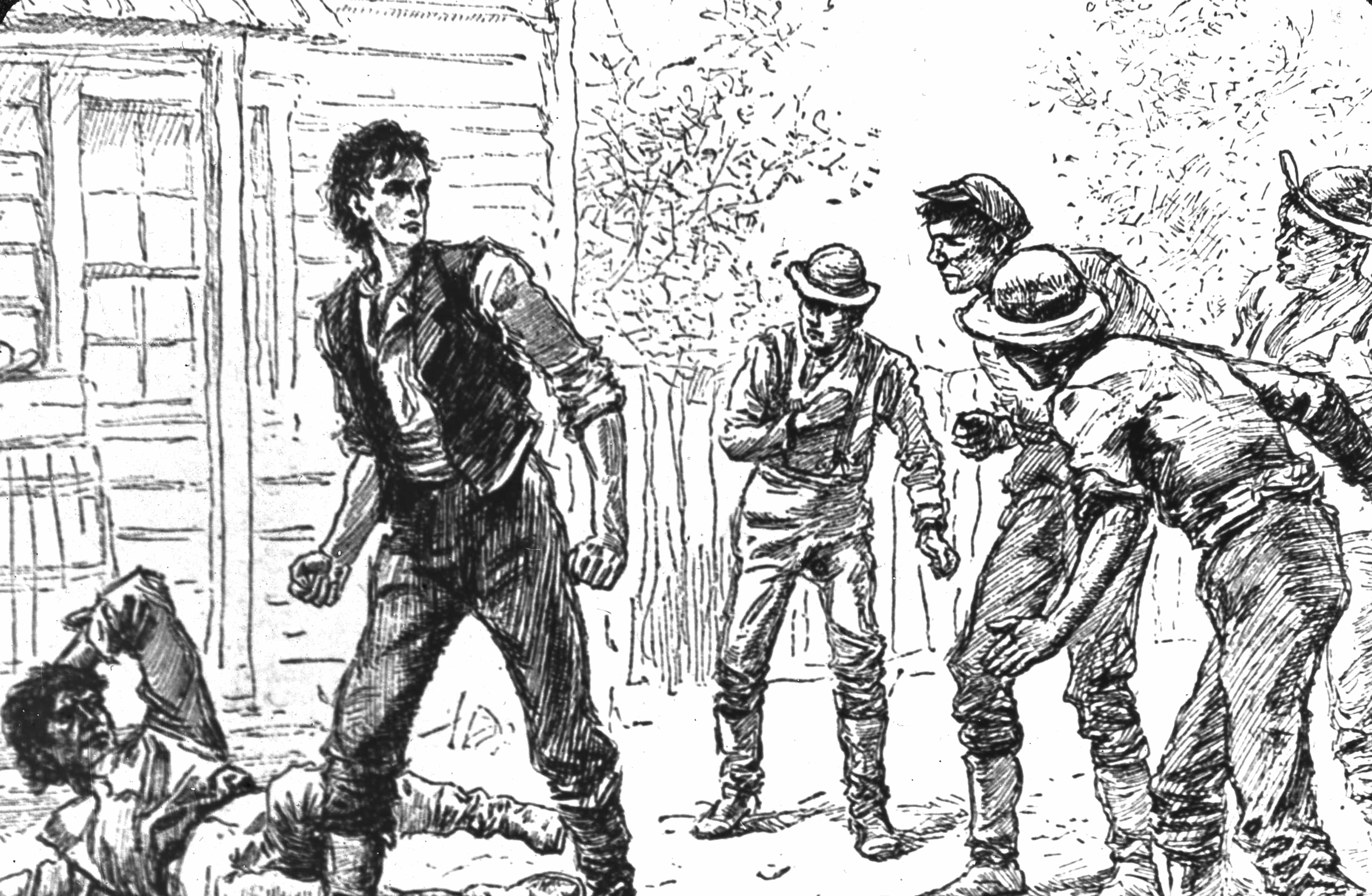
- Jack Armstrong: The leader of the Clary’s Grove gang whose wrestling match with Lincoln in 1831 cemented Lincoln’s reputation for strength and honor in Illinois.
- Dr. Preston H. Bailhache: The Lincoln family physician in Springfield, who observed Lincoln playing handball and noted how his “long arms and long legs served a good purpose in reaching and returning the ball from any angle.”
- William Donnelly: A Springfield resident and unofficial custodian of the local handball court, who offered a candid, less flattering view of the future president’s skills, noting that while Lincoln loved to play “Fives” and did “tolerably well,” he had started learning the game too late in life to truly master it.
- James Shields: An Illinois state auditor who challenged Lincoln to a duel in 1842. This confrontation, which could have ended in tragedy, remains one of the most famous near-misses in political history. Had the duel proceeded, it would have undoubtedly been remembered alongside other legendary historical duels of the 19th century.
Beyond Wrestling: Billiards, Bowling, and “Fives”
While wrestling was a young man’s game, Lincoln’s passion for physical activity and recreation persisted well into his adulthood. As a practicing attorney in Springfield, Lincoln sought out recreational activities to relieve the cognitive strain of his legal work. He was known to frequent local bowling alleys to play “ten pins,” a sport that was rapidly rising in popularity across the United States during the 1830s and 1840s. He also enjoyed playing billiards, though observers noted that his witty storytelling and self-deprecating humor during the matches were far more impressive than his actual skill with a cue stick.
During the pivotal year of 1860, as the Republican National Convention met in Chicago to select its presidential candidate, Lincoln remained in Springfield. To pass the anxious hours of waiting, the 51-year-old lawyer could frequently be found in a vacant lot off the public square, playing “Fives”—a traditional, fast-paced version of handball where players used their bare hands to strike a ball against a brick wall. This active display of physical endurance on the verge of his presidency shattered the traditional image of the sedentary, fragile politician.
Debunking the Baseball Myth
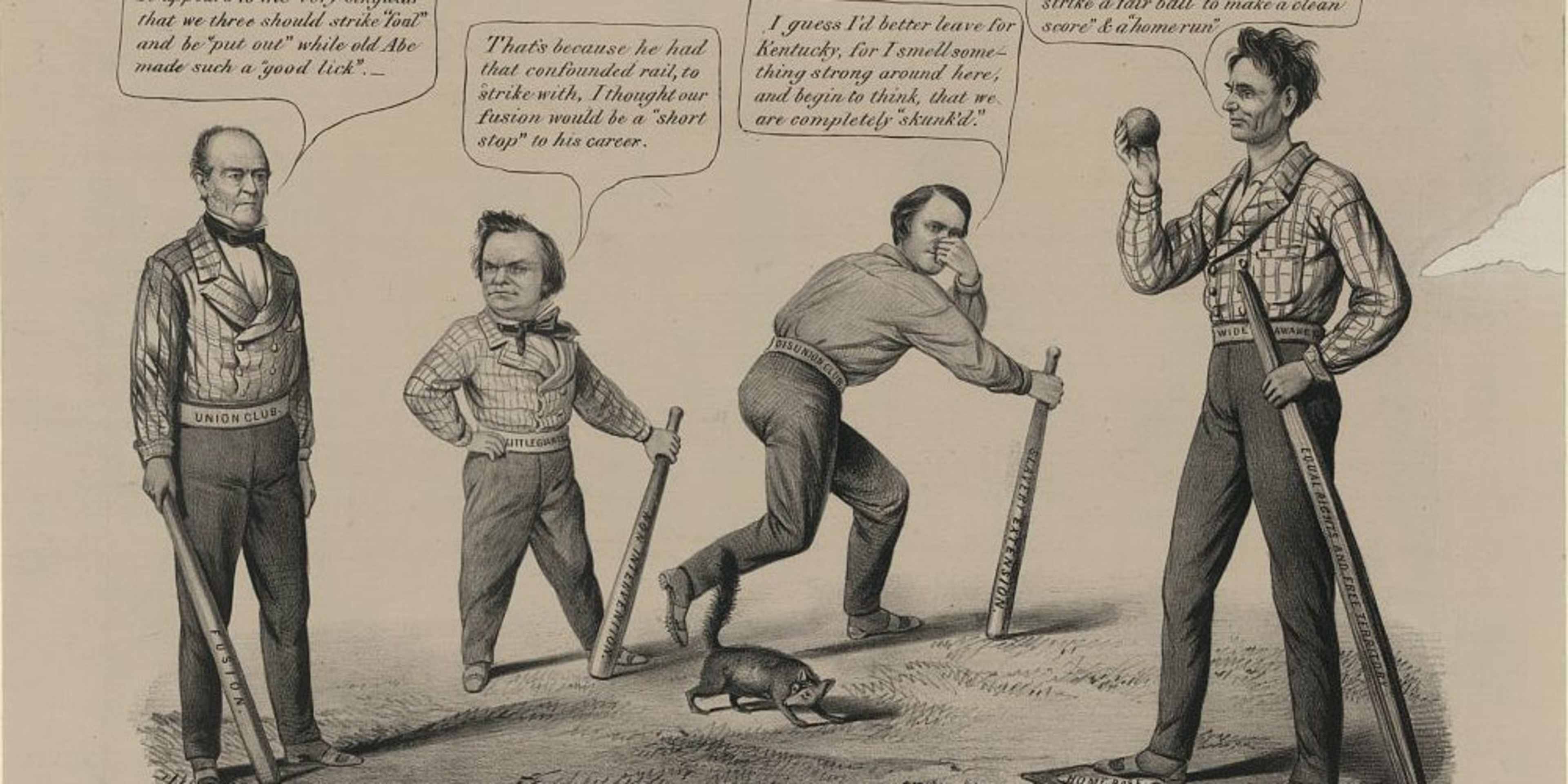
A persistent myth in American sports folklore suggests that Lincoln was actively playing baseball in Springfield when a messenger arrived to inform him of his presidential nomination. According to this legend, Lincoln was at bat and told the messenger to wait until he finished his turn at the plate. While this makes for a charming story, historical records confirm it is entirely fictitious. Lincoln never wrote or spoke about baseball, and there is no evidence he ever played the game. The myth likely originated from an 1860 political cartoon by Currier and Ives titled “The National Game,” which depicted Lincoln defeating his political rivals using baseball terminology, capitalizing on the sport’s burgeoning status as America’s favorite pastime.
The Long-Term Impact: How Fitness Shaped Lincoln’s Presidency
Lincoln’s lifelong dedication to physical activity was not merely a matter of personal enjoyment; it had profound political and practical implications. During the 1860 presidential campaign, the Republican Party successfully capitalized on his frontier background, branding him as “The Railsplitter.” This image of a rugged, physically strong self-made man resonated deeply with working-class voters, contrasting sharply with his aristocratic opponents.
Furthermore, the physical stamina Lincoln developed during his youth was critical to surviving the unimaginable pressures of the American Civil War. He routinely worked eighteen-hour days, endured severe sleep deprivation, and faced constant emotional distress. His robust physical constitution allowed him to withstand these conditions and lead the Union to victory, enabling the nation to make great strides for freedom in U.S. history through the abolition of slavery. His life, filled with unique ironies and unexpected turns, remains a frequent subject of study when exploring famous historical coincidences and remarkable administrative feats.
Lesser-Known Anecdotes of Lincoln’s Strength
Even as president, Lincoln loved to demonstrate that his physical strength had not waned with age or the burdens of office. In the spring of 1865, while returning from a visit to the military front aboard a steamboat, Lincoln noticed an axe lying on the deck. He picked it up and, to the amazement of the onlookers, extended his right arm perfectly parallel to the deck, holding the heavy axe horizontally by the very tip of its handle using only two fingers. He held it completely still before challenging the younger men on board to replicate the feat. None of them could. At a time when rumors circulated that the president was physically failing, Lincoln’s quiet display of raw strength proved he remained remarkably robust.
Why It Still Matters Today
Today, the relationship between a leader’s physical health and their capacity to govern remains a central point of public discussion. Abraham Lincoln’s athletic legacy serves as an early, powerful example of how physical fitness, stamina, and resilience can directly influence historical outcomes. His ability to connect with everyday citizens through shared athletic interests and his physically imposing presence helped him command respect during a period of unprecedented national crisis, proving that a strong mind is best supported by a strong body.
People Also Ask
Was Abraham Lincoln really a champion wrestler?
Yes. Abraham Lincoln competed in approximately 300 wrestling matches throughout his youth in Indiana and Illinois, losing only once. His formidable skills and clean sportsmanship earned him an induction into the National Wrestling Hall of Fame in 1992.
What is the game of “Fives” that Lincoln played?
“Fives” is a 19th-century British racket sport, similar to modern handball, where players use their gloved or bare hands to hit a ball against a stone or brick wall. Lincoln played it regularly to stay in shape and relieve stress.
Did Lincoln really carry an axe by the tip with two fingers?
Yes. This well-documented event occurred in April 1865. Despite the immense stress of the Civil War, Lincoln retained incredible grip and upper-body strength, easily performing physical feats that men half his age could not replicate.
Conclusion
Abraham Lincoln was far more than a brilliant orator and a visionary politician; he was a true product of the rugged American frontier whose physical strength and athletic endeavors shaped his character and leadership style. From the wrestling rings of New Salem to the handball courts of Springfield, Lincoln’s physical resilience was a cornerstone of his success. By examining his athletic achievements, we gain a deeper, more complete appreciation of the man who possessed the physical and moral fortitude required to hold a fractured nation together.


