History is often viewed as a structured, predictable march of causes and effects, but occasionally, the fabric of time aligns in ways that defy mathematical probability. These extraordinary occurrences, known as some of the most famous coincidences in history, bridge eras and connect individuals across centuries in manners so bizarre they read like works of fiction. From the early foundation of the United States to the tragic industrial accidents of the twentieth century, these historical coincidences in American history and global lore remind us that destiny is often stranger than any script. By examining these uncanny intersections, we gain a unique appreciation for the highly interconnected nature of human events, prompting us to ask whether these milestones are merely random occurrences or the result of deeper, underlying historical currents.
The Sociopolitical Context of Uncanny Historical Intersections
To truly appreciate these historical coincidences, one must understand the eras in which they occurred. The late eighteenth and nineteenth centuries were periods of immense structural transformation. In America, the transition from a fragile coalition of colonies to a continent-spanning empire was marked by intense ideological conflicts, bloodshed, and rapid technological advancements. Meanwhile, the industrial revolution in Europe ushered in an era of massive mechanical constructs and high-seas navigation, setting the stage for human drama on an unprecedented scale. Within these highly charged historical settings, individual lives constantly intersected, occasionally producing events that seemed guided by an unseen hand.
1. The Revolutionary Dusk: The Poetic Passing of Adams and Jefferson
When the Continental Congress convened in 1775 in Philadelphia, Thomas Jefferson and John Adams forged an immediate and powerful friendship. Jefferson, the tall, reserved Virginian, possessed a brilliant literary mind, while Adams, the stout, passionate intellectual from Massachusetts, was the voice of the revolution. Together, they drafted the Declaration of Independence, establishing a legacy of early democratic experiments that had been underway since the era of the Mayflower, illustrating how the Mayflower Compact laid a foundation for democracy in the New World. Their geographical roots in Massachusetts and Virginia highlighted the distinct regional landscapes that had long shaped the American experiment. Readers interested in how these early boundaries and cultures developed can view the 13 colonies map and original states to see how these foundational regions influenced early national politics.
However, their deep bond frayed when political factions emerged. Following Adams’ presidency, Jefferson defeated him in the bitter election of 1800. For over a decade, they remained completely estranged. It was not until 1812, prompted by mutual friends, that Adams sent Jefferson a warm New Year’s greeting. This gesture ignited a fifteen-year correspondence that remains one of the greatest literary treasures of American history. On July 4, 1826, as the young nation celebrated the exact 50th anniversary of the Declaration of Independence, the 83-year-old Jefferson drew his last breath at Monticello. Hours later, unaware of his friend’s passing, the 90-year-old Adams died in Quincy, whispering his final, mistaken words: ‘Thomas Jefferson survives.’ Adding to this bizarre historical pattern, James Monroe, the fifth President, also passed away on July 4th in 1831, while James Madison narrowly avoided the same fate, dying on June 28, 1836, after refusing medical stimulants intended to prolong his life to the Fourth of July.
2. A Hand in the Dark: The Booth and Lincoln Intersection
The tragic assassination of Abraham Lincoln by John Wilkes Booth in April 1865 is etched into the global consciousness. Yet, a stunning prelude to this national tragedy occurred months earlier, involving the President’s eldest son, Robert Todd Lincoln, and the assassin’s brother, Edwin Booth. In late 1864, Robert Todd was traveling by train from New York to Washington, D.C. During a crowded stop in Jersey City, New Jersey, Robert was pressed against a stopped train carriage on the platform. When the train suddenly began to move, he slipped into the dangerous gap between the platform and the tracks.
Before he could be crushed or severely injured, a stranger lunged forward, grabbed him by the collar, and pulled him to safety. Robert immediately recognized his savior as Edwin Booth, the most famous Shakespearean stage actor of the nineteenth century, and thanked him profusely. Edwin did not realize the identity of the young man he had saved until weeks later, when he received a letter of gratitude from Union officer Colonel Adam Badeau. This heroic act provided Edwin with a singular source of solace after his brother’s heinous actions forever tarnished the family name.
3. The Presidential Shadow: Robert Todd Lincoln’s Uncanny Presence
While Robert Todd Lincoln survived his close call in Jersey City, his life would remain inexplicably intertwined with presidential tragedies. In fact, Robert was present at or near three separate presidential assassinations in American history, leading him to believe a dark cloud followed him. The first occurrence was in April 1865, when he rushed to his father’s bedside at the Petersen House, witnessing the President’s final moments.
Sixteen years later, in July 1881, Robert Todd Lincoln was serving as the Secretary of War under President James A. Garfield. He was waiting at the Washington, D.C. train station to travel to New Jersey with the President when Charles Guiteau stepped out of the crowd and shot Garfield in the back. Decades later, in September 1901, President William McKinley invited Robert to the Pan-American Exposition in Buffalo, New York. Just as Lincoln arrived at the venue to meet the chief executive, anarchist Leon Czolgosz shot McKinley in the chest. Reflecting on these horrifying occurrences, Robert Todd Lincoln wryly remarked that there was a ‘certain fatality about the presidential function’ whenever he was present, prompting him to politely decline future presidential invitations.
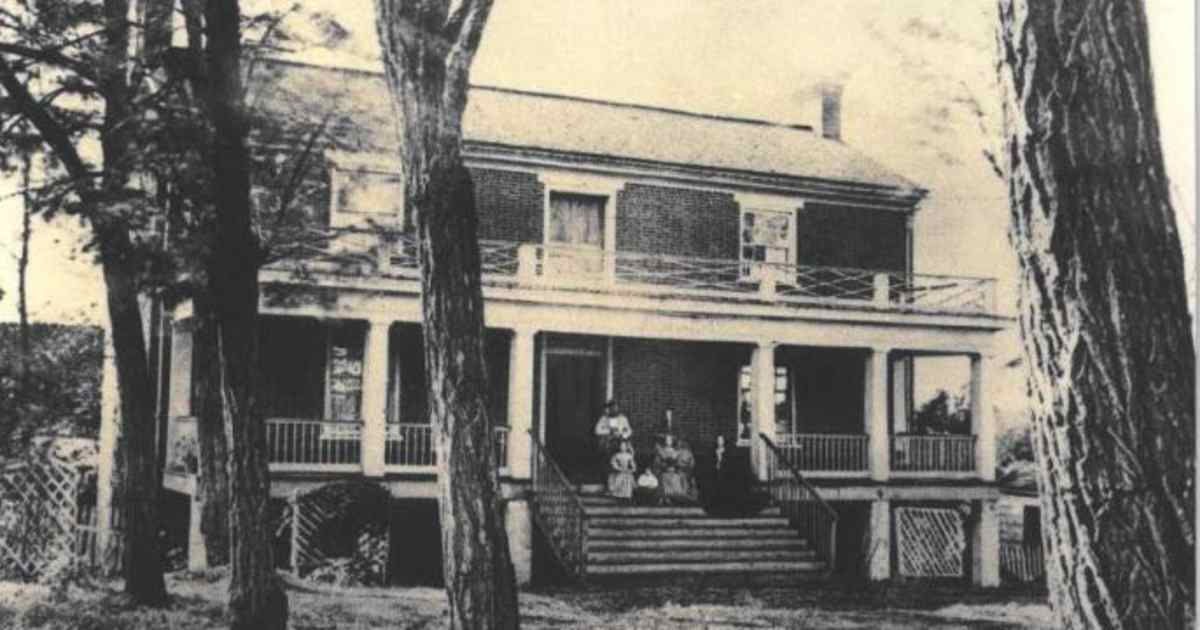
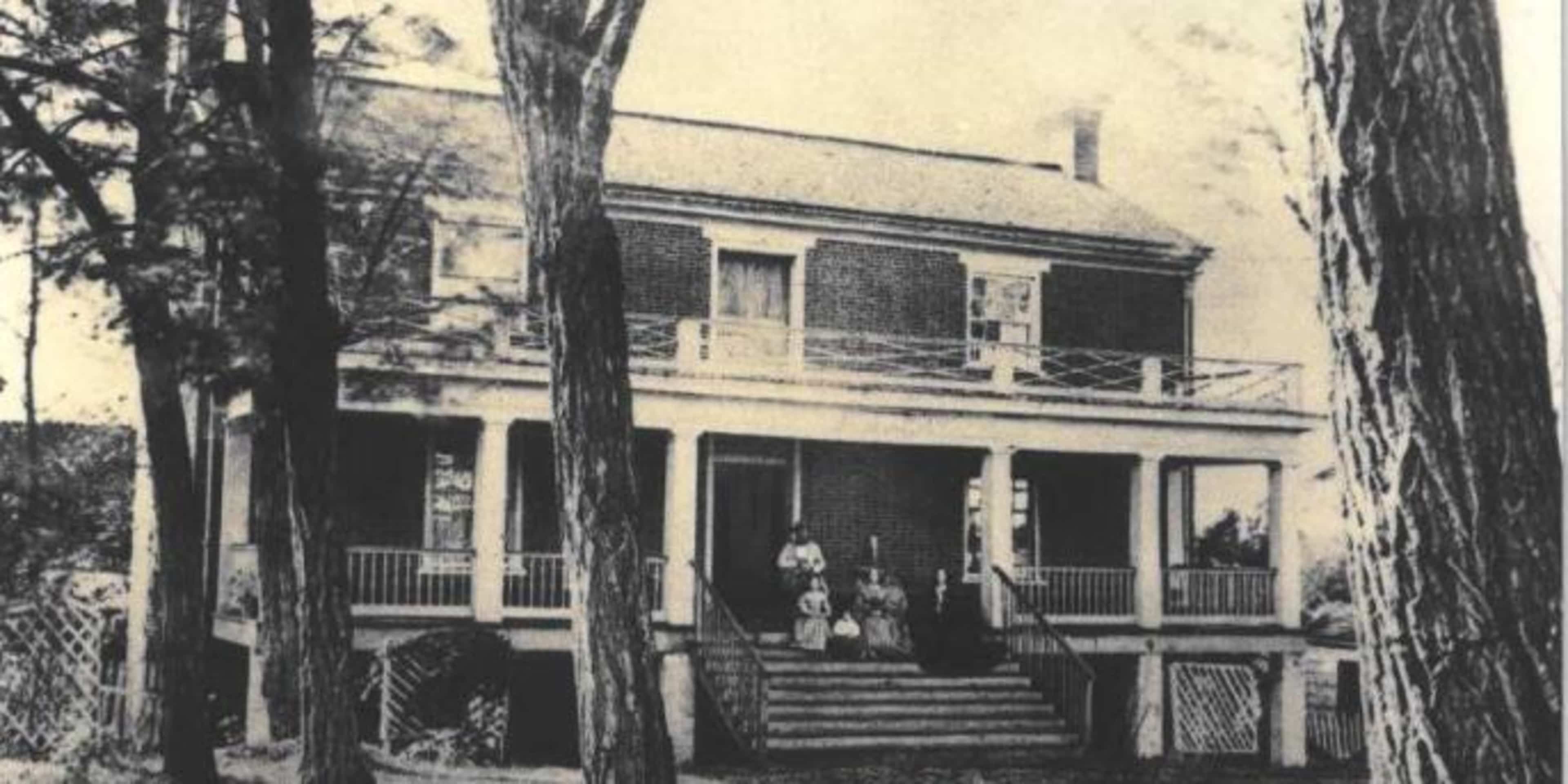
4. The War Began and Ended in His House: The Odyssey of Wilmer McLean
In the summer of 1861, Wilmer McLean and his family were living on a comfortable plantation near Manassas Junction, Virginia. On July 21, 1861, the First Battle of Bull Run—the first major land battle of the American Civil War—raged across McLean’s land. Confederate General P.G.T. Beauregard even used McLean’s house as his headquarters, during which a Union artillery shell famously crashed through his kitchen fireplace. Desperate to protect his family from the theater of war, McLean sold his property and relocated 120 miles southwest to the quiet hamlet of Appomattox Court House.
By April 1865, Union forces had successfully cornered General Robert E. Lee’s Army of Northern Virginia. Seeking a neutral, respectful location for a surrender meeting, Lee’s aide, Colonel Charles Marshall, approached a local resident for assistance. By an unbelievable stroke of fate, that resident was Wilmer McLean. Lee surrendered his army to Union General Ulysses S. Grant in the parlor of McLean’s Appomattox home on April 9, 1865. This dramatic geographic shift from Manassas to Appomattox mirrors earlier historical patterns where small, localized settlements suddenly became the epicenters of national destiny, much like how 3 colonial towns shaped the course of US history during the founding era. For McLean, the conflict literally began in his backyard and concluded in his front parlor.
5. The Cosmic Traveler: Mark Twain and Halley’s Comet
Samuel Langhorne Clemens, celebrated worldwide by his pen name Mark Twain, was born on November 30, 1835, in Florida, Missouri. His birth coincided precisely with the celestial appearance of Halley’s Comet, which visits Earth’s vicinity roughly every 75 years. Twain grew up to become America’s preeminent humorist and social critic, possessing an acute awareness of his unique connection to the cosmos. In 1909, knowing the comet was scheduled to return, Twain made a startling prediction: ‘It will be the greatest disappointment of my life if I don’t go out with Halley’s Comet. The Almighty has said, no doubt: “Now here are these two unaccountable freaks; they came in together, they must go out together.”‘
Twain’s uncanny prediction came to pass with absolute precision. On April 21, 1910, just one day after the comet reached its perihelion and emerged brilliantly from the far side of the sun, Twain suffered a fatal heart attack at the age of 74. The comet’s passage that year was exceptionally spectacular, passing just 13.9 million miles from Earth and being captured on film for the first time in human history.
6. Violet Jessop: The Unsinkable Legend of the White Star Line
Few individuals have tested the limits of maritime survival quite like Violet Jessop. Born to Irish immigrant parents, Jessop became a stewardess for the prestigious White Star Line, which had launched three massive luxury liners to dominate transatlantic travel: the Olympic, the Titanic, and the Britannic. In September 1911, Jessop was working aboard the Olympic when it collided heavily with the warship HMS Hawke near southern England. Thankfully, both vessels managed to return to port without sinking.
Following the collision, Jessop joined the crew of the Titanic for its ill-fated maiden voyage in April 1912. When the ship struck an iceberg and sank, taking over 1,500 lives, Jessop assisted passengers into lifeboats before being ordered into Lifeboat 16, where an officer handed her a lost baby to care for. Both Jessop and the infant were rescued by the RMS Carpathia. Years later, during World War I, Jessop served as a Red Cross nurse on the Britannic, which had been converted into a hospital ship. In November 1916, the Britannic struck a German underwater mine in the Aegean Sea. As the ship sank rapidly, Jessop jumped from her lifeboat to avoid being shredded by the ship’s giant rotating propellers, suffering a fractured skull but ultimately surviving to earn her famous moniker, ‘Miss Unsinkable’.

Key Chronology of History’s Greatest Coincidences
To visualize how these extraordinary historical coincidences unfolded over time, we can look at the chronological timeline of these key dates:
- July 4, 1826: Thomas Jefferson and John Adams die hours apart on the 50th anniversary of the Declaration of Independence.
- November 30, 1835: Mark Twain is born as Halley’s Comet streaks across the sky.
- July 21, 1861: The Civil War begins on Wilmer McLean’s property at the Battle of Bull Run.
- Late 1864: Edwin Booth rescues Robert Todd Lincoln from falling under a moving train in New Jersey.
- April 9, 1865: General Lee surrenders to General Grant in Wilmer McLean’s parlor in Appomattox.
- April 14-15, 1912: Violet Jessop survives the sinking of the RMS Titanic.
- November 21, 1916: Violet Jessop survives her third maritime disaster when the Britannic sinks.
Lesser-Known Historical Anecdotes
- The Souvenir Raiders of Appomattox: Immediately after Lee and Grant signed the surrender documents in Wilmer McLean’s parlor, Union officers began buying and outright stealing his furniture as historic souvenirs. General Sheridan paid twenty dollars for the table Grant used, while others cut upholstery and took his children’s toys, leaving the living room nearly empty.
- James Madison’s Stubborn Refusal: In June 1836, as the former president’s health rapidly declined, his doctors offered him stimulants to keep him alive until July 4th, hoping to match the poetic deaths of Adams, Jefferson, and Monroe. Madison refused, choosing to die peacefully on June 28th instead.
- The Fate of the Titanic Baby: While aboard the Carpathia, a hysterical woman ran up to Violet Jessop, grabbed the baby she had been holding, and ran off without saying a word. Jessop never found out who the mother or the child was.
Why These Coincidences Still Matter Today
In our modern, data-driven world, we often seek patterns to make sense of a chaotic universe. These historical coincidences highlight the delicate, interconnected nature of human experience. They serve as a powerful reminder that history is not just a collection of sterile statistics, but a living web of human choices, accidents, and surprising turns. Studying these moments encourages historians and enthusiasts alike to look beyond the surface level of historical records and appreciate the poetic, deeply human side of our shared past.
People Also Ask
How many US presidents have died on the Fourth of July?
Three of the first five U.S. presidents died on Independence Day: Thomas Jefferson and John Adams both died on July 4, 1826, and James Monroe died on July 4, 1831.
Did Edwin Booth know he saved Abraham Lincoln’s son?
At the moment of the rescue in late 1864, Edwin Booth did not know the identity of the young man he saved. He only learned it weeks later through a letter written by Union officer Colonel Adam Badeau.
What happened to Wilmer McLean’s Appomattox home?
After the Civil War, McLean defaulted on his mortgage, and the house was sold at auction in 1869. Decades later, it was acquired by the National Park Service, reconstructed, and opened to the public in 1949 as a historical landmark.
Reflecting on the Unseen Threads of History
Ultimately, whether one attributes these incredible events to pure mathematical probability or a higher cosmic order, they remain some of the most captivating chapters in human lore. From the shared revolutionary graves of Adams and Jefferson to the unsinkable spirit of Violet Jessop, these stories prove that the truths of history are frequently more astonishing than any fiction we could write.


1 comment