Throughout history, humanity has faced plagues that could not be stopped by medicine, quarantine, or prayer. While biological pathogens like smallpox or cholera are easily understood by modern science, there exists another category of outbreak that is far more elusive: mass hysteria in history. Known clinically as mass sociogenic illness or psychogenic contagion, these outbreaks manifest as real, physical symptoms with no physical cause, spreading rapidly through communities bound by shared anxieties. In the American narrative and across the globe, these phenomena serve as powerful social barometers. From the tragic convulsions in colonial Massachusetts to the mysterious ‘Mad Gasser’ of World War II-era Illinois, collective panic has repeatedly bypassed the physical body to attack the human psyche. By exploring the socio-economic, political, and cultural stressors of these eras, we can understand how deep-seated societal fears transform into physical suffering, proving that the mind remains one of history’s most volatile landscapes.
The Anatomy of Mass Sociogenic Illness
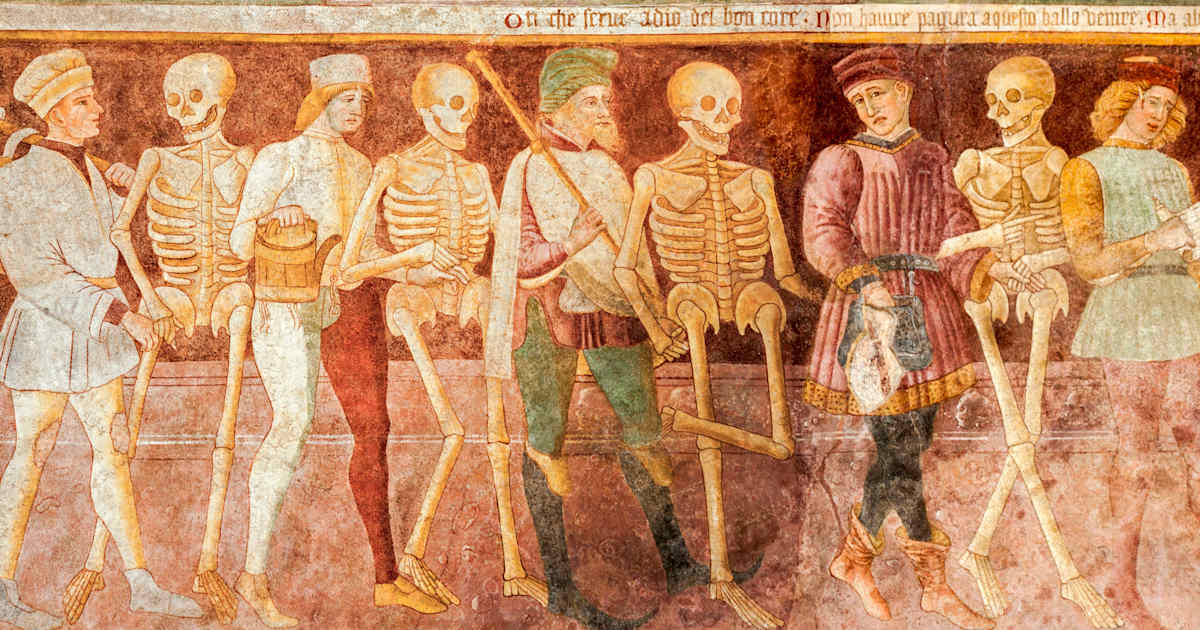
Mass sociogenic illness—historically referred to as epidemic hysteria or hysterical contagion—occurs when physical symptoms without a clear medical cause spread among members of a tight-knit community. To understand this phenomenon, as medical historian and researcher Dr. Robert Bartholomew notes, we should “think of it as the placebo effect in reverse.” It is a psychophysiological response to extreme environmental, social, or psychological stress. When individuals under intense pressure experience a physical trigger—such as a strange smell, a visual spectacle, or a sudden seizure—suggestion and belief take over. The brain translates psychological tension into somatic reality, causing very real rashes, convulsions, paralysis, and fits. Because the symptoms are physically manifested, communities often misidentify the root cause, attributing the affliction to witches, demonic possession, toxic gases, or mythical beasts. Ultimately, mass hysteria is driven by belief, and because we all have beliefs, we are all potential victims.
Historical Timeline of Collective Panics
To understand the progression of mass hysteria in history, we must look at a chronological breakdown of major documented outbreaks:
- July 1518: The Dancing Plague of Strasbourg erupts in modern-day France, marking one of the earliest and deadliest documented cases of dancing mania.
- January 1692: The Salem Witch Trials begin in colonial Massachusetts as young girls exhibit bizarre, unexplained convulsions.
- June 1892: The Writing Tremor Epidemic strikes schoolgirls in Groß Tinz, Germany, raising alarms about modern educational pressures.
- September 1944: The ‘Mad Gasser of Mattoon’ terrorizes an Illinois community during the height of wartime anxiety.
- January 1962: The Tanganyika Laughter Epidemic breaks out at a missionary-run boarding school in East Africa, lasting for over a year.
- June 1962: The ‘June Bug Plague’ strikes a U.S. textile mill, highlighting the intersection of workplace stress and media suggestion.
- May 2001: The Monkey Man of Delhi panic grips the Indian capital during a massive heatwave and utility crisis.
Seven Historic Mass Illnesses That Defied Explanation
1. The Strasbourg Dancing Plague (1518)
The epidemic began on a hot midsummer day in July 1518, when a woman known as Frau Troffea stepped into a narrow street in Strasbourg (then a free city within the Holy Roman Empire, now in France) and began to dance fervently and silently. She did not stop for nearly a week. Within a month, her strange choreomania had spread, and over 400 citizens were swept up in the irresistible urge to dance. The dancers convulsed, leaped, and spun under the blazing sun, unable to halt their movements. Tragically, many collapsed and died of strokes, heart attacks, and sheer exhaustion. Local authorities and physicians, misdiagnosing the condition as “hot blood,” mandated that the afflicted keep dancing to sweat out the illness. They even constructed a wooden stage and hired professional musicians, which only added fuel to the psychological fire. While early theories suggested ergot poisoning from a toxic grain mold, medical historian John Waller argued that extreme famine, smallpox, and a local belief in the “dancing curse” of St. Vitus created a perfect storm of stress-induced mass psychogenic disorder.
2. The Salem Witch Trials (1692)
In January 1692, nine-year-old Elizabeth (Betty) Parris and her eleven-year-old cousin Abigail Williams, the daughter and niece of Salem Village’s controversial minister Samuel Parris, began experiencing terrifying fits. They convulsed, barked like dogs, threw objects, and complained of being pinched by invisible forces. Unable to find a physical cause, a local doctor declared the children bewitched. Soon, other young girls in the village began exhibiting the same symptoms. To understand how these events fit into the broader pattern of colonial superstitions, historians point to earlier colonial witch hunts that shook New England before the 1692 panic. The social climate of Salem was incredibly volatile; the community faced extreme factionalism, a freezing “Little Ice Age” that decimated crops, inflation, a smallpox epidemic, and the constant threat of a devastating frontier war with the French and their Native American allies. The hysteria escalated dramatically through the testimonies of a small, highly suggestible group. Understanding the main accusers in the Salem Witch Trials reveals how personal grievances, religious extremism, and social pressures fueled a legal disaster that resulted in the execution of twenty innocent people before the court finally halted the trials.
3. The Writing Tremor Epidemic of Groß Tinz (1892)
In June 1892, a ten-year-old schoolgirl in Groß Tinz, Germany (now Tyniec Legnicki, Poland), developed an uncontrollable shaking in her right hand that escalated into full-body seizures. Within months, nineteen other female students were similarly afflicted, with some experiencing temporary amnesia and altered states of consciousness. The following year, students in Basel, Switzerland, experienced identical quaking when they tried to write. According to historical analyses, this “writing tremor” was a direct reaction to late 19th-century educational reforms. These pedagogical methods viewed the child’s mind as a muscle requiring rigid, highly repetitive, and tedious writing exercises. The severe physical and mental fatigue triggered a subconscious somatic response, allowing the students to escape the dreaded classrooms. This contrasts sharply with what school was like in early America, where classrooms were also notoriously strict and focused on rote memorization, yet did not manifest in the specific psychogenic writing tremors seen in industrializing Europe.
4. The Mad Gasser of Mattoon (1944)
At the height of World War II paranoia in September 1944, a young mother named Aline Kearney of Mattoon, Illinois, reported a sickeningly sweet odor in her bedroom that caused her legs and lower body to become paralyzed. That same night, her husband Bert reported seeing a tall, dark figure lurking outside their window. When the local newspaper published the story with the alarming headline “Anesthetic Prowler on Loose,” a wave of terror swept through the town. Dozens of residents came forward with identical reports of sweet smells, nausea, vomiting, and temporary paralysis. While some police officers suspected industrial emissions from a nearby war plant carried by shifting winds, the rapid spread of symptoms was a textbook case of collective panic. The underlying anxiety of the war, high-strung households with men fighting overseas, and sensationalized media coverage caused normal household odors—like spilled nail polish or coal gas—to be interpreted as chemical warfare from a rogue Nazi agent.
5. The June Bug Plague (1962)
In June 1962, a mysterious outbreak struck a major U.S. textile mill when over sixty workers suddenly experienced severe rashes, nausea, and numbness. The affected workers blamed a cargo of fabric from Europe, believing it was infested with toxic “June bugs” that were biting them. Entomologists and health inspectors rushed to the scene but found absolutely no evidence of toxic insects. A closer psychological investigation of the mill revealed that over ninety percent of the victims worked the exact same shift, most worked grueling overtime hours, and fifty of them only developed symptoms after seeing sensationalized media coverage of the initial cases. The combination of physical exhaustion, high production demands, and the power of suggestion caused a somatic chain reaction that closed the mill temporarily.
6. The Tanganyika Laughter Epidemic (1962)
Shortly after Tanganyika (now Tanzania) gained independence from Britain, a bizarre epidemic of uncontrollable laughter broke out on January 30, 1962, at a mission-run boarding school for girls in Kashasha. It began with three students and rapidly spread throughout the school, affecting ninety-five of the 159 pupils. Sufferers experienced bursts of laughter and crying that lasted from a few hours to sixteen days, accompanied by breathing problems, fainting, and skin rashes. The school was forced to close, but as the girls returned to their villages, the “laughter” spread to neighboring communities, eventually affecting over 1,000 people and forcing the closure of fourteen schools. Rather than a sign of joy, this laughter was a manifestation of deep psychological distress. Researchers attribute the outbreak to cultural dissonance; young girls were caught between the traditional beliefs of their rural families and the strict, unfamiliar discipline of Christian missionary schools, all occurring during a period of intense geopolitical transition.
7. The Monkey Man of Delhi (2001)
In May 2001, residents of Delhi, India, began reporting violent attacks by a bizarre creature described as part monkey, part human, with glowing red eyes and metal claws. The panic broke out during an intense heatwave coupled with massive electricity outages, which forced many low-income residents to sleep outside on their rooftops. Rumors of the “Monkey Man” spread like wildfire, fueled by sensationalist television coverage and local gossip. Hundreds of people rushed to hospitals with scratch marks, bite wounds, and bruises. A medical committee commissioned by the police later concluded that the injuries were self-inflicted—caused by victims scratching themselves in panic—or caused by stray cats and monkeys. Tragically, the collective hysteria proved deadly: two people died after falling from roofs and stairs in absolute terror after mistaking common shadows for the mythical beast.
Underlying Causes and Sociopolitical Context
A rigorous historical analysis reveals that mass sociogenic outbreaks are never random. Instead, they act as sensitive societal barometers, reflecting the collective anxieties of an era. These events typically require several overlapping conditions to manifest:
- High Ambient Stress: Outbreaks are almost always preceded by chronic, widespread stressors. In Strasbourg, it was famine and pestilence; in Salem, it was frontier warfare and smallpox; in Tanganyika, it was rapid cultural colonization.
- A Validating Trigger: A highly visible incident (the first dancer, the first convulsions, or the first reported smell) serves as a template for others to unconsciously copy.
- Institutional Validation: When authorities validate the threat (by building a stage for dancers or launching a witch hunt), the panic is reinforced and spreads faster.
- The Echo Chamber of Media and Gossip: In the modern era, newspapers, television, and social media act as the primary vectors, carrying the psychological contagion across vast distances in record time.
Long-Term Impact on America and the West
The legacy of these historical outbreaks has deeply shaped American and Western systems. The Salem Witch Trials, for instance, became a watershed moment in American jurisprudence. The devastating consequences of executing innocent citizens based on “spectral evidence” (the claim that an accused person’s spirit appeared to a victim in a dream or fit) led to a massive overhaul of the colonial court system. The colony banned spectral evidence, established stricter standards for eyewitness testimony, and heavily influenced the development of the “presumption of innocence” that serves as the bedrock of the United States Constitution.
Furthermore, in the fields of medicine and psychiatry, analyzing events like the June Bug Plague and the Mad Gasser of Mattoon led to the clinical definition of mass sociogenic illness. It forced the medical community to recognize that the mind and body are deeply intertwined, helping to destigmatize psychogenic disorders. Today, public health organizations utilize these historic lessons to identify and manage outbreaks of functional neurological symptoms without causing public panic.
Fascinating and Lesser-Known Facts
- The Real Pain of Imagined Threats: Sufferers of mass hysteria are not “faking it” or “crazy.” Neurological scans of modern psychogenic patients show that the brain’s motor control pathways are genuinely disrupted, meaning the physical pain, paralysis, and convulsions are completely real to the victim.
- The Silent Spitter of Virginia: Years before the Mad Gasser of Mattoon, a similar “phantom anesthetist” panic struck Botetourt County, Virginia, in 1933, proving that wartime and economic depression (The Great Depression) are prime breeding grounds for identical delusions.
- Laughter as a Defense Mechanism: In the Tanganyika laughing epidemic, the laughter was often accompanied by violent outbursts and extreme restlessness. It was not a sign of amusement, but rather a violent somatic release of repressed emotions.
Why Mass Hysteria Still Matters Today
In our hyper-connected digital age, the study of historical mass hysteria is more relevant than ever. While 17th-century Salem relied on physical proximity and local gossip to spread its panic, 21st-century social media platforms like TikTok, YouTube, and Instagram act as instantaneous global vectors. In recent years, neurologists have documented a rise in teenage girls developing physical tics and tremors after watching viral videos of influencers claiming to have Tourette’s syndrome. Dubbed “mass social-media-induced illness,” these modern cases demonstrate that human biology remains highly suggestible. As geopolitical tensions, economic instability, and climate anxieties rise, our collective fears will continue to seek physical expression. Understanding the history of sociogenic illness teaches us to approach bizarre societal trends with empathy, scientific rigor, and a critical eye toward the media we consume.
People Also Ask
What is the main cause of mass hysteria?
The main cause of mass hysteria (mass sociogenic illness) is severe, collective psychological stress within a community, which is then triggered by a highly visible event or suggestion, causing individuals to unconsciously mimic and manifest real physical symptoms.
Were any of the historic mass illnesses caused by actual biological agents?
While some historians have proposed biological causes—such as ergot poisoning (a hallucinogenic fungus on rye) for the Strasbourg Dancing Plague or Salem Witch Trials—these theories are widely rejected by modern scientists. Biological toxins cannot explain the incredible physical endurance of the dancers, the rapid geographic spread, or the selective nature of the symptoms, making a psychogenic explanation far more plausible.
How do public health officials stop an outbreak of mass hysteria?
Public health officials stop these outbreaks by separating the affected individuals, removing the physical stressors, reassuring the community that there is no biological threat, and curbing sensationalized media coverage, which effectively starves the psychological contagion of its fuel.
Conclusion
The history of mass hysteria reveals that the human body is not merely a biological machine, but a canvas upon which our deepest societal fears are painted. From the medieval streets of Strasbourg to the industrial mills of modern America, these mysterious mass illnesses prove that collective anxiety is a highly contagious force. By analyzing these events with scientific empathy rather than ridicule, we uncover the powerful, invisible threads that bind our minds, our bodies, and our cultures together.


