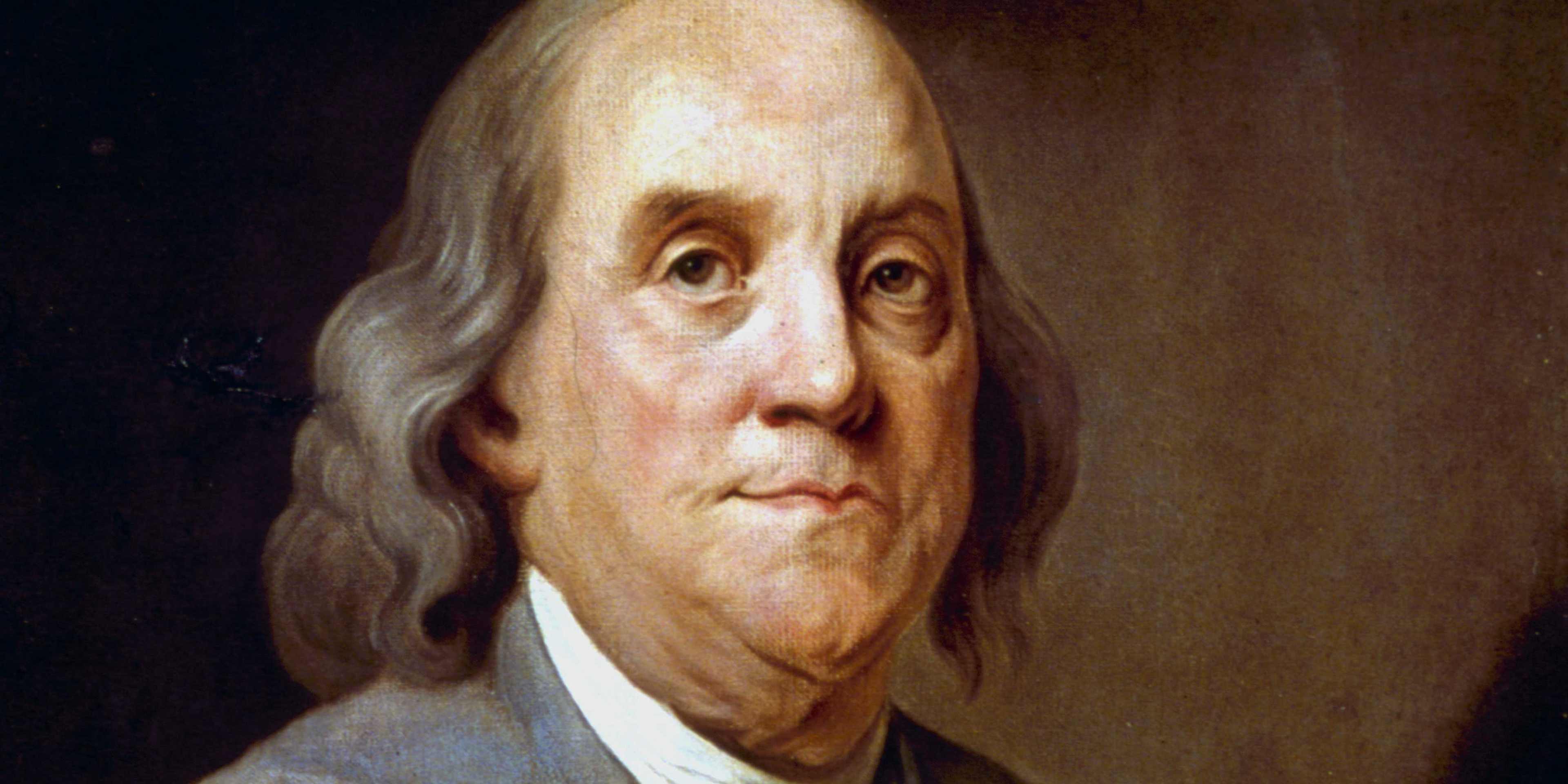
When we think of the founding generation of the United States, we often picture stoic politicians and solemn military generals. Yet, one extraordinary figure completely shattered this rigid mold with his eccentric brilliance, insatiable curiosity, and global celebrity status. Benjamin Franklin was not merely a politician; he was America’s first true renaissance man—a scientist, pioneering inventor, diplomat, prolific writer, and legendary humorist whose impact on the young nation is nearly immeasurable. From his humble beginnings as a runaway apprentice in Boston to becoming one of the most revered diplomats in the salons of Paris, Franklin’s life was a testament to the power of self-improvement and public service. Exploring the lesser-known aspects of his life reveals a far more complex, colorful, and profoundly human portrait of the man who literally helped spark the American Enlightenment and define the democratic spirit of the new republic.
The Historical Background: Colonial America and the Enlightenment
To understand the genius of Benjamin Franklin, one must understand the era in which he lived. Born in Boston in 1706, Franklin’s life spanned almost the entirety of the 18th century, a time of profound transition for the political landscape of the 13 colonies. This was the age of the Enlightenment, an intellectual movement that championed reason, science, and individual liberty over dogma and absolute monarchy. As the colonies grew from struggling outposts into prosperous societies, Franklin emerged as the quintessential product of this intellectual awakening. He was at the center of every major shift that transformed British subjects into independent Americans, utilizing the power of the printing press to unite the disparate colonies under a shared identity.
A Chronological Timeline of Franklin’s Extraordinary Life
- 1706: Benjamin Franklin is born in Boston, Massachusetts, to Josiah Franklin and Abiah Folger.
- 1718: Begins his apprenticeship at the age of 12 under his older brother, James Franklin, at a local Boston print shop.
- 1722: Secretly writes and publishes the popular Silence Dogood essays.
- 1723: Flees his apprenticeship in Boston and arrives virtually penniless in Philadelphia, Pennsylvania.
- 1732: Publishes the first edition of the immensely popular and lucrative Poor Richard’s Almanack.
- 1748: Retires from active printing business at age 42 to dedicate himself entirely to scientific inquiry and public service.
- 1751: Helps establish the Academy and College of Philadelphia, which would later evolve into the University of Pennsylvania.
- 1752: Conducts his legendary kite experiment, proving that lightning is electricity.
- 1774: Suffers public humiliation by British officials at “The Cockpit” in London, cementing his shift toward revolution.
- 1776: Co-drafts and signs the Declaration of Independence before being sent to France as a diplomat.
- 1778: Negotiates the critical Treaty of Alliance with France, securing military aid for the American Revolution.
- 1787: Serves as the oldest delegate at the Constitutional Convention and is elected President of the Pennsylvania Abolition Society.
- 1790: Submits the first formal anti-slavery petition to the U.S. Congress; passes away on April 17 at age 84.
Key Historical Figures in Franklin’s Orbit
While Franklin’s achievements were largely his own, his life was heavily shaped by those around him. His older brother, James Franklin, was a harsh master whose physical abuse prompted Benjamin to flee Boston, but James also inadvertently gave Benjamin his start in the printing trade and the early history of American journalism. Later in life, Franklin’s illegitimate son, William Franklin, became a pivotal and tragic figure; as the royal governor of New Jersey, William remained fiercely loyal to the British Crown, creating an irreparable, lifelong rift between father and son. On the diplomatic stage, French ministers like the Comte de Vergennes worked closely with Franklin, captivated by his rustic American persona, to secure the military alliance that ultimately won the Revolutionary War.
11 Surprising Facts About Benjamin Franklin
1. The Self-Taught Scholar Who Shrugged Off Formal Schooling
Despite being remembered as one of the most brilliant minds of his century, Franklin spent only two years in a formal classroom setting. His father, unable to afford the tuition for Boston Latin School, brought him into the family candle-making business instead. Franklin made up for this by reading voraciously, often skipping meals to buy books. This self-reliance contrasted sharply with the rigid nature of schooling in the 13 colonies. Decades later, his self-acquired erudition earned him honorary doctorates from prestigious institutions including Harvard, Yale, Oxford, and the University of St. Andrews.
2. The Teenage Widow: Silence Dogood
When his brother James refused to publish the writings of a sixteen-year-old apprentice, Benjamin took matters into his own hands. He adopted the persona of Silence Dogood, a fictional, sharp-tongued middle-aged widow who offered witty, satirical commentary on Bostonian society, marriage, and fashion. He slid these letters under the door of his brother’s print shop at night. The essays were a massive success, and the fictional Mrs. Dogood even received several marriage proposals before Benjamin finally confessed to being the author.
3. Inventor of the Haunting “Glass Armonica”
Among Franklin’s vast array of inventions, the one that brought him the deepest personal satisfaction was the glass armonica. Inspired by the sound of wet fingers rubbing against glass rims, Franklin designed a mechanical instrument featuring 37 custom glass bowls nested on a rotating iron spindle, operated by a foot pedal. The instrument produced ethereal, hauntingly beautiful tones and became a massive sensation across Europe. Legendary composers like Wolfgang Amadeus Mozart, Ludwig van Beethoven, and Richard Strauss eventually wrote original compositions specifically for Franklin’s armonica.
4. A Reluctant Revolutionary
Contrary to modern myths of instant patriotism, Franklin was actually one of the last Founding Fathers to embrace full separation from Great Britain. Having lived in London for nearly two decades, he loved the British Empire and believed that “every encroachment on rights is not worth a rebellion.” Following the Boston Tea Party in 1773, he publicly criticized the act of protest, calling it a violent injustice and insisting that the East India Company should be financially compensated. He only abandoned hope of reconciliation after being publicly ridiculed by British politicians in London in 1774.
5. The Visionary Spelling Reformer
Annoyed by the irregularities of English orthography, Franklin designed a brand-new phonetic alphabet in 1768. His system completely eliminated the redundant letters C, J, Q, W, X, and Y, and introduced six entirely new, customized characters designed to represent specific vocal sounds. Though he published an essay outlining his “Scheme for a new Alphabet and a Reformed Mode of Spelling,” the general public showed little interest, and Franklin eventually abandoned the ambitious project.
6. A Tragic Revolutionary Family Feud
The American Revolution tore the Franklin family apart. While Benjamin was a leading voice for independence, his illegitimate son, William Franklin, remained a steadfast Loyalist to King George III. William actively opposed the patriots, spent two years in a colonial prison, and eventually fled to England after the war. Benjamin never forgave his son for taking up arms against him, virtually cutting William out of his will and leaving him only a tiny, symbolic portion of his massive estate.
7. The Rockstar in a Fur Cap
When Franklin arrived in Paris in 1776 to seek French military aid, he was already famous. Recognizing that the French viewed Americans as rustic, pure-hearted frontiersmen, Franklin deliberately wore a simple marten fur cap instead of a formal wig. This brilliant public relations move sparked a major fashion craze in Paris; French society ladies wore massive wigs styled as the “coiffure à la Franklin,” and his face adorned countless portraits, medallions, and snuffboxes.
8. His Shift from Slaveholder to Devoted Abolitionist
Early in his life, Franklin owned at least two enslaved household servants and published advertisements for slave sales in his newspaper. However, as he grew older, his views evolved dramatically. By the late 1780s, he came to view slavery as a moral abomination that completely contradicted the founding ideals of the new republic. He took the presidency of the Pennsylvania Abolition Society and, in 1790, petitioned the U.S. Congress for the immediate emancipation of all enslaved individuals in the country.
9. The Posthumous Millions Left in Trust
In his will, Franklin left a unique legacy to his birthplace of Boston and his adopted home of Philadelphia. He bequeathed 2,000 pounds sterling to be placed in trusts for 200 years. For the first century, the money was used to offer low-interest loans to young tradesmen. By 1990, the funds had ballooned to over $4.5 million for Boston and $2 million for Philadelphia, which the cities utilized to fund the Franklin Institute and the Benjamin Franklin Institute of Technology.
10. An Inductee into the Swimming Hall of Fame
Franklin possessed a lifelong love for swimming that began in his youth. As a boy, he invented wooden hand paddles to help propel himself faster through the Charles River. While living in London, he performed complex swimming strokes in the River Thames, impressing onlookers so much that he was invited to open a local swimming school. His contributions to the sport earned him an honorary induction into the International Swimming Hall of Fame in 1968.
11. An Altruistic Refusal to Patent His Inventions
Whether inventing the lightning rod, the efficient Franklin stove, or bifocal spectacles, Franklin consistently refused to patent any of his creations. He believed that scientific breakthroughs should belong to humanity, famously writing, “As we enjoy great advantages from the inventions of others, we should be glad of an opportunity to serve others by any invention of ours; and this we should do freely and generously.”
The Major Turning Point: The Cockpit Confrontation
The turning point of Franklin’s life occurred in January 1774 in an amphitheater in London known as “The Cockpit.” Accused of leaking private letters written by Massachusetts Governor Thomas Hutchinson, Franklin was subjected to a blistering, hour-long public verbal assault by British Solicitor General Alexander Wedderburn. Standing silently in a patterned spotted velvet suit, Franklin endured the humiliation. This moment shattered his loyalty to the British Crown. He returned to Philadelphia a committed revolutionary, ready to put his vast diplomatic skills to work for the patriot cause.
Long-Term Impact on the United States
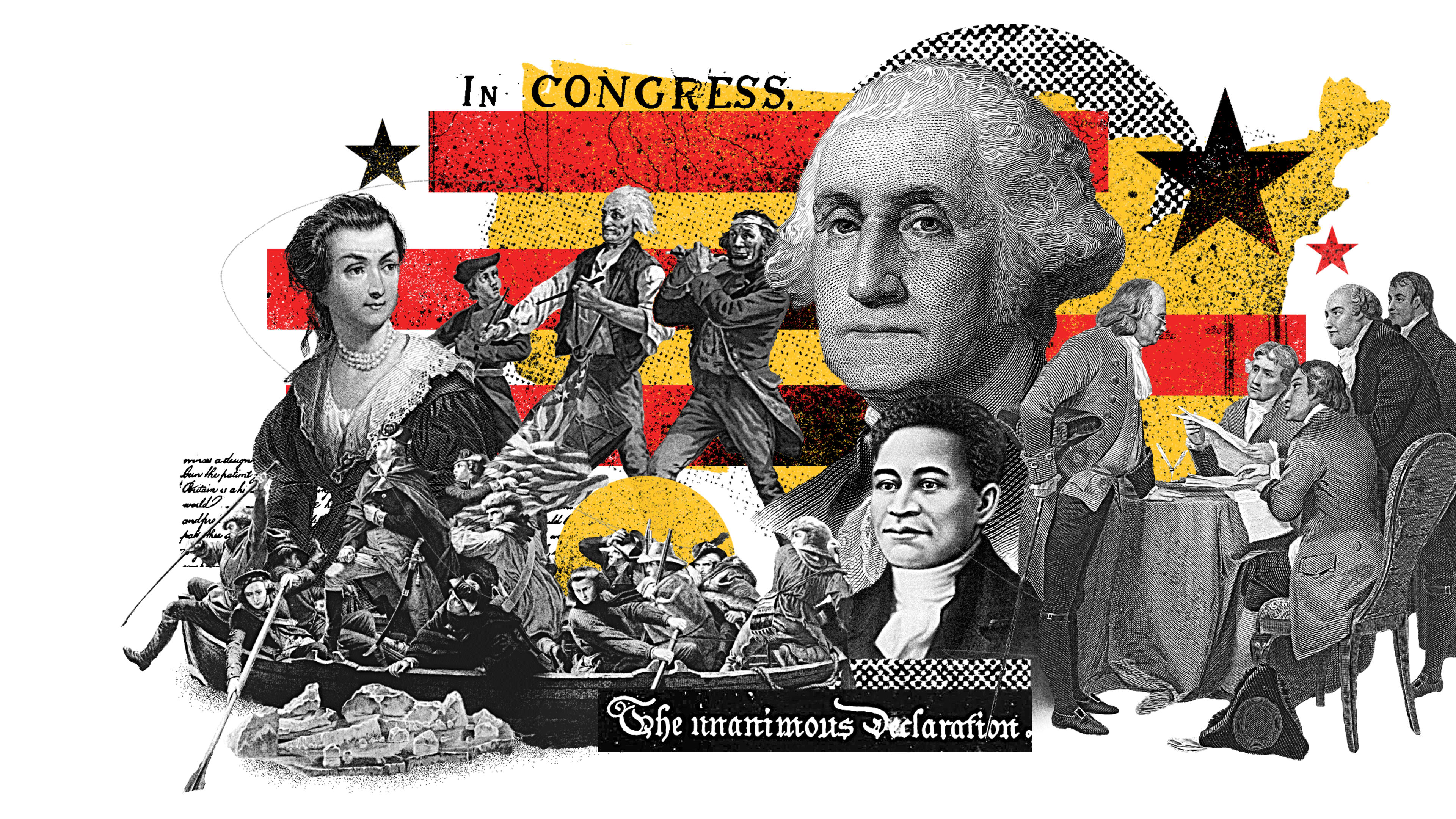
Franklin’s contributions laid the foundational brickwork for modern America. Diplomatically, his negotiation of the 1778 French Alliance and the 1783 Treaty of Paris secured America’s physical survival. Domestically, his commitment to civic institutions established America’s first subscription library, its first volunteer fire department, and its first public hospital. Politically, his ability to broker compromises during the Constitutional Convention of 1787 ensured that the United States Constitution could be drafted and ratified, uniting a fractured group of states into a single nation.
Why Benjamin Franklin Matters Today
Today, Benjamin Franklin remains the ultimate symbol of the American Dream. He proved that through intellect, hard work, and civic virtue, an individual could rise from the lowest rungs of society to change the course of human history. His scientific pragmatism and dedication to public good serve as a timeless reminder that true patriotism is rooted in active community improvement, scientific inquiry, and the preservation of personal liberty.
People Also Ask
What did Benjamin Franklin actually invent?
Benjamin Franklin invented the lightning rod, bifocal glasses, the Franklin stove, the glass armonica, and flexible urinary catheters. He famously refused to patent any of these inventions so they could be freely used by the public.
Why did Benjamin Franklin write under a pseudonym?
Franklin used pseudonyms like “Silence Dogood” and “Richard Saunders” (author of Poor Richard’s Almanack) to bypass censorship, voice controversial social critiques, and engage his readers with humor and relatability.
Was Benjamin Franklin ever the President of the United States?
No, Benjamin Franklin was never President of the United States. He was, however, the President of the Supreme Executive Council of Pennsylvania (a role equivalent to governor), the first Postmaster General, and the U.S. Minister to France.
Conclusion
Benjamin Franklin was a man of infinite facets—a practical dreamer who harnessed the power of the lightning bolt, negotiated the independence of a nation, and charmed the royal courts of Europe. His story is not just one of political achievements, but of an insatiable, lifelong curiosity that sought to make everyday life safer, more educated, and more harmonious. By exploring his life, we uncover the very essence of early American identity: a bold combination of ingenuity, pragmatism, and a relentless drive for progress.


