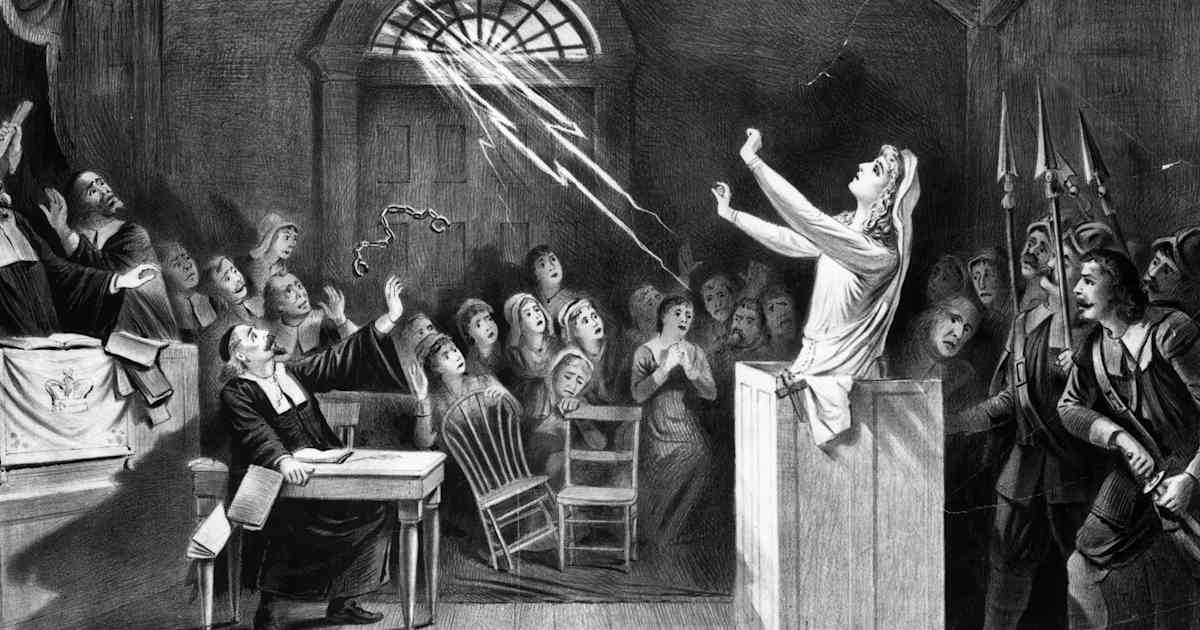
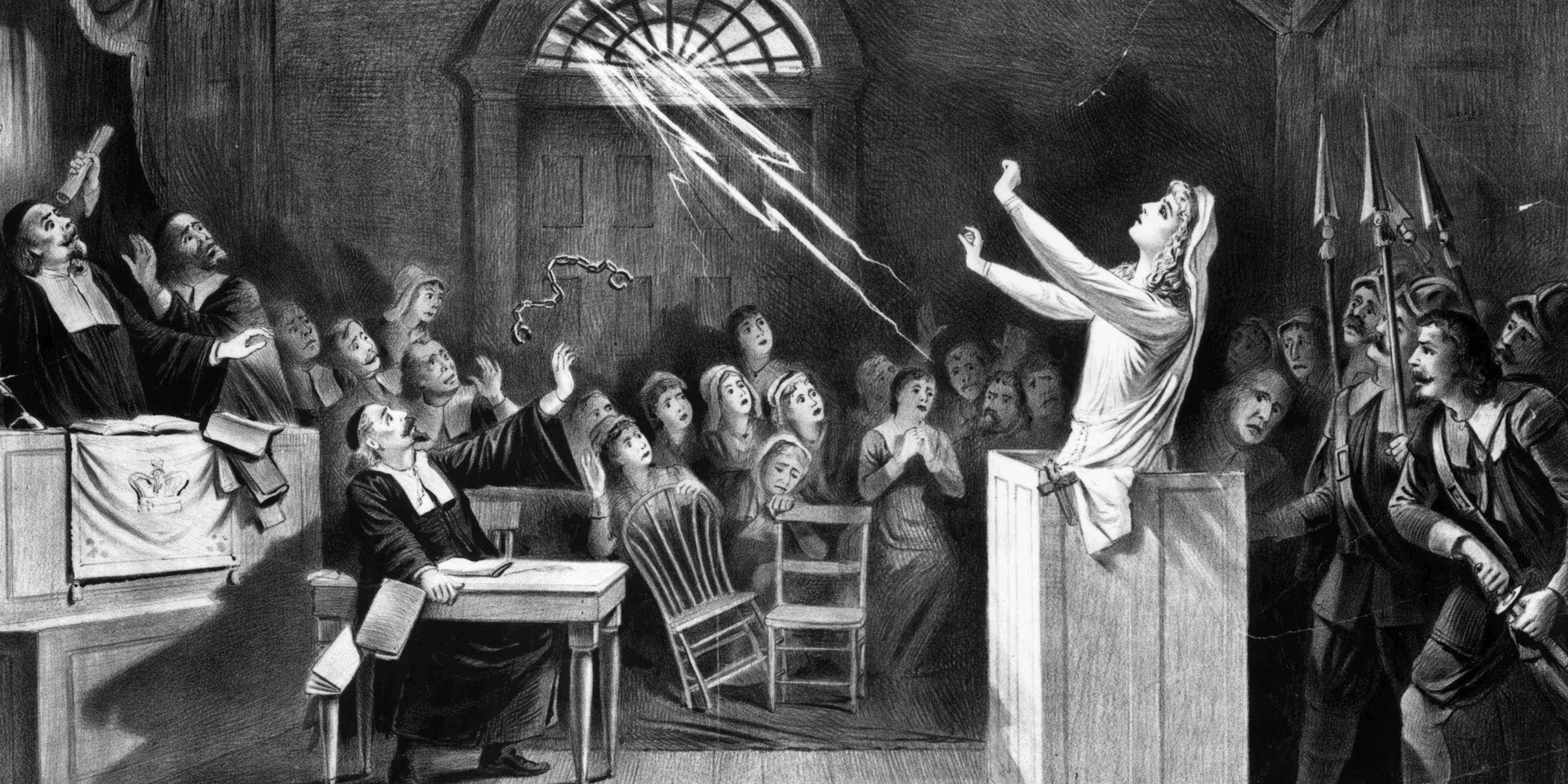
The year 1692 stands as one of the darkest and most perplexing chapters in early American history. In the isolated Puritan settlement of Salem Village, Massachusetts, a sudden wave of mass hysteria erupted, giving rise to what we now remember as the infamous Salem witch trials. Driven by a volatile mix of religious extremism, localized anxieties, socio-economic rivalries, and superstitious dread, a group of young girls claimed to be possessed by the devil, pointing accusatory fingers at their neighbors. What followed was a devastating judicial disaster that resulted in the execution of nineteen individuals by hanging, the pressing to death of one elderly man, and the tragic deaths of several others inside squalid, disease-ridden colonial prisons. Far from being a mere footnote of superstitious colonial times, the events of Salem revealed the dangerous fragilities of early colonial jurisprudence and the terrifying power of unchecked group psychology. To study this tragedy is to peer into the heart of early New England’s societal anxieties and to understand how easily justice can be subverted when fear becomes the ultimate arbiter of truth.
Historical Background & The Pre-1692 Climate
To fully comprehend the tragic descent into madness that occurred in 1692, one must look closely at the socio-political climate of seventeenth-century Massachusetts. The Puritans who settled New England were deeply devout, believing that the physical world was a constant battleground between God and the Devil. Every misfortune—from crop failures and harsh winters to outbreaks of smallpox—was interpreted as a direct manifestation of divine displeasure or satanic malevolence.
Sociopolitical Pressures in Salem Village
Furthermore, Salem Village (now present-day Danvers, Massachusetts) was plagued by intense localized factionalism. A bitter rivalry divided the agrarian Salem Village from the prosperous, mercantile Salem Town. Tensions were further exacerbated by a recent influx of refugees fleeing the brutal realities of King William’s War, fought between British forces and French colonists allied with native Wabanaki tribes. In a community constantly looking over its shoulder for external threats, a collective psychological siege mentality took deep root, preparing the perfect dry tinder for a hysterical spark.
The Spark of Hysteria: The Outbreak of Accusations
In January 1692, the spark was struck in the household of Reverend Samuel Parris, the controversial minister of Salem Village. His nine-year-old daughter, Betty Parris, and eleven-year-old niece, Abigail Williams, began displaying highly alarming behavior. The young girls contorted their bodies, slipped into violent fits, muttered incomprehensible sounds, and screamed uncontrollably. When traditional prayers and home remedies failed to yield results, a local physician named William Griggs was summoned. Lacking a scientific explanation for their erratic behavior, Griggs concluded that the girls were under the influence of the ‘Evil Hand’—they were bewitched.
The Accused and the First Wave of Warrants
Pressured by their elders to identify who was tormenting them, the afflicted girls pointed to three marginalized figures in the community: Tituba, an enslaved Caribbean woman working in the Parris home; Sarah Good, a destitute, homeless beggar; and Sarah Osborne, an elderly, sickly woman who rarely attended church services. On February 29, 1692, local magistrates Jonathan Corwin and John Hathorne signed the first arrest warrants, initiating a legal catastrophe that would soon consume the entire colony.
Chronological Timeline of the Salem Witch Trials
To understand how the crisis accelerated and eventually dissolved, we must examine the timeline of the Salem witch trials:
- January 1692: Betty Parris and Abigail Williams begin displaying bizarre symptoms.
- February 1692: Dr. Griggs diagnoses bewitchment. Arrest warrants are issued for Tituba, Sarah Good, and Sarah Osborne.
- March 1692: Tituba confesses to witchcraft under intense interrogation, claiming that a ‘black man’ had her sign a book and that other witches were active in the area. This confession validates the community’s worst fears and unleashes mass panic.
- May 1692: Newly appointed Governor Sir William Phips arrives in Massachusetts with a new royal charter and establishes the Court of Oyer and Terminer to hear and decide the growing backlog of witchcraft cases.
- June 10, 1692: Bridget Bishop, the first accused individual to be tried and convicted, is executed by hanging on Gallows Hill.
- July – September 1692: Executions peak. Eighteen more individuals are hanged, including respected figures like Rebecca Nurse and former minister George Burroughs. On September 19, eighty-year-old Giles Corey is pressed to death with heavy stones for refusing to enter a plea.
- October 1692: Public outrage grows over the execution of respected church members. Under advice from local ministers, including Increase Mather, Governor Phips bans the use of ‘spectral evidence’ and soon dissolves the Court of Oyer and Terminer.
- May 1693: Governor Phips issues a general pardon, releasing all remaining prisoners and bringing a formal end to the Salem witch trials.
Crucial Historical Figures and Their Roles
To dissect this complex historical tapestry, we must look at the specific individuals who shaped the trajectory of the events:
The Key Instigators and Judges
- Reverend Samuel Parris: As the minister of Salem Village, his rigid theology and personal conflicts with parishioners fueled the atmosphere of distrust. He actively encouraged the girls to name their tormentors to divert suspicion from his own household.
- John Hathorne and Jonathan Corwin: These local magistrates presided over the initial examinations. Hathorne, in particular, operated under a presumption of guilt, aggressively cross-examining the accused and treating the girls’ dramatic courtroom fits as absolute proof of demonic influence.
- William Stoughton: Appointed as the chief judge of the Court of Oyer and Terminer, Stoughton was a zealous prosecutor who steadfastly permitted the use of spectral evidence, refusing to show mercy even as public opinion began to turn.
The Respected Victims and Rebels
- Rebecca Nurse: A pious, elderly, and highly respected grandmother in Salem Village. Her accusation shocked many. Though initially found not guilty, the jury was forced to reconsider their verdict after the accusers threw dramatic fits in the courtroom. She was ultimately hanged on July 19.
- Giles Corey: An elderly farmer who refused to submit to a trial, knowing that either a ‘guilty’ or ‘not guilty’ plea would result in the confiscation of his property by the crown. To force a plea, he was subjected to peine forte et dure (pressing by stones). His legendary final words, ‘More weight,’ cemented him as a historical symbol of defiance.
Causes and Context: What Really Happened?
While the Puritans attributed the fits to demonic intervention, modern historians, toxicologists, and psychologists have proposed several secular theories to explain the hysteria:
The Ergot Poisoning Theory
In 1976, a groundbreaking study published in the journal Science proposed that the afflicted girls may have been suffering from ergotism. Ergot is a fungus (Claviceps purpurea) that grows on rye, a staple crop in colonial New England. Ingesting ergot-infected grain can lead to muscle spasms, hallucinations, delusions, and a crawling sensation on the skin—symptoms that closely align with those described by the Salem girls during their fits.
Socio-Economic Enmity and Land Disputes
Historians Paul Boyer and Stephen Nissenbaum famously argued in their book Salem Possessed that the accusations were deeply tied to geographic and economic divisions. A vast majority of the accusers lived in the poorer, agrarian Salem Village, whereas most of the accused resided in the wealthier, commercial Salem Town or along major trade routes. The trials provided a convenient legal mechanism to settle old family grudges and seize valuable land.
Psychological Mass Hysteria
Others point to mass psychogenic illness (conversion disorder) fueled by extreme stress, religious fear of eternal damnation, and the real-world trauma of King William’s War. Under immense pressure, the girls’ psychological stress manifested as physical symptoms, which quickly spread through peer suggestion.
Turning Points: The Fall of the Court of Oyer and Terminer
The turning point of the Salem witch trials came when the court’s reliance on spectral evidence—the belief that the devil could take the shape of an innocent person to torment others—was formally challenged. Prominent Boston minister Increase Mather, alongside his son Cotton Mather, published essays urging the court to raise its evidentiary standards. Increase Mather famously declared: ‘It were better that ten suspected witches should escape, than that one innocent person should be condemned.’
When the accusations escalated to target highly influential figures, including the wife of Governor William Phips himself, the political winds shifted. Realizing that the court had lost all credibility, Phips dissolved the Court of Oyer and Terminer in October 1692. The newly formed Superior Court of Judicature was prohibited from using spectral evidence, resulting in the rapid acquittal of the remaining accused.
Long-Term Impact on America
The painful legacy of the Salem witch trials left a lasting imprint on American society, religion, and jurisprudence. The disaster severely crippled the political influence of the Puritan clergy, accelerating the decline of theocracy in New England and paving the way for the eventual separation of church and state in the United States Constitution.
Furthermore, the trials transformed American legal standards. The blatant disregard for the rights of the accused led to a structural shift in courtroom procedures, reinforcing the core judicial principle of ‘innocent until proven guilty.’ The right to legal representation and the strict exclusion of subjective, hearsay evidence (such as dreams or ‘spectral’ visions) became foundational pillars of modern American law.

Lesser-Known Facts About the Trials
To enrich our understanding of this historical event, here are three fascinating and lesser-known facts that challenge common myths:
- No One Was Burned at the Stake: A common misconception is that the Salem witches were burned alive. In reality, under English law, witchcraft was a felony, not heresy, and was punishable by hanging. Nineteen victims were hanged, and Giles Corey was pressed to death.
- Even Animals Were Executed: The paranoia was so absolute that even animals were suspected of consorting with the devil. At least two dogs were executed in Salem after being accused of giving the ‘evil eye’ or being possessed by satanic forces.
- The Youngest Accused Was Four Years Old: Dorothy (often called Dorcas) Good, the daughter of the accused Sarah Good, was arrested and spent months chained in a freezing jail. The trauma permanently damaged her mental health, serving as a heartbreaking testament to the ruthlessness of the trials.
Why It Still Matters Today
Today, the term ‘witch hunt’ is frequently invoked in modern political and social discourse to describe unfair, fear-driven campaigns against individuals. In 1953, playwright Arthur Miller utilized the Salem trials as a powerful allegory in his classic play, The Crucible, criticizing the anti-communist Red Scare led by Senator Joseph McCarthy. The Salem witch trials serve as a timeless warning of how easily a democratic society can abandon its core values of justice, rationality, and empathy when confronted with existential fear and collective hysteria.
People Also Ask
How many people actually died in the Salem witch trials?
A total of twenty-five people died as a direct result of the Salem witch trials. Nineteen individuals were executed by hanging, one man (Giles Corey) was pressed to death, and at least five others died due to the atrocious conditions of the local prisons.
Did any of the accusers apologize?
Yes. In 1706, Ann Putnam Jr., one of the primary child-accusers, issued a formal, written apology to her church congregation. She claimed that she had been deluded by the devil into accusing innocent people, specifically expressing deep remorse for her role in the execution of Rebecca Nurse and others.
Was Tituba actually a witch?
No. Tituba was an enslaved woman of South American or Caribbean origin. Her ‘confession’ was coerced under physical abuse and intense pressure from Reverend Samuel Parris. She likely confessed and fabricated stories of meeting the devil to save her own life, as confessing witches were often spared execution to serve as informants.
Conclusion: The Enduring Warning of Salem
The tragedy of the Salem witch trials of 1692 remains a poignant reminder of the dangers of groupthink and religious zealotry. Over 300 years later, the lessons of Salem continue to echo in our legal institutions, our cultural narratives, and our daily social interactions. By remembering the names and stories of those who suffered on Gallows Hill, we honor their memory and reinforce our commitment to maintaining a society grounded in reason, due process, and compassion.


