Nestled within a mere twenty-mile corridor along Virginia’s scenic Tidewater region lies a sacred geography where the very architecture of the United States was born, contested, and ultimately realized. Known collectively as America’s Historic Triangle, the historic communities of Jamestown, Williamsburg, and Yorktown serve as the ultimate physical chronological markers of early American history. From the perilous arrival of English colonists in 1607 to the fiery debates of revolutionary statesmen, and culminating in the thunderous, decisive cannon fire of the Siege of Yorktown in 1781, this compact peninsula witnessed the profound convergences of diverse cultures. Within this small stretch of land, the complex realities of American democracy were first modeled, even as the devastating institutions of racialized chattel slavery and the displacement of indigenous nations took root. Understanding this dual legacy is essential for anyone seeking to comprehend the full, unfiltered narrative of the American experiment. Indeed, the stories preserved within these three towns do not merely reflect the past; they continuously inform our contemporary debates on liberty, equality, and national identity.
Indigenous Beginnings and the Dawn of Jamestown (1607)
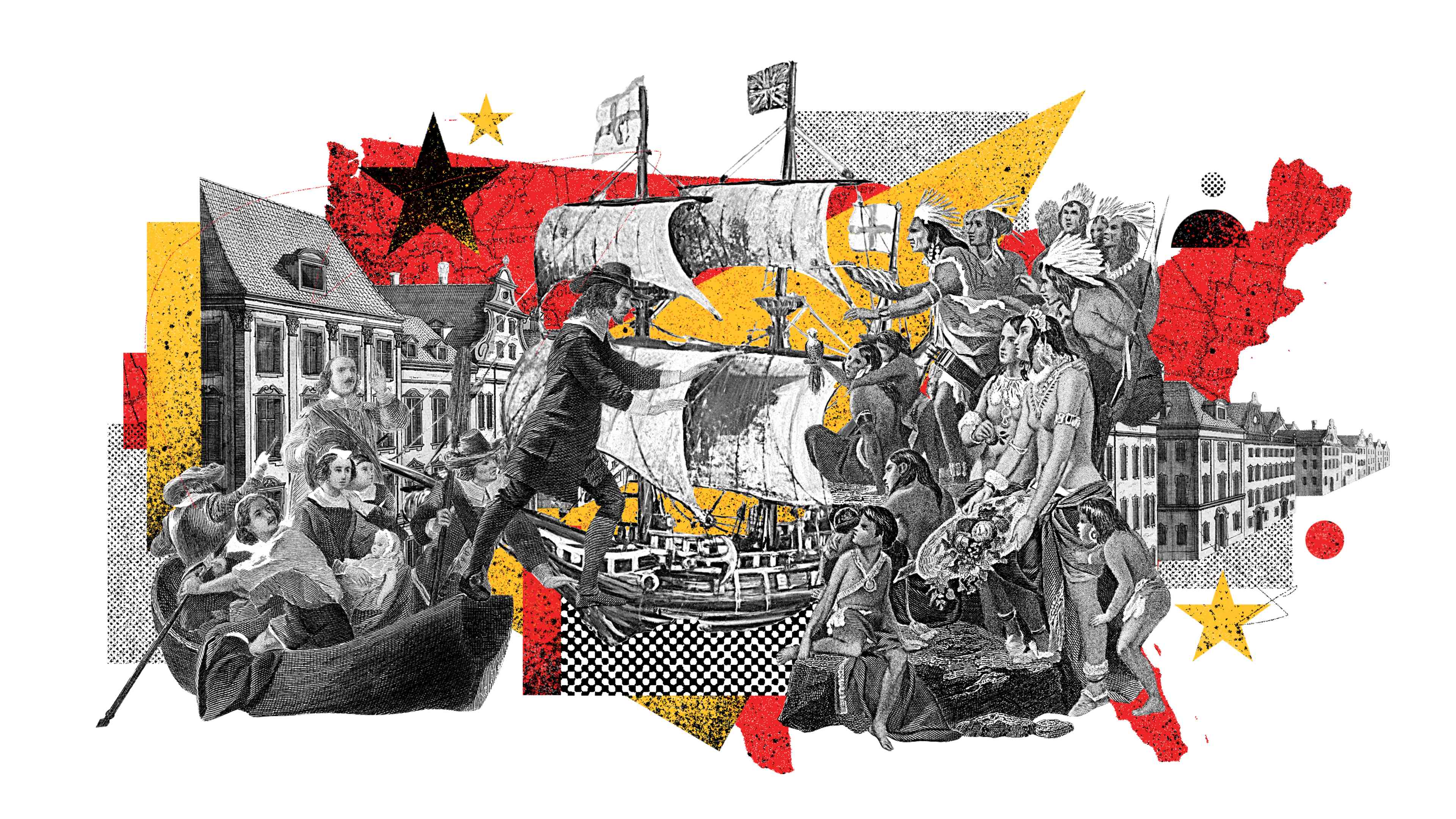
Long before the three English vessels—the Susan Constant, the Godspeed, and the Discovery—dropped anchor in the brackish waters of the James River on May 13, 1607, the Virginia Peninsula was a thriving and densely populated indigenous homeland. Known as Tsenacommacah, this vast territory was governed by the Powhatan Confederacy, a sophisticated alliance of roughly thirty Algonquian-speaking tribes. Under the leadership of the paramount chief Wahunsenacawh (frequently referred to as Chief Powhatan), the indigenous peoples had engineered a sustainable society deeply tied to the rhythms of the Tidewater’s estuaries, marshes, and fertile forests.
The arrival of approximately 104 English men and boys, under the auspices of the joint-stock Virginia Company of London, shattered this ecological and political equilibrium. Seeking immediate wealth in the form of gold, silver, and a navigable passage to the Orient, the settlers established their fortified settlement on a low-lying, marshy peninsula that was easily defensible from rival European powers but plagued by mosquitoes and poor drinking water. The early years of the Jamestown colony were defined by a desperate struggle for survival. Ignorant of local agricultural practices and plagued by a devastating regional drought, the settlers quickly exhausted their supplies.
The winter of 1609–1610, infamously known as the “Starving Time”, brought the colony to the absolute brink of total annihilation. Under a fierce siege by Powhatan’s warriors, who recognized the threat of English expansion, the trapped colonists resorted to eating domestic animals, leather shoes, and, as modern archaeological evidence has shockingly verified, the remains of deceased settlers. By spring, only 60 of the 500 colonists remained alive. The colony was saved from abandonment only by the eleventh-hour arrival of supply ships led by the newly appointed governor, Lord De La Warr.
The 1619 Turning Point: Democracy, Slavery, and Tobacco
The stabilization of Jamestown came not from gold, but from the commercial cultivation of a sweet strain of West Indian tobacco introduced by colonist John Rolfe in 1612. Tobacco became Virginia’s economic engine, driving a massive hunger for land and labor that fundamentally transformed the colony’s social landscape. To attract more settlers and transition from military rule to a stable civil society, the Virginia Company initiated two pivotal developments in the summer of 1619 that would forever define the American trajectory.
First, on July 30, 1619, the General Assembly convened inside the Jamestown church. Composed of the governor, his council, and 22 burgesses elected by male landowners, this assembly was the first democratically elected legislative body in the Western Hemisphere. It established the foundational precedent of representative self-governance that would eventually inspire the US Constitution.
However, this milestone of liberty was almost immediately joined by its tragic antithesis. In late August 1619, the English privateer ship White Lion arrived at Point Comfort, carrying “20 and odd” captive Angolans captured from a Portuguese slave ship. Sold to colonial leaders in exchange for provisions, these individuals marked the painful genesis of systemic racialized slavery in mainland North America. This profound duality—the simultaneous birth of democratic representation and institutional human bondage—remains the most defining and scrutinized paradox of American history.
Williamsburg: The Crucible of Revolutionary Ideology (1699–1780)
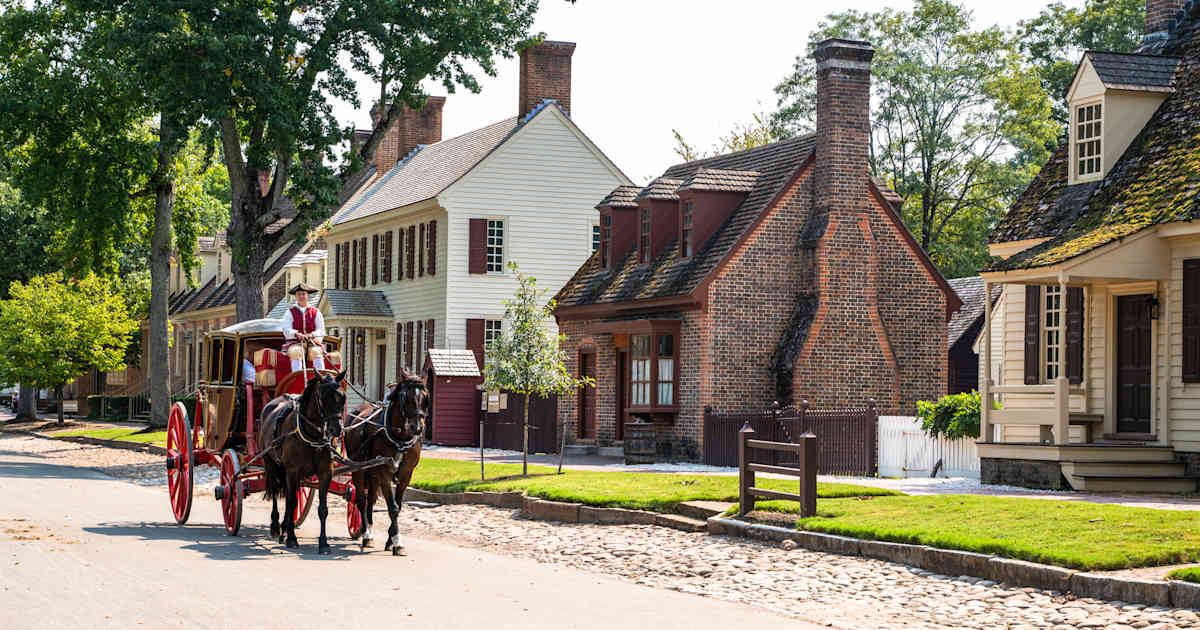
Following a disastrous fire that destroyed the statehouse in 1698, the colonial administration decided to relocate the capital of Virginia five miles inland to an area known as Middle Plantation, subsequently renamed Williamsburg in honor of King William III. Planned as a grand baroque city centered around the prestigious College of William & Mary (founded in 1693) and the elegant Governor’s Palace, Williamsburg quickly evolved into the intellectual and political heart of Britain’s largest and most populous American colony.
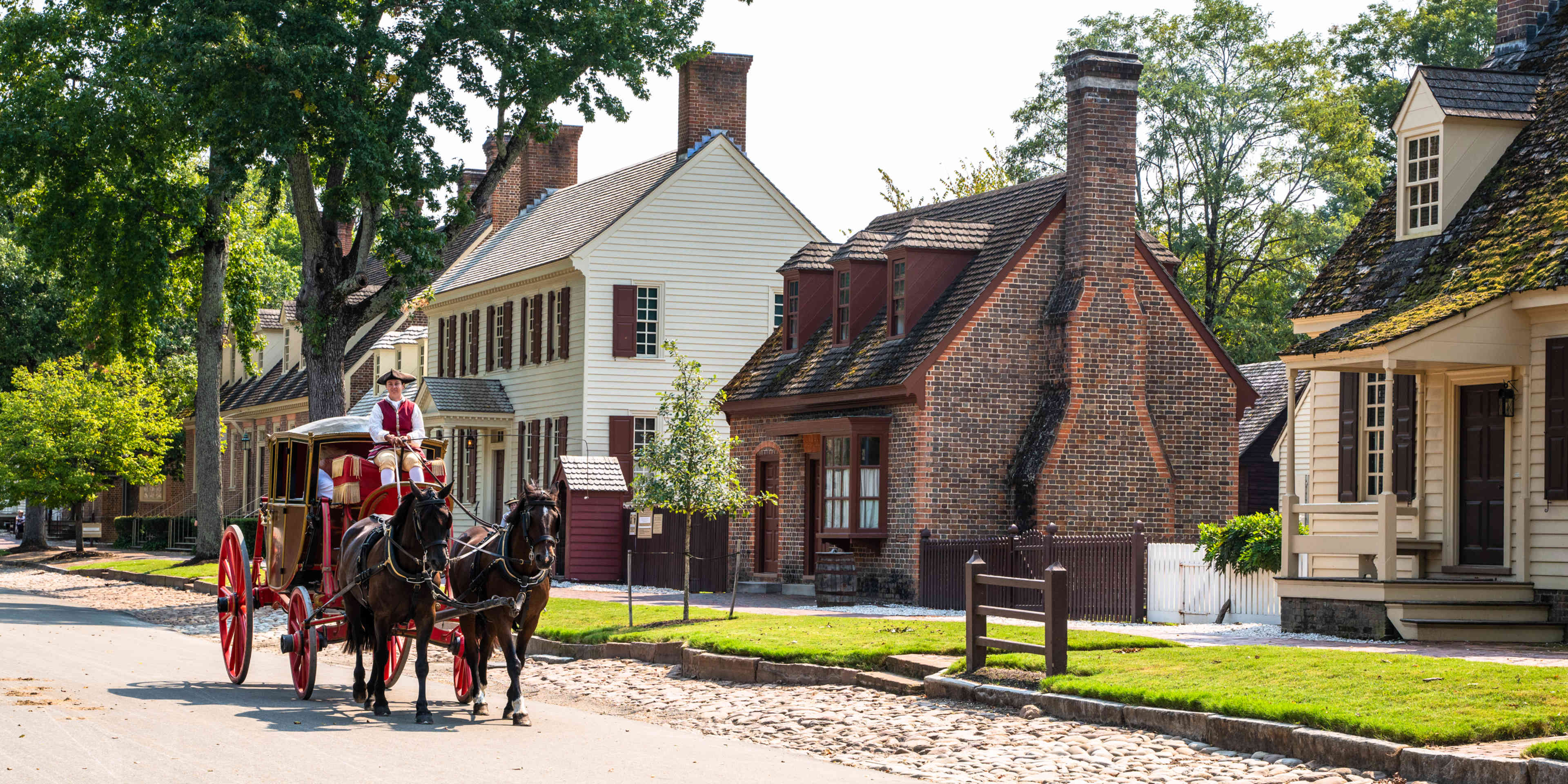
When the British Parliament sought to impose direct taxes on the colonies via the 1765 Stamp Act, Williamsburg became a primary crucible of revolutionary dissent. It was within the halls of the House of Burgesses that the fiery orator Patrick Henry delivered his radical Stamp Act Resolves, boldly declaring that only Virginians had the right to tax Virginians. In the ensuing decade, giants of American intellect like Thomas Jefferson and George Washington refined their legislative skills and political philosophy in Williamsburg’s taverns and assembly rooms.
Tensions reached a boiling point in April 1775 during the Gunpowder Incident. Just one day after the Battles of Lexington and Concord in Massachusetts, Virginia’s royal governor, the Earl of Dunmore, secretly removed the public gunpowder supply from the Williamsburg Magazine. This provocative act sparked armed patriotic mobilization. Fearing for his safety, Dunmore threatened to free and arm enslaved laborers to defend the crown—a move that alienated the wealthy planter class and forced Dunmore to flee to a British warship, effectively ending royal rule in Virginia.
Yorktown: The Climax of the Revolutionary War (1781)
The political arguments crafted in Williamsburg were ultimately vindicated on the battlefields of Yorktown, situated on the banks of the York River. By the summer of 1781, British General Lord Charles Cornwallis had marched his depleted army to the deep-water port of Yorktown to establish a naval defensive base. Recognizing a fleeting opportunity to trap the British forces, General George Washington and his French counterpart, the Comte de Rochambeau, executed a masterstroke of military strategy.
Marching a combined allied force of over 19,000 American and French troops hundreds of miles from New York, they established a vice-like siege around Cornwallis’s earthworks. Simultaneously, the French Navy, commanded by Admiral de Grasse, defeated the British Royal Navy at the Battle of the Capes, severing Cornwallis’s maritime escape route and supply lines.
The grueling siege reached its dramatic climax on the night of October 14, 1781. In a synchronized infantry assault, French forces stormed Redoubt 9 while a young Lieutenant Colonel Alexander Hamilton led 400 light infantrymen in a daring, bayonets-only charge to capture Redoubt 10. Left with no hope of reinforcement, Cornwallis surrendered his entire army on October 19, 1781. This monumental victory broke the British will to fight, directly leading to the 1783 Treaty of Paris and the formal recognition of the sovereign United States of America.
A Chronological Timeline of the Historic Triangle
- May 13, 1607: English colonists land at Jamestown, establishing the first permanent English settlement in North America.
- Winter 1609–1610: The “Starving Time” decimates the Jamestown population, leaving only 60 survivors.
- July–August 1619: The first representative legislative assembly meets in Jamestown, and the first enslaved Africans arrive in Virginia.
- September 1676: Bacon’s Rebellion reaches its peak as Nathaniel Bacon’s forces burn Jamestown to the ground in a dispute over land and indigenous policy.
- 1699: The capital of Virginia is officially moved to Williamsburg, ending Jamestown’s political dominance.
- May 1765: Patrick Henry introduces the Stamp Act Resolves in Williamsburg, sparking colonial resistance to British taxation.
- April 1775: The Gunpowder Incident in Williamsburg forces Governor Dunmore to flee, ending British royal authority in Virginia.
- October 19, 1781: General Cornwallis surrenders his army at Yorktown, effectively securing American independence.
Fascinating and Lesser-Known Historical Facts
- The Myth of “The World Turned Upside Down”: Legend states that the British army band played this melancholic tune during the surrender at Yorktown. However, contemporary historical consensus suggests this is highly apocryphal, as there are no eyewitness accounts mentioning this specific song in official military logs.
- Rockefeller’s Secret Philanthropy: The breathtaking preservation of Colonial Williamsburg was secretly bankrolled by billionaire John D. Rockefeller Jr. in the late 1920s. To prevent real estate speculation and price gouging, Rockefeller’s agents purchased deteriorated colonial-era homes under assumed corporate names.
- Archaeological Evidence of Survival: For centuries, accounts of cannibalism during the “Starving Time” were dismissed as sensationalist exaggeration. However, in 2012, archaeologists from Historic Jamestowne discovered the fractured skull and shinbone of a 14-year-old girl, whom they named “Jane,” proving beyond doubt that desperate colonists did indeed scavenge human remains to survive.
Why the Historic Triangle Matters Today
The Historic Triangle is far more than an open-air museum; it is a profound educational mirror reflecting the complex origins of modern America. At Jamestown Settlement, ongoing historical revisions now place equal emphasis on the rich culture of the Paspahegh and Powhatan peoples, correcting generations of Eurocentric erasure. In Colonial Williamsburg, the stories of enslaved and free African Americans—who made up over half of the colonial capital’s population—are now integrated into daily living history programs.
By exploring how these three towns shaped the nation, we confront the enduring tensions of our society: the struggle between liberty and oppression, the ongoing fight for indigenous sovereignty, and the evolution of representative democracy. The lessons of the Historic Triangle remind us that the American story was not preordained, but forged through human choices, conflicts, and compromises that continue to reverberate in our lives today.
People Also Ask
What are the three towns in the Historic Triangle?
The three historic towns that form the Historic Triangle are Jamestown, the site of the first permanent English settlement; Williamsburg, the prosperous colonial capital; and Yorktown, the decisive battlefield of the American Revolution.
Why is Jamestown historically significant?
Jamestown is historically significant because it was the site of England’s first permanent transatlantic colony in North America (1607). It is also the birthplace of representative democracy in the Western Hemisphere (1619) and the tragic point of origin for the transatlantic slave trade in mainland English America.
How long is the Colonial Parkway?
The Colonial Parkway is a scenic, 23-mile toll-free parkway managed by the National Park Service that connects Jamestown, Williamsburg, and Yorktown, allowing visitors to easily travel between all three historic sites.
Did Cornwallis attend the surrender ceremony at Yorktown?
No, British General Lord Cornwallis claimed illness and sent his second-in-command, Brigadier General Charles O’Hara, to deliver his sword of surrender to General George Washington.
Conclusion
Spanning a critical trajectory of 174 years, America’s Historic Triangle encapsulates the rise and fall of the British Empire in North America. In Jamestown, the seeds of a new society were planted amidst harsh environmental realities and cultural collisions. In Williamsburg, those seeds sprouted into an intellectual movement that challenged royal authority. And in Yorktown, that movement was permanently codified through military triumph. By visiting and studying these historical landmarks, we gain an invaluable, unvarnished appreciation for the diverse peoples whose combined actions set the course of United States history.


