The life of Roger Williams – Founder of Rhode Island & Salem Minister represents one of the most compelling and transformative narratives in early American history. Decades before the founding fathers envisioned a nation defined by civil liberties, this brilliant intellectual and radical Puritan minister challenged the absolute authorities of his era to champion “soul liberty”—the idea that every individual possesses an inviolable right to freedom of conscience. Driven out of the Massachusetts Bay Colony for preaching what magistrates labeled “dangerous opinions,” Williams walked into the freezing wilderness of New England, survived with the aid of Indigenous allies, and laid the foundations for a completely new kind of society. His radical insistence on the separation of church and state, paired with his deep respect for the sovereignty and humanity of Native Americans, established Rhode Island as a beacon of tolerance in a sea of religious dogmatism. Today, Williams is celebrated not merely as a colonial pioneer, but as the philosophical architect whose radical ideas paved the way for the First Amendment of the United States Constitution.
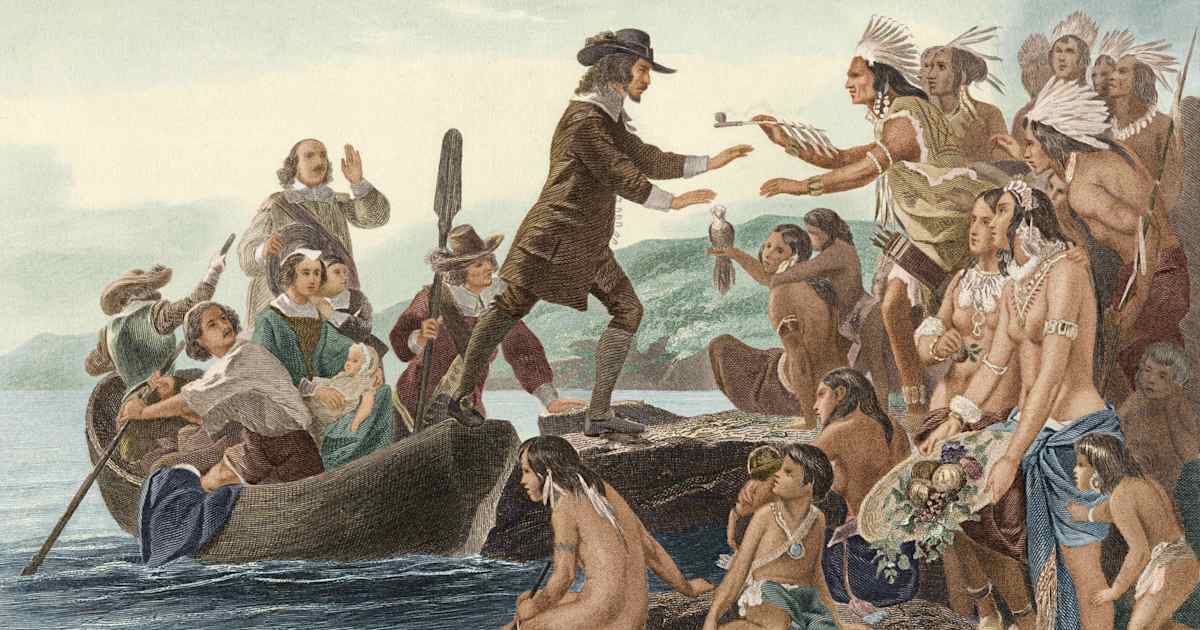
The Puritan Crucible: Historical Background and Early Life
To understand the radical nature of Roger Williams’ philosophy, one must examine the socio-religious turmoil of seventeenth-century England. Born in London around 1603, Williams grew up in an era defined by religious persecution and political upheaval. As a teenager, his exceptional academic and linguistic talents caught the attention of Sir Edward Coke, the legendary English jurist and champion of common law. Under Coke’s patronage, Williams received a classical education at Charterhouse and later Pembroke College, Cambridge, graduating in 1627. It was during his university years that Williams became a proficient linguist, mastering Latin, Greek, Hebrew, and Dutch—a skill that would later prove invaluable in his interactions with the Indigenous peoples of North America. Although ordained in the Church of England, Williams grew deeply disillusioned with its hierarchical structure and its persecution of religious dissidents under Archbishop William Laud. Embracing radical Puritanism and eventually Separatism, Williams concluded that the state-run church was fundamentally corrupt. Seeking a pure religious community where he could practice his faith without state interference, Williams and his wife, Mary Bernard, boarded the ship Lyon in December 1630, setting sail for the newly established colonies of New England.
Chronological Timeline of a Radical Life
- 1603: Born in London, England, amid a changing religious landscape.
- 1627: Graduated from Pembroke College, Cambridge, having mastered multiple classical languages.
- 1630–1631: Emigrated to Massachusetts, arriving in Boston on the ship Lyon in February 1631.
- 1631–1635: Served as a preacher in Boston, Salem, and Plymouth; built close trading and diplomatic relationships with the Wampanoag and Narragansett nations.
- October 1635: Put on trial by the Massachusetts General Court and sentenced to banishment for sedition and heresy.
- January 1636: Escaped into the winter wilderness to avoid deportation to England; founded the settlement of Providence Plantations.
- 1638: Co-founded the First Baptist Church in America, though he eventually departed from the denomination to become a “Seeker”.
- 1643: Published A Key into the Language of America, the first systematic study of an Indigenous American language in English.
- 1644: Published his highly controversial philosophical treatise, The Bloudy Tenent of Persecution, for Cause of Conscience, and secured a parliamentary charter for Rhode Island.
- 1663: Secured a Royal Charter from King Charles II, codifying absolute religious freedom and civil democracy for Rhode Island.
- 1675–1676: Acted as a negotiator and military captain during the devastating King Philip’s War, witnessing the burning of Providence.
- 1683: Passed away at the age of 80 in Providence, leaving behind an unprecedented legacy of liberty.
Key Figures in the Shaping of Rhode Island
Several historical figures played pivotal roles in Roger Williams’ life and the eventual development of Rhode Island:
- Sir Edward Coke (1552–1634): The celebrated English jurist who mentored Williams. Coke’s insistence on the rule of law and constitutional limitations on royal authority heavily influenced Williams’ political thinking.
- John Cotton (1585–1652): The preeminent minister of the Massachusetts Bay Colony. Cotton became Williams’ chief theological adversary, defending the Puritan state’s right to enforce religious uniformity. Their intellectual duel produced some of the era’s most important literature on religious liberty.
- Massasoit (c. 1581–1661): The Great Sachem of the Wampanoag Confederacy. Massasoit befriended Williams during his early years of trading and provided him with crucial shelter and food during his winter exile in 1636.
- Canonicus (c. 1565–1647) and Miantonomi (c. 1600–1643): Sachems of the Narragansett Tribe. Out of mutual respect, they sold the tract of land to Williams that would become Providence, establishing a peaceful alliance that lasted for decades.
- Anne Hutchinson (1591–1643): A charismatic religious dissident banished from Massachusetts for her antinomian views. Williams assisted Hutchinson and her followers in purchasing land on Aquidneck Island, where they founded Portsmouth.
The Theological Battle: “Soul Liberty” and the Wall of Separation
To understand Williams’ banishment, one must understand the absolute theological orthodoxy of the Massachusetts Bay Colony. Led by Governor John Winthrop and ministers like John Cotton, the Puritans sought to build a “City upon a Hill”—a holy commonwealth where civil laws and religious doctrine were one and the same. To them, religious dissent was not just a theological error; it was treason against God that threatened to bring divine wrath upon the entire colony.
Williams rejected this concept entirely. He coined the term “soul liberty” to express his conviction that God had created the human conscience to be free from all worldly coercion. He argued that no government, magistrate, or king had the right to enforce religious conformity or punish infractions of the “First Table” of the Ten Commandments (which deal with an individual’s relationship with God, such as blasphemy or Sabbath-breaking). Williams famously asserted that forcing individuals to worship against their conscience was “spiritual rape” and that forced uniformity only succeeded in producing hypocrites.
Crucially, Williams introduced the metaphor of a “wall of separation” between the garden of the church and the wilderness of the world. He believed that when the pure church is mixed with the corrupting influence of civil government, the church itself becomes corrupted. This conceptualization of the separation of church and state was deeply religious in nature, designed to protect faith from political manipulation.
The Founding of Rhode Island: A Lively Experiment
After the Massachusetts General Court ordered his banishment in October 1635, Williams planned to establish a colony in Narragansett Bay. However, when the magistrates learned he was still preaching, they dispatched a ship to arrest him and deport him back to England. Tipped off by his friend John Winthrop, Williams fled Salem in January 1636 during a brutal winter storm. He traveled through deep snow for over fourteen weeks, eventually finding refuge with Massasoit and the Wampanoag.
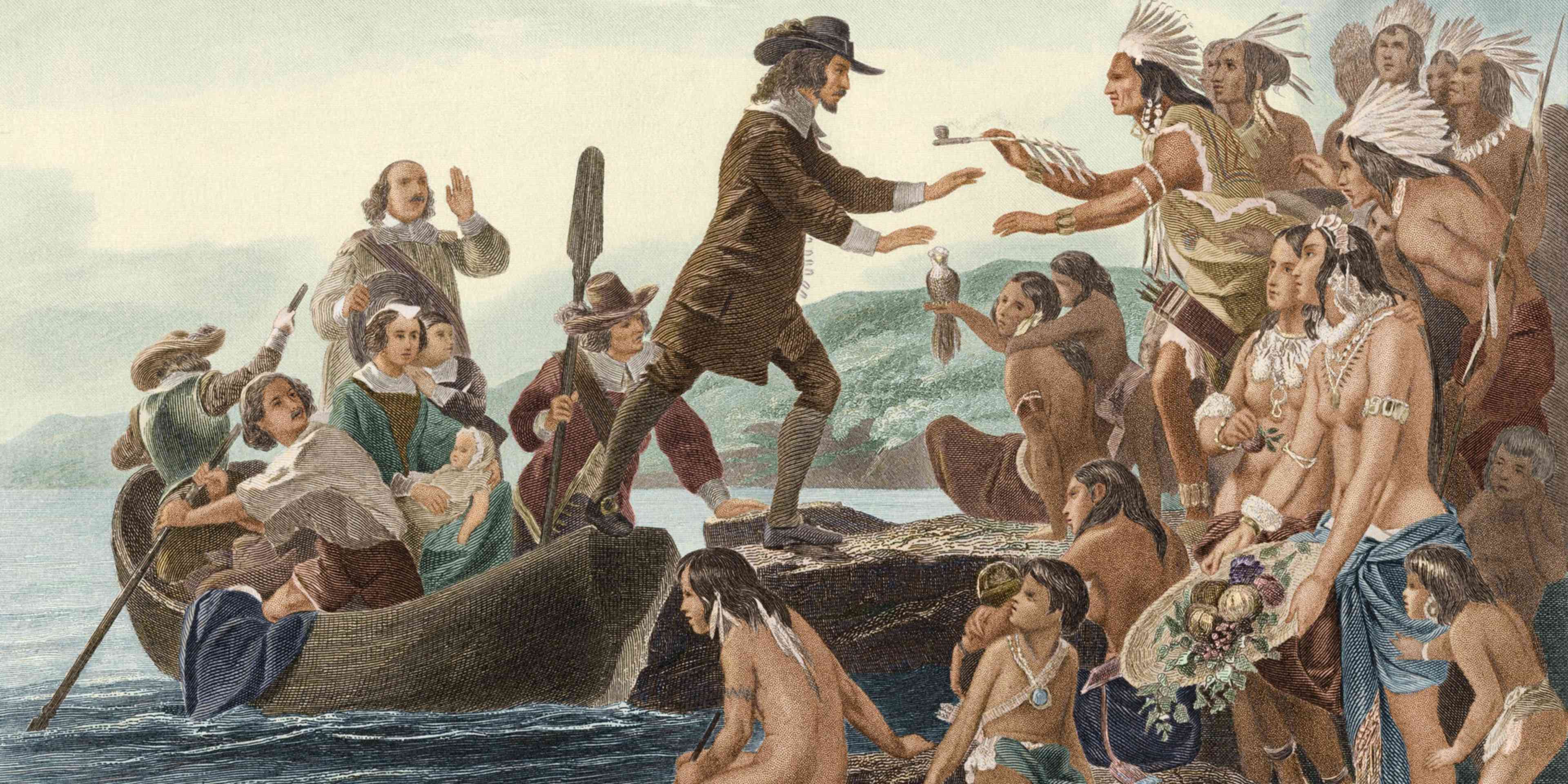
In the spring of 1636, Williams and a small group of followers crossed the Seekonk River into Narragansett territory. He purchased a tract of land from the Narragansett sachems Canonicus and Miantonomi and named the settlement “Providence” in gratitude for God’s merciful providence. Unlike other colonial leaders, Williams insisted on paying the Native Americans for their land, arguing that the English King had no legal right to grant Indigenous territory to colonists.
The new colony was founded on a revolutionary covenant: the government would hold authority “only in civil things”. Rhode Island became a safe haven for those fleeing religious persecution. Baptists, Quakers, and the earliest Jewish communities in North America settled there, finding a level of freedom found nowhere else in the Western world. To protect this “lively experiment” from hostile neighboring colonies, Williams traveled back to England during the English Civil War to secure a parliamentary charter in 1644. Nearly twenty years later, in 1663, he successfully petitioned King Charles II for a Royal Charter that legally solidified Rhode Island’s democratic government and absolute commitment to religious freedom.
Indigenous Relations, Linguistics, and the Tragedy of King Philip’s War
Roger Williams’ relationship with the Native American tribes of New England was unique and characterized by deep mutual respect. Recognizing that effective communication was the key to peace and fair trade, Williams lived among the Wampanoag and Narragansett, learning their customs, oral histories, and languages. In 1643, he published A Key into the Language of America, which was not only the first English-Indigenous dictionary but also a highly sympathetic ethnographic study of Native culture. Through this work, Williams challenged European prejudices, arguing that Indigenous moral and social structures were often superior to those of the so-called “civilized” Christian Europeans.
Despite his lifelong work as a diplomat and peacekeeper between the English and Native tribes, Williams was unable to prevent the tragic outbreak of King Philip’s War (1675–1676). The war was sparked by decades of colonial land encroachment and shifting power dynamics after the death of Massasoit. Metacomet (known to the English as King Philip) led a desperate, bloody coalition against the expanding English settlements.
Though Williams was in his seventies, he was elected captain of the Providence militia. He watched in heartbreak as his decades of diplomatic work crumbled. In March 1676, Native warriors advanced on Providence. Williams went out to meet them unarmed, trying to negotiate peace, but the warriors told him that while they respected him personally, they could no longer spare the town. Providence was burned, including Williams’ own home. The war ended with the brutal defeat and displacement of the local tribes, leaving a permanent scar on New England and deeply saddening Williams in his final years.
Lesser-Known Facts About Roger Williams
While many know Williams as the founder of Rhode Island, several fascinating and surprising details of his life are often overlooked:
- The Apple Tree Root that “Ate” His Body: When Roger Williams died in 1683, he was buried in his backyard. Over the decades, the exact location of his grave was forgotten. In 1860, civic leaders sought to relocate his remains to a proper monument. When they excavated the grave site, they found no skeleton—only some nails, teeth, and a thick, bizarrely shaped root from a nearby apple tree. The root had grown into the coffin, followed the exact contours of Williams’ spine, split at his hips, bent at his knees, and turned up at his feet. Visually, the root had “absorbed” and taken the shape of the founder. Today, this famous root is preserved and displayed by the Rhode Island Historical Society at the John Brown House.
- North America’s First Anti-Slavery Law: Long before the abolitionist movement took hold in America, Roger Williams and Gortonist leader Samuel Gorton drafted a law in 1652 that attempted to ban lifetime slavery in Rhode Island, limiting indentured servitude to ten years. While the law was unfortunately ignored by merchants and later overturned, it stands as one of the earliest official anti-slavery efforts in colonial history.
- An Ever-Searching Soul: Williams helped establish the First Baptist Church in America in 1638. However, his personal search for theological truth was so rigorous that he left the Baptist church just a few months later. For the rest of his life, he identified as a “Seeker,” believing that the true church of Christ had been corrupted and could not be restored until Christ himself returned.
Why Roger Williams Matters Today
The principles that Roger Williams pioneered in the seventeenth century are the bedrock of modern democratic societies. His concept of “soul liberty” and the “wall of separation” directly inspired figures like Thomas Jefferson and James Madison as they drafted the First Amendment. In an era where global societies continue to struggle with religious conflicts, the integration of church and state, and the rights of ideological minorities, Williams’ “lively experiment” remains a vital model. He demonstrated that a society does not require religious homogeneity to achieve civic unity and peace; rather, true strength lies in protecting the freedom of every individual to think, believe, and live according to their own conscience.
People Also Ask (PAA)
Why was Roger Williams banished from the Massachusetts Bay Colony?
Roger Williams was banished in 1635 because of his “dangerous” theological and political views. Specifically, he argued that civil magistrates had no authority to police religious beliefs, that the Church of England was completely corrupt and must be publicly rejected, and that the English King had no right to grant Native American lands to colonists without fair purchase.
What does Roger Williams mean by “soul liberty”?
“Soul liberty” is a term coined by Roger Williams to describe the absolute freedom of individual conscience. He believed that God created the human mind to be free, and that forcing anyone to conform to a specific religion or religious practice is a sin against God and an act of spiritual violence.
How did Roger Williams influence the U.S. Constitution?
Nearly a century after his death, Roger Williams’ writings on the “wall of separation” between church and state and the importance of religious liberty deeply influenced early American founders, especially Thomas Jefferson. These concepts became the foundational blueprint for the First Amendment of the U.S. Constitution, which guarantees freedom of religion and prohibits the government from establishing a state religion.
What is the story of the apple tree root and Roger Williams’ grave?
During an 1860 exhumation of Williams’ long-forgotten grave, excavators found that the root of a nearby apple tree had grown into his coffin. The root had grown down the path of his spine, split at the hips, and curled at his feet, effectively taking the shape of his body as it absorbed nutrients from his remains. This famous root is now on display at the Rhode Island Historical Society.
Conclusion
Roger Williams was a man far ahead of his time. He was a “Puritan’s Puritan” who pushed his religious beliefs to their most logical, compassionate, and radical conclusions. By championing the separation of church and state, defending the sovereignty of Indigenous peoples, and establishing a safe haven for all of humanity’s outcasts, Williams did not just build a colony—he established the foundational ideals of modern liberty. His legacy is a reminder that the protection of individual conscience is the ultimate safeguard of a free society.


