The American Revolution remains one of the most transformative epics in global history, a dramatic struggle where thirteen loosely aligned colonies dared to challenge the mightiest empire on Earth. This historic upheaval was far more than a sequence of military campaigns; it was a profound ideological and social revolution that fundamentally reshaped human governance, introducing the radical concept that governments derive their just powers from the consent of the governed. By examining the fiery debates of the 1760s to the ultimate triumphs of the 1780s, we uncover a story populated by legendary generals, forgotten minority heroes, and ordinary citizens caught in the crucible of war. To truly understand modern America, one must first explore the foundational trials of the American Revolution, a conflict that shook the foundations of the Western world and established an enduring legacy of liberty that still echoes through modern democracy.

Historical Background: The Sparks of Rebellion (1763–1775)
The seeds of the American Revolution were sown in the soil of imperial victory. Following the conclusion of the French and Indian War (the North American theater of the Seven Years’ War) in 1763, Great Britain emerged as the dominant global superpower but found itself burdened with staggering national debt. To cover the immense costs of maintaining and defending its vast empire, the British Parliament turned its gaze toward the American colonies, which had previously enjoyed a long period of “salutary neglect.”
As Parliament began enforcing new taxes and regulations, a constellation of prominent historical figures arose to voice colonial discontent. Leaders like Samuel Adams, a masterful political organizer, galvanized public sentiment in Boston, while his cousin John Adams fought intellectual battles in defense of colonial rights. In Virginia, the fiery orator Patrick Henry openly challenged the British Crown, declaring that British policies infringed upon the fundamental rights of English subjects. The primary catalyst for the rebellion was not merely the financial burden of the taxes, but the profound constitutional question of who had the authority to levy them. Without direct representation in the British Parliament, colonists argued that any taxes imposed upon them were an unconstitutional violation of their liberty—coining the immortal rallying cry, “No taxation without representation!”
Causes and Context: From Loyal Subjects to Rebels
The transition from loyal British subjects to armed revolutionaries was a gradual, painful process. For generations, the colonists had nurtured a unique political identity. Prior to the outbreak of hostilities, they had grown accustomed to a high degree of legislative autonomy. Local assemblies, such as the Virginia House of Burgesses, had spent decades practicing representative self-rule, fostering a distinct political culture rooted in self-governance. When London attempted to assert direct authority, it threatened these established local democratic institutions.
The economic tension was exacerbated by a series of aggressive legislative acts. The Stamp Act of 1765 taxed everyday paper goods, uniting colonists across social classes in protest. Although repealed due to massive colonial boycotts, it was followed by the Townshend Acts of 1767 and the Tea Act of 1773. The latter prompted the famous Boston Tea Party, where the Sons of Liberty dumped hundreds of chests of East India Company tea into Boston Harbor. In response, Parliament passed the punitive Coercive Acts (referred to by colonists as the “Intolerable Acts”), which closed Boston Harbor, suspended local town meetings, and established military rule in Massachusetts. This heavy-handed imperial overreach effectively united the disparate colonies in mutual defense, paving the way for the First Continental Congress in 1774.
Key Events Timeline: The Road to Independence and Victory
The struggle for American independence was defined by a series of critical milestones that marked the colonies’ journey from resistance to sovereignty:
- March 5, 1770 – The Boston Massacre: A chaotic street brawl between British soldiers and a colonial crowd escalates into gunfire, resulting in the deaths of five colonists and sparking widespread anti-British propaganda.
- December 16, 1773 – The Boston Tea Party: Protesters dump British tea into the harbor, triggering harsh legislative retaliation from London.
- April 19, 1775 – Battles of Lexington and Concord: The first military engagements of the war erupt in Massachusetts, featuring the famous “shot heard ’round the world.”
- June 17, 1775 – The Battle of Bunker Hill: A fierce encounter during the Siege of Boston that demonstrates the grit of the colonial militia against professional British regulars.
- July 4, 1776 – The Declaration of Independence: The Continental Congress formally adopts Thomas Jefferson’s historic document, officially severing ties with the British Crown.
- Winter 1777–1778 – Encampment at Valley Forge: General Washington’s army survives brutal winter conditions, disease, and shortages, emerging as a disciplined, professional fighting force.
- October 19, 1781 – The Siege of Yorktown: Combined American and French forces trap British General Cornwallis, leading to his surrender and the practical end of military hostilities.
- September 3, 1783 – The Treaty of Paris: Great Britain officially recognizes the sovereignty and independence of the United States.
Important Figures: Leaders, Martyrs, and Unsung Heroes
The American Revolution was shaped by a diverse array of individuals, each playing a vital role in the birth of the nation:
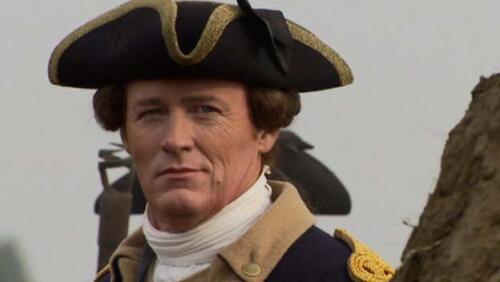
- George Washington: Appointed Commander-in-Chief of the Continental Army, Washington’s greatest genius was not tactical supremacy, but his sheer resilience. He managed to keep a poorly funded, ill-equipped army together through years of devastating defeats and political intrigue, ultimately securing victory before voluntarily resigning his military commission—a radical act of democratic humility.
- Crispus Attucks: A dockworker and sailor of mixed African and Wampanoag/indigenous descent, Attucks was an escaped slave who found himself at the forefront of the Boston Massacre. When British troops fired into the crowd, Attucks was the first to fall, making him the celebrated first martyr of the American Revolution. His legacy was later championed by 19th-century abolitionists as a powerful symbol of Black patriotism and sacrifice.
- Peter Salem: Born into slavery in Massachusetts, Salem was freed by his owner to fight as a minuteman in the local militia. He fought at Concord and later distinguished himself at the Battle of Bunker Hill, where he is credited with firing the fatal shot that killed British Major John Pitcairn. Salem’s courage highlighted the critical, often-overlooked contributions of Black patriots who fought for a concept of liberty they were frequently denied themselves.
- Thomas Jefferson: As the primary author of the Declaration of Independence, Jefferson gave voice to the philosophical heart of the rebellion. His assertion that all men possess unalienable rights to “Life, Liberty, and the pursuit of Happiness” established an ideological standard that continues to challenge and inspire global democratic movements.
Major Turning Points: How the Tide Turned
The American victory was far from inevitable. For much of the war, the Continental Army suffered from severe supply shortages, disease, and desertion. Two pivotal turning points, however, fundamentally altered the trajectory of the conflict:
The Battle of Saratoga (1777)
The American victory at the Battle of Saratoga in upstate New York was a massive strategic triumph. By forcing the surrender of an entire British army under General John Burgoyne, the Americans proved to a skeptical European audience that they had a genuine chance of winning. This victory convinced King Louis XVI of France to formally enter the war as an American ally. French naval power, troops, and financial backing transformed a localized colonial rebellion into a global war that stretched British military resources to their breaking point.
The Crucible of Valley Forge
While not a traditional battlefield victory, the winter encampment at Valley Forge represents a major psychological and organizational turning point. Surrounded by disease, freezing temperatures, and starvation, the Continental Army faced near-collapse. However, Washington used this grueling period to reform his forces. Under the rigorous training of Prussian military officer Baron von Steuben, the soldiers mastered essential battlefield maneuvers and bayonet combat. They emerged from Valley Forge in the spring of 1778 as a highly disciplined, cohesive professional army capable of fighting the British on equal terms.
Long-Term Impact on America
The American Revolution forever altered the socio-political landscape of the world. Nationally, it led to the drafting of the U.S. Constitution in 1787 and the subsequent Bill of Rights in 1791, creating a federal republic characterized by a system of checks and balances. Culturally, it cultivated a deeply ingrained national belief in individual liberty, free enterprise, and democratic representation.
However, the revolution also introduced a profound national contradiction. The high-minded rhetoric of the Declaration of Independence existed alongside the brutal institution of chattel slavery and the ongoing displacement of Indigenous communities. Over the centuries, this gap between America’s founding ideals and its historical realities has served as the primary catalyst for subsequent civil rights movements, as successive generations have fought to fully realize the promise of 1776.
Lesser-Known Facts of the Revolution
- The Culper Spy Ring: General Washington relied heavily on a sophisticated, clandestine espionage network. Using invisible ink, coded messages, and everyday citizens (including women and enslaved individuals), the Culper Spy Ring successfully uncovered British military secrets, playing a decisive role in the ultimate American victory.
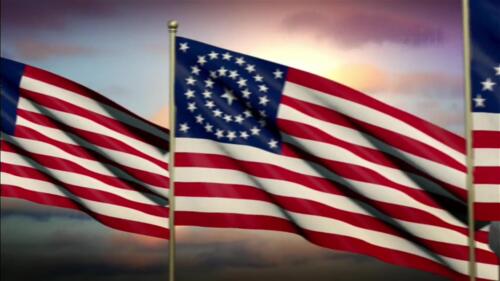
- Why the Flag Has 13 Stripes: “Old Glory” is instantly recognizable across the globe, but many do not realize that the 13 alternating red and white stripes represent the original thirteen American colonies that bravely declared their independence from Great Britain. If you want to dive deeper into the daily realities, politics, and secrets of this fascinating era, you can read these intriguing 13 colonies facts.
- The Forgotten Battle of Survival: More American soldiers died of disease (such as smallpox and typhus) during the war than in actual combat. Washington’s decision to mass-inoculate his troops against smallpox at Valley Forge was one of the most daring and successful medical interventions in military history.
Why It Still Matters Today
The American Revolution is not merely a collection of dusty dates and names; it is a living debate that continues to shape modern society. The foundational questions asked by the founders—concerning the balance of power between federal and local governments, the protection of individual liberties, and the right of citizens to protest—are debated in courts and public forums daily. As the world’s oldest continuous constitutional democracy, modern America is a direct product of the risks taken by ordinary individuals who dared to envision a self-governed society.
People Also Ask (FAQ)
Who was the first person killed in the American Revolution?
Crispus Attucks, a sailor of African and Native American descent, is widely regarded as the first casualty of the American Revolution. He was shot and killed by British soldiers during the Boston Massacre on March 5, 1770.
Did the Americans win the war alone?
No. The American victory was heavily reliant on international alliances, most notably with France. The French provided critical financial aid, gunpowder, troops, and a formidable navy, which played a decisive role in trapping the British forces at Yorktown.
Why was the Battle of Saratoga so important?
The Battle of Saratoga is considered the turning point of the war because the American victory convinced France to officially enter the conflict as an ally, transforming the colonial rebellion into a global war that Britain could not easily sustain.
Conclusion
The American Revolution was a messy, complex, and extraordinarily brave undertaking that redefined the course of human history. Born from a mixture of economic frustration, political ideals, and an unyielding desire for self-determination, the war forged a new nation out of thirteen separate colonies. From the tragic sacrifice of Crispus Attucks to the disciplined survival of Washington’s army at Valley Forge, the road to independence was paved with immense hardship. Understanding this history allows us to appreciate the delicate nature of democracy and reminds us that the pursuit of a “more perfect union” is an ongoing journey that belongs to every generation.


