For over four centuries, the fate of the 115 English men, women, and children who settled on Roanoke Island in 1587 has remained one of the most tantalizing riddles in global history. This early colonial experiment, meant to establish a permanent English presence in the New World, vanished almost without a trace by 1590, leaving behind only the cryptic word ‘CROATOAN’ carved into a wooden post. Today, the enduring mystery of what happened to the Lost Colony of Roanoke is finally being illuminated not by wild speculation, but by the meticulous spade of the archaeologist. Recent excavations at two key North Carolina sites have unearthed remarkable material evidence that challenges the long-held myth of total annihilation, suggesting instead a narrative of survival, adaptation, and cultural convergence with indigenous allies.
Historical Background: The Geopolitical Context of the Roanoke Venture
During the late 16th century, Protestant England and Catholic Spain were locked in a fierce, undeclared geopolitical rivalry. Queen Elizabeth I authorized privateers and explorers to challenge Spanish supremacy in the New World. In 1584, Sir Walter Raleigh received a royal charter to discover and colonize remote, heathen lands not possessed by any Christian prince. Raleigh’s first attempt in 1585, led by Ralph Lane, was entirely military and ended in disaster due to supply shortages and severe conflicts with the local Algonquian tribes. This failed effort was just one of several failed North American colonies that highlighted the sheer difficulty of European settlement in this era. Undeterred, Raleigh organized a second expedition in 1587, opting for a civilian-based model comprised of 115 middle-class families, artisans, and farmers who hoped to establish a self-sustaining agricultural community.
A Chronological Timeline of the Lost Colony
To trace the progression of the Roanoke tragedy, it is helpful to look at the exact chronology of events:
- April 1587: The civilian expedition departs from England, carrying families, artisans, and farmers across the Atlantic.
- July 22, 1587: The colonists arrive at Roanoke Island. While their original destination was the Chesapeake Bay, the ship’s pilot, Simon Fernandes, refuses to carry them further, forcing them to disembark at Roanoke.
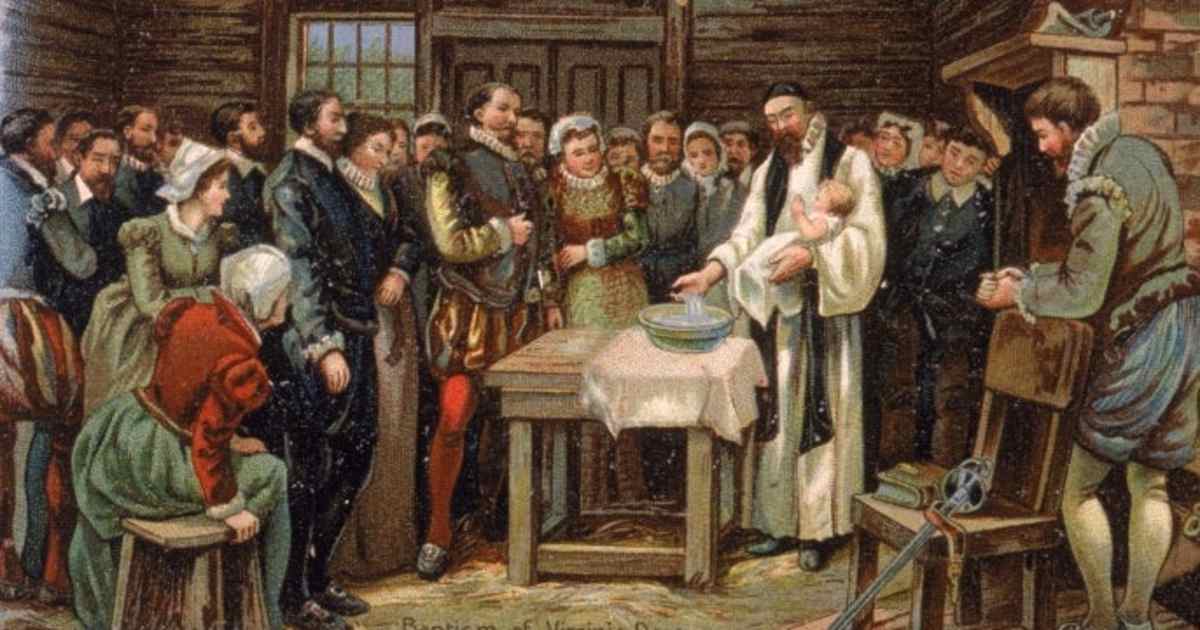
- August 18, 1587: Eleanor Dare gives birth to Virginia Dare, the first English child born in the Americas.
- August 27, 1587: Realizing they are critically short on food and supplies as winter approaches, Governor John White departs for England to secure emergency provisions, leaving his family behind.
- 1588–1589: White’s return to Roanoke is delayed indefinitely due to the outbreak of the Anglo-Spanish War and the mobilization of the Spanish Armada.
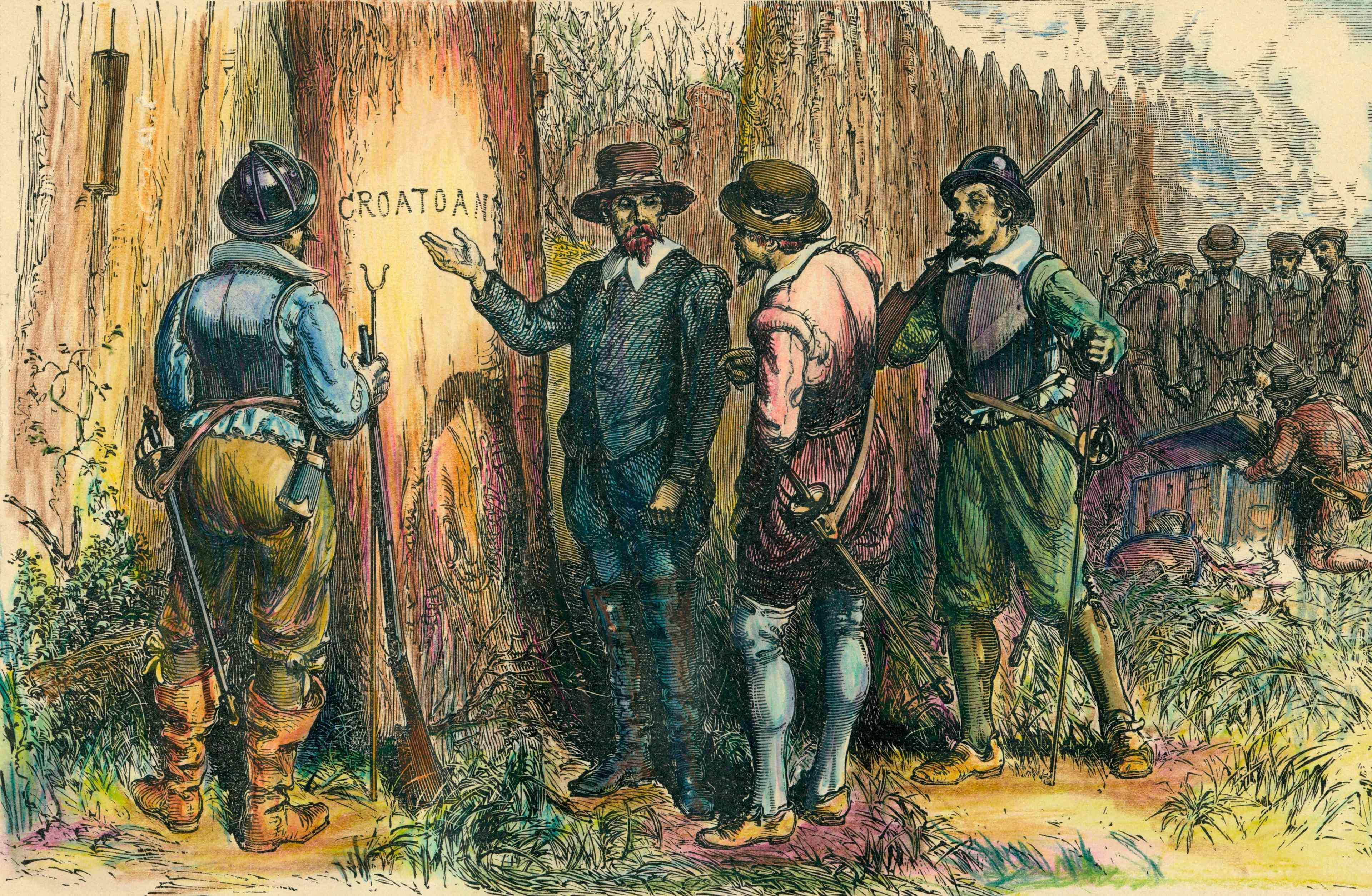
- August 18, 1590: John White finally returns to Roanoke Island on his granddaughter’s third birthday, only to find the settlement completely abandoned, the houses dismantled, and the word ‘CROATOAN’ carved into a palisade post.
Prominent Historical Figures of Roanoke
Several key historical figures played central roles in this early American drama, leaving lasting impacts on the historical record:
- Sir Walter Raleigh: The visionary financier who funded the Roanoke expeditions, seeking to secure wealth and strategic leverage for the English Crown.
- John White: An artist, mapmaker, and eventual governor of the 1587 colony. His beautiful watercolor illustrations remain the most vital visual records of 16th-century Algonquian life.
- Virginia Dare: The infant granddaughter of John White, whose birth symbolized the hope of permanent English domesticity in North America.
- Manteo: A Croatoan nobleman who traveled to London, became a trusted translator, and was baptized as a Christian. He served as a crucial liaison between the English and the local tribes.
- Wanchese: A Roanoke warrior who also traveled to England but grew deeply suspicious of English imperial intentions, later advocating for resistance against the colonizers.
The Core Clues: Excavations at Cape Creek and Site X
For centuries, historians debated whether the colonists were massacred, lost at sea, or absorbed by local tribes. Modern archaeology is actively shifting the consensus. Two independent research teams have uncovered physical evidence pointing to two distinct survival paths.
Cape Creek and the Croatoan Connection
Located on Hatteras Island (historically known as Croatoan Island), roughly 50 miles southeast of Roanoke, Cape Creek was a major native trading center. Archaeologist Mark Horton of Bristol University, working alongside the Croatoan Archaeological Society, has spent years excavating this site. The discoveries have been nothing short of astonishing. Among the findings is a 10-carat gold signet ring dating to the late 16th century, engraved with a lion rampant. Additionally, Horton’s team recovered a fragment of a slate writing tablet complete with a lead pencil, a copper ingot, and the hilt of an iron rapier. Because Native Americans did not possess advanced metallurgy, these European items strongly suggest the physical presence of the colonists. The theory is that the settlers moved to Croatoan Island—just as their carved message implied—and integrated with Manteo’s friendly tribe while retaining their European goods.
Site X: The Secret of John White’s Map
Meanwhile, another compelling line of evidence has emerged 50 miles inland, along the Albemarle Sound. In 2012, researchers at the British Museum examined John White’s 1585 watercolor map, La Virginea Pars, using advanced imaging technology. They discovered a hidden, patched-over symbol: a small, four-pointed star colored red and blue, marking a strategic inland fort site. This spurred the First Colony Foundation, led by archaeologist Nicholas Luccketti, to excavate what is now known as ‘Site X.’ Here, researchers unearthed shards of Border Ware pottery—a specific utility ceramic common in late-16th-century England and also found at Jamestown and Roanoke Island. Because Site X also contains evidence of a Native American village called Mettaquem, the presence of this early pottery suggests that a smaller contingent of Roanoke settlers may have traveled inland to live among native allies. To delve deeper into the science and theories of this assimilation, you can read about whether the Lost Colony of Roanoke disappeared or just assimilated.
Lesser-Known Historical Facts
- The Hidden Map Patch: John White’s map was patched not just to correct a drawing mistake, but likely to conceal the location of the inland fort from Spanish spies who were actively seeking to destroy any English settlements in North America.
- The Spanish Hunt for Roanoke: The Spanish did, in fact, search for the Roanoke colony. In 1588, a Spanish reconnoitering vessel sailed into the Chesapeake and Outer Banks looking for the English base, but they completely missed the settlement, which was hidden behind the barrier islands.
- The Lost Colony’s Honeymoon Phase: The colonists arrived expecting to build a thriving city, but within just weeks of landing, a colonist named George Howe was killed by native warriors while crabbing, instantly shattering any illusions of peace and forcing John White’s early departure for reinforcements.
Long-Term Impact on America
The failure of Roanoke was a devastating blow to Sir Walter Raleigh, but it provided crucial lessons for the future of English colonization. The promoters of the Virginia Company analyzed the Roanoke disaster and concluded that future colonies must be well-fortified, better supplied, and less dependent on immediate native goodwill. This hard-won knowledge directly shaped the founding of Jamestown in 1607 and the Plymouth Colony in 1620. Furthermore, the mystery of Roanoke birthed a rich tradition of American folklore, transforming Virginia Dare into a romanticized symbol of early American pioneer spirit.
Why the Roanoke Mystery Still Matters Today
The story of the Lost Colony is not merely a historical cold case; it is a profound reflection on the complexities of early European-Indigenous encounters. Rather than viewing the contact as a simplistic clash of civilizations resulting in absolute destruction, modern archaeological evidence paints a more nuanced picture of human resilience and multicultural integration. It reminds us that early American history was shaped as much by cooperation, intermarriage, and cultural exchange as it was by conflict and conquest.
People Also Ask (FAQ)
Why did the Roanoke colonists write ‘Croatoan’ on the tree?
Before Governor John White left for England in 1587, he instructed the colonists that if they had to leave the island due to distress or relocation, they should carve their destination into a prominent tree or post. If they were leaving in distress, they were supposed to carve a Maltese cross above the name. White found the word ‘CROATOAN’ carved without any cross, suggesting a planned, peaceful move to nearby Hatteras Island.
Could the Spanish have destroyed the Lost Colony?
While Spain desperately wanted to eliminate the English settlement to protect its treasure fleets and colonial claims in Florida, Spanish records show they were unable to locate the Roanoke colony. They sent search expeditions, but by the time they identified the general area, the colony had already disappeared.
What is Border Ware pottery, and why is it important?
Border Ware is a type of utilitarian lead-glazed earthenware produced on the border of Surrey and Hampshire in England. It was widely used by early English colonists in the late 16th and early 17th centuries. Finding Border Ware at Site X is crucial because it dates precisely to the Roanoke era and was no longer imported after the early 1600s, providing strong evidence of Roanoke-era European occupation at the inland site.
Conclusion
The narrative of the “Lost Colony” of Roanoke is undergoing a quiet revolution. Once framed as a tragic tale of settlers swallowed by the wilderness, the latest archaeological discoveries at Cape Creek and Site X suggest a far more human story of survival. Faced with starvation and isolation, the Roanoke colonists likely did what any desperate group would do: they divided, adapted, and sought refuge with their native neighbors. As archaeologists continue to sift through the North Carolina dirt, the lost colonists are lost no longer—they are simply being found in the blended ancestry of early America.


