The enduring enigma of the Lost Colony of Roanoke represents one of the most mesmerizing chapters in early American history, captivating researchers, archaeologists, and history enthusiasts for well over four centuries. In 1587, more than a hundred English men, women, and children landed on Roanoke Island off the coast of modern-day North Carolina, full of hope for a prosperous future in the New World. Yet, within three short years, this entire community vanished, leaving behind only the cryptic word ‘CROATOAN’ carved into a wooden post. This eerie disappearance has long been framed as America’s oldest cold case—an abrupt, tragic vanishing act that has fueled countless myths, folklore, and speculative theories. However, ground-breaking archaeological discoveries on nearby Hatteras Island have radically reshaped this narrative, suggesting that the colonists may not have met a violent end or starved in isolation. Instead, emerging evidence points toward a much more human and pragmatic outcome: peaceful adaptation and integration. Understanding what truly happened at Roanoke is critical because it challenges our traditional colonial narratives, shifting our perspective from a tale of mysterious doom to one of early cross-cultural cooperation and survival.
Historical Background: Sir Walter Raleigh and the Dream of Roanoke
To understand the fate of the 1587 settlers, we must first trace the origins of England’s earliest attempts at North American colonization. In the late 16th century, Queen Elizabeth I granted a charter to the ambitious explorer Sir Walter Raleigh to establish a permanent English footprint in the New World. The primary objective was not merely agrarian; the English crown desired a strategic military outpost from which privateers could raid Spanish treasure fleets.
The Roanoke venture actually occurred in phases. The first attempt in 1585, led by Ralph Lane, was heavily militaristic and quickly collapsed due to hostile relations with local Indigenous populations, particularly after the English executed the Secotan chief Pemisapan. The colonists returned to England in defeat. Undeterred, Raleigh organized a second expedition in 1587. This time, the demographic was drastically different. Rather than consisting solely of soldiers, the expedition carried 118 civilian men, women, and children, representing a genuine attempt to build a self-sustaining community. Led by artist and governor John White, this group was supposed to settle in the Chesapeake Bay but was instead dropped off on Roanoke Island on July 22, 1587, by a hurried ship pilot.
This ill-fated settlement was among several early failures in European expansion. In fact, Roanoke remains one of the most prominent examples of failed North American colonies that struggled against harsh climates, isolation, and geopolitical friction before England finally achieved permanent success.
A Chronological Timeline of the Roanoke Mystery
- 1584: Sir Walter Raleigh sends an exploratory expedition to the Outer Banks of North Carolina, establishing early contact with the local Croatoan and Secotan Algonquian tribes.
- 1585: The first military colony is established on Roanoke Island under Ralph Lane. Tensions with local tribes lead to the colony’s abandonment in 1586, with the settlers returning to England with Sir Francis Drake.
- July 22, 1587: Governor John White and 118 civilian colonists arrive on Roanoke Island to re-establish the settlement.
- August 18, 1587: Eleanor Dare, Governor White’s daughter, gives birth to Virginia Dare, the first English child born in the Americas.
- August 27, 1587: Facing severe food shortages and deteriorating relations with some local tribes, the colonists persuade John White to return to England to secure vital supplies.
- 1588–1589: The Anglo-Spanish War peaks. The threat of the Spanish Armada prompts Queen Elizabeth I to requisition all English shipping, preventing White from returning to North America.
- August 18, 1590: John White finally returns to Roanoke Island on his granddaughter’s third birthday, only to find the settlement completely deserted.
Key Figures in the Roanoke Drama
Several central individuals shaped the trajectory of this historic endeavor, leaving a lasting impact on how we view early American history:
- Sir Walter Raleigh: The visionary and financier who dreamed of an English empire. Though he never set foot in Roanoke himself, his efforts paved the way for subsequent colonial successes.
- John White: The governor of the 1587 colony, whose detailed watercolor paintings provide some of the earliest and most vital visual records of Native American life in the coastal Carolinas. His personal tragedy—losing his daughter, son-in-law, and granddaughter to the wilderness—remains a poignant focus of the Roanoke story.
- Virginia Dare: Born shortly after arrival, her birth symbolized the hope of permanent English domestic life in America. Her disappearance elevated her into a legendary figure of American folklore.
- Manteo: A Croatoan diplomat who traveled to England twice and served as a crucial liaison between the English and local tribes. He was baptized into the Christian faith and named Lord of Roanoke by White, demonstrating a rare early instance of close cross-cultural alliance.
Unraveling the Clues: What John White Found in 1590
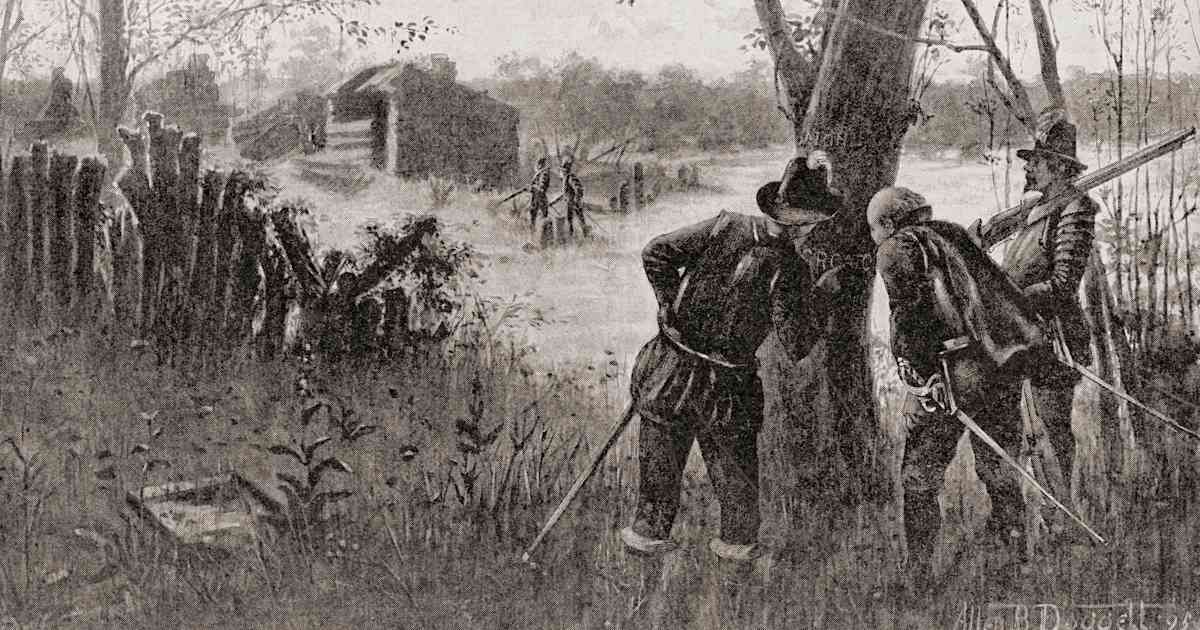
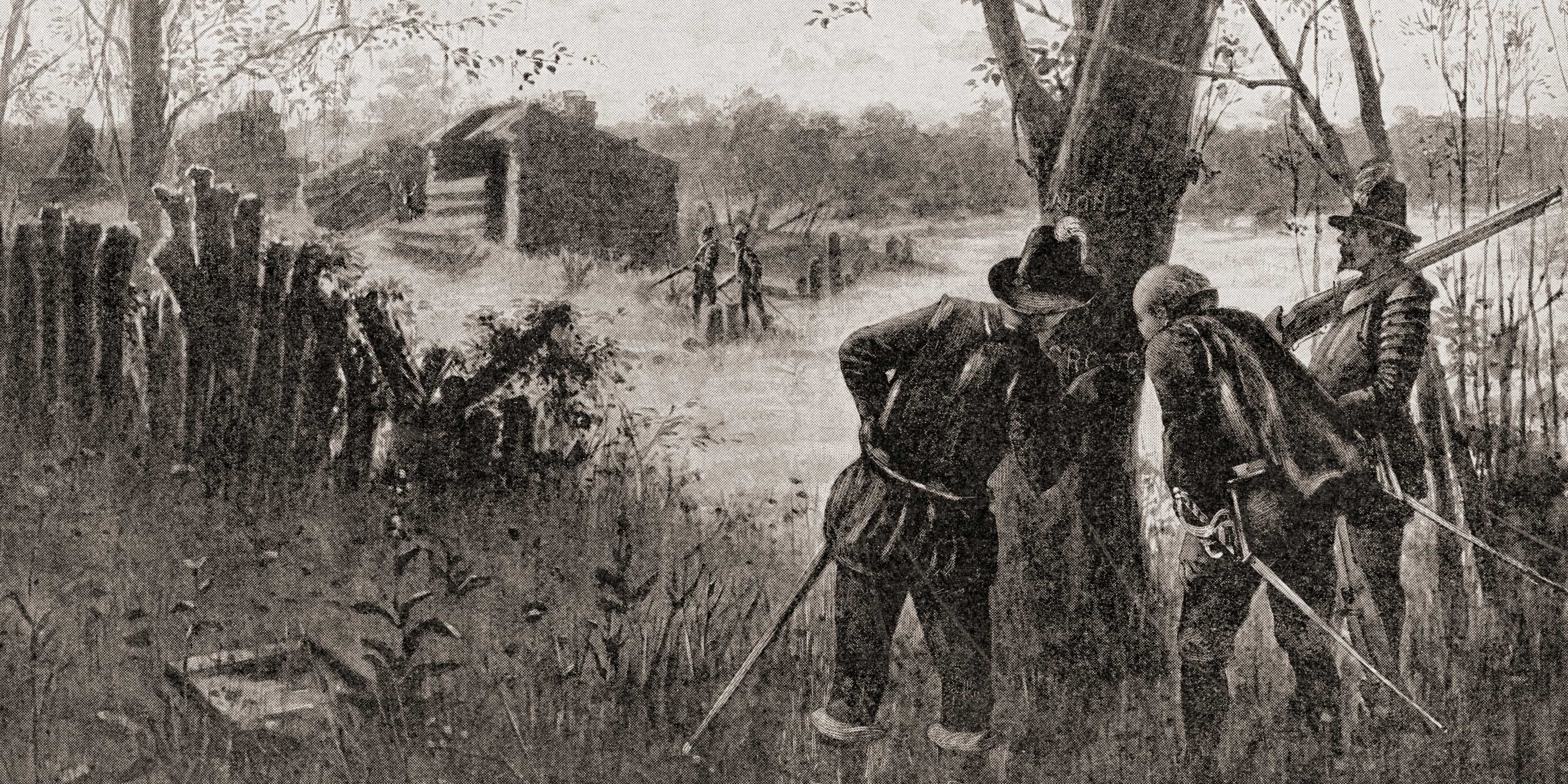
When Governor White stepped ashore in 1590, the scene was hauntingly quiet but notably orderly. The houses had been carefully dismantled rather than burned or destroyed, suggesting a planned relocation rather than a catastrophic raid. White discovered two primary clues: the letters “CRO” carved into a tree near the shore, and the word “CROATOAN” carved into a heavy wooden palisade post.
Crucially, White and the colonists had established a contingency agreement before his departure. If they had to abandon the settlement due to distress or attack, they were instructed to carve a Maltese cross above the name of their destination. No such cross was found. This strongly suggested that the colonists had departed voluntarily and in an orderly fashion. Furthermore, White knew exactly where “Croatoan” was: it was the home island of Manteo’s friendly tribe, located on what is now known as Hatteras Island, roughly 50 miles south. Unfortunately, a massive storm battered White’s ship, damaging his anchors and forcing him to abandon his search and return to England, never to see his family again.
For a deeper analysis of the initial search and the early theories that arose in the centuries following White’s departure, explore our comprehensive guide on what happened to the Lost Colony of Roanoke.
The 2025 Breakthrough: The Science of Hammer Scale
For centuries, the hypothesis that the colonists simply integrated with local Native populations was treated as a plausible but unproven theory. However, monumental archaeological findings announced in May 2025 on Hatteras Island have injected concrete physical evidence into the debate. A dedicated team of researchers, including local historian Scott Dawson and British archaeologist Professor Mark Horton, uncovered a game-changing artifact: hammer scale.
What is Hammer Scale and Why Does It Matter?
Hammer scale consists of micro-flakes of iron oxide that fly off metal when a blacksmith hammers hot iron on an anvil. It is a highly localized byproduct of blacksmithing. Because hammer scale is essentially industrial waste, it was never an item of trade. Furthermore, 16th-century Algonquian tribes did not practice traditional metallurgy or forge iron. Therefore, the discovery of multiple piles of hammer scale buried beneath a thick, undisturbed layer of historical refuse (a shell midden) geologically dated to the late 16th century strongly implies that English blacksmiths were actively working metal on Hatteras Island.
Historians like Professor Kathleen DuVal of the University of North Carolina point out that the colonists arrived with limited resources. Desperate to survive, they likely worked to re-forge existing metal items—such as nails, chains, or old tools—into highly practical agricultural implements or trade goods. The presence of these iron flakes in a layer of soil containing virtually no other European trash suggests that the settlers lived cohesively alongside the Croatoan people, gradually assimilating into their cultural landscape over time.
Turning Points and the Legacy of Assimilation
This archaeological turning point directly challenges the sensationalist “disappearance” myth. The idea of the “Lost Colony” was popularized in the 20th century, particularly around 1937 with the debut of the famous outdoor drama at Fort Raleigh. This framing overlooked the obvious historical clues, favoring a romanticized, eerie mystery over a practical story of indigenous hospitality and human survival.
By blending with the Croatoan people, the Roanoke settlers chose survival over isolation. The island of Roanoke was poorly suited for long-term agriculture, whereas the mainland and surrounding islands offered better hunting, fishing, and established agricultural systems run by Indigenous communities. To avoid starvation, moving in with a friendly, established native town like the Croatoans was the most logical step. Over successive generations, the European bloodlines and technologies became thoroughly integrated into the local Native American population, explaining early colonial reports from the 17th century of Native individuals with grey eyes, fair hair, and an unusual familiarity with European customs.
Long-Term Impact on American Colonization
The lessons of Roanoke profoundly shaped England’s later, successful attempts to colonize North America. When the Virginia Company established the Jamestown colony in 1607, they did so with an acute awareness of Roanoke’s vulnerabilities. The Jamestown settlers knew that isolation from local tribes and a lack of agricultural self-sufficiency could mean total destruction or forced assimilation.
Roanoke also served as a warning about the fragility of early settlements, prompting subsequent colonial charters to emphasize strong supply lines, diversified economies, and more fortified defensive positions. It underscored the absolute necessity of negotiating—and sometimes fighting—for resources with the established Indigenous nations of the Chesapeake and Atlantic regions, a dynamic that would define American history for the next three centuries.
Lesser-Known Facts About Roanoke
- The Spanish Were Hunting Them: Queen Elizabeth’s bitter rival, King Philip II of Spain, was actively searching for the Roanoke colony. The Spanish crown viewed the English settlement as an illegal encroachment and a base for piracy. Spanish search parties actually sailed into the Chesapeake and Outer Banks looking for the English, completely unaware that the colony had already vanished or relocated.
- The Ring That Wasn’t Gold: In 1998, excavators on Hatteras Island found a beautiful signet ring featuring a prancing lion, initially believed to be 16th-century gold belonging to a wealthy Roanoke colonist. Decades later, advanced X-ray fluorescence tests revealed the ring was actually made of brass. This suggested it was a mass-produced trade item, warning archaeologists not to jump to conclusions based on single artifacts.
- Mapmaking Secrets: John White was an extraordinarily accurate cartographer. In 2012, researchers examining his 1585 map, “Virginea Pars,” discovered a tiny, paper patch covering a symbol of a fort located 50 miles inland. This fueled speculations that White had hidden the colonists’ actual backup location from Spanish spies.
Why It Still Matters Today
The story of Roanoke is far more than an ancient mystery; it is a mirror reflecting how historical narratives are constructed. For generations, the focus remained on the “disappearance,” which conveniently ignored the sophisticated society of the Croatoan people who likely saved the settlers’ lives. By shifting the focus from a tragic vanishing to a successful cross-cultural assimilation, we honor both the resilience of the English colonists and the profound generosity of the Indigenous people who took them in.
In modern historical discourse, Roanoke serves as a powerful reminder of the interconnectedness of early American societies. It prompts us to re-examine our origins not as a series of isolated European footholds, but as a complex tapestry of adaptation, cooperation, and mutual survival.
People Also Ask
Did the Roanoke colonists really go to Croatoan Island?
Yes, all historical and modern archaeological evidence strongly points to this conclusion. The colonists carved “CROATOAN” on a palisade without a distress cross, indicating a planned move. Recent excavations on Hatteras Island (historically Croatoan Island) have revealed 16th-century English artifacts and blacksmithing debris (hammer scale), which align with the timeline of the colony’s departure.
Were any bodies ever found at Roanoke?
No human remains or graves belonging to the 1587 Roanoke colonists have ever been discovered on Roanoke Island. The lack of skeletal remains, defensive damage, or burned structures supports the theory that the colonists moved away voluntarily and were not victims of a sudden massacre.
Why didn’t John White go to Croatoan immediately?
When John White discovered the empty colony in August 1590, he did attempt to sail south toward Croatoan. However, severe Atlantic storms battered his ships, destroying his anchors and threatening his crew’s lives. Low on provisions and facing hurricane-season weather, White was forced to abandon the rescue attempt and return to England.
Conclusion: From Mystery to History
The “Lost Colony” of Roanoke was likely never truly lost. Instead, they did what any group of desperate, starving human beings would do: they adapted, relocated, and joined forces with those who knew how to harvest the land and sea. Thanks to the remarkable 2025 discovery of hammer scale on Hatteras Island, the romanticized myth of a phantom disappearance is gradually giving way to a much richer, scientifically backed truth. The legacy of Roanoke is not one of a ghostly vanishing, but of survival, endurance, and the very first merging of European and Indigenous cultures on American soil.


