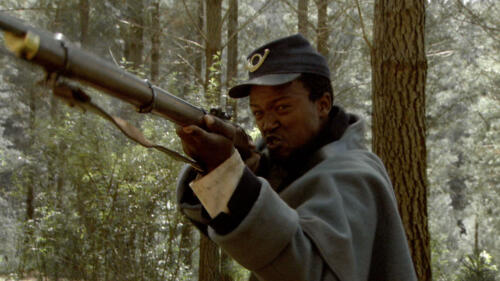
The Civil War was a defining epoch in American history, transforming the nation’s political, social, and moral landscape. Amidst this bloody conflict emerged one of the most celebrated and heroic military units to ever wear the Union uniform: the 54th Massachusetts Volunteer Infantry Regiment. Authorized in the wake of President Abraham Lincoln’s Emancipation Proclamation, this exceptional regiment was the first official, federally authorized Black unit recruited in the Northern states. Their journey was not merely a military endeavor; it was an ideological crusade against systemic prejudice, skepticism, and the brutal reality of slavery. From their rigorous training at Camp Meigs near Boston to their legendary, tragic charge at Fort Wagner, South Carolina, these men fought on two fronts—against the Confederate Army on the battlefield and against racial discrimination within their own ranks. Their unparalleled bravery permanently altered the course of the war, proving to a skeptical nation that Black patriots possessed the same courage, discipline, and devotion as any other soldier. Understanding the story of the 54th Massachusetts Infantry is vital to appreciating the broader, enduring legacy of African American contribution to American freedom.
Historical Background: The Birth of an Experimental Regiment
Before 1863, the American Civil War was widely viewed in both the North and the South as a “white man’s war.” Despite the pressing moral issue of slavery, the federal government hesitated to enlist African American men into combat roles. This hesitation ignored the long legacy of early Black patriots, such as the 7 black heroes of the American Revolution who fought valiantly for a freedom they did not yet fully possess. The reluctance also overlooked Peter Salem’s revolutionary story and other early pioneers who laid the groundwork for Black military service. However, as the bloody war dragged on and Union casualties mounted, the sociopolitical pressure to arm Black men became overwhelming.
Following President Lincoln’s signing of the Emancipation Proclamation, which officially went into effect on January 1, 1863, the Union military was finally permitted to organize all-Black combat units. Massachusetts Governor John Albion Andrew, a passionate and outspoken abolitionist, championed this opportunity. He sought to create an elite, experimental regiment that would serve as an undeniable proof of Black capability, intelligence, and valor. This unit was officially designated the 54th Massachusetts Volunteer Infantry Regiment.
A Chronological Timeline of Key Events
- January 1, 1863: The Emancipation Proclamation goes into effect, legally permitting the Union to enlist African American men into the armed forces.
- January 26, 1863: Secretary of War Edwin Stanton authorizes Governor John A. Andrew of Massachusetts to begin recruiting volunteers of African descent.
- February 1863: Recruitment officially begins. Because Massachusetts has a relatively small free Black population, recruitment offices are established across the North, reaching as far as New York, Ohio, and Canada.
- May 28, 1863: After intensive training at Camp Meigs in Readville, the 54th Massachusetts paraded through the streets of Boston to cheering crowds and boarded the transport ship De Molay, bound for South Carolina.
- July 16, 1863: The regiment sees its first combat action at the Battle of Grimball’s Landing on James Island, South Carolina, successfully holding off Confederate forces to protect retreating Union soldiers.
- July 18, 1863: The historic and tragic assault on Battery Wagner (Fort Wagner) on Morris Island, South Carolina. Colonel Robert Gould Shaw and nearly half of the attacking regiment are killed, wounded, or captured.
- February 20, 1864: The 54th fights with distinction at the Battle of Olustee in Florida, preventing a complete Union rout.
- November 30, 1864: The unit participates in the Battle of Honey Hill, defending Union positions despite extreme terrain difficulties.
- August 4, 1865: The 54th Massachusetts is formally mustered out of federal service, returning to Boston as national heroes.
Important Figures: The Pillars of the 54th Massachusetts
The success and moral fortitude of the 54th Massachusetts Volunteer Infantry were driven by extraordinary individuals who risked everything to make the regiment an indisputable success.
Governor John Albion Andrew
Governor John A. Andrew of Massachusetts was a staunch abolitionist who envisioned the 54th Massachusetts as a model regiment. He knew that the eyes of the nation were on this “experimental” unit. To ensure its prestige, Andrew recruited highly qualified white officers with strong anti-slavery convictions to lead the regiment, believing that their exemplary leadership would shield the Black soldiers from political attacks.
Colonel Robert Gould Shaw
At just 25 years old, Robert Gould Shaw, the son of a wealthy Boston abolitionist family, was chosen to lead the 54th. Initially hesitant to leave his friends in the 2nd Massachusetts Infantry, Shaw accepted the command and quickly became deeply devoted to his men. He fiercely defended their rights, refused segregated camp conditions, and famously joined his soldiers in refusing unequal pay from the federal government.
Frederick Douglass
The legendary orator and abolitionist Frederick Douglass served as one of the chief recruiters for the regiment. Believing that fighting for the Union was the ultimate path to full citizenship and freedom, Douglass famously declared, “Who would be free, themselves must strike the blow.” To demonstrate his deep commitment, two of his own sons, Charles and Lewis Douglass, were among the first to enlist in the 54th.
Sergeant William H. Carney
Born into slavery in Virginia, William H. Carney escaped to freedom via the Underground Railroad and settled in New Bedford, Massachusetts. During the chaotic assault on Fort Wagner, when the Union color guard was shot down, Carney caught the American flag before it hit the ground. Despite receiving severe wounds to his chest, arms, and legs, he carried the flag to the parapet and back to safety. His heroic action earned him the Congressional Medal of Honor, making him the first African American soldier in U.S. history to perform actions recognized by this prestigious award.
Causes, Context, and the Pay Protest
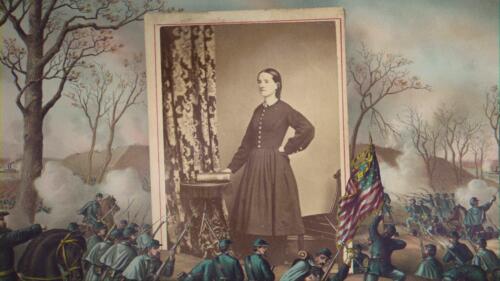
The path to the battlefield was fraught with systemic discrimination. The men of the 54th Massachusetts faced severe prejudice not only from their Southern enemies but also from the Union government they had volunteered to defend. When the regiment was formed, the federal government promised them equal treatment, but the War Department subsequently decided to pay Black soldiers only $10 per month, with an additional $3 deducted for clothing. Meanwhile, white soldiers received $13 per month with no clothing deduction.
The soldiers of the 54th, supported by Colonel Shaw and Governor Andrew, refused to accept this insulting, unequal wage. For 18 grueling months, the men served, fought, and died without receiving a single penny of pay, demanding absolute federal equality. The state of Massachusetts offered to pay the difference, but the soldiers refused that as well, insisting that the federal government must recognize their equal status. In June 1864, after intense lobbying, Congress finally passed a bill granting full back-pay to all Black soldiers who had been free at the start of the war.
Furthermore, the Confederate government issued a terrifying decree: any captured Black soldiers would not be treated as traditional prisoners of war. Instead, they would be enslaved or summarily executed, and their white officers would be put to death for inciting servile insurrection. Despite knowing that capture meant certain death or enslavement, the men of the 54th never faltered.
The Major Turning Point: The Assault on Battery Wagner
The turning point in the regiment’s history—and in the public perception of Black soldiers—occurred on the evening of July 18, 1863, at Morris Island, South Carolina. The target was Battery Wagner, a massive earth-and-sand fortification guarding the southern approach to Charleston Harbor, the very cradle of the Confederacy. Taking the fort was considered an almost impossible task, yet Colonel Shaw volunteered the 54th Massachusetts to lead the vanguard of the assault.
As dusk fell, the 54th charged across a narrow strip of open beach directly into the teeth of heavy artillery and rifle fire. The carnage was absolute, yet the soldiers pressed forward, scaling the walls of the fort and engaging the Confederate defenders in brutal, hand-to-hand combat. Colonel Shaw was shot through the heart and killed on the crest of the parapet while shouting, “Forward, Fifty-fourth!”
Though the assault ultimately failed to capture the fort and resulted in devastating casualties—with 281 of the 600 attacking men killed, wounded, or captured—it was a monumental symbolic victory. The breathtaking courage of the 54th Massachusetts shattered the racist myths of Black inferiority and cowardice. Northern newspapers widely praised their valor, and the public’s attitude toward Black military service was fundamentally transformed.
Long-Term Impact on America
The sacrifice of the 54th Massachusetts at Fort Wagner had profound, lasting effects on the course of American history. Most directly, it sparked a massive wave of African American enlistment. Witnessing the valor of the 54th, President Lincoln and the War Department aggressively expanded the recruitment of Black soldiers, leading to the creation of the United States Colored Troops (USCT). Over 180,000 Black soldiers eventually served in the Union Army, representing roughly 10% of the entire force. President Lincoln later asserted that the Union could not have won the war without the crucial manpower and morale boost provided by these brave men.

Beyond the Civil War, this regiment laid the foundation for the countless black heroes throughout US military history who have served in every subsequent American conflict. Their fight for equal pay and equal treatment in the military became an early, powerful milestone in the long struggle for civil rights, demonstrating that military service was a potent tool for demanding constitutional equality and social reform.
Fascinating and Lesser-Known Facts
- The Ultimate Pay Protest: The soldiers of the 54th went without pay for nearly a year and a half, putting their families through severe financial hardship, just to prove a point about human dignity and equality.
- Buried with His Men: Following the battle, Confederate officers buried Colonel Robert Gould Shaw in a mass grave alongside his fallen Black soldiers, intending it as a deep insult to a white officer. However, when Union forces later offered to recover Shaw’s body, his father famously refused, stating that there was no holier or more fitting resting place for his son than surrounded by his brave and faithful soldiers.
- Global Diversity: Although raised in Massachusetts, the regiment’s ranks were filled with recruits from 15 different states, Canada, and the Caribbean, making it a truly international coalition of free Black men fighting to end slavery.
Why the 54th Massachusetts Still Matters Today
The legacy of the 54th Massachusetts Infantry is not a relic of the past; it remains deeply relevant in modern discussions of civil rights, patriotism, and systemic equality. In 1897, the city of Boston dedicated a magnificent bronze bas-relief memorial by sculptor Augustus Saint-Gaudens on the Boston Common. The monument depicts Colonel Shaw riding alongside his marching Black troops, capturing their quiet dignity and resolute strength. Today, the monument serves as a powerful reminder of the sacrifices made by marginalized communities to secure the promises of American democracy. Their story teaches us that true patriotism often involves challenging the nation to live up to its founding ideals of liberty and justice for all.
People Also Ask (PAA)
Why was the 54th Massachusetts regiment so important?
The 54th Massachusetts was crucial because it was the first Northern, federally authorized Black regiment of the Civil War. Their exceptional bravery at Fort Wagner proved that Black soldiers were highly capable, disciplined, and courageous in battle, which directly led to the recruitment of over 180,000 Black soldiers who helped win the war for the Union.
Did the 54th Massachusetts win the Battle of Fort Wagner?
Tactically, the Union did not capture Fort Wagner during the assault on July 18, 1863, and the 54th suffered devastating casualties. However, strategically and psychologically, the battle was a massive victory because it proved the mettle of Black troops and transformed Northern public opinion in favor of African American military service.
How accurate is the movie Glory about the 54th Massachusetts?
The 1989 Oscar-winning film Glory is highly accurate in its depiction of the regiment’s training, the pay protest, and the heroic assault on Fort Wagner. However, it takes some creative liberties; most of the main characters played by Denzel Washington and Morgan Freeman are fictional composites representing former slaves, whereas the real 54th consisted primarily of free Black men from the North.
Conclusion
The story of the 54th Massachusetts Volunteer Infantry is a soaring testament to the power of courage and conviction in the face of overwhelming odds. By standing up against unequal pay and volunteering for a hazardous assault at Fort Wagner, these men wrote their names into the annals of American history. They did not just fight to save the Union; they fought to redefine what it meant to be an American. Their enduring legacy continues to inspire generations of Americans to fight for justice, equality, and the fulfillment of the nation’s democratic promises.


