On September 17, 1862, the fields surrounding the small town of Sharpsburg, Maryland, became the stage for the single bloodiest day in American military history. The Battle of Antietam left over 22,700 soldiers dead, wounded, or missing, staining the Maryland countryside with unparalleled carnage. Yet, the true historical turning point of this conflict lay not just in the tactical movements of armies, but in the lens of a camera. For the first time in history, the raw, unvarnished horrors of combat were captured before the dead could be buried, forever transforming how the civilian public perceived the reality of war. When entrepreneur Mathew Brady and photographer Alexander Gardner put these graphic images on display in New York City in October 1862, they fundamentally shattered the romanticized Victorian ideals of a noble, heroic sacrifice. Through pioneering Civil War photography, the battlefield was brought directly into the parlors of everyday Americans, creating a visceral psychological shift that continues to influence photojournalism, military documentation, and the ethics of reporting conflict to this day.
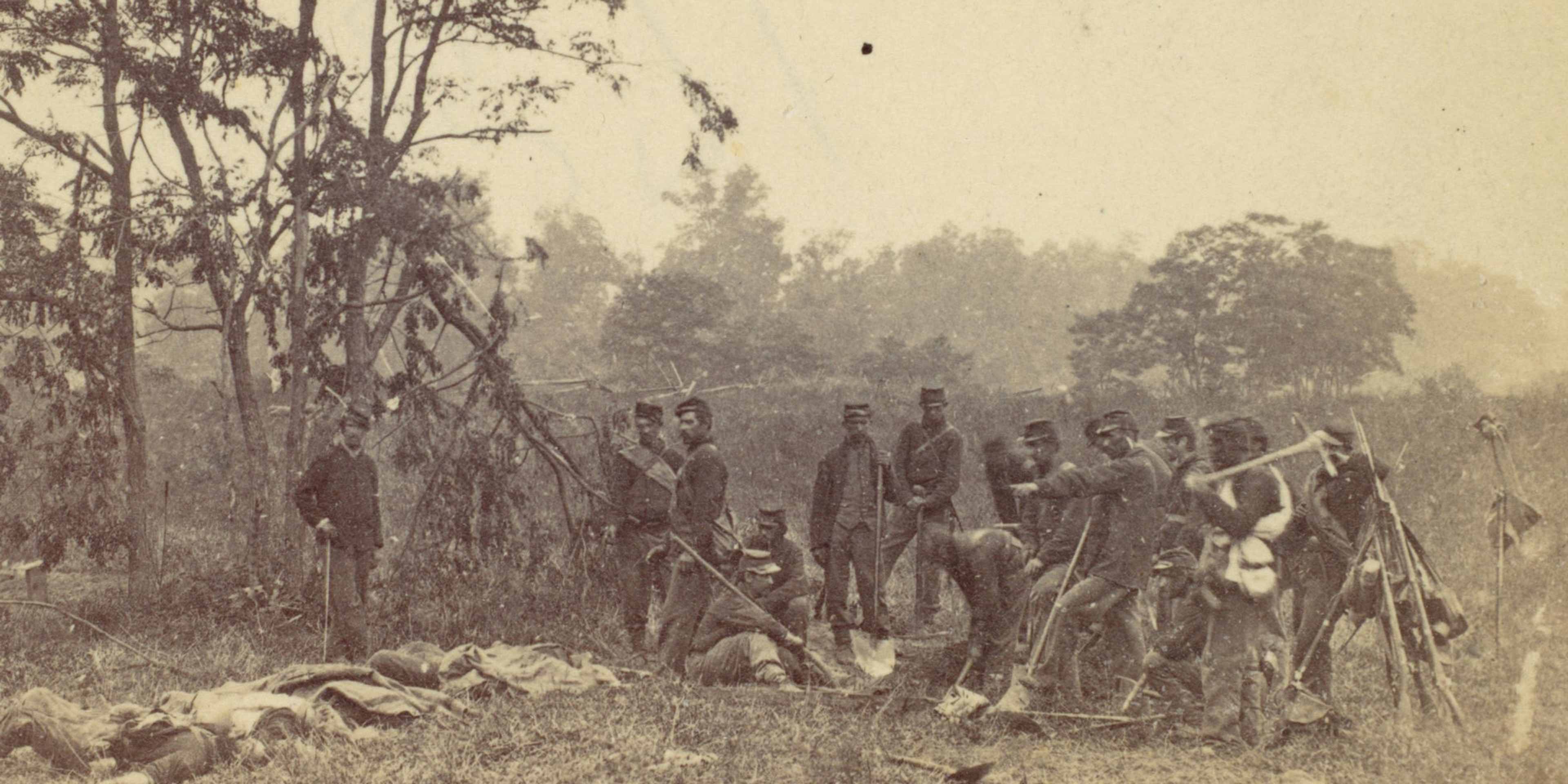
Historical Background: A New Era of Carnage and Technology
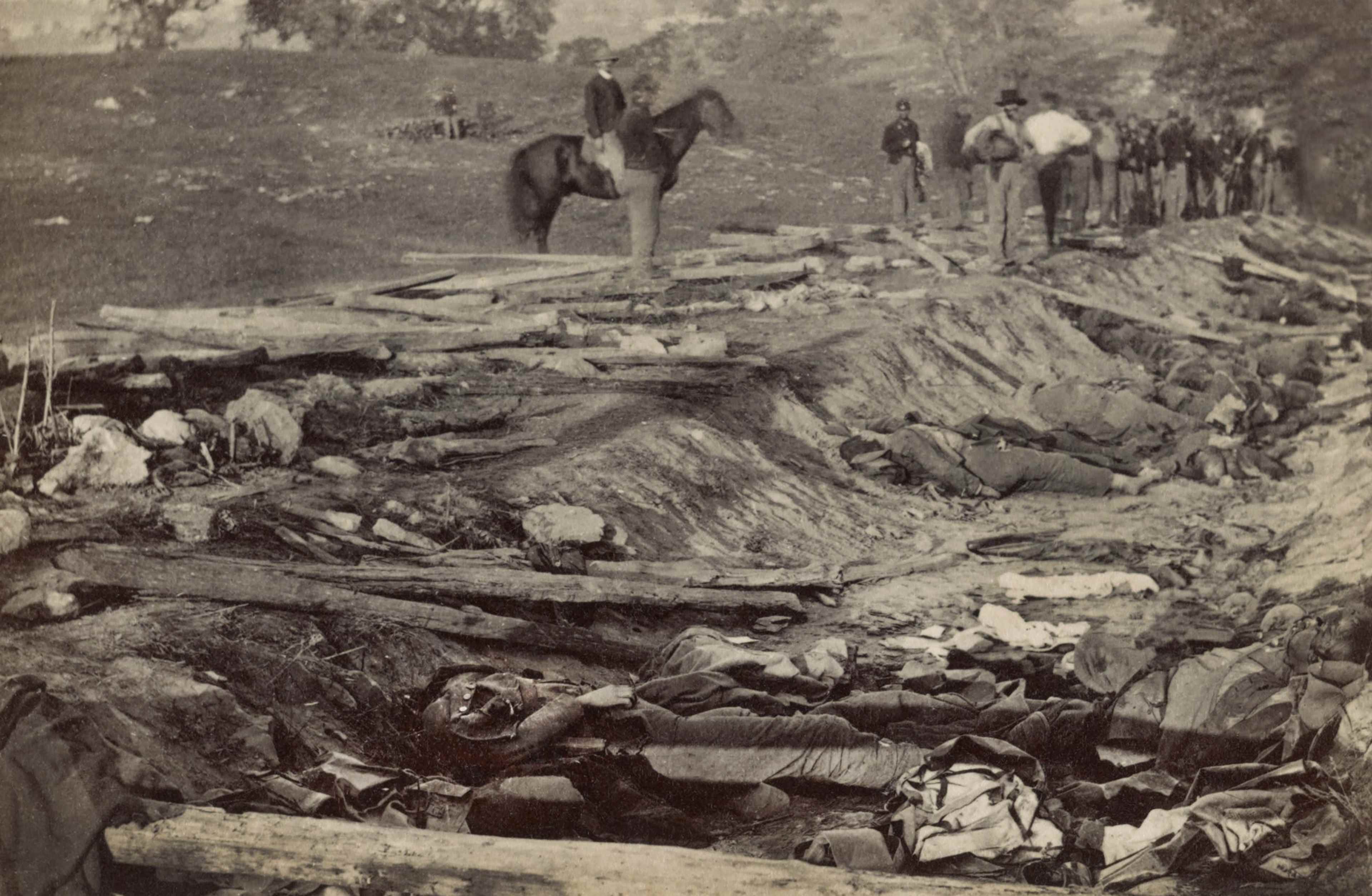
The American Civil War, which began in April 1861, was a conflict of unprecedented scale. By the late summer of 1862, the Confederacy, led by General Robert E. Lee, launched its first invasion of the North, hoping to secure a decisive victory on Union soil, win foreign recognition from Britain and France, and force a peace agreement. The Union Army of the Potomac, commanded by the cautious General George B. McClellan, moved to intercept Lee’s forces in western Maryland. The resulting clash near Antietam Creek was characterized by brutal, close-quarters fighting in landmarks that would forever be etched in blood: the Cornfield, the West Woods, and the Sunken Road.
Simultaneously, a quieter revolution was occurring in the field of technology. Photography, invented only a few decades prior, was coming of age. Up until this point, war had been depicted through highly stylized paintings, woodcut engravings, and romanticized literature. Soldiers died “gloriously” with pristine uniforms, holding national flags, and uttering poetic final words. This “Good Death” was a cornerstone of Victorian culture, comforting families with the belief that their loved ones passed with dignity. The wet plate collodion photographic process, however, was about to dismantle this comforting illusion. This process required a mobile darkroom, heavy glass plates, and volatile chemicals that had to be mixed, exposed, and developed on-site within minutes. Despite these immense technical difficulties, photographers were determined to document the conflict with absolute, uncompromising fidelity.
Chronological Timeline of the Antietam Photographic Revolution
- September 17, 1862: The Battle of Antietam is fought in Sharpsburg, Maryland, resulting in over 22,700 casualties.
- September 19, 1862: Photographer Alexander Gardner and his assistant James F. Gibson arrive on the battlefield. As General Lee’s forces retreat into Virginia, Gardner becomes the first photographer to capture dead bodies on an active American battlefield before burial details can finish their grim work.
- September 21, 1862: Gardner sends an urgent military telegraph to Mathew Brady’s Washington, D.C. gallery, requesting more four-by-ten-inch glass plates to continue his exhaustive stereoscopic documentation.
- October 1862: Mathew Brady opens the groundbreaking exhibition titled “The Dead of Antietam” at his Broadway gallery in New York City. Crowds queue up for hours to witness the shocking images.
- October 20, 1862: The New York Times publishes a historic review of the exhibition, writing that Brady has done something to “bring home to us the terrible reality and earnestness of war.”
- July 1863: Essayist Oliver Wendell Holmes Sr. publishes a deeply reflective piece in The Atlantic Monthly, recounting how the stereoscopic views of the Antietam dead brought back the raw, sickening emotions of his own search for his wounded son on the battlefield.
Key Figures Behind the Camera and the Battle
Understanding the impact of these images requires looking at the key individuals who captured and reacted to them. Mathew B. Brady, often remembered as the “father of photojournalism,” was a masterful entrepreneur and portrait photographer. Sensing the historical gravity of the Civil War, Brady secured permission from President Abraham Lincoln to document the battlefields at his own expense. However, Brady himself rarely took the field photos. Instead, he hired a talented team of field operators, most notably Alexander Gardner.
Gardner, a Scottish immigrant with a keen eye for composition and a relentless work ethic, was the true genius behind the Antietam series. Frustrated by Brady’s practice of claiming all studio photos under his own name, Gardner eventually broke away to establish his own successful photography business. Another critical figure was Oliver Wendell Holmes Sr., a prominent intellectual, physician, and co-inventor of the hand-held stereograph viewer. Holmes’s son, future Supreme Court Justice Oliver Wendell Holmes Jr., was shot through the neck during the battle. The elder Holmes’s desperate search through Maryland to find his surviving son gave him a deeply personal, agonizing connection to Gardner’s photographs, which he described as bearing witness to the “dread reality” of war.
Causes and Context: The Public’s Unpreparedness for Real War
Why did the Antietam photographs cause such an unprecedented public sensation? The answer lies in the deep disconnect between the home front and the battlefront. Prior to October 1862, families in northern cities like New York, Boston, and Philadelphia viewed the war as a distant, abstract event. News arrived via text-heavy newspapers or idealized sketches in illustrated weeklies like Harper’s Weekly. There was no visual vocabulary for the mangled, bloated corpses of young men left in muddy ditches.
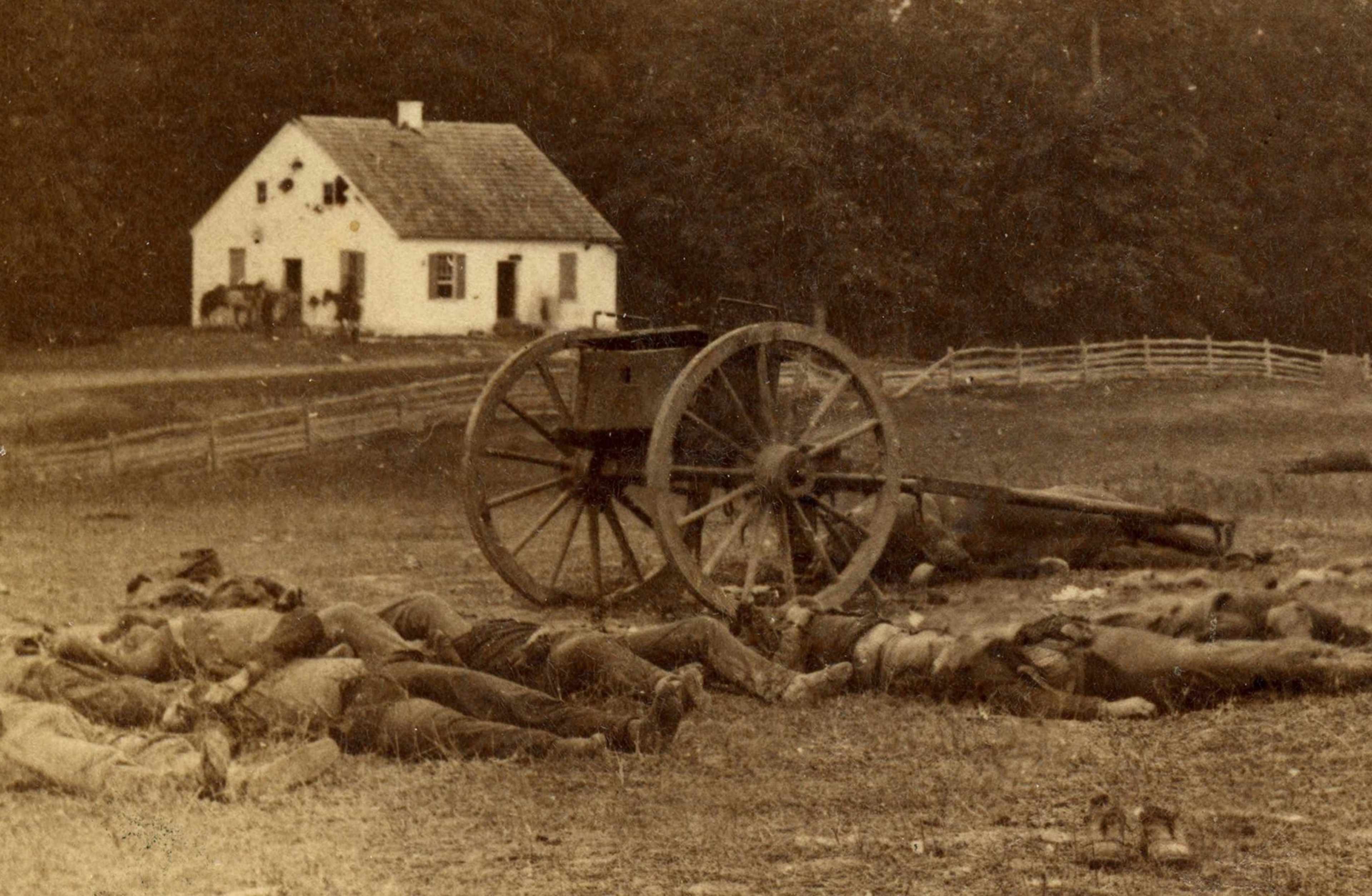
This stark division created a society totally unprepared for the physical reality of industrial warfare. The introduction of rifled muskets and Minié balls had dramatically increased the lethality of combat, resulting in massive, disfiguring wounds. When Gardner’s photographs arrived in Manhattan, they bridged this geographic and psychological gap. The images did not show heroic charges or triumphant generals; they showed swollen bodies lying in the mud, horses ripped apart by artillery, and makeshift graves marked with hasty wooden headboards. This sudden exposure forced the public to confront the true human cost of preservation, directly challenging the political and military rhetoric of the era.
Major Turning Points: The Birth of Battlefield Photojournalism
The exhibition of “The Dead of Antietam” marked a profound turning point in the history of media, journalism, and American culture. Prior to this, photographers had only captured the clean aftermath of battles—damaged buildings, fortresses, or portraits of soldiers in pristine uniforms. Antietam was the first time a camera captured the dead before they were interred. This was made possible because the Union victory, though strategically messy, left the field in Federal hands, allowing Gardner and Gibson immediate and safe access to the grounds.
Furthermore, Gardner utilized stereoscopic cameras, which took dual side-by-side images. When viewed through a stereoscope, these images created a lifelike three-dimensional effect. This 19th-century precursor to virtual reality allowed viewers to “feel their way into the very depths of the picture,” as Holmes described. The visual clarity of these glass-plate negatives was so sharp that viewers in the Broadway gallery could lean in to examine the distorted facial features, tattered clothing, and even the personal belongings of the deceased. This raw immersion established a new standard for documentary realism, laying the conceptual groundwork for modern war correspondence.
Long-Term Impact on America: Shifting Perspectives and Demographics
The long-term cultural impact of Civil War photography cannot be overstated. It initiated a slow but steady erosion of the romanticized myths surrounding warfare, a shift that would echo decades later in the history of American anti-war movements. While the photos did not immediately turn the public against the Union cause, they permanently altered the visual language of conflict, stripping war of its pristine glory and replacing it with grim, democratic reality—death came to all, regardless of rank or patriotism.
This era of visual awakening also coincided with a massive transformation in the military demographic. As the war progressed, the Union increasingly relied on diverse forces, including the heroic contributions of African Americans, whose valorous actions are celebrated today among the legendary black heroes throughout US military history. The democratization of death captured in Gardner’s photographs reflected a broader truth: the cost of freedom and union was being paid by Americans of every background, and their sacrifice was now being documented with absolute photographic permanence.
Lesser-Known Facts About the Antietam Photos
- Staging the Scenes: Modern photographic analysis has revealed that Alexander Gardner occasionally manipulated battlefield scenes to enhance their emotional and narrative impact. He sometimes rearranged bodies, placed rifles or hats near the deceased, or adjusted compositions to tell a more dramatic story—a practice that would be considered a major ethical violation in modern photojournalism but was viewed as acceptable artistic storytelling in the 19th century.
- Precursors to Collectible Trading Cards: Brady sold these grim images in the format of cartes-de-visite (small, inexpensive cards) and stereographs. These cards became some of the very first numbered, collectible photographic series in American history, arriving decades before the advent of baseball cards.
- The Premium Price of War: While scenic stereographs of landmarks like Niagara Falls sold for 25 cents, Brady charged a premium of 50 cents (equivalent to over $10 today) for the Antietam war views, recognizing the public’s immense “terrible fascination” and willingness to pay for a glimpse of the front lines.
Why It Still Matters Today
Today, we live in an era of saturated, real-time media where images of global conflicts are delivered directly to our smartphones within seconds. Yet, the ethical debates we engage in today—regarding military censorship, the visual dignity of casualties, and the psychological impact of graphic violence on the public—all trace their roots directly back to Mathew Brady’s Broadway gallery in October 1862. The Battle of Antietam photography proved that images have the unique power to bypass intellectual arguments and strike directly at the human conscience. It reminds us that behind every geopolitical statistic lies a human story, forever captured in the stark, unyielding light of truth.
People Also Ask
Who actually took the photographs at the Battle of Antietam?
While the photographs were exhibited and marketed under Mathew Brady’s name, they were actually captured by his talented gallery manager, Alexander Gardner, and his assistant, James F. Gibson. Gardner eventually left Brady’s studio to receive proper credit for his historic work.
Why are the Antietam photographs historically significant?
They represent the first time in history that war dead were photographed on a battlefield before being buried. The images shattered the idealized Victorian myths of a peaceful, noble death and brought the gruesome reality of the Civil War directly to the civilian public.
What was the public reaction to “The Dead of Antietam” exhibition?
The public was deeply shocked, fascinated, and horrified. Crowds lined up to view the photos in New York City, and prominent publications like The New York Times remarked that the images brought the grim reality of the battlefield directly to the city’s streets and doorsteps.
Conclusion
The photographs from the Battle of Antietam did more than just document a single day of immense carnage; they revolutionized human perception. By stripping away the romantic veil of war and exposing the stark, painful reality of death, Alexander Gardner and Mathew Brady set a new standard for photojournalism. These haunting glass-plate images remain an enduring testament to the human cost of the Civil War, reminding subsequent generations that the true face of war is not one of pristine glory, but of profound, quiet tragedy.


