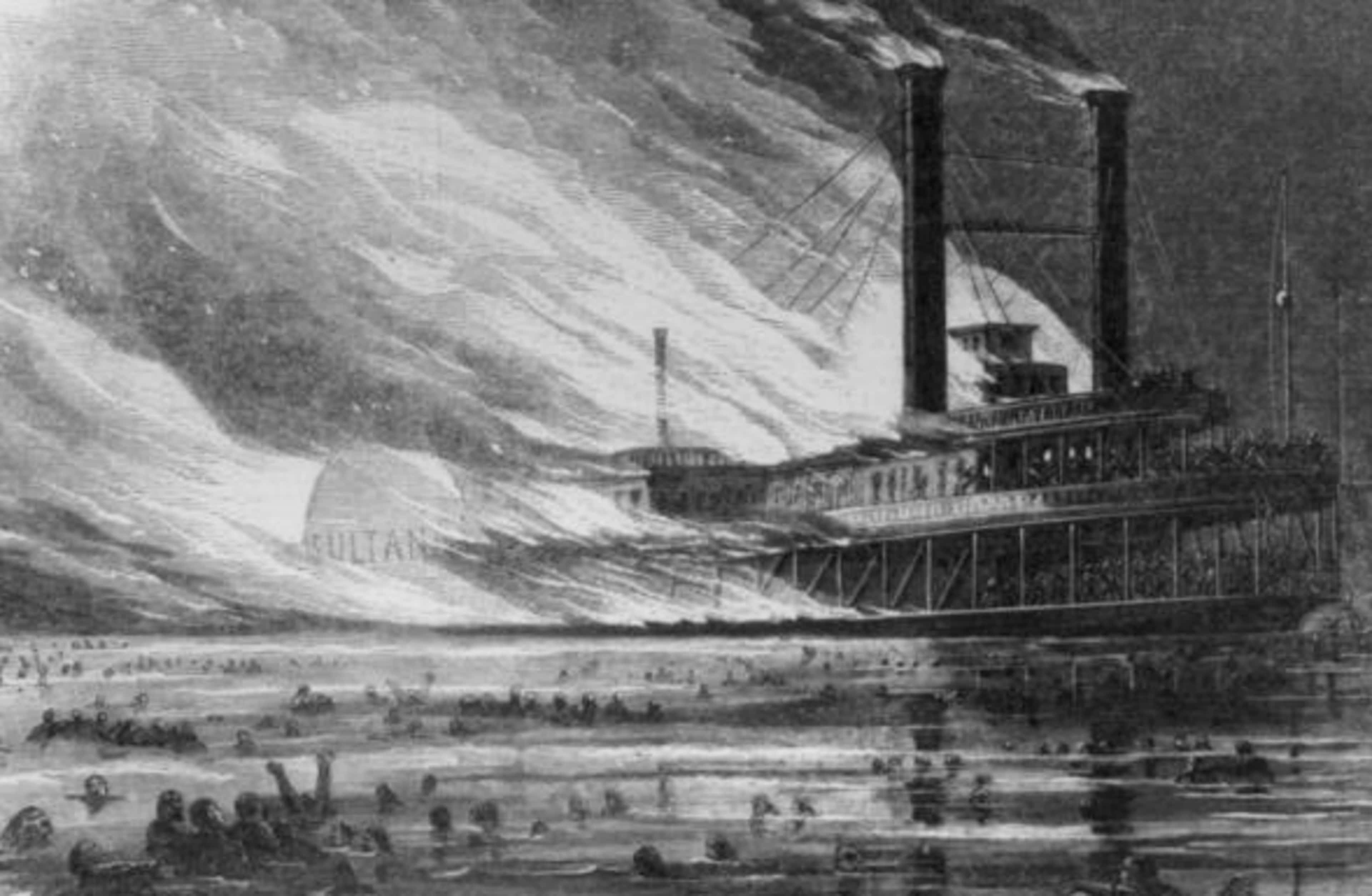
On the chilly, pitch-black night of April 27, 1865, a colossal explosion ripped through the dark waters of the Mississippi River, instantly turning the wooden side-wheel steamboat Sultana into a floating, screaming inferno. The horrific event claimed the lives of an estimated 1,100 to 1,800 people—mostly paroled Union soldiers who had miraculously survived the brutal prisoner-of-war camps of Andersonville and Cahaba. Despite being the worst maritime disaster in United States history, surpassing even the tragic loss of the Titanic in terms of American lives lost, the tragedy of the Sultana remains largely forgotten. It was a catastrophe born of corporate greed, military corruption, and a critical failure of oversight. Cruelly, it was almost immediately erased from public consciousness, swallowed by the monumental national news that dominated the end of the American Civil War.
The Historical Background: A Nation Reeling in the Shadow of War
To understand how such a massive tragedy could be overlooked, one must look at the tumultuous climate of April 1865. The American Civil War was in its death throes. General Robert E. Lee had surrendered to General Ulysses S. Grant at Appomattox Court House on April 9. Just five days later, on April 14, John Wilkes Booth assassinated President Abraham Lincoln, plunging the nation into unprecedented grief and chaos. On April 26, the very day before the Sultana exploded, Booth was hunted down and killed in a Virginia barn. The public was completely consumed by these monumental headlines, which pushed all other news to the margins.
At the same time, the United States government faced the monumental logistical challenge of sending hundreds of thousands of paroled soldiers home. Thousands of Union survivors of Southern prison camps had been gathered at a parole camp near Vicksburg, Mississippi, awaiting passage North. To expedite the process, the federal government offered private steamboat captains a lucrative bounty: $5 per enlisted soldier and $10 per officer they transported. This massive financial incentive quickly sparked a wave of corruption, setting the stage for a deadly maritime disaster.
The Fatal Timeline: Chronology of the Sultana Tragedy
The events leading up to the disaster unfolded rapidly over a matter of days, fueled by economic greed and structural negligence:
- April 15, 1865: Captain J. Cass Mason, co-owner of the Sultana, learns of President Lincoln’s assassination while docked at Cairo, Illinois. He buys up local newspapers to spread the shocking news downriver, where telegraph lines had been destroyed by the war.
- April 24, 1865: The Sultana arrives in Vicksburg, Mississippi, with a severely leaking boiler. A local boilermaker advises Captain Mason that a complete repair is necessary, which would take several days. Fearing he will lose the chance to load lucrative Union prisoners to rival boats, Mason demands a quick, superficial patch instead.
- April 25, 1865: Despite the boiler’s weakened state and the vessel’s legal carrying capacity of only 376 passengers, a corrupt kickback agreement between Captain Mason and Union officers leads to the massive overcrowding of the ship. More than 2,100 paroled soldiers, along with civilian passengers and crew, are crammed onto the sagging decks.
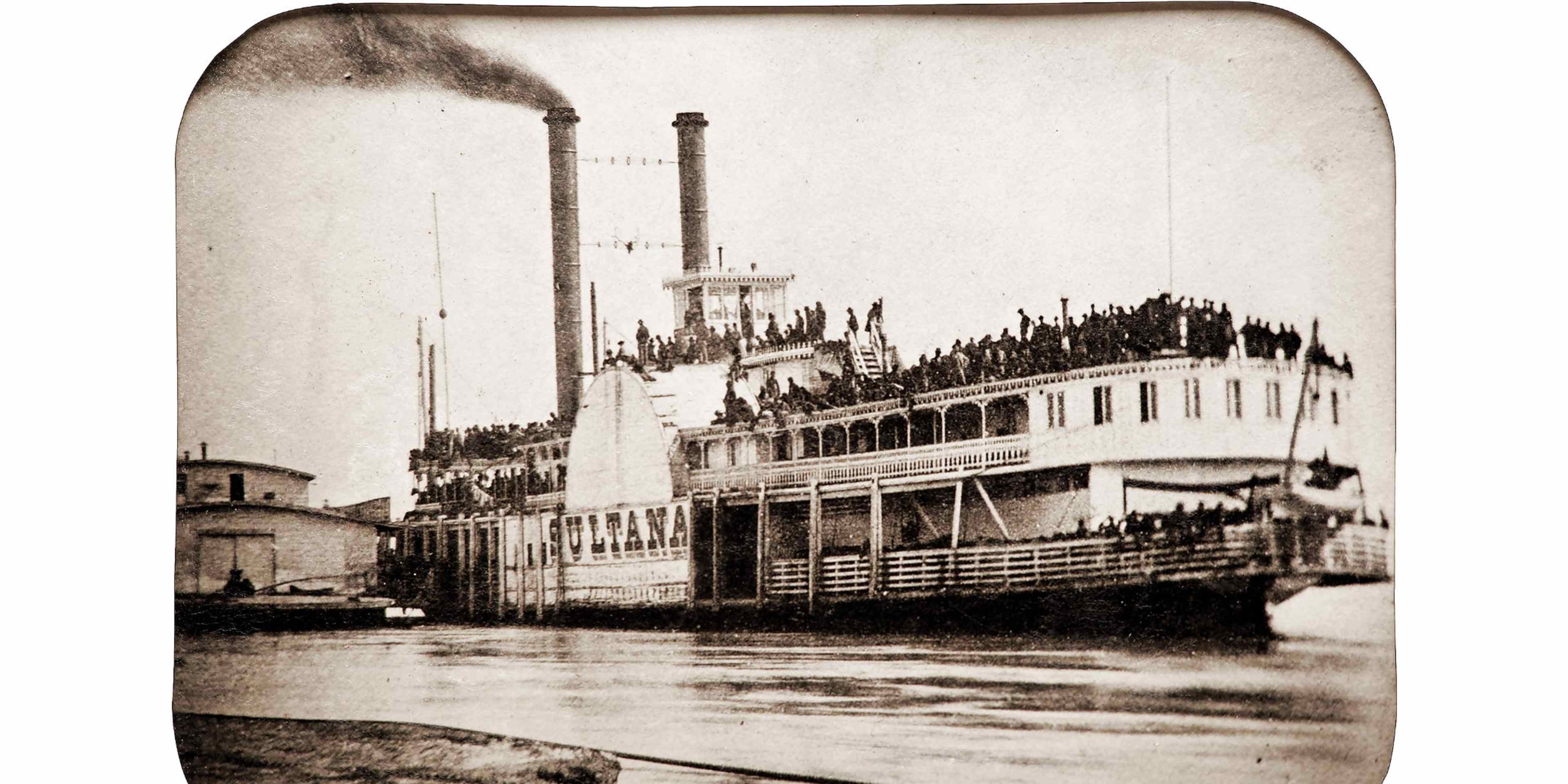
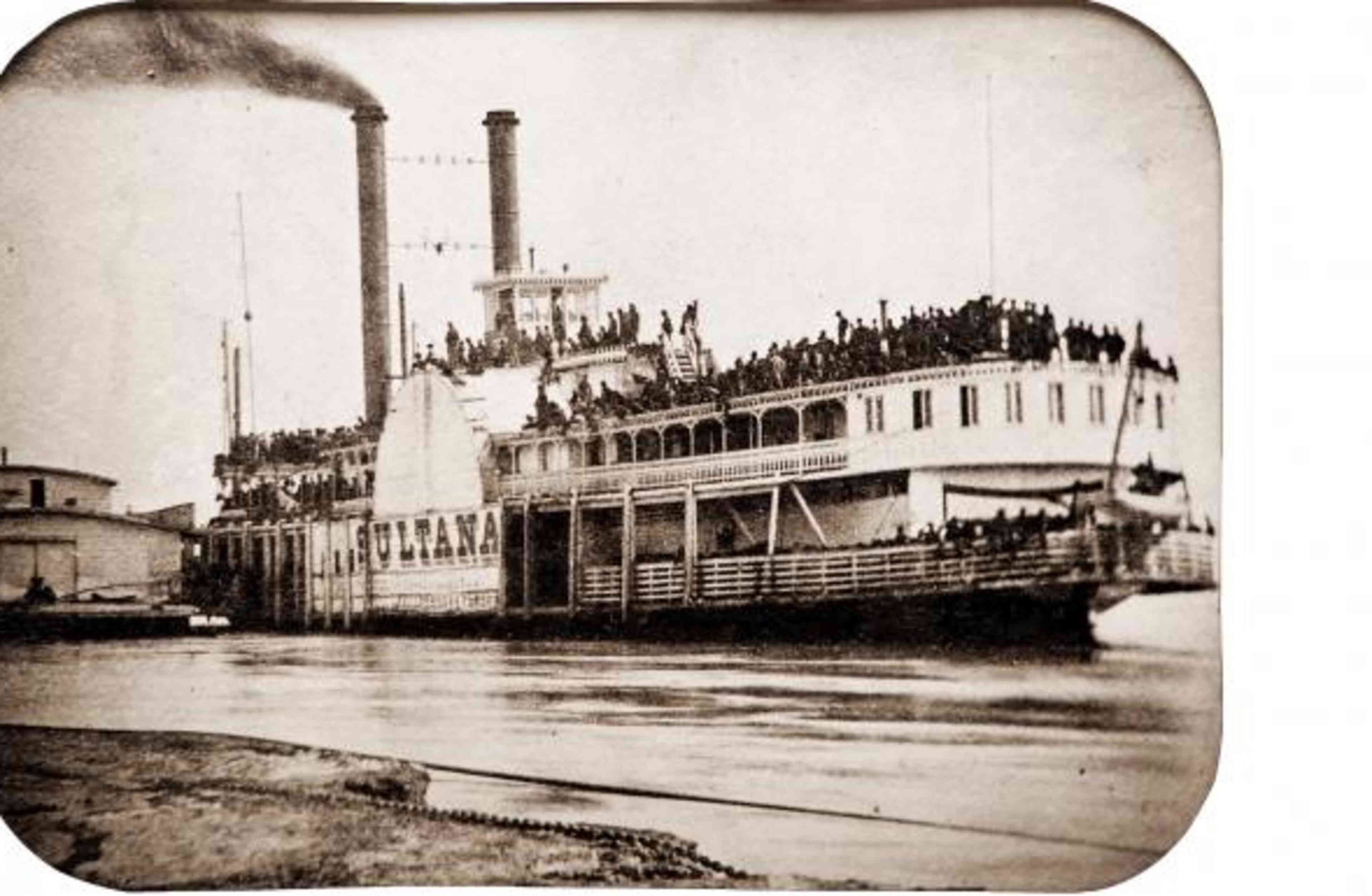
- April 26, 1865: The overloaded Sultana stops briefly at Helena, Arkansas, where photographer Thomas W. Bankes captures a haunting image of the dangerously packed vessel. The decks are literally bowing under the weight of the men.
- April 27, 1865 (2:00 AM): Just seven miles north of Memphis, Tennessee, three of the ship’s four poorly patched boilers explode under intense pressure. The blast tears through the center of the vessel, collapsing the smokestacks and throwing sleeping passengers into the freezing, swollen waters of the Mississippi River.
- April 27, 1865 (Morning): Rescue efforts begin as boats from Memphis rush to save survivors. Out of approximately 2,400 people on board, fewer than 800 survive, and many of those later succumb to their wounds in Memphis hospitals.
Key Historical Figures and the Web of Corruption
The disaster of the Sultana was not a simple act of God; it was the direct result of human failure, greed, and military misconduct. Several prominent figures played critical roles in the tragedy:
Captain James Cass Mason
The co-owner and captain of the Sultana, Mason was in severe financial trouble. When presented with the opportunity to transport Union soldiers, his financial desperation overrode basic safety protocols. He chose to patch a ruptured boiler rather than fix it properly and willingly accepted six times the vessel’s maximum capacity. He perished in the disaster, his body never recovered.
Lieutenant Colonel Reuben Benton Hatch
The Chief Quartermaster at Vicksburg, Hatch was a notorious opportunist with a history of corruption and embezzlement. Hatch brokered the kickback deal with Captain Mason, ensuring that the Sultana received a massive monopoly of the departing Union soldiers in exchange for financial bribes. To escape justice, Hatch resigned from the military shortly after the disaster and successfully ignored subpoenas to testify at military inquiries.
Captain Frederic Speed and Captain George Williams
These Union officers were responsible for organizing the transport of the paroled prisoners at Vicksburg. Despite warnings from other officers that the ship was dangerously overloaded, they rushed the boarding process. Captain Frederic Speed was the only individual court-martialed for his role in the disaster. Though found guilty of neglect of duty, his conviction was ultimately overturned by the Judge Advocate General, and no one was ever legally held accountable.
The Context of Negligence: Why the Boiler Exploded
The technical cause of the disaster lay within the Sultana‘s advanced but highly sensitive ‘tubular’ boilers. Unlike older, safer boiler designs, tubular boilers utilized internal tubes to heat water rapidly, which made the steamboat incredibly fast. However, they required a constant, even level of water to prevent the metal from overheating and weakening.
As the heavily overloaded ship traveled upriver, navigating a powerful spring flood, it leaned from side to side. When the ship tilted, water rushed to one side of the boilers, leaving the exposed metal tubes on the other side dry and red-hot. When the ship righted itself, the sudden splash of cold water against the overheated metal caused a massive, instantaneous buildup of high-pressure steam, triggering the cataclysmic explosion. Coupled with the shoddy repair job authorized by Captain Mason, the boilers stood no chance against the extreme strain.
The Aftermath: How the Tragedy Was Forgotten
The sheer scale of the Sultana disaster makes its historical obscurity deeply tragic. To put it in perspective, the death toll of the Sultana rivaled, and perhaps exceeded, the military casualties in American conflicts of earlier eras, yet it barely made the newspapers. In 1865, the public had developed a profound ‘war fatigue.’ After four years of reading daily casualty lists containing tens of thousands of names from horrific battles like Gettysburg and Antietam, the American public had become numb to mass death.
Furthermore, because the victims were primarily poor, working-class Midwestern enlisted men rather than wealthy elites, their deaths did not command the long-term media attention that later tragedies, such as the sinking of the Titanic, would receive. At the time, the mechanics of early American journalism and the evolution of newspapers meant that national reporting was heavily focused on political restructuring and the hunt for Lincoln’s co-conspirators. The country was desperately eager to move past the horrors of the war and look toward a peaceful future, leaving the victims of the Sultana to be buried in the margins of history.
Lesser-Known Facts and Surprising Anecdotes
- The Haunting ‘Ghost Ship’ Photo: A day before the disaster, photographer Thomas W. Bankes took a photograph of the Sultana at Helena, Arkansas. The image shows the decks so densely packed with soldiers that they look like a solid mass of humanity. Despite this clear evidence of extreme overloading, no port authority stepped in to stop the voyage.
- Former Enemies Become Saviors: In a beautiful twist of humanity, many of the starving and burning Union survivors were rescued by local Southern citizens and even former Confederate soldiers. Men who had been shooting at each other weeks prior swam out into the icy Mississippi floodwaters to pull drowning Union soldiers to safety.
- The Surviving Mule: One extraordinary survival story involves a Union soldier who managed to escape the burning deck and survived the night by clinging to the back of a floating, deceased army mule. He floated nearly ten miles downriver before being rescued near Memphis.
Why the Sultana Matters Today
The legacy of the Sultana remains a poignant chapter in the rich and complex history of the United States military. It serves as an enduring warning against the dangers of unregulated corporate greed, cronyism, and the tragic consequences of cutting corners on safety. In the modern era of the 24-hour news cycle, the story of the Sultana is also a stark reminder of how easily monumental human tragedies can be overshadowed and forgotten when the media and the public are hyper-focused on single, dominant narratives.
People Also Ask (FAQs)
How many people actually died in the Sultana disaster?
While the exact death toll remains a subject of historical debate due to incomplete passenger manifests, most modern historians estimate that between 1,160 and 1,800 people lost their lives in the explosion and its aftermath, making it the deadliest maritime disaster in U.S. history.
Was the Sultana disaster caused by Confederate sabotage?
In the immediate aftermath, rumors spread that a Confederate saboteur had slipped a ‘coal torpedo’ (an explosive device disguised as coal) into the ship’s fuel supply. However, multiple military investigations concluded that the disaster was caused by the combination of a faulty boiler, poor water level management, and extreme overloading.
Who was held legally responsible for the Sultana disaster?
Tragically, no one was ever truly punished. Captain Frederic Speed was court-martialed and found guilty of neglect of duty, but his conviction was overturned. The highly corrupt Lieutenant Colonel Reuben Hatch resigned his commission to escape trial, and Captain Mason died in the explosion.
Conclusion
The tragedy of the Sultana is a somber reminder of the hidden costs of war and the devastating impact of greed and negligence. The young Union soldiers who boarded the vessel had survived the worst horrors of Southern captivity and were only days away from returning to their families. Though they survived the battlefield, they could not survive the corruption that packed them onto a broken vessel. By uncovering and sharing their story, we ensure that these forgotten heroes are finally given the respect and remembrance they so richly deserve.


