In the chilling depths of the Atlantic Ocean, a revolutionary piece of military technology lay silent for over a century, holding a macabre secret that has fascinated historians and scientists alike. The H.L. Hunley, a pioneering Confederate submarine, earned its place in the annals of naval warfare on February 17, 1864, when it became the first submarine in history to successfully sink an enemy warship during combat. Yet, immediately after its historic victory over the USS Housatonic, the sub vanished into the dark waters of Charleston Harbor, taking its eight-man crew to a watery grave. When the vessel was finally discovered in 1995 and raised five years later, archaeologists made an unsettling discovery: all eight crew members were still seated at their stations, peacefully resting without any signs of struggle or panic. The search for what sank the H.L. Hunley and killed its crew has generated decades of scientific inquiry, making it one of the most compelling mysteries in military history. This pivotal event has left an indelible mark on US military history, charting a new and deadly course for naval engineering.
Historical Background: The Desperate Siege of Charleston
The creation of the H.L. Hunley was born of absolute desperation. By 1863, the Union Navy’s blockade was successfully choking the Confederacy. Charleston, South Carolina, a vital Southern port, was under a crippling blockade that halted trade and prevented critical supply lines from reaching Southern forces. Desperate to break this naval stranglehold, Confederate leadership looked toward asymmetrical, highly experimental warfare. Horace Lawson Hunley, an enterprising and wealthy lawyer, teamed up with engineers James McClintock and Baxter Watson to build a secret weapon in Mobile, Alabama: a hand-cranked submersible designed to slip beneath the blockade undetected and deliver a lethal underwater blow.
Chronological Timeline of the H.L. Hunley
To understand the tragic legacy of this pioneer vessel, we must look at its highly volatile operational timeline between 1863 and 1864:
- Early 1863: The submarine is constructed in Mobile, Alabama, utilizing a recycled iron steam boiler.
- July 1863: The vessel is shipped by rail to Charleston, South Carolina, to assist in lifting the Union blockade.
- August 29, 1863: During a practice run, the submarine suffers its first sinking. The wake of a passing ship floods the open hatches. Five of the nine crew members drown, while Lieutenant John A. Payne and three others escape.
- October 15, 1863: The submarine sinks for a second time during a routine dive. This tragedy claims the lives of all eight crew members aboard, including its chief financial backer and inventor, Horace Lawson Hunley.
- February 17, 1864: After being salvaged and repaired once more, the Hunley embarks on its first and final combat mission under the command of Lieutenant George E. Dixon. It successfully sinks the USS Housatonic but fails to return, sinking for the third and final time.
- 1995: Author Clive Cussler and his team from the National Underwater and Marine Agency (NUMA) locate the wreck on the ocean floor.
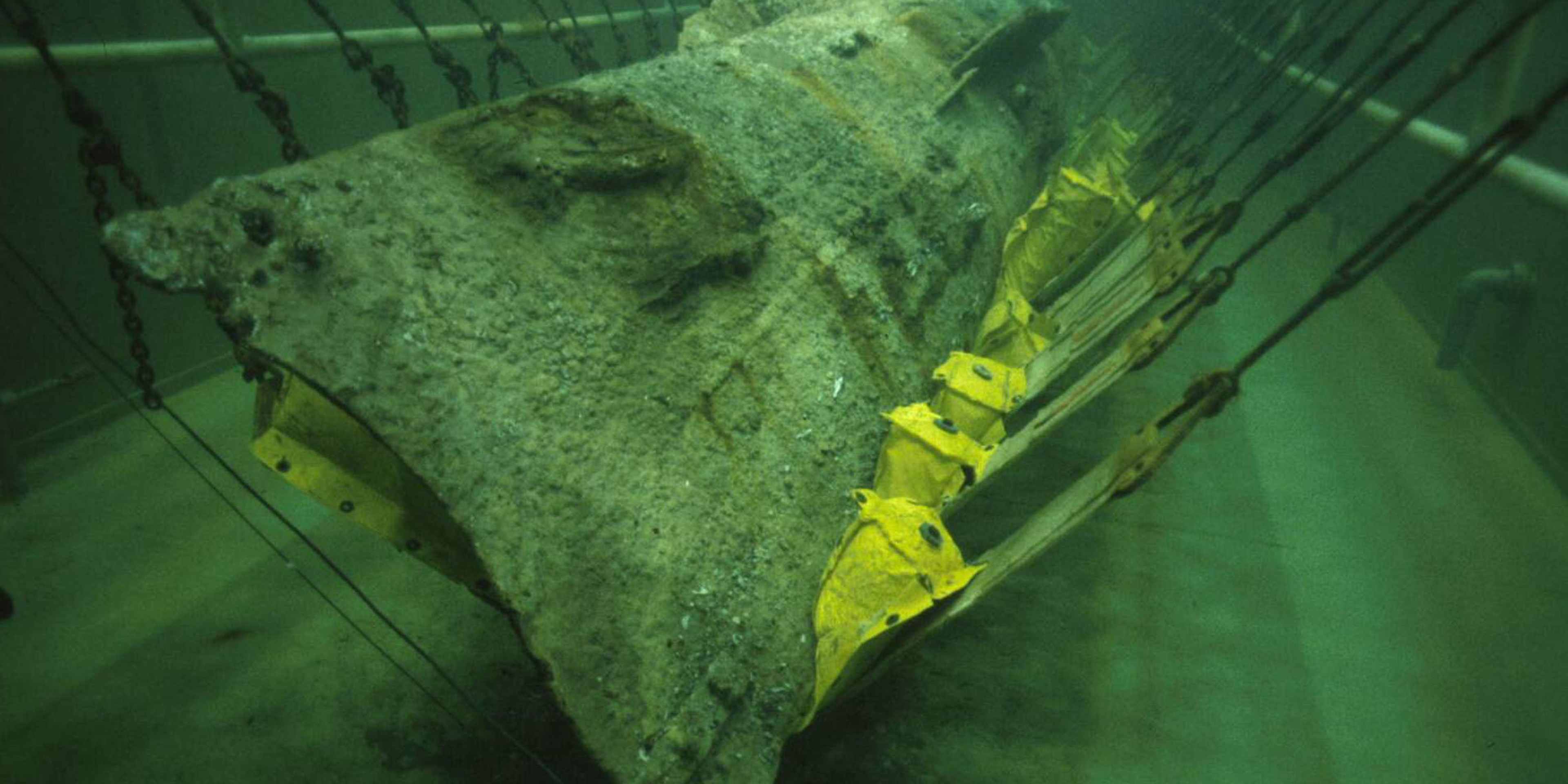
- August 8, 2000: The Hunley is raised from the seabed and transported to the Warren Lasch Conservation Center in North Charleston for preservation and forensic study.
Key Historical Figures
Several notable individuals played central roles in the Hunley’s dramatic saga:
- Horace Lawson Hunley: The visionary developer and financier who poured his personal wealth into the submarine’s design. His dedication to the project ultimately cost him his life during the second sinking.
- Lieutenant George E. Dixon: An infantry officer who took command of the final mission. Dixon was known for his determination and was famously found with a warped gold coin in his pocket that had saved his life during the Battle of Shiloh.
- James McClintock: The lead designer whose engineering choices shaped the submarine’s unique cylindrical structure.
The Sinking and the Scientific Turning Point: The Blast Theory
For over a century, the primary explanation for the crew’s demise was either suffocation due to oxygen depletion or drowning as water filled the cabin. However, when the sub was unsealed in 2000, researchers found no skeletal trauma, and the men were resting calmly at their stations. There was no evidence that they had scrambled toward the escape hatches or panicked.
In 2017, a groundbreaking study led by Dr. Rachel Lance, a biomedical engineer and blast-injury specialist from Duke University, proposed a chilling new explanation. Using a scaled model of the submarine and conducting controlled explosions in water, Dr. Lance’s team demonstrated that the crew was likely killed instantly by the blast wave of their own weapon.
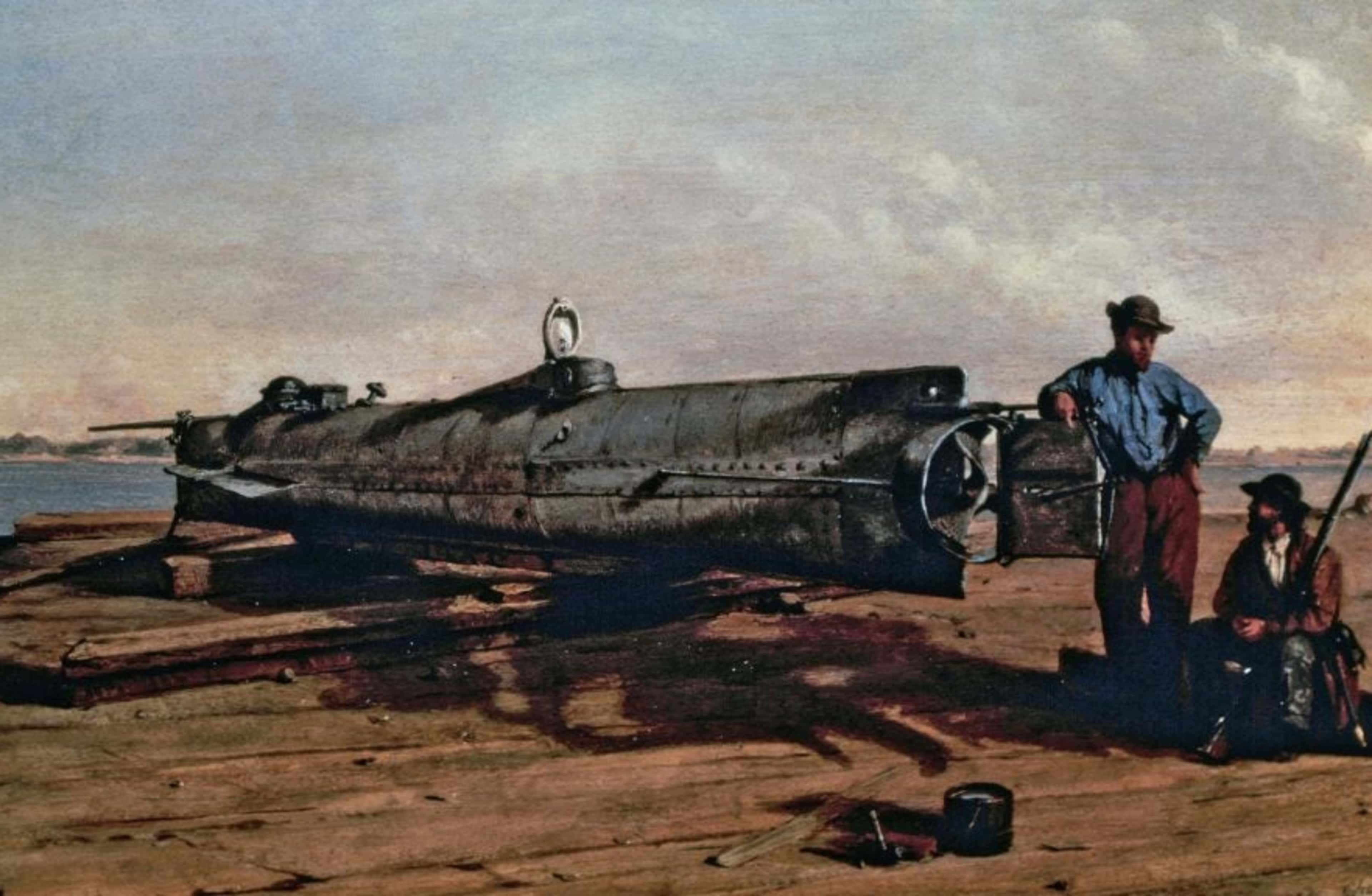
The Hunley utilized a 135-pound black powder spar torpedo. This explosive was bolted to a 16-foot iron pole extending from the submarine’s bow. When the torpedo detonated against the hull of the USS Housatonic, the explosion occurred less than 20 feet away from the submarine. Dr. Lance’s research showed that the underwater shockwave traveled directly through the thin iron hull of the Hunley. This wave caused rapid pressure changes inside the pressurized cabin, a phenomenon known as “blast lung.” The sudden pressure spike instantly ruptured the delicate blood vessels in the crew’s lungs, filling them with blood and causing immediate unconsciousness and death without damaging their bones. Unmanned and silent, the dead submarine slowly drifted with the currents, sinking to its final resting place.
The Untapped Failsafe: No Sign of Panic
Further adding to the mystery was the 2018 discovery of an untapped failsafe mechanism. Archaeologists working at the Clemson University Warren Lasch Conservation Center uncovered heavy iron blocks, weighing nearly 1,000 pounds, attached to the keel of the submarine. These “keel blocks” were designed to be dropped in an emergency by pulling a series of internal levers. Dropping the keel blocks would have made the submarine instantly buoyant, allowing it to rise to the surface.
However, when archaeologists removed the hardened silt, they discovered that the levers were completely locked in their standard operational positions. The crew had made absolutely no attempt to pull the levers. This physical evidence strongly supports the blast theory; the crew was either instantly incapacitated or killed, leaving them unable to react or deploy their emergency escape mechanism.
Lesser-Known Historical Anecdotes
- Built From a Recycled Boiler: Lacking advanced industrial manufacturing, the builders constructed the Hunley by modifying a cylindrical iron steam boiler. This makeshift design represents a classic example of improvisation during America’s industrial revolution, where iron fabrication was adapted for desperate military measures.
- The Legendary “Lucky” Gold Coin: Lieutenant George Dixon carried a twenty-dollar gold coin given to him by his sweetheart, Queenie Bennett. During the Battle of Shiloh, a Union bullet struck his trousers pocket, hitting the gold coin directly. The coin absorbed the impact, saving his leg and his life. When the submarine was excavated, archaeologists found the bent coin in Dixon’s pocket, inscribed with the words: “Shiloh, April 6, 1862, My Life Preserver.”
- An Accidental Time Capsule: Because the crew died instantly and the vessel remained undisturbed in the ocean muck, it acted as one of the most remarkable famous time capsules ever found. Personal items, including matches, pocket watches, and even intact brain tissue inside the skulls, were preserved for over a century, offering an unprecedented look at Civil War-era daily life.
Why the H.L. Hunley Still Matters Today
The story of the Hunley is not just a tale of Civil War history; it is a vital chapter in the evolution of modern military technology. Today, underwater forensic science, marine archaeology, and blast injury medicine all draw crucial insights from the study of the Hunley. The research conducted by Dr. Rachel Lance and the Warren Lasch Conservation Center continues to help the military understand how blast waves interact with enclosed structures—research that directly informs the design of modern armored vehicles and protective gear for soldiers.
People Also Ask (FAQ)
Did anyone survive the sinking of the H.L. Hunley?
While the final voyage on February 17, 1864, killed all eight crew members, several men survived the submarine’s earlier accidents. During the first sinking in August 1863, four men, including Lieutenant John A. Payne, managed to escape the flooding vessel. No one survived the second or third sinkings.

How deep was the H.L. Hunley found?
The Hunley was discovered in approximately 30 feet of water off the coast of Sullivan’s Island, South Carolina, buried beneath several feet of ocean sediment which helped preserve the iron hull from rapid corrosion.
What happened to the remains of the Hunley crew?
After being carefully excavated and studied by forensic anthropologists, the remains of the eight crew members were buried with full military honors in 2004 at Magnolia Cemetery in Charleston, South Carolina, alongside the crew members who had perished in the previous two sinkings.
Conclusion
The tragic yet groundbreaking journey of the H.L. Hunley represents a watershed moment in naval history. By proving that a submerged vessel could successfully destroy an enemy warship, the Hunley paved the way for modern submarine warfare. Although the brave crew paid the ultimate price, the scientific and historical discoveries salvaged from its iron hull continue to educate and intrigue us today. The mystery of what sunk the Hunley may finally be laid to rest, but its legacy as a pioneer of the deep remains immortal.


