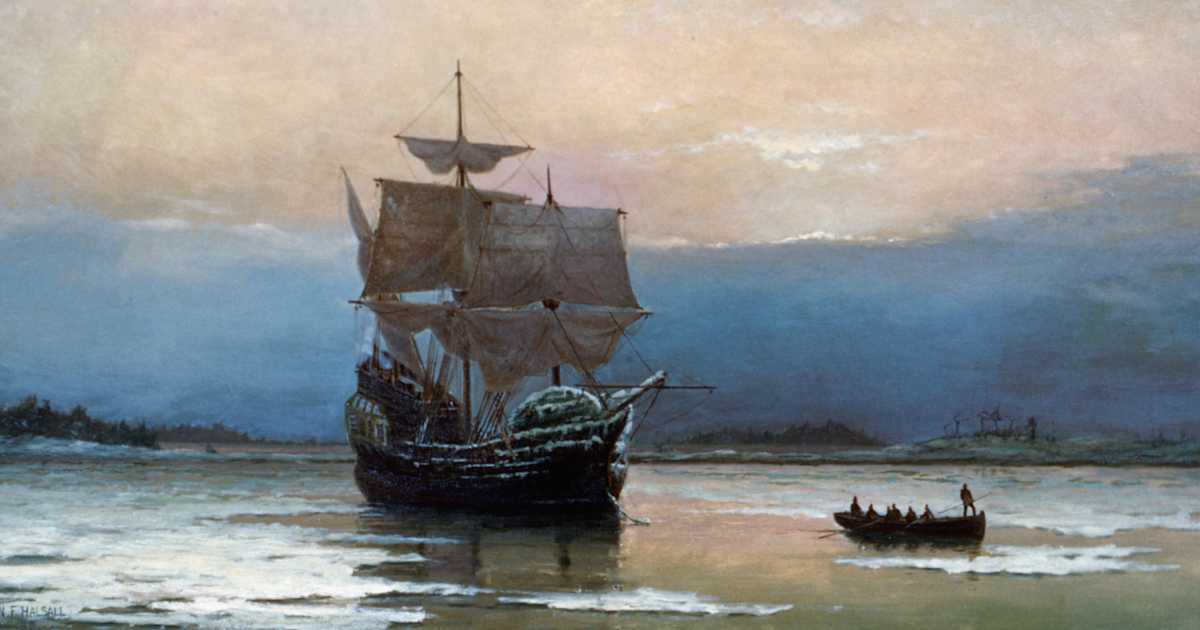
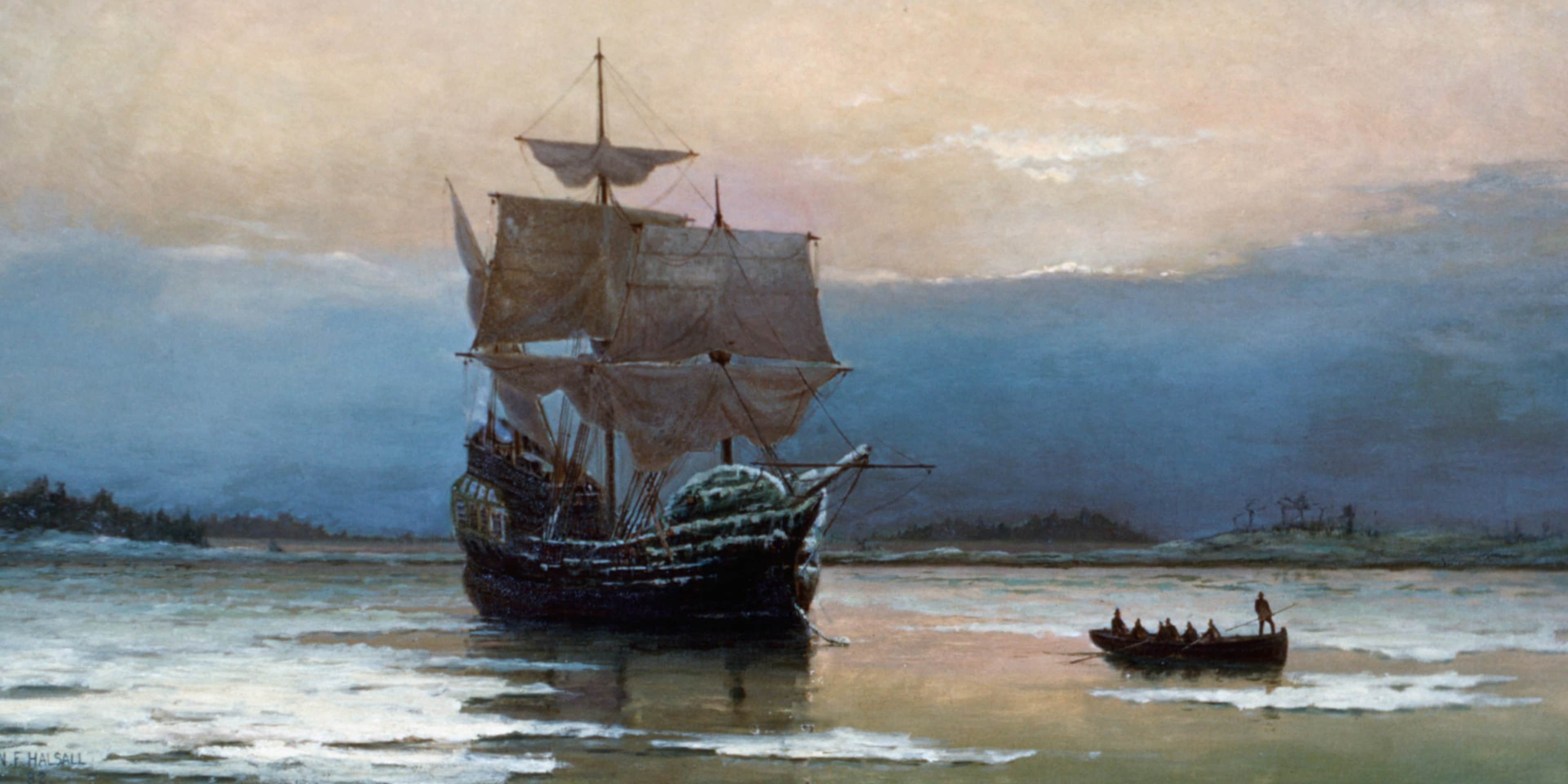
In the chilly autumn of 1620, a double-masted merchant ship carrying 102 passengers and roughly 30 crew members dropped anchor in what is now Provincetown Harbor. This vessel, the Mayflower, carried a group of religious Separatists seeking freedom from the Church of England, alongside secular “Strangers” looking for economic opportunity. Together, these early colonizers laid the physical and cultural foundations of Plymouth Colony. Today, their legacy is woven deeply into the fabric of American history. It is estimated that up to 35 million living people globally can trace their ancestry to this single historic voyage. Over the centuries, these Mayflower descendants have shaped the nation as presidents, pioneering artists, industry captains, and cultural icons. Understanding who these passengers were, the hardships they overcame, and the profound historical mark left by their descendants provides an essential window into the evolution of America’s national identity.
The Genesis of a Journey: Historical Background and Context
The story of the 1620 voyage is rooted in the turbulent religious landscape of 17th-century England. Under King James I, the Church of England maintained strict religious conformity. A group of radical Puritans, known as Separatists, believed the national church was beyond reform and chose to break away entirely. Facing persecution and imprisonment, they fled to Leiden, Holland, in 1608. While they found religious tolerance there, they struggled economically and worried their children were losing their English cultural identity to Dutch assimilation.
To preserve their heritage, the Separatists secured financial backing from the Merchant Adventurers, a group of London investors. To offset the high costs, they agreed to share the voyage with the “Strangers”—non-Separatists recruited for their practical skills as tradesmen, coopers, and laborers. The journey across the Atlantic was treacherous, lasting 66 grueling days. Faced with violent North Atlantic storms, a cracked main beam, and rampant disease, the passengers drafted and signed the Mayflower Compact before stepping ashore. This historic document established a self-governing colony based on the consent of the governed, laying an early intellectual cornerstone for American democracy.
Chronological Timeline of Plymouth Colony (1608–1704)
- 1608: English Separatists flee to Leiden, Holland, to escape religious persecution.
- September 1620: The Mayflower departs Plymouth, England, after delays with its sister ship, the Speedwell.
- November 11, 1620: The Mayflower Compact is signed aboard the ship; passengers anchor at Provincetown Harbor.
- December 1620: The colonists select Plymouth as their permanent settlement site.
- Winter 1620–1621: The “Great Sickness” claims the lives of nearly half of the Mayflower passengers.
- Autumn 1621: The colonists celebrate their first successful harvest with the Wampanoag people, later remembered as the “First Thanksgiving.”
- 1630: John Billington, a Mayflower passenger, is hanged for murder, marking the colony’s first execution.
- 1699: Mary Allerton Cushman passes away, the last surviving passenger of the original crossing.
- 1704: Peregrine White, born aboard the Mayflower in Provincetown Harbor, dies.
Famous Mayflower Descendants: Carrying the Legacy Forward
The lineage of those who survived the brutal winter of 1620 blossomed into some of the most influential figures in American history. Below are seven remarkable individuals whose family trees root back to the original Mayflower passengers.
1. George Eastman (Descendant of William Bradford)
William Bradford was one of the primary leaders of the Plymouth Colony, serving as its governor for over thirty years. His extensive journal, Of Plymouth Plantation, remains the single most important primary document detailing early colonial life. Generations later, his descendant George Eastman founded the Eastman Kodak Company in 1892. Much like Bradford chronicled early American life with his pen, Eastman revolutionized the world by bringing roll film and accessible photography to the masses, forever changing how humanity captures its history.
2. Julia Child (Descendant of William and Mary Brewster)
William Brewster was the religious leader of the Plymouth Separatists and a trusted advisor to Governor Bradford. He and his wife, Mary, endured the transatlantic voyage alongside their sons and two young foster children, the More siblings. Centuries later, their descendant Julia Child would capture the hearts of the nation. While Brewster fed the spiritual needs of early Plymouth, Child revolutionized American culinary culture, demystifying French cuisine and teaching millions of Americans the art of fine dining.
3. James A. Garfield (Descendant of John and Eleanor Billington)
The Billingtons were known as Plymouth’s most notorious “troublemakers.” Shortly after arrival, young Francis Billington nearly blew up the Mayflower by firing a musket near a barrel of gunpowder [1]. In 1630, his father, John Billington, became the first English colonist executed for murder after shooting a neighbor [1]. Despite this chaotic heritage, their descendant James A. Garfield rose to become the 20th President of the United States [1]. Tragically, Garfield’s life was also marked by violence; he was assassinated in 1881 by a disgruntled constituent, serving the second-shortest term in presidential history [1].
4. John Adams & John Quincy Adams (Descendants of John Alden and Priscilla Mullins)
John Alden, the ship’s cooper, decided to remain in America rather than return with the ship [1]. He married Priscilla Mullins, whose entire immediate family died during the first winter [1]. Their legendary romance became the subject of Henry Wadsworth Longfellow’s famous 1858 poem, The Courtship of Miles Standish [1]. Their direct descendants included America’s second president, John Adams, and his son, the sixth president, John Quincy Adams, establishing a political dynasty that shaped the American Revolution and early constitutional government.
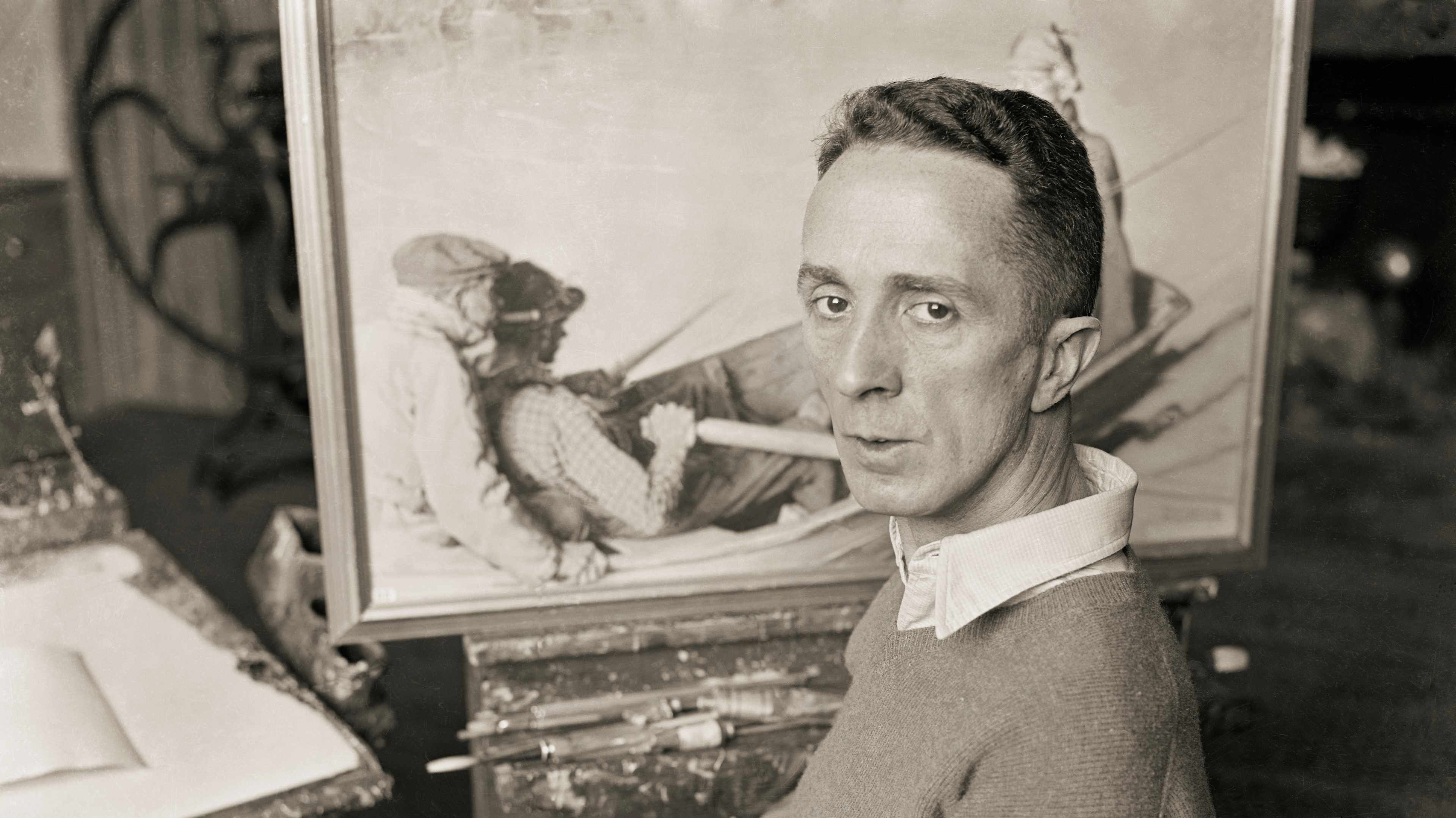
5. Norman Rockwell (Descendant of Stephen Hopkins)
Stephen Hopkins was a seasoned adventurer who had previously survived a shipwreck in Bermuda and lived in Jamestown [1]. He served as Plymouth’s emissary to the local Native American tribes but frequently clashed with Puritan authorities over his secular habits [1]. His descendant Norman Rockwell became the preeminent painter of 20th-century American life [1]. Rockwell’s iconic illustrations for the Saturday Evening Post defined American nostalgia, irony, and warmth—capturing the essence of the society his ancestor helped build.
6. Humphrey Bogart (Descendant of John Howland)
During the treacherous voyage across the Atlantic, young indentured servant John Howland was swept overboard during a violent storm [1]. Miraculously, he grabbed a halyard rope and was pulled back aboard [1]. Howland survived, married Elizabeth Tilley, and became a prominent civic leader [1]. Had he drowned, Hollywood history would look vastly different; his direct descendant was Humphrey Bogart, the legendary star of classic cinema masterpieces like Casablanca and The Maltese Falcon [1].
7. Zachary Taylor (Descendant of Isaac Allerton)
Isaac Allerton was a cunning Separatist businessman who served as Plymouth’s assistant governor and financial agent in England [1]. Though his financial mismanagement eventually forced him out of the colony, his legacy endured through his youngest daughter, Mary, who lived until 1699 [1]. Allerton’s descendant Zachary Taylor became a celebrated military hero in the Mexican-American War and was elected as the 12th President of the United States in 1848, bringing the Allerton line directly into the White House [1].
Turning Points and Indigenous Dynamics
The survival of the Plymouth Colony was not an isolated English triumph; it was fundamentally dependent on the indigenous inhabitants of the region. Upon landing, the colonists settled on the abandoned site of Patuxet, a village devastated by a leptospirosis epidemic introduced by European traders years prior. The arrival of Tisquantum (Squanto) and Massasoit, the leader of the Wampanoag Confederacy, led to a crucial peace treaty and agricultural guidance that saved the starving settlers. However, this early cooperation eventually gave way to colonial expansion, leading to severe resource conflicts, land displacement, and the devastating King Philip’s War (1675–1676) decades later—a turning point that forever altered the sovereignty of regional tribes.
The Long-Term Legacy of the Mayflower Voyage
The cultural and political impact of the Mayflower voyage extends far beyond the branches of individual family trees. The Mayflower Compact represents one of the earliest models of self-determination and written constitutionalism in the Western Hemisphere. The ideals of religious liberty, hard work, and civic responsibility championed by the Pilgrims helped forge the early American character. Furthermore, the massive genealogical footprint of the Mayflower passengers means that their descendants have actively participated in every major era of U.S. history, from the signing of the Declaration of Independence to the frontiers of modern science and art.
Fascinating and Lesser-Known Mayflower Facts
- A Bermuda Shipwreck Connection: Stephen Hopkins’ harrowing 1609 shipwreck in Bermuda is widely believed by literary scholars to have served as the direct inspiration for William Shakespeare’s famous play, The Tempest.
- A Secret Affair and Orphans: The young More children traveling with the Brewster family were sent away on the Mayflower by their father, Samuel More, who discovered his wife was having an affair and claimed the children were not his [1]. Three of the four children tragically died during the first winter [1].
- Born at Sea: Only one child was born during the historic transatlantic voyage. Elizabeth Hopkins gave birth to a son whom they named Oceanus, representing the vast, turbulent waters they crossed [1].
Why Mayflower History and Ancestry Still Matter Today
In the modern era, the legacy of the Mayflower is no longer viewed through a singular, romanticized lens. Today, historians, genealogists, and institutions like Plimoth Patuxet Museums work diligently to present a balanced, inclusive history. This narrative honors both the remarkable perseverance of the European immigrants and the tragic impact of colonization on the Indigenous peoples. Exploring Mayflower ancestry allows us to confront the complexities of the American origin story, serving as a reminder of how our shared past continues to shape contemporary discussions about identity, democracy, and reconciliation.
People Also Ask (FAQ)
How many living people are descended from Mayflower passengers?
It is estimated by genealogical societies that between 10 million and 35 million people worldwide are direct descendants of the 102 passengers who traveled on the Mayflower in 1620.
Who was the last surviving passenger of the Mayflower?
Mary Allerton Cushman, who was only a young child during the 1620 voyage, was the last surviving passenger of the transatlantic crossing [1]. She passed away in 1699 at Plymouth [1].
What was the main purpose of the Mayflower Compact?
The Mayflower Compact was drafted to establish a temporary, democratic government with binding laws. Because the colonists landed outside their charter’s designated territory in Virginia, they needed a legal agreement to maintain order and prevent mutiny among the passengers.
Conclusion
The historic journey of the Mayflower in 1620 was a pivotal moment that set the trajectory for the American experiment. From the ink of Governor William Bradford’s journal to the iconic brushstrokes of Norman Rockwell and the presidential leadership of John Adams and James A. Garfield, the descendants of these early settlers have left an indelible mark on global culture and politics. By studying their complex stories, triumphs, and flaws, we gain a deeper appreciation for the multifaceted lineage that continues to define the United States today.


