The story of Plymouth Colony is often wrapped in the warm, mythic hues of early American folklore—a simplistic tale of black-hatted Pilgrims, a peaceful harvest feast, and the providential birth of a new nation. However, the historical reality of New England’s first permanent European settlement is far more complex, dramatic, and human. Established in December 1620 by a fragile coalition of religious radicals and opportunistic merchants, the colony was forged in the crucible of a devastating winter, geopolitical survival, and an uneasy alliance with the indigenous Wampanoag Nation. To truly understand Plymouth is to look beyond the legendary “Plymouth Rock” and examine the systemic forces, cultural collisions, and political compromises that reshaped the North American continent forever. This settlement did not just mark the beginning of English colonization in New England; it established the early legal and social precedents that would echo through the American Revolution, the U.S. Constitution, and the ongoing struggle for indigenous sovereignty.
Historical Background: Fleeing Faith and Seeking Fortune
To trace the origins of Plymouth Colony, one must look back to the religious turmoil of late 16th and early 17th-century England under the reign of King James I. While the English Reformation had established the Church of England, a passionate faction known as the Puritans believed the church retained too many Catholic traditions and demanded further reform. Within this movement was an even more radical, uncompromising group: the English Separatists. Convinced that the national church was corrupt beyond saving, they defied English law by breaking away entirely to hold private, illicit services.
Faced with intense persecution, fines, and imprisonment, a small congregation of Separatists from the village of Scrooby fled England in 1607 and 1608. They settled in the relatively tolerant Netherlands, first in Amsterdam and later in the vibrant university town of Leiden. For over a decade, they lived in peace, working hard in the Dutch textile industries. However, as the years wore on, the Separatists faced growing concerns. Their children were rapidly assimilating into Dutch culture, losing their English language and heritage. Moreover, the threat of a renewed war between the Protestant Netherlands and Catholic Spain loomed on the horizon. Realizing that Europe could no longer guarantee their spiritual or cultural future, they set their sights on the vast, unfamiliar shores of North America.
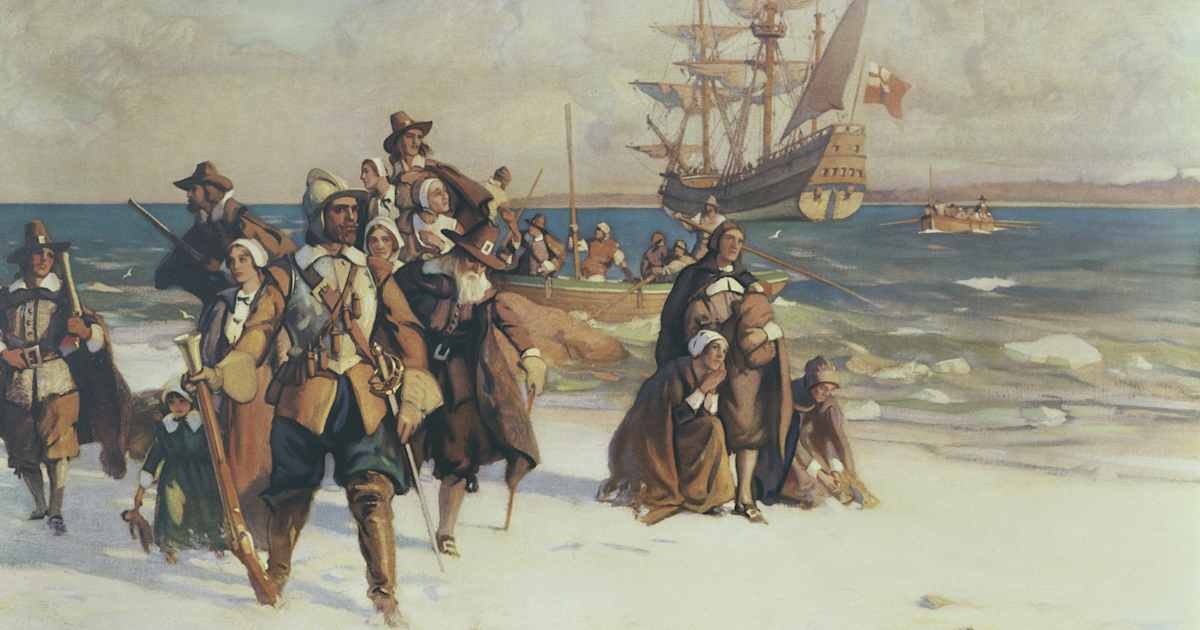
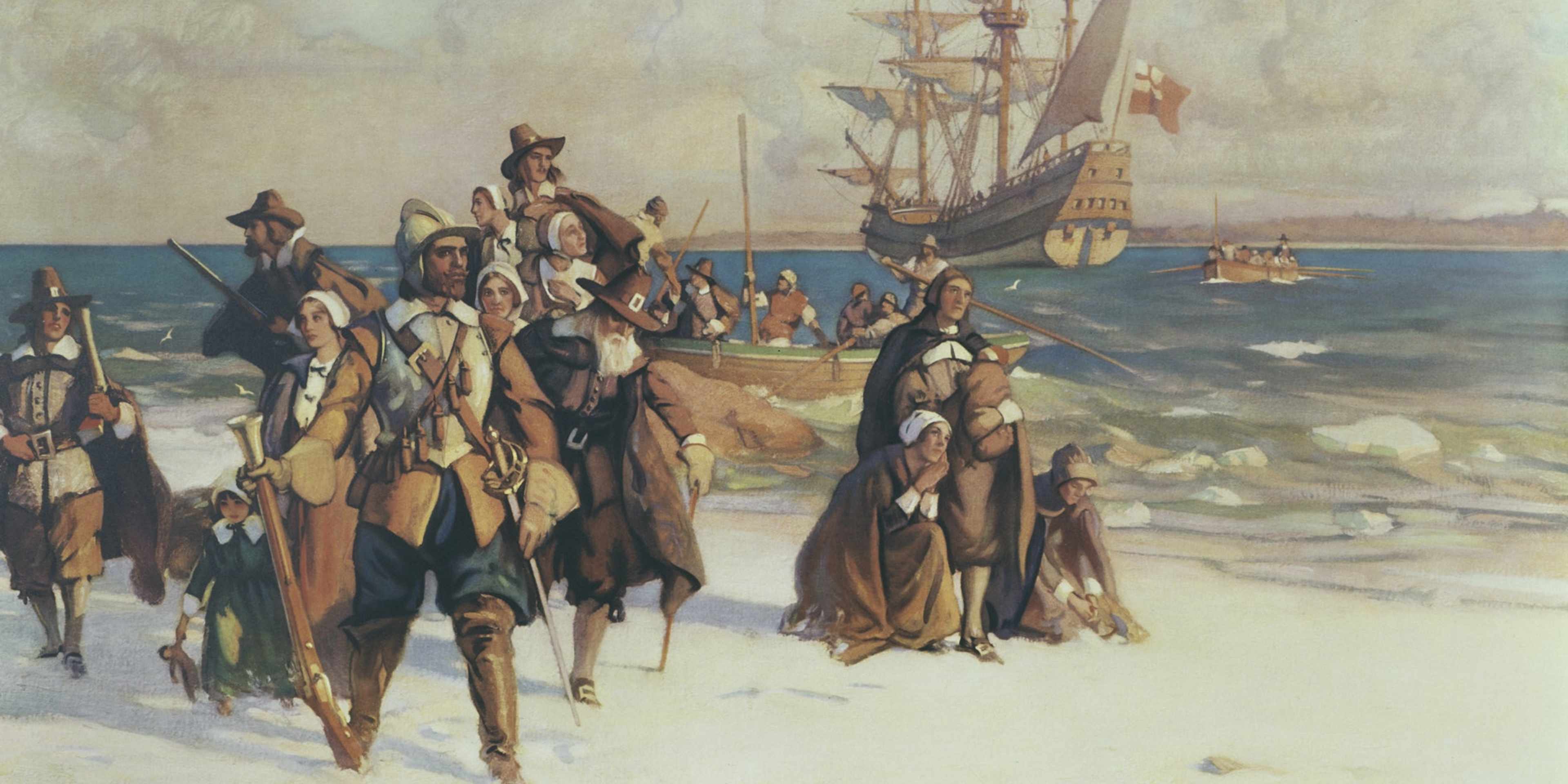
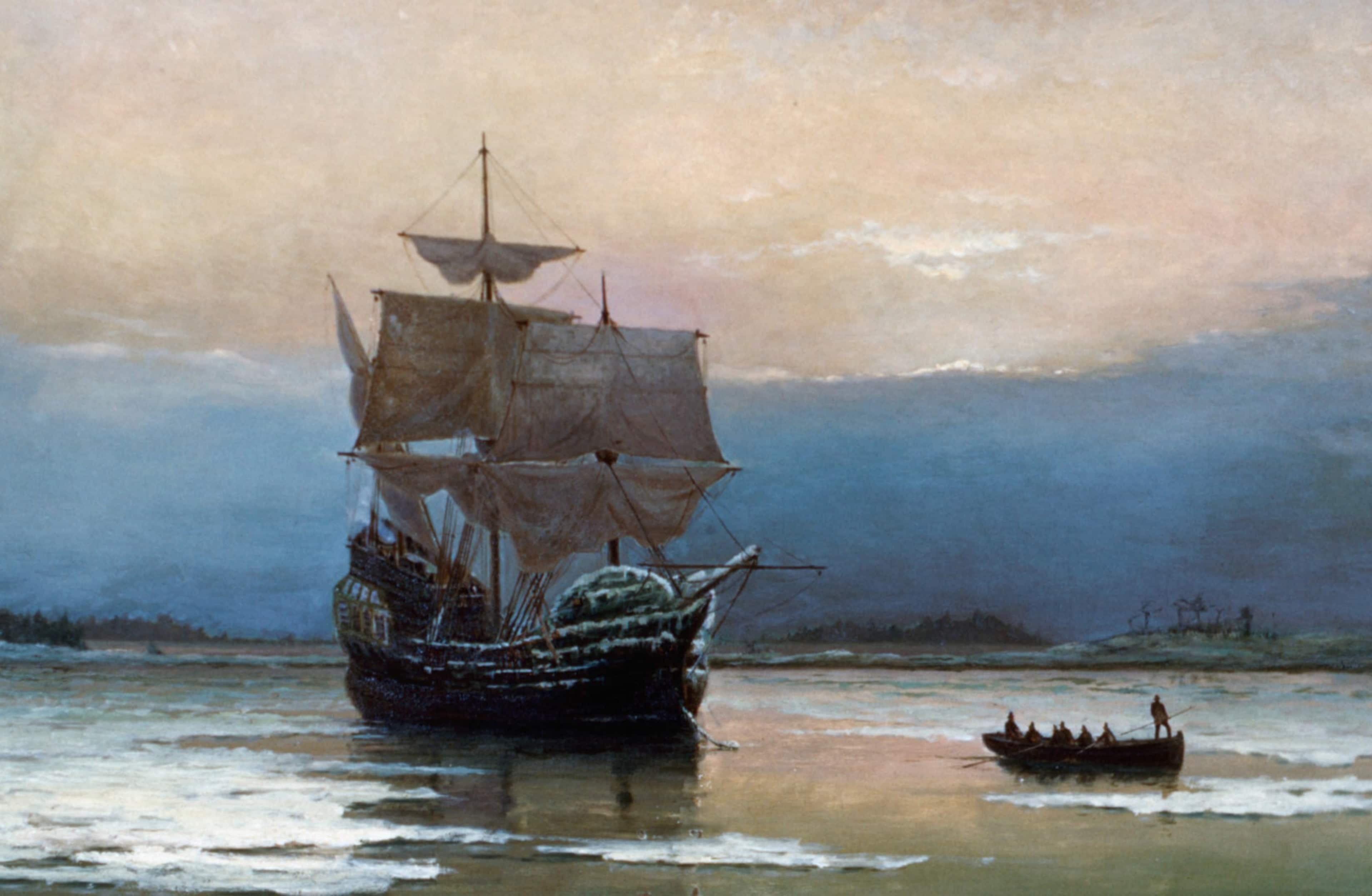
To finance this expensive and hazardous venture, the Separatists entered into a joint-stock agreement with the Company of Merchant Adventurers of London. The merchants provided the capital, ships, and supplies; in return, the colonists promised to send back furs, timber, and fish for seven years. To fill the ship and maximize profits, the merchants also recruited dozens of non-Separatist passengers—craftsmen, laborers, and adventurers whom the religious zealots dryly referred to as “Strangers”. This tense, mixed group of about 102 passengers eventually boarded the Mayflower, setting sail from Plymouth, England, in September 1620 on a grueling, storm-tossed 66-day voyage across the Atlantic.
The Indigenous Landscape: The Wampanoag and the “Great Dying”
Popular history long portrayed the Pilgrims as arriving in an empty, untamed wilderness waiting to be inhabited. The truth is far more complex. The Mayflower anchored off the coast of Cape Cod and eventually landed at a place the English named Plymouth, but which had been known for millennia as Patuxet. This land was the ancestral home of the Wampanoag Nation, the “People of the First Light,” who had lived in southeastern Massachusetts and Rhode Island for more than 12,000 years, cultivating corn, managing forests, and navigating a rich network of coastal villages.
Just a few years before the Mayflower’s arrival, between 1616 and 1619, a catastrophic epidemic introduced by European fishermen and traders swept through the coastal indigenous populations. Often referred to by historians as the “Great Dying,” this plague (believed to be leptospirosis or viral hepatitis) decimated up to 90% of the coastal Wampanoag villages. Patuxet was hit so hard that the entire village was abandoned, leaving empty fields and unburied bones.
When the Pilgrims landed, they did not find a wilderness; they found a recently devastated homeland. This demographic vacuum explains why the Pilgrims were able to establish their settlement with minimal initial resistance. However, it also set the stage for an alliance of mutual survival. To the south, the powerful Narragansett tribe had escaped the plague unscathed. Sensing their vulnerability and fearing subjugation by their rivals, the Wampanoag leader, Great Sachem Ousamequin (frequently referred to as Massasoit), saw a strategic opportunity. By forming an alliance with these heavily armed, desperate English newcomers, the Wampanoag could secure a powerful military deterrent against the Narragansett.
Chronological Timeline of Plymouth Colony
To understand the rapid evolution of the colony, we can look at the defining moments of its early history:
- September 6, 1620: The Mayflower departs from Plymouth, England, carrying 102 passengers after several delays and the abandonment of its leaking companion ship, the Speedwell.
- November 11, 1620: The ship sights land at Cape Cod. Realizing they are far north of their intended destination near the Hudson River (then part of the Virginia Patent), the passengers sign the Mayflower Compact to establish local law and order.
- December 16, 1620: After weeks of exploring the Cape Cod coastline, the Mayflower anchors in Plymouth Harbor. Construction of the first common house begins shortly after.
- Winter 1620–1621: The grueling “Starving Time.” Scurvy, exposure, and tuberculosis ravage the settlement. By spring, only 53 of the original 102 passengers survive, including only four adult women.
- March 1621: Samoset, an Abenaki sachem who learned English from fishermen, walks into the settlement and famously welcomes the colonists. He returns with Tisquantum (Squanto) and Chief Ousamequin, leading to a historic mutual defense treaty.
- Autumn 1621: The first harvest is celebrated over three days with games, military drills, and a feast shared between 50 surviving colonists and 90 Wampanoag men. This event serves as the historic origin of Thanksgiving.
- November 1621: The ship Fortune arrives, bringing 35 new settlers, though minimal provisions, straining the colony’s fragile food supply.
- 1623: The arrival of the ships Anne and Little James. The passengers of these first four ships are designated as the “Old Comers,” receiving special political privileges.
- 1627: The colony transitions from a communal agricultural system to private land ownership, dramatically improving crop yields and individual economic motivation.
- 1675–1676: Relations with local tribes deteriorate into King Philip’s War, a devastating conflict that ends indigenous dominance in the region.
- 1691: Plymouth Colony is formally absorbed into the larger, more prosperous Massachusetts Bay Colony, ending its independent status.
Important Figures and Their Defining Roles
The survival and legacy of Plymouth Colony were shaped by several key historical figures, each playing a critical role in this early colonial experiment:
- William Bradford: A deeply religious Separatist who served as Plymouth’s governor for 30 years. Bradford was the primary architect of the colony’s legal codes, its transition to private property, and its focus on self-sufficiency. His detailed journal, Of Plymouth Plantation, remains the most comprehensive firsthand account of the colony’s early years.
- Ousamequin (Massasoit): The Great Sachem of the Wampanoag. He negotiated the 1621 treaty with the Pilgrims, maintaining a fragile peace for over four decades. His diplomacy was driven by a sophisticated understanding of regional balance-of-power politics.
- Tisquantum (Squanto): A Patuxet Wampanoag who had been kidnapped by English explorer Thomas Hunt in 1614, sold into slavery in Spain, escaped to England, and eventually returned home to find his entire village wiped out by the plague. His unique ability to speak fluent English made him an invaluable interpreter, guide, and agricultural advisor, teaching the Pilgrims how to cultivate native maize and locate rich fishing grounds.
- Myles Standish: A professional English military officer hired by the Pilgrims to lead their defense. Standish was known for his aggressive, often ruthless tactics against local tribes, which successfully intimidated potential rivals but also sowed long-term seeds of distrust.
Causes, Context, and the Mayflower Compact
The creation of Plymouth Colony was fundamentally shaped by an unexpected geographical detour. The Pilgrims held a land patent for the region near the Hudson River, which was under the jurisdiction of the Virginia Company. When rough Atlantic storms and dangerous shoals forced the Mayflower to anchor far to the north at Cape Cod, they found themselves in territory without any recognized English legal authority.
This legal vacuum triggered an immediate political crisis. Several of the non-Separatist “Strangers” aboard declared that once they stepped ashore, they would not be bound by any contract or laws, asserting that “none had power to command them”. Realizing that mutiny and lawlessness would doom their survival in the harsh winter ahead, the Pilgrim leaders took swift action.
On November 11, 1620, while still aboard the ship, 41 adult male passengers signed the Mayflower Compact. This brief, revolutionary document was not a constitution in the modern sense, but a voluntary social contract. The signers pledged to bind themselves into a “civil body politick” and agreed to submit to “just and equal laws” enacted for the general good of the colony. Rather than relying on a royal charter or a distant corporation, the colonists established the radical precedent of self-governance based on the consent of the governed—a concept that would eventually become a cornerstone of American democracy.
The Turning Point: From Alliance to Annihilation (King Philip’s War)
For the first few decades, the peace treaty between the Wampanoag and Plymouth Colony held, primarily because both parties benefited from trade and mutual defense. However, as the mid-17th century approached, the geopolitical landscape shifted dramatically. The Great Migration of the 1630s brought tens of thousands of Puritans to the neighboring Massachusetts Bay Colony. The demand for land grew insatiable.
The English began aggressively expanding their borders, ignoring indigenous land rights, establishing private property boundaries, and utilizing legal maneuvers to dispossess Native people. The fur trade, which had previously linked the two cultures, declined in economic value, leaving land as the only commodity the English desired. Following the death of Ousamequin, his son Metacom (known to the English as King Philip) watched as Wampanoag sovereignty was systematically eroded.
In 1675, tensions boiled over into King Philip’s War, one of the deadliest conflicts in American history relative to population. Metacom organized a broad coalition of Native tribes to drive the English settlers back into the sea. The war was brutal and devastating for both sides; dozens of colonial towns were burned, and thousands of settlers died. Ultimately, the superior resources and alliances of the colonists prevailed. Metacom was killed, and hundreds of surviving Wampanoag—including his wife and son—were captured and sold into slavery in the West Indies. This tragic turning point marked the end of independent Native power in southern New England and set a devastating pattern for future westward expansion.
Lesser-Known Historical Anecdotes
To truly appreciate the gritty reality of Plymouth Colony, consider these surprising and often overlooked historical facts:
- A Giant Screw Saved the Voyage: Halfway across the Atlantic, a violent storm cracked one of the Mayflower’s main wooden support beams. The ship was on the verge of collapsing and turning back, but the passengers had brought a “great iron screw” (likely a heavy jack from a printing press or a house-building tool). They used this screw to raise the beam back into place, securing the ship’s structure and allowing them to complete their journey.
- Desecrated Graves and Stolen Corn: Upon first landing in Cape Cod, the desperate and fearful Pilgrims did not make polite contact. While exploring, they discovered indigenous graves, which they dug up and searched, and stumbled upon stores of corn buried by the local Nauset tribe. The Pilgrims took this seed corn to save themselves from starvation, promising to pay the owners back later.
- The Demographics of the First Thanksgiving: The popular image of the first Thanksgiving shows a balanced, family-friendly gathering. In reality, it was heavily male-dominated and born of grief. Because 78% of the women on the Mayflower died during the first winter, only four adult English women survived to attend the feast. The gathering consisted of 50 English colonists (mostly men and children) and 90 armed Wampanoag men, making it a highly tense, political, and militarized affair.
The Long-Term Impact on America
Though Plymouth Colony was relatively small and eventually absorbed by Massachusetts, its cultural and political impact on the United States is monumental. First, the Mayflower Compact established the ideological foundation for local self-government and constitutionalism in North America. The concept of writing down a mutual covenant to guide a society directly influenced the framing of the U.S. Constitution and the Bill of Rights. Second, the romanticized narrative of the Pilgrims and the first Thanksgiving became a powerful national myth, utilized by President Abraham Lincoln in 1863 to foster national unity during the dark days of the Civil War. However, this myth also long obscured the devastating reality of colonial displacement, epidemic diseases, and the violent subjugation of indigenous nations.
Why It Still Matters Today
Today, Plymouth Colony is not just a chapter in a history textbook; it remains a living, evolving discussion about identity, democracy, and historical justice. For millions of Americans, the Pilgrims represent the timeless virtues of courage, perseverance, and religious freedom. Conversely, for many Native Americans, the landing of the Mayflower is remembered as a day of mourning. Since 1970, Indigenous people and their allies have gathered at Cole’s Hill in Plymouth every Thanksgiving for the National Day of Mourning, honoring their ancestors, correcting the historical narrative, and reminding the public of the ongoing struggles for tribal sovereignty, environmental protection, and cultural preservation. Engaging with this history honestly allows us to appreciate the complex roots of American democracy while confronting the tragic costs of its expansion.
People Also Ask (FAQ)
Where was Plymouth Colony located?
Plymouth Colony was located on the western side of Cape Cod Bay in southeastern Massachusetts, at the site of a former Wampanoag village named Patuxet. Today, this area is the modern town of Plymouth, Massachusetts.
What was the purpose of the Mayflower Compact?
The Mayflower Compact was written and signed to prevent mutiny and establish a temporary government. Because the Pilgrims landed outside their legal patent’s jurisdiction, some passengers threatened to ignore colonial laws. The Compact bound the signers to a “civil body politick” governed by mutual consent and equal laws.
Who was Squanto and how did he help the Pilgrims?
Tisquantum (Squanto) was a Wampanoag man from the Patuxet tribe. Having previously been kidnapped and brought to Europe, he spoke fluent English. He served as an interpreter, negotiator, and guide, teaching the Pilgrims how to catch local fish, hunt beaver, and plant native corn using fish as fertilizer, which saved the colony from starvation.
Was Plymouth the first English colony in America?
No. Jamestown, established in Virginia in 1607, was the first permanent English settlement in North America. Plymouth, founded in 1620, was the first permanent English settlement in the region of New England.
Conclusion
The history of Plymouth Colony is a rich tapestry of faith, survival, cooperation, and tragedy. It was a place where desperate European Separatists and a devastated Wampanoag Nation forged an unlikely alliance out of sheer necessity, launching a political experiment in self-government that would help shape the destiny of a continent. By looking past the simplistic myths and engaging with the raw, historical truths of Plymouth, we gain a deeper, more honest appreciation of the diverse voices, painful conflicts, and enduring ideals that define the American story.


