Long before the Mayflower anchored off Plymouth Rock or Captain John Smith established the Jamestown Colony, a group of brave English pioneers sought to forge a destiny in the untamed wilderness of North America. Known historically as the Lost Colony of Roanoke, this early attempt at permanent English settlement in the New World remains one of history’s most baffling and enduring mysteries. Established in 1587 under the authorization of Queen Elizabeth I and the financial backing of Sir Walter Raleigh, the colony was meant to be a beacon of English imperial ambition. Instead, it vanished into thin air, leaving behind only a cryptic carving on a wooden post and centuries of speculation. Understanding what happened to these 115 settlers requires us to dive deep into the geopolitical rivalries of the late 16th century, the cultural clashes between European colonizers and Native American tribes, and the harsh ecological realities of an unfamiliar continent. The story of Roanoke is not just an unsolved historical cold case; it is the foundational drama of the English colonial endeavor in America.
Historical Background: Queen Elizabeth’s Ambitions and the New World
In the late 16th century, England was a rising maritime power eager to challenge Spain’s lucrative monopoly in the Americas. In 1584, Queen Elizabeth I granted a royal charter to her favorite courtier, Sir Walter Raleigh, authorizing him to discover, search, find, and view such remote, heathen and barbarous lands, countries, and territories, not actually possessed of any Christian prince. Raleigh’s primary objective was to establish a strategic base of operations for English privateers—legalized pirates—to raid Spanish treasure fleets carrying gold and silver from the Caribbean. The first reconnaissance voyage, led by Philip Amadas and Arthur Barlowe in 1584, identified Roanoke Island (off the coast of modern-day North Carolina) as an ideal, sheltered location. They returned to England with glowing reports of a fertile land and two cooperative Indigenous emissaries, Manteo and Wanchese. This set the stage for subsequent colonization attempts, which were marred by military aggression, misunderstandings, and environmental catastrophes.
Causes and Context: The Aggressive Military Outpost and the Silent Drought
The famous ‘Lost Colony’ of 1587 was actually England’s second attempt to settle Roanoke Island. In 1585, Raleigh dispatched a military-dominated expedition led by Ralph Lane. This initial settlement was plagued by severe food shortages and rising tensions with the local Native American tribes, particularly the Secotans. In a tragic misunderstanding over a stolen silver cup, Ralph Lane’s men burned a Secotan village and executed their chief, Wingina. Realizing they had alienated their neighbors and faced starvation, Lane’s colonists abandoned Roanoke in 1586, hitching a ride back to England with Sir Francis Drake.
When a new group of 115 civilian colonists—including women and children—arrived in 1587 under the leadership of Governor John White, they were met with a hostile landscape and suspicious neighboring tribes. Worse still, scientific studies of tree rings (using dendrochronology) of ancient bald cypress trees have recently revealed that the colonists arrived in the midst of the most severe three-year drought the region had experienced in 800 years. This ecological catastrophe meant that neither the English nor the nearby Indigenous communities had enough food to spare, dramatically heightening the survival stakes.
A Chronological Timeline of the Roanoke Expeditions
- 1584: Sir Walter Raleigh receives a royal charter. The Amadas-Barlowe expedition explores the Outer Banks of North Carolina and establishes contact with the Croatoan and Secotan peoples.
- 1585–1586: Ralph Lane establishes a militaristic colony on Roanoke. Tensions boil over, resulting in the killing of Chief Wingina. The colonists abandon the settlement and return to England.
- July 1587: John White leads a civilian group of 115 settlers, intending to settle in the Chesapeake Bay but forced by their pilot, Simon Fernandes, to disembark at Roanoke.
- August 18, 1587: Eleanor Dare gives birth to Virginia Dare, the first child born to English parents in the Americas.
- Late August 1587: Recognizing the dire need for food, tools, and reinforcements, Governor John White reluctantly sails back to England.
- 1588–1589: The outbreak of the Anglo-Spanish War prompts Queen Elizabeth I to requisition all English ships to defend against the Spanish Armada, stranding White in England.
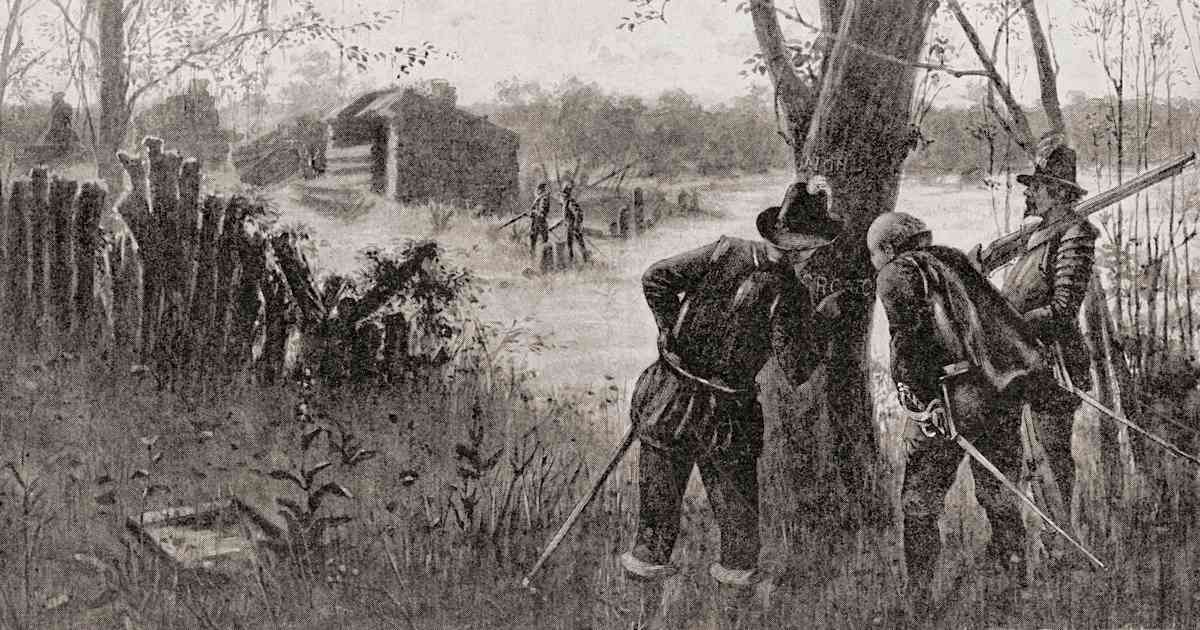
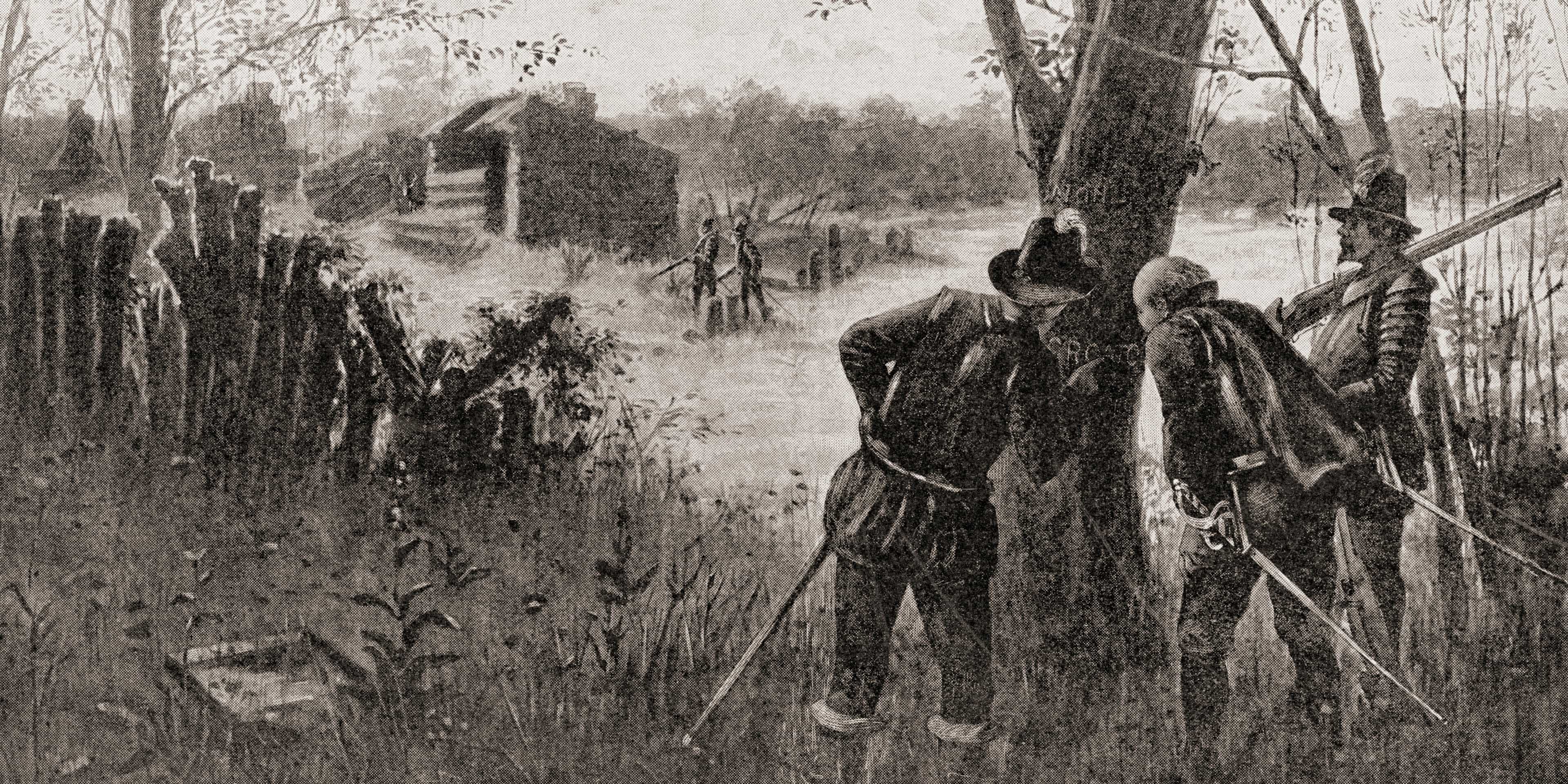
- August 18, 1590: Exactly three years after his granddaughter’s birth, John White returns to Roanoke. He finds the settlement dismantled, with the word ‘Croatoan’ carved into a palisade post and ‘CRO’ on a tree.
Important Figures of the Roanoke Tragedy
Several individuals played pivotal roles in this historical drama:
- Sir Walter Raleigh: The visionary financier who funded the voyages but never set foot on Roanoke himself. His failure to sustain the colony cost him fortunes but laid the conceptual groundwork for future English ventures.
- Governor John White: An artist and cartographer whose watercolor illustrations provide the most detailed visual record of 16th-century Native American life. His tragic role as governor saw him leave behind his daughter, son-in-law, and granddaughter, never to see them again.
- Virginia Dare: Born on August 18, 1587, she became a symbol of early American folklore and a figure of mystery, representing the fragile, ill-fated promise of the settlement.
- Manteo: A Croatoan nobleman who traveled twice to England, learned English, and served as an essential translator and diplomat. He was baptized into the Christian faith and named ‘Lord of Roanoke’ by Raleigh’s authority, remaining a loyal ally to the English.
The Pivotal Turning Points
The trajectory of the colony shifted dramatically due to two major events. First, the Anglo-Spanish War completely severed Roanoke’s lifeline. If not for the threat of the Spanish Armada, John White would have returned within months rather than three long years. Second, the decision by the settlers to relocate was guided by a pre-arranged plan. Before White departed in 1587, the colonists agreed that if they had to leave the island, they would carve their new destination on a tree or post, and if they were in distress, they would carve a Maltese cross above the name. When White returned, he found ‘Croatoan’ but no cross, indicating a deliberate, non-emergency relocation.
The Mystery Unveiled: Archaeological Breakthroughs
For centuries, the popular myth of Roanoke painted a picture of a sudden, violent massacre or a supernatural vanishing act. However, recent scientific and archaeological endeavors have dismantled these sensationalized narratives. Excavations spearheaded by Scott Dawson of the Croatoan Archaeological Society and Professor Mark Horton of the Royal Agricultural University have yielded groundbreaking results on Hatteras Island (historically known as Croatoan Island).
By digging at Cape Creek, archaeologists have discovered substantial 16th-century English industrial material, including hammer scale (the residue of blacksmithing), European pottery, and lead shot. These findings strongly indicate that English settlers lived on Hatteras Island for years, working alongside the Croatoan people. Rather than a tragic massacre, the real story of the Lost Colony is one of peaceful assimilation. Facing catastrophic drought and starvation, the colonists likely did exactly what they wrote on the post: they went to live with their allies, the Croatoans, and slowly integrated into the native community, blending their bloodlines and cultures over generations.
Long-Term Impact on English Colonization
The failure of Roanoke taught the English Crown and investors invaluable lessons. The crown realized that relying on a single, wealthy proprietor like Sir Walter Raleigh was insufficient to support a colony across an ocean. Consequently, when the English attempted colonization again 17 years later, they utilized joint-stock companies, such as the Virginia Company of London, which pooled capital from multiple investors. This financial structure provided the resilience needed to sustain the Jamestown Colony through its own ‘Starving Time.’ Furthermore, future expeditions avoided the treacherous shoals of the Outer Banks, choosing instead deep-water harbors further north.
Lesser-Known Facts About Roanoke
- The Extreme Drought Record: In 1998, researchers analyzed the growth rings of ancient bald cypress trees in the Blackwater River basin. They proved that the years 1587 to 1589 constituted the most devastating regional drought in nearly a millennium, explaining why the colonists could not sustain their agricultural efforts.
- The Dare Stones: In the late 1930s, a series of carved stones were found across the American Southeast, purportedly written by Eleanor Dare to her father, John White. While the first stone is considered by some historians to be potentially authentic, the subsequent dozens were exposed as elaborate hoaxes created to cash in on the public’s fascination with the mystery.
- The First English Baptism: On August 13, 1587, just days before Virginia Dare was born, the Croatoan leader Manteo was baptized into the Church of England, making him the first Native American Protestant in history.
Why It Still Matters Today
The story of Roanoke remains highly relevant as a window into early European-Indigenous encounters. Historically, Eurocentric narratives preferred the myth of a ‘lost’ colony to avoid acknowledging that white English settlers willingly integrated into Native American society to survive. Modern archaeology and environmental science are rewriting this chapter of American history, showcasing how cooperative integration, ecological adaptability, and shared resources were the true keys to survival on the early frontier.
People Also Ask
What does the word ‘Croatoan’ mean?
‘Croatoan’ was the name of both the Native American tribe allied with the English and the island they inhabited (modern-day Hatteras Island, North Carolina), located south of Roanoke Island.
Were the Roanoke colonists ever found?
While no formal rescue party ever located them intact as a separate colony, contemporary archaeological evidence from Hatteras Island indicates they peacefully integrated with the Croatoan tribe and lived among them, eventually becoming absorbed into the local population.
Did a hurricane stop John White from finding his family?
Yes. Upon finding the word ‘Croatoan’ in 1590, John White attempted to sail south to Hatteras Island. However, a severe storm damaged his ships’ anchors and rigging, forcing the crew to abandon the search and return to England, preventing him from ever verifying their survival.
Conclusion: The Everlasting Legacy of Roanoke
The ‘Lost Colony’ of Roanoke is no longer the impenetrable riddle it once was. Through the intersection of history, climatological data, and pioneering archaeological work on Hatteras Island, we now understand that the settlers did not vanish into thin air. Instead, driven by the worst drought in 800 years and stranded by the geopolitical tides of the Anglo-Spanish War, they made a logical, human decision: they moved to be with their friends. In doing so, they left behind an enduring legacy that helped shape the future of American colonization.


