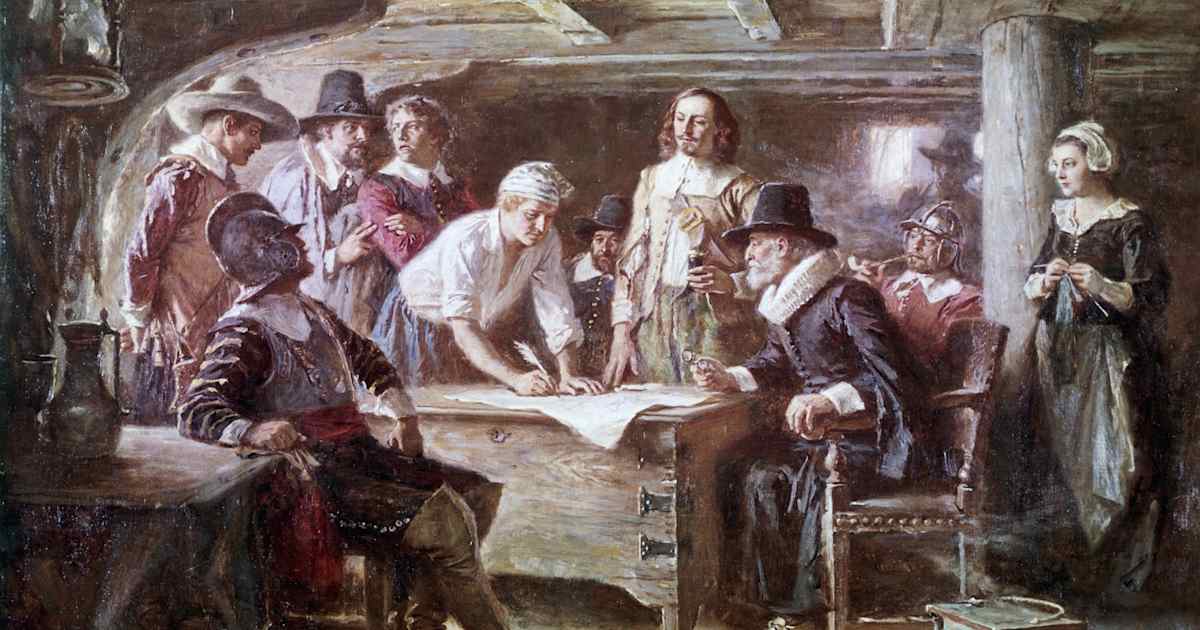
On the biting, wind-swept morning of November 11, 1620, the Mayflower dropped its anchor off the coast of Cape Cod, far north of its intended destination. Aboard the storm-battered merchant vessel, a diverse group of religious dissidents and secular opportunists stared out at a harsh, unfamiliar wilderness. Realizing they were outside the jurisdiction of their charter, a looming crisis of lawlessness threatened to tear the fragile community apart before they even set foot on land. To prevent anarchy and establish order, forty-one adult male passengers gathered to draft a historic agreement. This document, later known as the Mayflower Compact, established the first framework for consensual self-government in the New World. By declaring that laws should be made by the governed for the general good of the colony, this simple covenant laid a crucial foundation for American democracy. It proved that a society could govern itself through mutual consent, setting a powerful precedent that would eventually echo through the Declaration of Independence and the United States Constitution.
Historical Background: Fleeing Oppression for an Uncertain Wilderness
To understand the creation of the Mayflower Compact, one must look back at the intense religious and social upheaval of early 17th-century England. Under the reign of King James I, the Church of England maintained strict conformity, forcing all citizens to adhere to state-controlled religious practices. Anyone who dared to worship outside the state-approved church faced heavy fines, imprisonment, and even execution. Among these dissidents was a group of radical Puritans known as Separatists. Unlike mainstream Puritans who wished to reform the Anglican Church from within, the Separatists believed the church was hopelessly corrupt and sought to sever ties completely.
Fleeing persecution, a prominent congregation of Separatists fled to Leiden, Holland, in 1608, where they enjoyed relative religious freedom. However, after a decade, they faced new challenges. Their children were assimilating into Dutch culture, losing their English language, and abandoning their faith. Furthermore, they found Dutch secular life too libertine and feared the impending end of the Twelve Years’ Truce between Spain and the Dutch Republic, which threatened to bring war and Catholic persecution back to their doorstep. Thus, they made the bold decision to cross the Atlantic and forge a new community in the remote, empty wilderness of North America.
The Catalyst: A Threat of Mutiny and the Search for Legal Order
To finance this perilous voyage, the Separatists partnered with London merchant adventurers and obtained a land patent from the Virginia Company to settle near the Hudson River, which was then part of northern Virginia. Because they needed more hands to establish a viable colony, they recruited non-separatist artisans, laborers, and merchants—whom the religious Pilgrims referred to as “Strangers”. The Strangers did not share the Pilgrims’ deep religious ideals; they were seeking economic opportunity and a fresh start in the New World.
After a brutal two-month Atlantic crossing marked by fierce storms and treacherous seas, the Mayflower was blown hundreds of miles off course, eventually sighting land at Cape Cod. Attempting to sail south toward the Hudson River proved impossible due to dangerous shoals and contrary winds. Consequently, the ship’s master, Christopher Jones, turned back and anchored in Provincetown Harbor.
Because they had landed far north of the territory granted by their Virginia Company patent, the legal authority of the colony’s leaders was suddenly thrown into question. The “Strangers” realized that the company’s charter no longer bound them. Some began making “discontented and mutinous speeches,” arguing that when they came ashore, they would use their own liberty, for none had the power to command them. Without a unifying authority, the colony risked immediate collapse. The Mayflower Compact was drafted as a desperate and brilliant solution to bind the two factions together.
A Chronological Timeline of the Plymouth Journey
To appreciate the rapid progression of these events, here is a chronological timeline of this foundational moment:
- 1608: The Separatists flee England to establish a community in Leiden, Holland, seeking religious freedom.
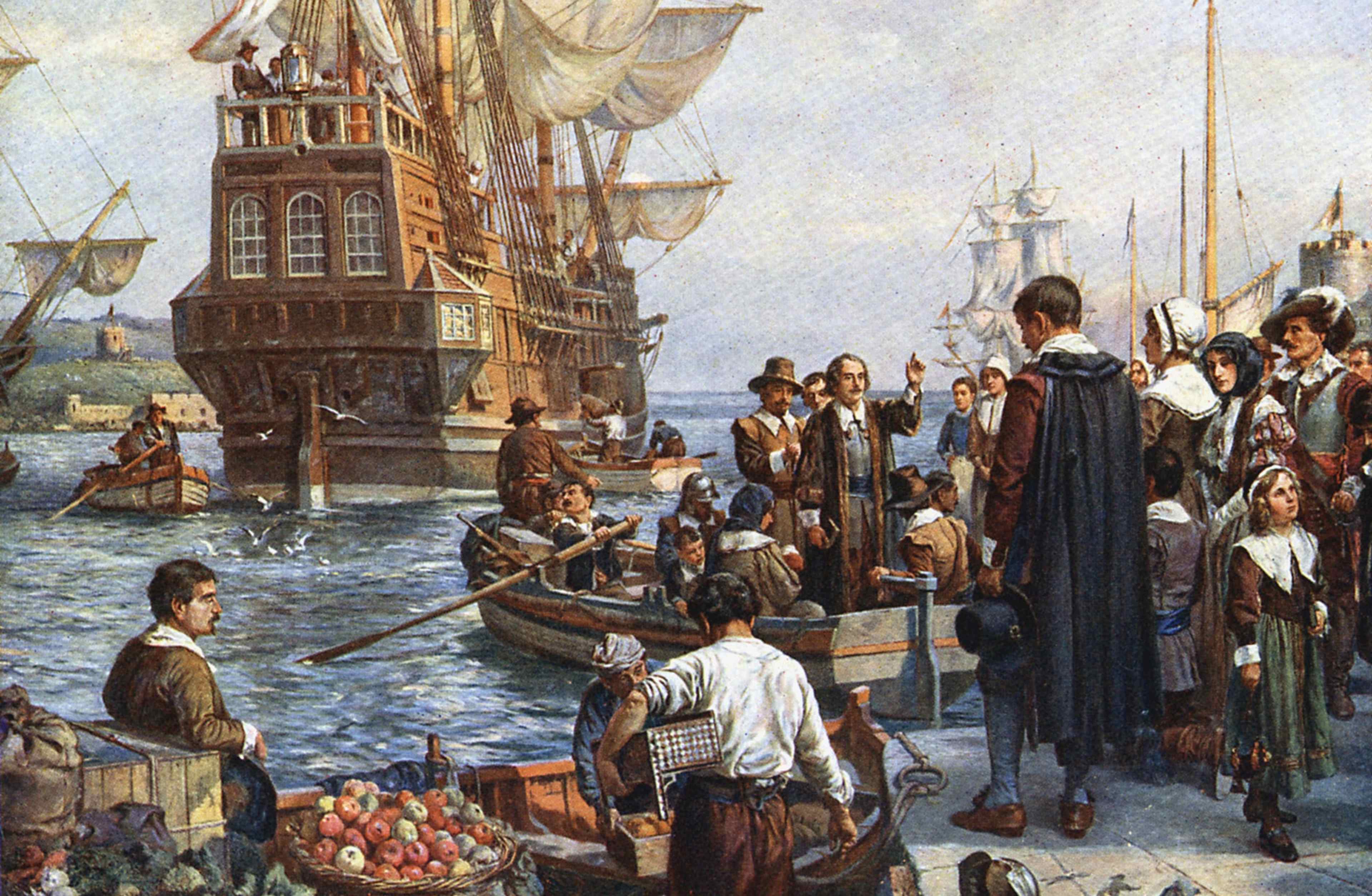
- July–August 1620: The Separatists return to England, boarding the Speedwell and the Mayflower. After the Speedwell repeatedly leaks, both groups squeeze onto the Mayflower in Plymouth, England.
- September 6, 1620: The Mayflower sets sail alone across the Atlantic with 102 passengers and a crew of about 30.
- November 9, 1620: Lookout on the Mayflower spots the sandy cliffs of Cape Cod.
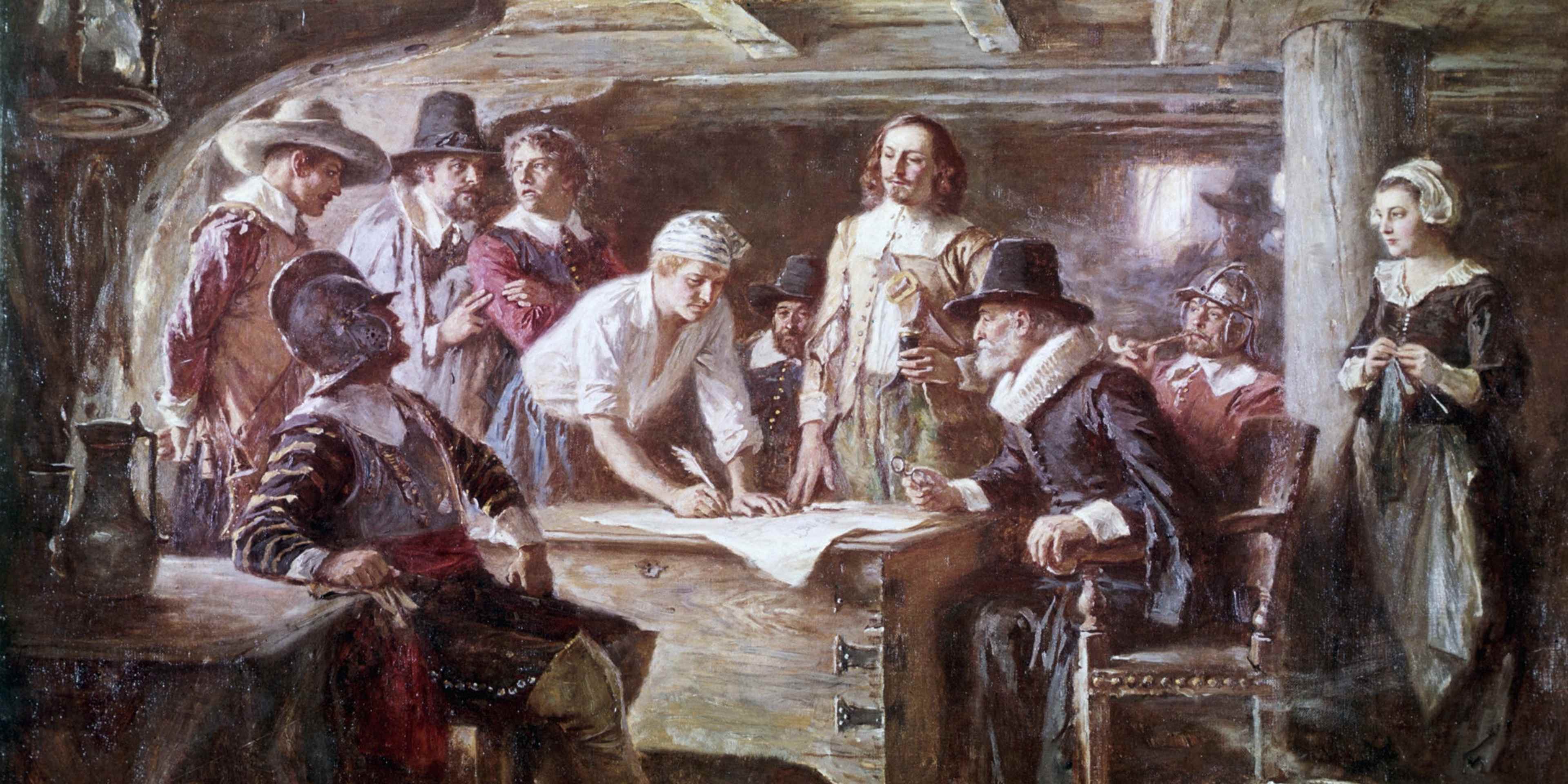
- November 11, 1620: The ship anchors in modern-day Provincetown Harbor. Recognizing the lack of legal authority, forty-one adult male passengers sign the Mayflower Compact before going ashore. John Carver is elected the colony’s first governor.
- December 1620: The passengers officially land at Plymouth Rock and begin constructing their settlement on the cleared land of a former Patuxet Wampanoag village, which had been devastated by European disease epidemics.
- Winter 1620–1621: The “Great Sickness” ravages the colony, killing nearly half of the settlers and crew.
- Autumn 1621: The surviving colonists celebrate a successful harvest alongside the Wampanoag leader Massasoit, an event later celebrated as the First Thanksgiving.
Important Figures Who Shaped the Covenant
Several key individuals played monumental roles in drafting the document, surviving the voyage, and establishing the nascent Plymouth Colony:
- John Carver (c. 1584–1621): A wealthy merchant who helped secure funding for the voyage, Carver is widely believed to be the primary author of the Compact. Immediately after its signing, he was elected the first governor of Plymouth. Although he survived the brutal winter, he died of heatstroke in the spring of 1621.
- William Bradford (1590–1657): One of the most prominent Separatist leaders, Bradford succeeded Carver as governor and served for over thirty years. His detailed journal, Of Plimoth Plantation, remains the primary historical source for the voyage, the signing of the Compact, and the daily struggles of the colony.
- William Brewster (c. 1566–1644): The spiritual leader of the Separatist congregation, Brewster provided moral guidance and helped draft the covenant, ensuring that the document remained open to both Separatists and Strangers.
- Myles Standish (c. 1584–1656): A military advisor hired by the Pilgrims to coordinate their defense. Though not a member of their church, Standish signed the Compact and worked tirelessly to protect the colony from external threats and maintain internal order.
- John Howland (c. 1592–1673): An indentured servant who miraculously survived being swept overboard during a violent mid-Atlantic storm. Had he drowned, the lineage of millions of modern Americans, including several U.S. presidents, would have never existed. His signature on the Compact represents the early inclusion of working-class men in the democratic process.
Major Turning Points: From Corporate Charter to Consensual Contract
The creation of the Mayflower Compact marked a radical departure from traditional European governance. Typically, law and authority descended directly from the monarch, who claimed divine right. The Plymouth colonists, however, created a system where authority was generated from the bottom up. By organizing themselves into a “civil body politick,” they agreed to create and submit to “just and equal laws” for the general good of the colony.
This shift from an autocratic, top-down structure to a bottom-up, consensual agreement is the true turning point of the Mayflower story. It replaced a rigid corporate charter with a fluid social contract. Although they declared their loyalty to King James, the colonists were essentially creating a self-governing republic in all but name.
Long-Term Impact on American Democratic Principles
The Mayflower Compact served as the intellectual blueprint for subsequent democratic institutions in North America. It demonstrated that a diverse group of individuals could successfully establish a functioning government based on mutual consent rather than monarchical decree. This model of local governance directly influenced the development of the colonial town hall meeting, which became the cornerstone of New England political life.
More broadly, the Compact anticipated the revolutionary theories of European social contract philosophers like Thomas Hobbes, John Locke, and Jean-Jacques Rousseau, who argued that legitimate political authority must rest on the consent of the governed. When Thomas Jefferson drafted the Declaration of Independence in 1776, declaring that governments derive “their just powers from the consent of the governed,” he was articulating a principle that had already been put into practice on a cold ship in 1620. The Compact was, in essence, the first written constitution in America, directly paving the way for the United States Constitution.
Fascinating and Lesser-Known Facts
- It Had No Official Name for 170 Years: The Pilgrims never referred to the document as the “Mayflower Compact.” In early colonial records, it was simply called the “association and agreement”. It wasn’t until 1793, during the early years of the American Republic, that the term “Mayflower Compact” was officially popularized.
- The Original Document is Lost: Despite its monumental historical significance, the original signed document has been lost to history. It is believed to have disappeared during the Revolutionary War or during the British occupation of Boston. Fortunately, exact copies survived in William Bradford’s journal and in the 1622 pamphlet Mourt’s Relation.
- Servants Signed the Document: In a highly unusual move for the 17th century, two indentured servants, Edward Leister and George Soule, were allowed to sign the Compact alongside wealthy landholders and religious leaders. This demonstrated a surprising level of class inclusivity, reinforcing the consensual nature of the new government.
- A Legacy of Ten Million Descendants: Today, it is estimated that over ten million living Americans can trace their ancestry back to the passengers of the Mayflower. This massive lineage includes historical giants like Ralph Waldo Emerson, civil rights leaders, and at least nine U.S. presidents, including John Adams, Franklin D. Roosevelt, and George W. Bush.
Why the Mayflower Compact Still Matters Today
In an era often marked by political polarization and division, the Mayflower Compact serves as a timeless reminder of the power of civil compromise. The Pilgrims and the Strangers held vastly different worldviews, religious beliefs, and personal motivations. Yet, when faced with the threat of starvation, exposure, and lawlessness, they chose to sit down, negotiate, and agree on a shared set of rules.
The Compact teaches us that democratic institutions are not self-sustaining; they require active participation, mutual concession, and a shared commitment to the “general good”. It stands as a testament to the idea that a diverse society can peacefully co-exist and thrive, provided they respect the rule of law and the fundamental principle of consensual governance.
People Also Ask (FAQ)
Why was the Mayflower Compact created?
The Mayflower Compact was created because the ship landed in Cape Cod, outside the legal jurisdiction of the Virginia Company charter. To prevent the non-separatist passengers (“Strangers”) from rebelling and declaring complete personal liberty, the colonial leaders drafted the agreement to bind all passengers to a single, self-governing legal framework.
How did the Mayflower Compact influence the US Constitution?
The Compact introduced the concept of self-government and the social contract to the American colonies. It established the principle that laws derive their legitimacy from the consent of the governed, a core idea that became the bedrock of both the Declaration of Independence and the United States Constitution.
Who was allowed to sign the Mayflower Compact?
Of the 102 passengers on the Mayflower, forty-one adult male passengers signed the document. This included religious Separatists, secular “Strangers,” and even two indentured servants. Women, children, and the ship’s crew were not invited to sign, reflecting the political limitations of the 17th century.
What happened to the original Mayflower Compact document?
The original document signed aboard the Mayflower in 1620 is lost. Historians believe it was misplaced or destroyed during the turbulent years of the American Revolutionary War. However, accurate transcriptions were preserved in early publications, including William Bradford’s manuscript Of Plimoth Plantation.
Conclusion: The Enduring Legacy of the Civil Body Politick
The Mayflower Compact was far more than a temporary solution to a potential mutiny; it was a watershed moment in the history of human freedom. By choosing cooperation over conflict and law over anarchy, a small band of exhausted travelers drafted a document that would alter the course of global history. As we look back on their journey, we recognize that the tiny “civil body politick” forged in the dark cabin of the Mayflower was the spark that ignited the flame of American democracy—a flame that continues to burn brightly today.


