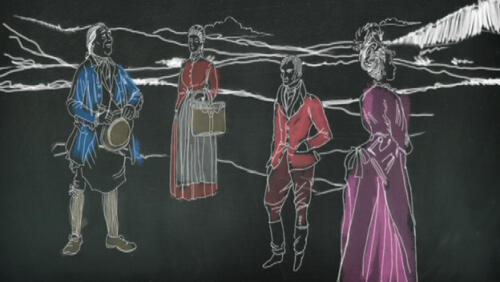
When early English settlers sailed across the Atlantic toward the shores of Roanoke and Jamestown, they carried visions of glittering gold and effortless riches. What they encountered instead was a brutal, unforgiving wilderness where survival hung by a thread. In this harsh landscape, metallic coins—known as specie—were practically non-existent. To survive and trade, the colonists had to look to the land, eventually finding their true liquid gold not in the dirt, but hanging from the branches of apple trees. During the colonial era, hard apple cider in colonial America became far more than a mere beverage; it transformed into a universally accepted currency that paid wages, bought land, settled taxes, and sustained families. This humble fruit, originating thousands of miles away in Central Asia, became the very lifeblood of early American society, deeply intertwining agricultural innovation with the survival of a young nation.
Historical Background: The Seed of a New World Economy
The era of the American colonies, spanning from the founding of Jamestown in 1607 to the signing of the Declaration of Independence in 1776, was defined by chronic economic improvisation. The British Crown, adhering to strict mercantilist policies, deliberately restricted the flow of official silver and gold coins to the colonies to maintain economic control. This policy left settlers in a desperate financial bind. Without a reliable circulating currency, transactions had to be conducted through barter or ‘commodity money’.
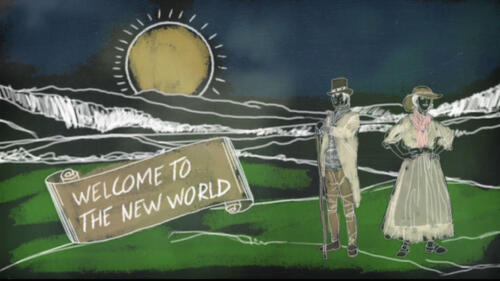
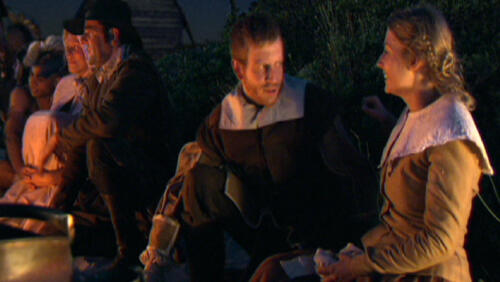
While Virginia famously adopted tobacco leaves as a currency standard, the colder northern colonies of New England faced a different challenge. The rocky soil was poorly suited for luxury crops, but it proved remarkably hospitable to apple trees. Originally brought as seeds by Puritans and Pilgrims in the 1620s, apples quickly became the most vital crop on the American frontier. Because raw apples rotted quickly, colonists preserved their massive harvests by pressing them into fermented hard cider. Soon, these barrels of liquid gold were treated as cash. Millers, blacksmiths, laborers, and even ministers accepted gallons of cider as standard payment for services, turning the orchards into the colonial equivalent of a mint and proving that apples as currency was a highly successful economic strategy.
The Global Causes and Socio-Political Context
To understand why hard cider achieved such absolute dominance, one must look at the public health and global political dynamics of the 17th and 18th centuries. First and foremost was the issue of sanitation. In colonial America, natural water sources near early settlements were frequently contaminated with deadly pathogens, leading to outbreaks of cholera, dysentery, and typhoid. Lacking the scientific knowledge of bacteria, colonists noticed a simple pattern: those who drank water often fell ill, while those who drank fermented beverages remained healthy. The fermentation process killed harmful pathogens, making hard cider the safest daily hydrator available for everyone, including children.
Secondly, European grains like barley and hops, which were required to brew traditional beer, struggled to grow in the acidic, forest-heavy soils of New England and the Mid-Atlantic. Importing beer from England was a luxury only the wealthiest merchants could afford. Apples, conversely, flourished with minimal attention. Once planted, an apple orchard could produce abundant fruit for decades. Thus, necessity drove the colonists to cultivate the apple, converting a wild Central Asian fruit into an essential survival tool and a foundational pillar of their cashless, commodity-based colonial American economy.
Key Events Timeline: The Journey of the American Apple
- 1607: The Founding of Jamestown – English colonists arrive in Virginia expecting immediate mineral wealth. Faced with starvation, they learn that agricultural adaptability is the only path to survival.
- 1625: The First Orchard in Boston – Clergyman William Blackstone plants the first recorded orchard in New England on Boston’s Beacon Hill, introducing cultivated apple varieties to the northeastern climate.
- 1640s: The Rise of Apple Currency – As cash shortages worsen across the 13 colonies, rural communities systematically adopt commodity barter. Hard cider officially begins to circulate as a recognized medium of exchange.
- 1740s: Cider Pays the Clergy – Across New England, local parishes and governments authorize the payment of taxes, church tithes, and schoolteacher salaries directly in barrels of hard apple cider.
- 1779: Revolutionary War Diplomacy – Under the shade of an old apple tree, General George Washington and the Marquis de Lafayette dine together to map out crucial military strategies, illustrating the cultural importance of the fruit.
- 1800s-1840s: Johnny Appleseed’s Frontier Expansion – John Chapman travels through Ohio, Pennsylvania, and Indiana, establishing nurseries of cider apples that allow Western homesteaders to legally claim land.
- 1840: The Log Cabin and Hard Cider Campaign – Presidential candidate William Henry Harrison famously uses hard cider as a political symbol to capture the vote of the common American, cementing the drink in political history.
- 1920: The Dark Age of Prohibition – The passage of the 18th Amendment outlaws alcohol. Temperance zealots burn down historic cider orchards, wiping out hundreds of unique American heirloom apple varieties.
Prominent Figures in America’s Apple History
Several key historical figures actively shaped how apples became an economic and cultural force in early America:
- William Blackstone: As the first settler of Boston, Blackstone was a highly educated Anglican minister who chose a life of quiet horticultural study. His early grafting experiments proved that European apple varieties could adapt to New England soil, laying the groundwork for America’s agricultural boom.
- John Chapman (Johnny Appleseed): Far from the childlike folk caricature who threw seeds at random, Chapman was a brilliant, eccentric businessman. Under early land laws, settlers could claim frontier territory only if they planted a certain number of fruit trees to prove permanent habitation. Chapman anticipated this need, traveling ahead of the frontier line to establish fenced apple nurseries. He sold these saplings to eager homesteaders, accumulating over 1,200 acres of valuable real estate by his death. Crucially, because he planted from seeds rather than grafting, his trees produced bitter ‘spitter’ apples, which were perfect for hard cider but completely inedible raw. This brilliant strategy cemented his place in Johnny Appleseed history.
- Thomas Jefferson: At his Monticello estate, Jefferson was a passionate pomologist. He meticulously curated a South Orchard containing eighteen distinct apple varieties, including his favorites, the Esopus Spitzenburg and the Newtown Pippin. Jefferson viewed the development of unique American apple varieties as a point of national pride, proving to European skeptics that American soil could produce agricultural goods of unrivaled quality.
Turning Points: From Wilderness Survival to Political Weapon
As the 13 colonies matured into an independent United States, the role of apples underwent a dramatic shift. What began as an emergency survival food and a substitute for scarce cash gradually transformed into a powerful cultural identity. The ultimate political turning point occurred during the 1840 presidential election campaign. The Whig Party candidate, William Henry Harrison, was dismissively mocked by a Democratic newspaper, which claimed that if given a pension and a barrel of hard cider, Harrison would gladly retire to a log cabin. Seizing on this insult, Harrison’s campaign managers flipped the narrative. They branded Harrison as the ‘Log Cabin and Hard Cider’ candidate—a rugged, honest man of the soil who drank the common man’s beverage, unlike his opponent, Martin Van Buren, whom they painted as an aristocratic elite who drank fancy European wines. This brilliant marketing strategy sparked unprecedented voter turnout and forever linked hard apple cider with the democratic spirit of the American working class.
The Long-Term Impact on American Society and Culture
The historical dominance of apples left deep, indelible marks on the structural and cultural landscape of the United States:
- The Homestead Infrastructure: Early American property laws were fundamentally shaped by orchards. The requirement to plant fruit trees to secure land titles accelerated the clearing of forests and the westward expansion of the United States.
- The Cultural Myth of Self-Reliance: The independent farmer, tending his orchard and pressing his own cider, became the archetypal symbol of American agrarian democracy, celebrated by thinkers like Thomas Jefferson and Ralph Waldo Emerson.
- Agricultural Biodiversity: Because colonial orchards relied almost entirely on planting seeds rather than cloning through grafting, genetic mutation ran rampant. This created an astonishing explosion of biodiversity, resulting in over 15,000 unique American apple varieties by the late 19th century—a genetic treasure trove that modern botanists are still trying to recover.
Lesser-Known Historical Facts About Colonial Apples
1. The Bitter Reality of ‘Spitter’ Apples
If you were to travel back to 18th-century New England and pluck an apple from a tree, you would likely spit it out in disgust. These wild-grown apples were known as ‘spitters’ because they were incredibly bitter, highly acidic, and packed with astringent tannins. While terrible for eating raw or baking into pies, these harsh qualities were precisely what made them exceptional for fermentation. The tannins and acids acted as natural preservatives and gave colonial hard cider its complex, full-bodied flavor profile.
2. The Kid-Friendly Beverage: Ciderkin
Because clean drinking water was so scarce and dangerous, colonial children did not escape the consumption of fermented beverages. Instead of pure water, children were routinely served a drink called ciderkin. This was made by taking the leftover apple pulp (pumice) from a primary cider pressing, soaking it in water, and pressing it a second time. The resulting liquid had a very low alcohol content (around 1 to 2 percent), providing children with a safe, sanitary, and slightly sweet beverage to drink with their daily meals.
3. The Cultural Erasure of Prohibition
When the 18th Amendment initiated Prohibition in 1920, the primary target was commercial beer and liquor. However, hard cider suffered the most devastating and permanent blow. Temperance zealots and government agents went beyond shutting down taverns; they marched into rural areas and chopped down or burned vast orchards of historic, bitter cider-apple trees. Because these specific varieties had no value as table fruit, farmers had no choice but to replace them with sweet, edible varieties like the Red Delicious, effectively erasing centuries of American horticultural heritage overnight and highlighting the devastating Prohibition impact on orchards.
Why It Still Matters Today
Today, we are living in the midst of a massive American cider renaissance. After nearly a century of obscurity following Prohibition, craft cideries are popping up across the Pacific Northwest, New England, and the Mid-Atlantic. Modern cidermakers are acting as agricultural detectives, searching abandoned historic farms to locate surviving colonial-era ‘lost’ apple trees. Understanding the history of apples in America is not just a lesson in historical economics; it is a profound reminder of human resilience and ecological adaptation. In an age where industrial farming favors monoculture and extreme genetic uniformity, the story of the colonial apple reminds us of the value of biodiversity, the ingenuity of our ancestors, and the ways in which the environment shapes human civilization.
People Also Ask
Why was hard cider used as currency in colonial America?
Hard cider was used as currency because the British Crown strictly limited the export of gold and silver coins to the colonies. To conduct business, colonists relied on a barter system, using highly valuable, long-lasting commodities like hard cider to pay for labor, goods, and even local taxes.
Why did colonial Americans drink cider instead of water?
Colonial water sources near cities and farms were often heavily contaminated with bacteria, leading to lethal diseases. Because the fermentation process naturally killed these harmful pathogens, drinking hard cider was much safer and healthier than drinking plain water.
What is Johnny Appleseed’s real story?
His real name was John Chapman, and he was a shrewd businessman, not just a nomadic wanderer. He planted apple nurseries ahead of westward settlers so he could sell them the saplings they needed to legally claim frontier land. His apples were bitter varieties grown specifically for making hard cider.
Ultimate Historical Takeaways
The story of the American apple is a testament to how necessity breeds extraordinary cultural and economic transformation. When early settlers arrived expecting gold, they were forced to adapt to a reality where survival depended on the soil. By turning to the humble apple, they secured safe hydration, created a functional currency, and built an agricultural empire that eventually stretched from coast to coast. The next time you enjoy a glass of crisp cider or a slice of warm pie, remember that you are tasting the very history that built a nation—a liquid gold that was, once upon a time, truly as good as real gold.


