The Salem witch trials of 1692 remain one of the most chilling and deeply misunderstood chapters in early American history [1]. For over three centuries, this colonial-era panic has captivated the public imagination, serving as a dark mirror to the dangers of extremism, isolation, and institutional failure [1]. What began as the mysterious afflictions of a few young girls in a remote Massachusetts settlement quickly snowballed into a mass hysteria that tore apart families, claimed dozens of innocent lives, and forever altered the American legal system [1]. To truly understand this tragedy, we must look beyond the popular myths of broomsticks and cauldrons and examine the complex web of political instability, frontier warfare, and religious anxiety that fueled the crisis [1]. Through groundbreaking historical scholarship and critically acclaimed literature, modern readers can finally step inside the crowded Puritan meetinghouses and decipher how a community unravelled from within [1].

Historical Background: The Crucible of Puritan New England
To grasp how the Salem witch trials occurred, one must understand the socio-religious ecosystem of late 17th-century New England [1]. The Massachusetts Bay Colony was founded by Puritans, a highly conservative religious group that sought to establish a ‘city upon a hill’—a perfect Christian society. In their Calvinist worldview, the universe was an active battlefield between God and the Devil. Satan was not a metaphor; he was a literal, physical entity constantly plotting the downfall of the Puritan experiment. This deep-seated fear was compounded by Salem’s geographical and social isolation.
By 1692, Salem was divided into two distinct entities: Salem Town, a prosperous merchant port, and Salem Village (now Danvers), a struggling, agricultural community. The agrarian villagers deeply resented the wealthy town merchants. This socio-economic friction was exacerbated by a bitter internal factionalism [1]. A faction led by the powerful Putnam family lobbied fiercely for Salem Village to have its own independent church, eventually hiring the contentious Reverend Samuel Parris as their minister. This division created a powder keg of resentment, where neighbors viewed one another with deep suspicion, laying the groundwork for the catastrophe to come.
A Chronological Timeline of the 1692 Hysteria
The descent into madness was rapid and devastating. Here is how the crisis unfolded month by month:
- January 1692: Nine-year-old Elizabeth (Betty) Parris and her eleven-year-old cousin Abigail Williams, the daughter and niece of Reverend Samuel Parris, begin exhibiting bizarre behavior [1]. They scream, throw items, crawl under furniture, and contort their bodies in agonizing ways.
- February 1692: Local physician Dr. William Griggs, unable to find a physical cause for the girls’ ailments, diagnoses them as being ‘under an Evil Hand’—the victim of witchcraft. Under pressure from adults, the girls name their first three tormentors: Tituba, an enslaved woman in the Parris household; Sarah Good, a homeless beggar; and Sarah Osborne, an elderly, impoverished woman who rarely attended church [1].
- March 1, 1692: Local magistrates John Hathorne and Jonathan Corwin conduct public examinations of the accused. While Good and Osborne maintain their innocence, Tituba delivers a vivid, terrifying confession [1]. She claims she was approached by a tall man from Boston who made her sign a red book, and that she flew through the air on a pole with other witches. This confession confirms the Puritans’ worst fears: a grand conspiracy of Satan was active in Salem.
- May 1692: The newly appointed Governor of Massachusetts, William Phips, arrives from England [1]. To handle the rapidly filling jails, he establishes a special Court of Oyer and Terminer (‘to hear and determine’) to prosecute the accused [1].
- June 10, 1692: Bridget Bishop, a local tavern owner known for her independent lifestyle, becomes the first person executed, hanged on Gallows Hill.
- July–September 1692: The trials reach their peak [1]. Mass executions take place on Gallows Hill. On September 19, eighty-year-old Giles Corey is pressed to death with heavy stones over three days for refusing to enter a plea, keeping his estate safe for his heirs [1].
- October 1692: Prominent ministers, including Increase Mather, urge caution. Increase Mather famously writes that ‘It were better that ten suspected witches should escape, than that one innocent person should suffer.’ Influenced by this and the fact that high-society members (including his own wife) are now being accused, Governor Phips bans the use of ‘spectral evidence’ in court and dissolves the Court of Oyer and Terminer [1].
- May 1693: Governor Phips issues a general pardon for all remaining prisoners, officially bringing the dark saga to a close [1].
Root Causes and Context: Frontier War and Spiritual Anxiety
The Salem witch trials did not happen in a vacuum. Modern historians have identified several external catalysts that pushed Salem over the edge [1]. One of the most critical factors was King William’s War (also known as the Second Indian War), a brutal conflict waged between French-backed Native American tribes and English colonists on the northeastern frontier in Maine [1]. The Puritans suffered devastating losses, and Salem became inundated with traumatized refugees and war orphans [1]. The fear of imminent attacks by Native Americans—whom the Puritans associated with demonic forces—created an atmosphere of perpetual terror [1]. The trauma of war was projected directly onto the accused, who were seen as internal agents of the same destructive forces attacking the borders [1].
Additionally, Massachusetts was experiencing a severe identity crisis. The colony’s original charter had been revoked by the British Crown, leaving citizens without a stable, recognized government for years [1]. This political vacuum, combined with a decline in religious fervor among the younger generation, made church elders increasingly desperate to reassert their spiritual authority. Salem Village became the perfect stage for a moral panic, where religious, political, and military anxieties collided [1].
Key Historical Figures of the Salem Panic
Understanding the human element of the trials requires analyzing the key players whose actions shaped this tragedy [1]:
- Reverend Samuel Parris: The rigid minister of Salem Village whose paranoid sermons and household crisis sparked the panic [1]. He utilized the pulpit to fuel divisions, framing any opposition to his ministry as a betrayal of God.
- Tituba: An enslaved woman of Central or South American Indigenous origin [1]. Her coerced confession, which blended elements of English folklore and Puritan theology, dramatically escalated the hysteria by validating the existence of a local witch coven [1].
- Rebecca Nurse: A pious, elderly, and highly respected grandmother. Her conviction and execution shocked the community [1], marking a turning point where people realized that even the most devout Puritans were not safe from accusation.
- Chief Justice William Stoughton: The relentless judge who presided over the Court of Oyer and Terminer. Stoughton aggressively permitted the use of spectral evidence, refusing to show mercy even when juries initially found defendants innocent.
- Giles Corey: A stubborn and wealthy farmer who chose to endure the excruciating torture of being pressed to death under heavy stones rather than plead guilty or not guilty, which legally protected his property from confiscation by the state [1].
Decoding the Salem Witch Trials: Five Essential Books
To fully comprehend the nuances of this complex history, several seminal books offer profound insights and diverse perspectives [1]:

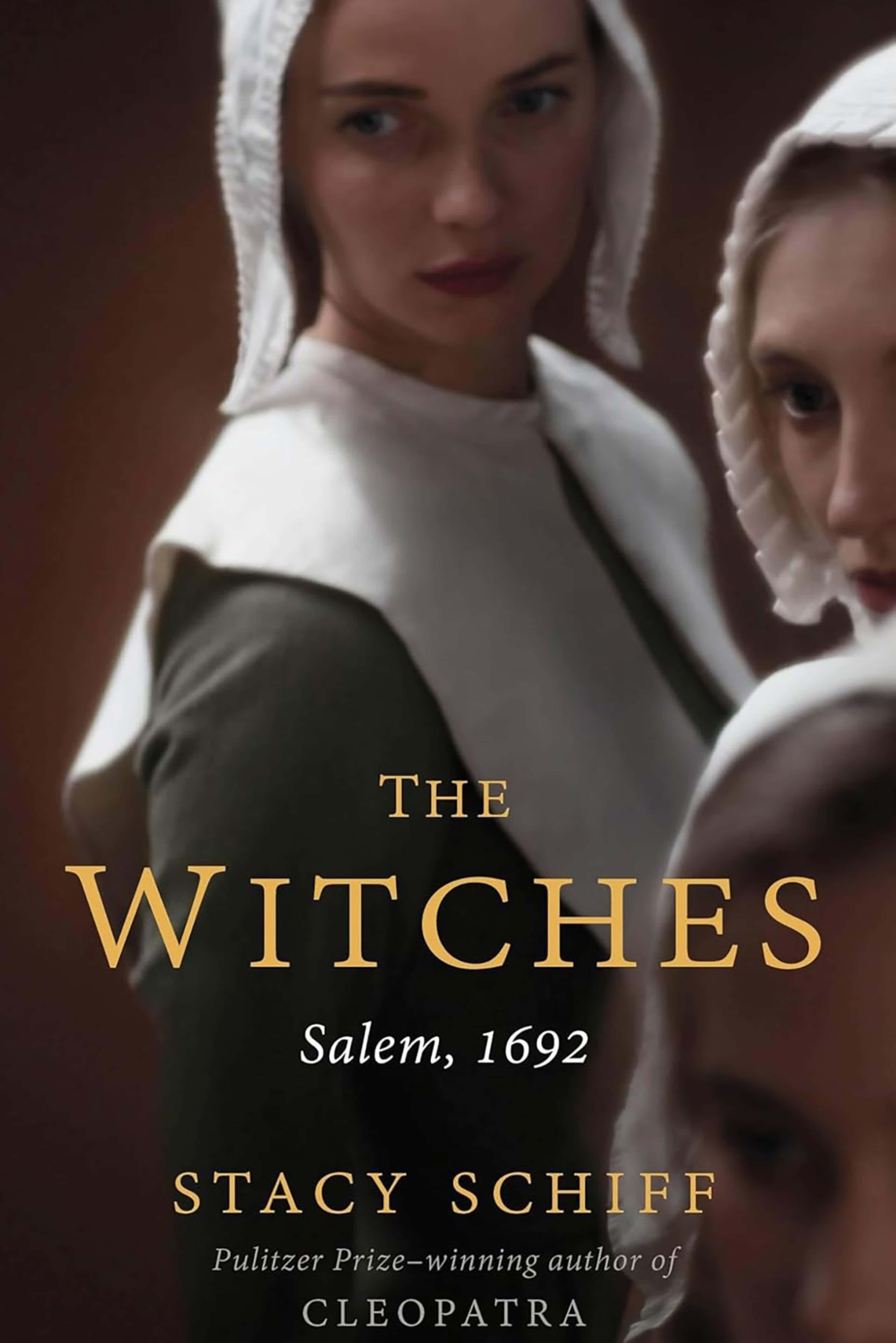
1. The Witches: Salem, 1692 by Stacy Schiff
Pulitzer Prize–winning author Stacy Schiff approaches the trials with the narrative tension of a true-crime thriller [1]. Drawing heavily on primary sources, Schiff vividly reconstructs the claustrophobic atmosphere of Salem [1]. She portrays a community unraveling from within, demonstrating how fear made it ‘less dangerous to accuse than to object.’ Schiff avoids forcing the events into a single, simplistic theory, instead allowing the terrifying human drama to unfold naturally [1].
2. A Storm of Witchcraft: The Salem Trials and the American Experience by Emerson W. Baker
Emerson Baker, a professor of history at Salem State University, provides a comprehensive look at the multi-faceted causes of the crisis [1]. He argues that Salem was the result of a ‘perfect storm’ of political upheaval, King William’s War, and declining religious zeal [1]. Baker also exposes the subsequent government cover-up, where the Massachusetts Bay government banned the publication of trial accounts, marking one of the earliest instances of state censorship in American history [1].
3. In the Devil’s Snare: The Salem Witchcraft Crisis of 1692 by Mary Beth Norton
Historian Mary Beth Norton offers a groundbreaking analysis by connecting the trials directly to the brutal Indian Wars on the northeastern frontier [1]. Norton illustrates how the traumatized refugees of Maine emerged as key accusers in Salem, and how the colony’s leaders, plagued by guilt over their military failures, sought to redeem themselves by aggressively prosecuting the ‘witches’ at home [1]. This work is essential for understanding the psychological toll of colonial warfare on the Puritan mind [1].
4. Satan & Salem: The Witch-Hunt Crisis of 1692 by Benjamin C. Ray
As director of the Salem Witch Trials Documentary Archive, Benjamin Ray utilizes rigorous data analysis and interactive geographical mapping to challenge long-held assumptions [1]. Rather than a simple geographic divide between Salem Village and Salem Town, Ray proves that the accusations were deeply rooted in local religious affiliations and church politics [1]. He also provides a meticulous breakdown of the legal failures inside the courtroom [1].
5. I, Tituba, Black Witch of Salem by Maryse Condé
For a powerful fictional perspective, Maryse Condé’s award-winning novel reconstructs the life of Tituba, the marginalized and deeply misunderstood historical figure at the center of the trials [1]. Condé brings Tituba to life, exploring her resilience, her indigenous heritage, and her struggles under the double yoke of Puritannical racism and sexism, giving a voice to a woman silenced by history [1].
The Legal and Cultural Turning Points
The trials reached a breaking point when the accusations grew too grand and began targeting the colony’s elite, including Lady Mary Phips, the wife of the Governor. This escalation forced colonial leadership to reevaluate the judicial process. The primary turning point was the rejection of spectral evidence—the legal acceptance of a victim’s claim that a suspect’s ‘specter’ or spirit had attacked them in a dream or vision. When secular and religious leaders realized that spectral evidence made defense impossible, they stripped the court of its validity. This decision effectively collapsed the prosecution’s case, leading to the rapid dissolution of the trials [1].
The Long-Term Impact on American Law and Society
The legacy of the Salem witch trials profoundly shaped the development of American jurisprudence. The public shame and regret that followed the trials prompted a major shift toward modern legal standards. It catalyzed the adoption of the principle of being ‘innocent until proven guilty’ and the absolute right to legal representation. Furthermore, Salem accelerated the secularization of New England society, dealing a blow to theocratic governance and laying the conceptual groundwork for the eventual separation of church and state in the United States Constitution.
Lesser-Known Facts About Salem
Despite centuries of folklore, several fascinating historical facts often get lost in translation:
- No Witches Were Burned: Under English law, witchcraft was a felony, not a heresy. Therefore, those convicted in Salem were executed by hanging, not burned at the stake.
- The Tragedy of the Witch Cake: The panic was actually escalated by a well-meaning neighbor who instructed Tituba to bake a ‘witch cake’ using rye meal and the afflicted girls’ urine, which was fed to a dog to identify the tormentors. Reverend Parris was furious, viewing the cake as a form of counter-magic that invited the devil into his home.
- Animals Were Also Accused: The hysteria was so pervasive that even animals fell victim. Two dogs were executed in Salem after being accused of giving the ‘evil eye’ or being complicit in witchcraft.
Why Salem Matters Today
The Salem witch trials remain highly relevant as a timeless cautionary tale. The phrase ‘witch hunt’ has entered the modern political lexicon to describe public hysteria, scapegoating, and the persecution of minority groups. In the digital age, where social media algorithms can amplify outrage and groupthink, Salem serves as a stark warning of what happens when a society abandons objective truth, evidence, and empathy in favor of collective fear and moral panic.
People Also Ask
How many people died in the Salem witch trials?
A total of twenty people were executed: nineteen were hanged on Gallows Hill, and one (Giles Corey) was pressed to death with heavy stones [1]. Additionally, at least five other individuals died in the deplorable, freezing conditions of the colonial prisons while awaiting trial [1].
What was the real cause of the fits in Salem?
While some modern theorists have suggested biological causes like ergot poisoning (a toxic fungus on rye), most historians attribute the fits to a combination of clinical hysteria, psychological trauma from the ongoing frontier wars, deep-seated local rivalries, and strong suggestion under intense religious pressure [1].
Did anyone apologize for the Salem witch trials?
Yes. In 1697, the Massachusetts General Court declared a day of fasting and soul-searching for the tragedy. One of the judges, Samuel Sewall, publicly confessed his error and guilt in front of his congregation. In 1711, the colony passed a bill restoring the good names and rights of many of the accused and granted financial restitution to their survivors.
Conclusion: The Fragile Nature of Justice
Ultimately, the Salem witch trials of 1692 stand as a solemn monument to human fragility and the dangers of unchecked authority [1]. It was not a conflict between magical forces, but a human tragedy driven by fear, political instability, and a broken legal system [1]. By reading seminal works and examining the historical reality of colonial Massachusetts, we preserve the memory of those who suffered and ensure that the lessons of Salem continue to guide our pursuit of justice, rational thought, and civil liberties today [1].


