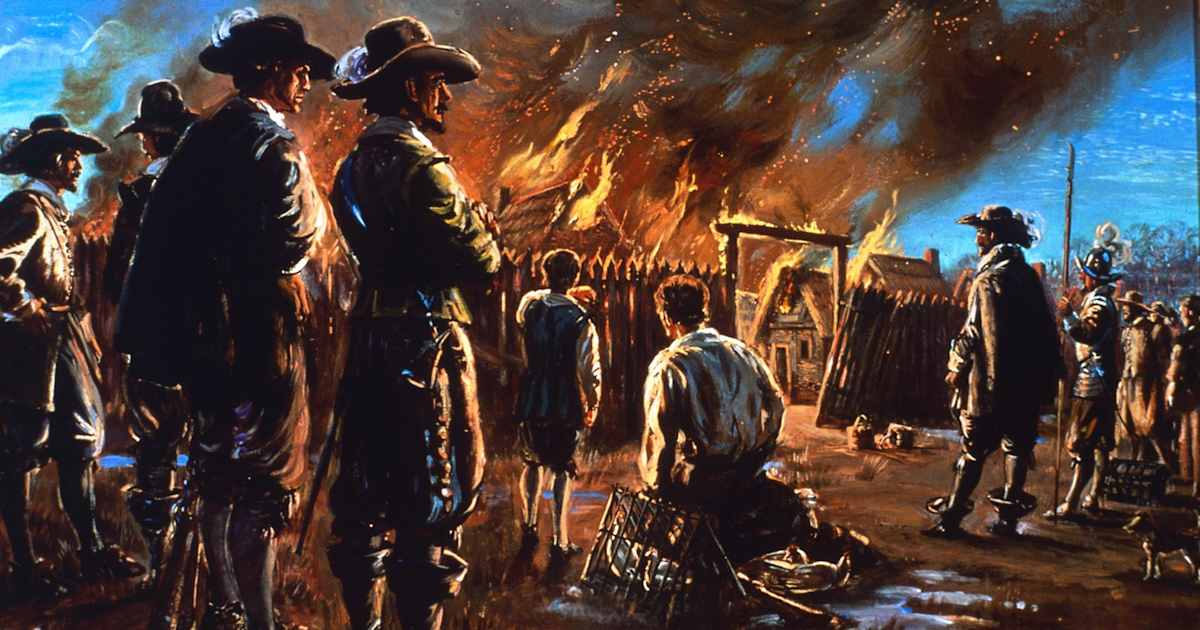
On the night of September 19, 1676, the dark skies over the James River glowed with an apocalyptic fire as Jamestown, the bustling capital of Colonial Virginia, was systematically reduced to a smoldering pile of ash. This was not the work of foreign invaders or a tragic accident, but the climax of Bacon’s Rebellion—the first armed insurrection by American colonists against British royal authority. Led by the charismatic yet demagogic Nathaniel Bacon, a diverse militia of disenfranchised frontiersmen, white indentured servants, and enslaved Black laborers turned their fury against Governor William Berkeley. Long celebrated by early American historians as a heroic prelude to the American Revolution, modern historical consensus reveals a far more complex and tragic reality: a violent power struggle fueled by colonial greed, economic despair, and a devastating campaign of ethnic cleansing against Native Americans. By understanding how this dramatic rebellion unfolded, we uncover the pivotal moment that fundamentally reshaped the labor systems, racial hierarchies, and social structures of early America.
The Historical Background: A Powder Keg in Colonial Virginia
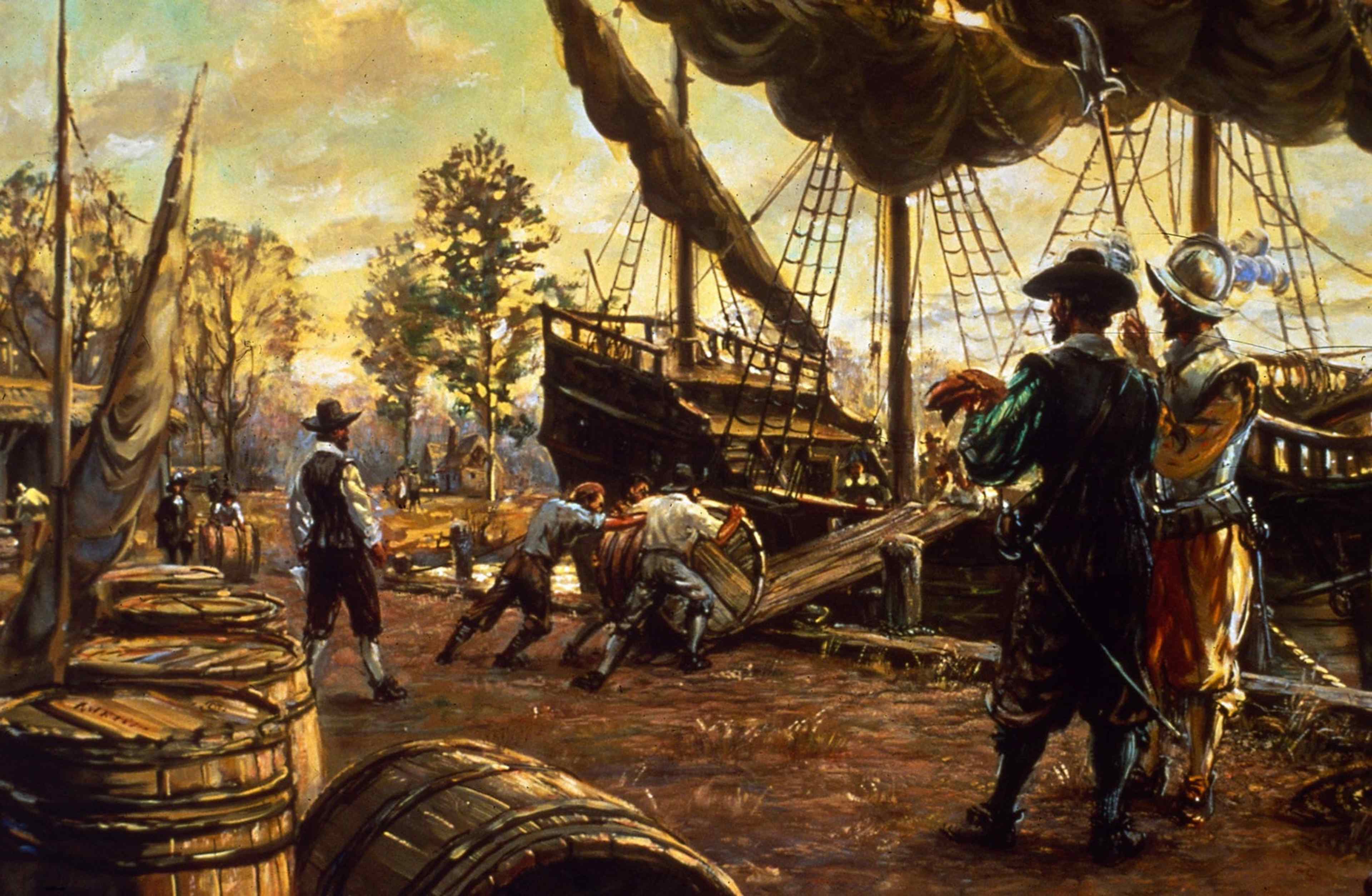
To understand why the capital of Virginia was burned to the ground, one must examine the socio-economic landscape of the late seventeenth century. By 1676, the Virginia colony was experiencing severe growing pains. The initial boom of the tobacco economy had slowed dramatically, crippled by falling tobacco prices, commercial competition from neighboring colonies, and the restrictive mercantilist policies of the English Navigation Acts. This economic stagnation hit the poorest colonists the hardest.
At the same time, a rigid social hierarchy had solidified. At the top sat the wealthy Tidewater planters—often referred to as the “gentry”—who controlled the best coastal lands and dominated the local government. At the bottom was a growing, volatile underclass of landless free men, many of whom had recently completed their terms of indentured servitude. Finding no available land in the safe, developed coastal regions, these impoverished settlers were forced to move westward toward the Piedmont frontier. There, they occupied ancestral lands of various Native American tribes, leading to frequent, violent skirmishes. The frontier settlers felt completely abandoned by Governor Sir William Berkeley and the ruling elite in Jamestown, who seemed more interested in maintaining their lucrative fur trade monopolies with friendly indigenous tribes than protecting the struggling settlers on the borders.
Key Causes and Context: Land, Labor, and Trade Monopolies
The deep-seated grievances that sparked the rebellion can be categorized into three distinct yet overlapping areas:
1. The Indian Trade Monopoly
Governor Sir William Berkeley maintained a tight, highly profitable monopoly on the fur trade with local Native American tribes. To protect this source of income, Berkeley pursued a policy of cautious diplomacy, drawing a sharp line between friendly tribes near the settlements and hostile tribes on the frontier. To the land-hungry frontier settlers, this policy looked like treason. They accused Berkeley of prioritizing his personal financial interests and the lives of Native Americans over the safety of loyal English subjects.
2. The Disenfranchisement of the Frontier Labor Force
Under Berkeley’s long tenure, the colonial government grew increasingly autocratic. In 1670, Berkeley restricted voting rights in the colony, declaring that only land-owning men could participate in elections. This disenfranchised a massive portion of the population—specifically the poor, former indentured servants who lived on the dangerous frontier. High taxes, levied to pay for expensive defense forts that many settlers believed were useless, further inflamed class tensions.
3. Escalating Frontier Violence
As settlers pushed farther inland, they clashed directly with the Susquehannock, Doeg, and other Native nations who were defending their homelands. When a series of mutual raids in 1675 resulted in casualties on both sides, the colonists demanded that the colonial government launch a full-scale military campaign to eradicate or expel all Native Americans from the region. Berkeley refused, advocating for defensive fortifications instead, which the colonists viewed as a costly and ineffective stalling tactic.
Key Events Timeline: The Path to Ashes (1675–1677)
The escalation from a localized border dispute to the complete destruction of the colonial capital occurred with shocking speed. Below is a chronological breakdown of the rebellion’s pivotal moments:
- July 1675: A dispute over an unpaid debt between plantation owner Thomas Mathew and members of the Doeg tribe escalates into violence. In response, Virginia militia forces mistakenly attack a friendly band of Susquehannock hunters, igniting a brutal cycle of retaliatory raids along the Potomac frontier.
- March 1676: Frustrated by Governor Berkeley’s defensive posture, the 29-year-old Nathaniel Bacon, a wealthy and well-connected newcomer, demands a military commission to lead an independent volunteer army against the Native Americans. Berkeley flatly refuses.
- May 1676: Defying the governor, Bacon amasses a rogue militia of poor farmers and servants. They march south and manipulate the Occaneechi tribe into helping them defeat a band of Susquehannocks. Once successful, Bacon’s men turn on their Occaneechi hosts, brutally slaughtering them and destroying their village.
- June 1676: Berkeley declares Bacon a rebel and calls for new colonial elections to appease the public. Bacon is overwhelmingly elected to the House of Burgesses. Upon arriving in Jamestown, Bacon is arrested, forced to apologize on his knees, and then pardoned. However, he soon flees the town, fearing for his safety.
- June 23, 1676: Bacon returns to Jamestown at the head of 500 armed supporters. He corners the governor, demanding his military commission. In a dramatic standoff, Berkeley bares his chest and dares the rebels to shoot. Ultimately, the terrified legislature forces Berkeley to sign the commission.
- July 30, 1676: Bacon issues his famous “Declaration of the People of Virginia,” accusing Governor Berkeley of corruption, unjust taxation, and failing to protect the colonists from barbarous heathens.
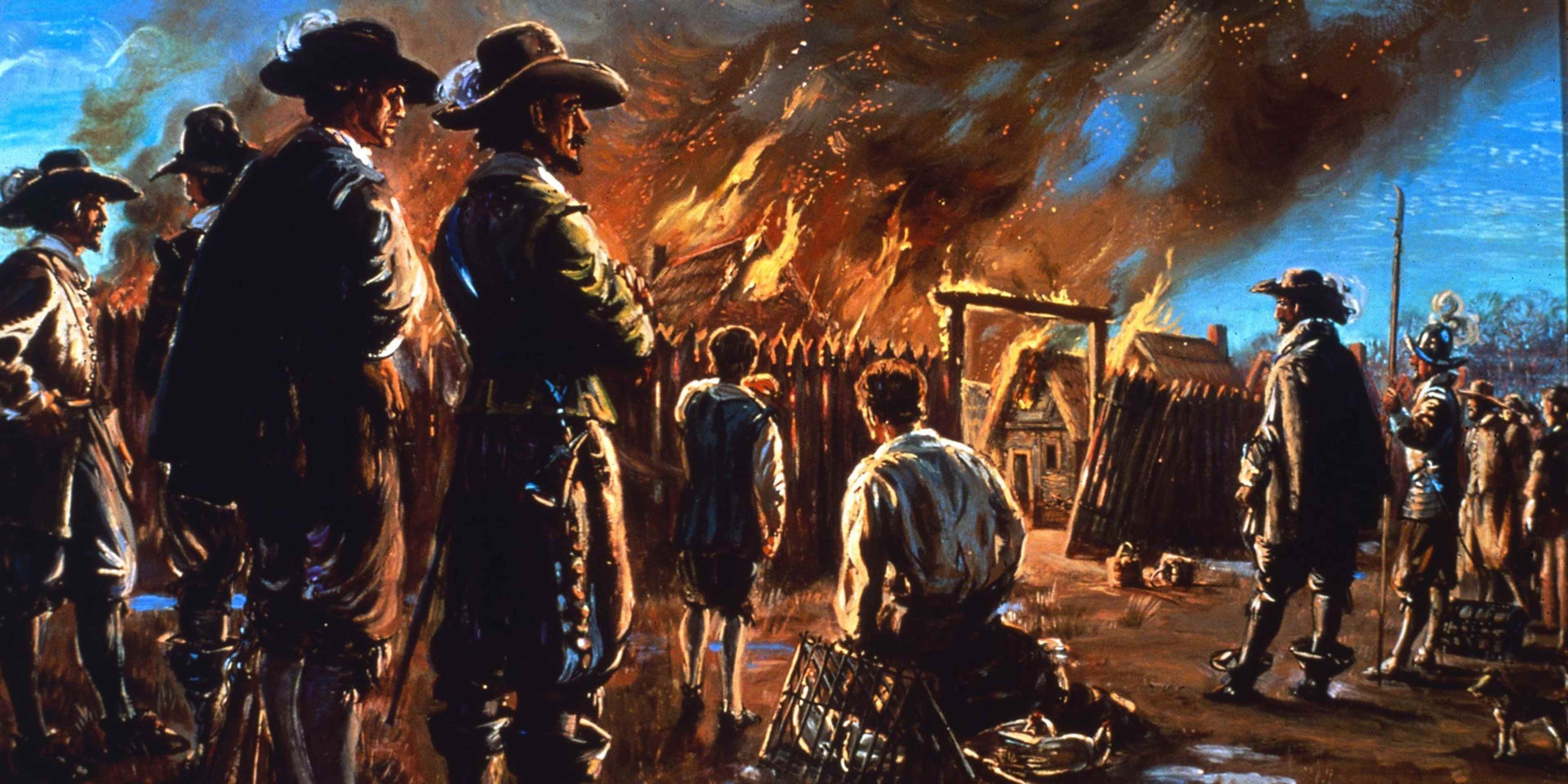
- September 19, 1676: After weeks of skirmishing, Bacon and his rebel army march on Jamestown. Berkeley and his loyalists flee by ship. To prevent the town from being recaptured and used as a royal base, Bacon orders his men to burn the capital to the ground. Jamestown is reduced to ashes.
- October 26, 1676: At the absolute height of his power, Nathaniel Bacon dies suddenly in Gloucester County of dysentery (known historically as “the bloody flux”). Deprived of his charismatic leadership, the rebel forces lose momentum and quickly fracture.
- January 1677: Backed by heavily armed English merchant vessels and incoming royal troops sent by King Charles II, Governor Berkeley retakes control of Virginia. He systematically hunts down the remaining rebels, executing 23 of them by hanging before being recalled to London in disgrace.
Important Figures and Their Lasting Impact
To fully grasp the dynamics of this historical event, we must look at the key individuals who drove the narrative:
- Nathaniel Bacon: Despite being remembered as a champion of the common man, Bacon was actually a member of the English gentry and Berkeley’s cousin by marriage. He used populist anger and intense racial animosity toward Native Americans to advance his own political standing, leaving a legacy of violence and devastation.
- Sir William Berkeley: A veteran of the English Civil Wars and a favorite of King Charles II, Berkeley served as governor of Virginia for over 27 years. His early years were marked by economic growth, but his later rule became deeply corrupt and insular. His vindictive execution of 23 rebels after the uprising horrified the Crown, and he died in London in 1677, broken and disgraced, before he could secure an audience with the King.
- Cockacoeske (Queen of the Pamunkey): Often overlooked in traditional narratives, Cockacoeske was a brilliant Native American diplomat and leader of the Pamunkey people. Despite having her people attacked by Bacon’s rogue militia, she navigated the post-rebellion landscape masterfully. She signed the Treaty of Middle Plantation in 1677, which established reservations and secured native rights under English protection.
Major Turning Points: The Defiance and The Torch
Two critical turning points altered the course of the rebellion. First was the highly theatrical confrontation in June 1676 outside the statehouse in Jamestown. Governor Berkeley, furious at Bacon’s armed intimidation, literally tore open his shirt and cried out, “Here! Shoot me, before God, fair mark, shoot!” Bacon declined to shoot, instead shouting that he only demanded a commission to fight the Indians. This moment marked the complete breakdown of civil authority, proving that raw, armed force now dictated Virginian politics.
The second major turning point was the burning of Jamestown itself. Facing the return of Berkeley’s superior naval forces, Bacon realized his militia could not defend the town. His decision to raze the oldest permanent English settlement in North America to the ground showed the desperate, scorched-earth nature of the rebellion. It symbolized the total destruction of the old social order, paving the way for a radical, dark transformation of the entire colony.
Long-Term Impact on America: The Birth of Racial Slavery
While the rebellion itself failed, its aftermath permanently altered the course of American history. Before 1676, the primary labor force in Virginia consisted of white indentured servants working alongside a smaller population of Black laborers, some of whom were indentured, free, or enslaved. During Bacon’s Rebellion, these poor Black and white workers had united to fight against the wealthy elite.
This unity terrified the wealthy planter class. They realized that a large, mobile population of landless white men who felt disenfranchised represented a permanent threat to their power. To prevent future uprisings, the colonial gentry systematically phased out the system of white indentured servitude and accelerated the transition to permanent, hereditary African slavery.
By enacting laws that strictly divided people based on race, such as the Virginia Slave Codes of 1705, the ruling elite deliberately drove a wedge between poor whites and enslaved Blacks. Poor white settlers were granted minor social privileges and access to Native lands, while Black Virginians were stripped of their basic human rights and legally defined as chattel. This deliberate “divide and conquer” strategy laid the foundational legal and cultural groundwork for systemic racism and the brutal institution of racialized slavery in the United States.
Lesser-Known Facts About Bacon’s Rebellion
- The Secret Grave of Nathaniel Bacon: Fearing that Governor Berkeley would dig up and desecrate Bacon’s body—or hang his corpse as a warning to others—Bacon’s loyal followers buried their leader in a highly secretive, unmarked grave. To this day, the exact location of his remains in Gloucester County has never been found.
- Sparked by a Dispute Over Pigs: The grand, destructive rebellion that burned down a colonial capital actually began with a petty argument over livestock. Thomas Mathew’s refusal to pay a debt to the Doeg tribe led them to take some of his pigs, setting off a chain reaction of violent retaliations that eventually consumed the entire colony.
- The King’s Angry Reaction: When King Charles II learned of Berkeley’s brutal, vindictive executions of 23 rebel leaders, he was reportedly furious, famously remarking: “That old fool has hanged more men in that naked country than I have done for the murder of my father.”
Why It Still Matters Today
Bacon’s Rebellion is not merely a dusty chapter in colonial history; it is a critical lens through which we can understand modern American societal structures. It illustrates the origins of class division and the deliberate invention of racial categories to protect the wealth of the ruling elite. Whenever we discuss systemic racism, income inequality, or the ways in which populism can be manipulated to target marginalized groups, we are directly engaging with the unresolved legacy of 1676. It serves as a stark historical warning of how easily public anger can be redirected away from systemic issues and toward vulnerable communities.
People Also Ask
Why did Nathaniel Bacon burn Jamestown?
Nathaniel Bacon ordered his men to burn Jamestown to the ground on September 19, 1676, to prevent Governor William Berkeley and his loyalist forces from using the colonial capital as a military stronghold. Bacon’s militia lacked the resources to defend the town against Berkeley’s incoming naval ships, so they opted for a scorched-earth strategy.
How did Bacon’s Rebellion impact the growth of slavery?
The rebellion terrified wealthy planters because poor white indentured servants and Black laborers had united to rebel. To prevent future cross-racial alliances, the elite phased out indentured servitude and turned to permanent African slavery, establishing strict racial codes to legally divide white and Black workers.
Was Bacon’s Rebellion a precursor to the American Revolution?
While early historians like Thomas Jefferson viewed the rebellion as a brave stand against British tyranny, modern historians disagree. Bacon’s primary goal was not independence from Britain, but rather a demand for government-sanctioned violence to seize Native American lands and secure a share of the lucrative fur trade.
Conclusion: The Smoldering Legacy of 1676
Bacon’s Rebellion remains one of the most intriguing and dark chapters of early American history. What began as a dispute over frontier land and native policy escalated into a full-blown civil war that left the capital of Virginia in ashes. While the rebellion itself crumbled with the death of Nathaniel Bacon, its true tragedy lies in its long-term consequences. By cementing the transition to chattel slavery and embedding racial divisions into American law, the ashes of Jamestown gave birth to a racial hierarchy that would shape the social fabric of the United States for centuries to come.


