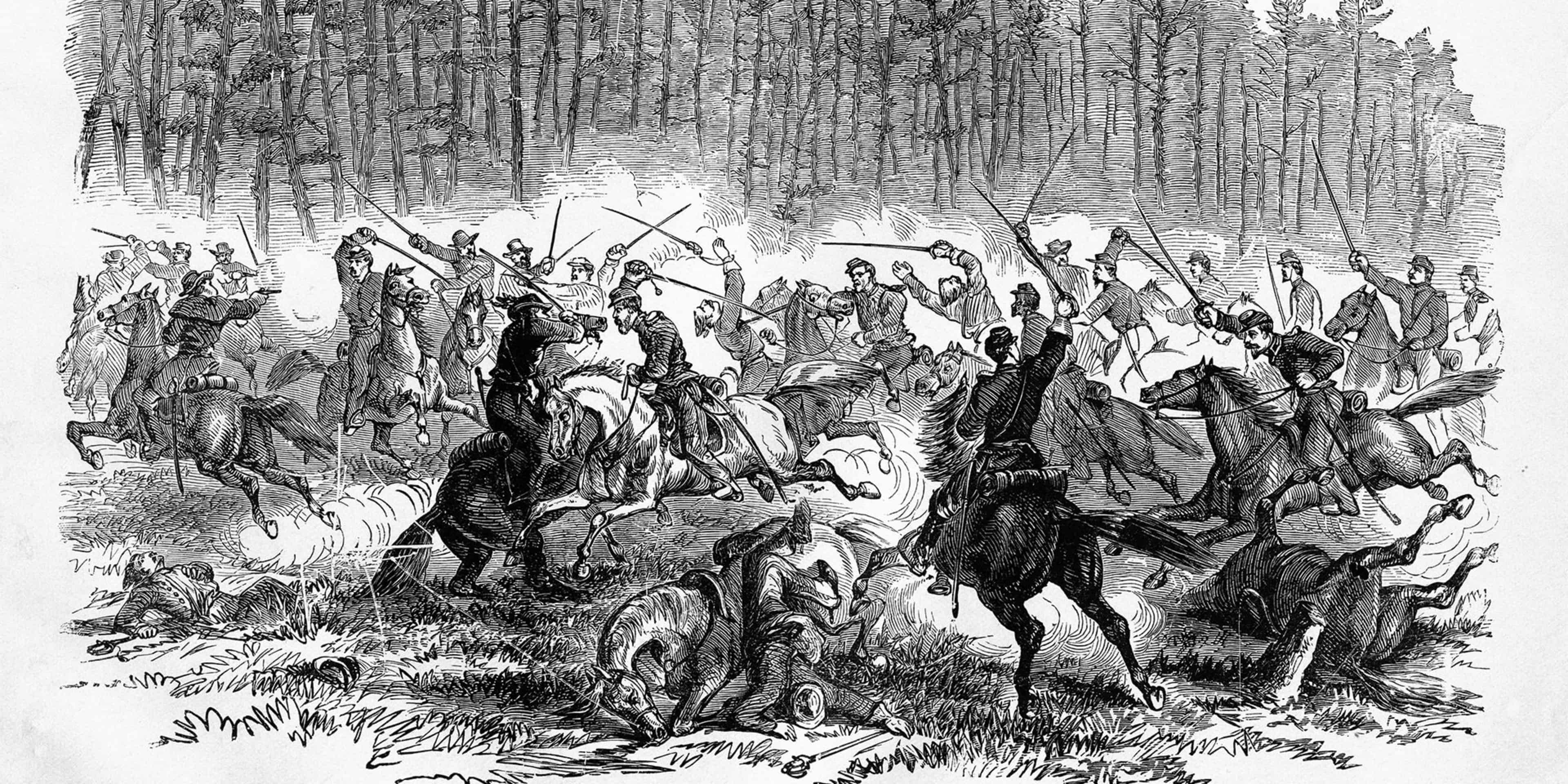
The American Civil War (1861–1865) was not just a battle for the preservation of the Union and the eradication of slavery; it was the world’s first truly industrial conflict. It stood as a tragic crossroads where outdated 19th-century military tactics—rooted in Napoleonic-era maneuvers—collided head-on with deadly, modernized Civil War technology. As the industrialized North and the agrarian South clashed, a wave of rapid innovation swept through every theater of war. This period introduced lethal new weaponry, rapid communication networks, and heavy-duty logistics infrastructure that would redefine global conflict forever. From repeating rifles to ironclad warships and submarines, this era transitioned warfare from a localized test of sheer human endurance into a complex contest of technological and industrial might, laying the groundwork for the modern military-industrial complex.
The Sociopolitical and Economic Context of the Industrial War
Before the first shots were fired at Fort Sumter, the United States was already fracturing along economic and technological lines. The Northern states had embraced rapid industrialization, boasting a dense network of factories, iron foundries, and standardized transportation systems. Conversely, the Southern economy was heavily agrarian, relying almost exclusively on the labor of enslaved people to harvest cash crops like cotton and tobacco. This structural disparity directly dictated how both sides waged war.
When the conflict began, the Union held an overwhelming industrial advantage. Northern factories possessed the machinery and skilled labor necessary to mass-produce advanced weapons, locomotives, and telegraph wires. The Confederacy, while possessing brilliant tactical commanders, struggled throughout the war with severe supply shortages, a lack of manufacturing infrastructure, and a disjointed transportation network. This imbalance meant that while both sides could devise technological breakthroughs, only the North could deploy them at a scale capable of winning a war of attrition.
The Evolution of Weaponry: From Muskets to Repeaters
Perhaps the most lethal shift in Civil War technology occurred in the hands of the common infantryman. Prior to 1861, soldiers typically carried smoothbore muskets. These weapons were slow to load, held only a single round, and had an effective accuracy range of barely 80 yards. Consequently, military strategy dictated that armies march in close, dense formations to deliver massed volleys at close range.
The introduction of the rifled musket and the revolutionary Minié ball shattered this traditional approach. Invented in 1848 by French army officer Claude Minié, the Minié ball was a cone-shaped lead bullet designed with a slightly smaller diameter than the rifle barrel. This allowed soldiers to load the ammunition quickly and easily without needing a mallet to force it down the barrel. Upon firing, the hollow base of the lead bullet expanded to grip the spiral rifling grooves inside the barrel, spinning the bullet and dramatically increasing its stability in flight.
Suddenly, an average infantryman could accurately hit a target up to 500 yards away, with a maximum range of nearly 1,000 yards. Because military tactics did not evolve as fast as weapon precision, soldiers marching in traditional tight lines were systematically cut down from afar. This deadly imbalance accounts for roughly 90 percent of all battlefield casualties during the war, forcing soldiers on both sides to adapt by digging elaborate trench systems and building defensive fortifications.
By 1863, firepower advanced even further with the widespread introduction of repeating rifles, most notably the Spencer carbine. Capable of firing seven consecutive shots in just 30 seconds before requiring a reload, these weapons provided Union troops with an overwhelming tactical advantage. Confederate forces, lacking the industrial capacity to manufacture these complex mechanisms or their specialized copper rimfire cartridges, could only look on in frustration. Confederate soldiers famously joked that the Union possessed guns they could “load on Sunday and shoot all week.”
Naval Warfare and Undersea Innovations
The technological revolution was not limited to land. On the water, the age of wooden sailing ships came to an abrupt end. The Union deployed a massive naval blockade to choke off Southern trade, prompting the Confederacy to develop counter-technologies. This led to the rise of “ironclads”—steam-powered warships protected by thick plates of iron armor.

The historic clash between the USS Monitor and the CSS Virginia (formerly the USS Merrimack) at the Battle of Hampton Roads in March 1862 proved that wooden warships were obsolete. While the battle itself ended in a draw, it initiated a global naval arms race. Beyond armored hulls, the Confederacy turned to desperate, experimental designs to break the Union blockade, resulting in the development of early submarines. The most famous of these was the CSS Hunley, a cramped, hand-cranked metal tube designed to carry an eight-man crew. In February 1864, the Hunley made history by sinking the Union blockade ship USS Housatonic off the coast of Charleston, South Carolina, using a spar torpedo, though the submarine itself sank during the mission, claiming the lives of its entire crew.
The Power of Infrastructure: Railroads and Logistics
While weapons dominated battlefield headlines, logistical infrastructure was arguably more decisive in securing Union victory. The railroad emerged as the primary strategic artery of the war. Once again, the Union held a massive geographical and industrial advantage, boasting approximately 22,000 miles of railroad track compared to the South’s 9,000 miles.
Crucially, Northern tracks were largely standardized to a uniform gauge, meaning trains could run seamlessly across state lines without stopping to transfer cargo. Southern railroads, however, were built using mismatched gauges. This forced costly, time-consuming transfers of troops and supplies from one train to another. The Union Army utilized its rail superiority to rapidly transport tens of thousands of troops and tons of rations directly to critical battlefronts, while specialized military construction corps quickly repaired damaged tracks and bridges to keep the supply lines open.
Telecommunications: The Telegraph and Lincoln’s War Room
The Civil War was the first conflict in history to be directed in real-time by a head of state using electronic communication. The telegraph transformed the presidency of Abraham Lincoln, allowing him to bypass slow military bureaucracies and command his generals directly from the War Department telegraph office in Washington, D.C.
In 1861, the Union established the U.S. Military Telegraph Corps under the leadership of a young industrialist named Andrew Carnegie. Over the course of the war, this corps strung more than 15,000 miles of telegraph wire, enabling instant communication between Washington and commanders in the field. Historians often analyze how Abraham Lincoln used the telegraph to help win the Civil War as a case study in modern executive command. While Lincoln monitored battle reports and coordinated multi-theater strategies, Confederate President Jefferson Davis was severely limited by a lack of telegraph wire, battery chemicals, and operators, leaving Southern commanders to operate in relative isolation.
Visualizing War: The Dawn of Photojournalism
The horrors of the battlefield were brought home to civilians in unprecedented detail through the emerging medium of photography. Although the complex, multi-step “wet-plate” chemical process made candid action snapshots impossible, photographers like Mathew Brady and Alexander Gardner captured the immediate, grim aftermath of major battles.
These early Civil War photographs stripped away the romanticized myths of glorious combat, displaying bloated corpses, shattered landscapes, and the stark reality of military encampments. For the first time, families at home did not have to rely solely on artistic sketches or written letters; they could see the brutal, unvarnished cost of war with their own eyes.
A Timeline of Civil War Technological Milestones
- 1848: Claude Minié invents the expanding Minié ball, revolutionizing infantry rifle accuracy and range.
- 1861: The U.S. Military Telegraph Corps is established under the direction of Andrew Carnegie, instantly linking the capital to active battlefronts.
- March 1862: The historic battle between the USS Monitor and CSS Virginia marks the end of wooden naval warfare.
- 1863: Union forces widely adopt repeating rifles like the Spencer carbine, drastically increasing fire rates on the battlefield.
- February 1864: The Confederate submarine CSS Hunley successfully sinks the USS Housatonic, marking the first successful submarine attack in naval history.
Lesser-Known Facts and Surprising Anecdotes
While names like Lincoln, Grant, and Lee dominate standard history textbooks, several fascinating details highlight the diverse and unusual nature of Civil War technology and demographics:
- Aerial Reconnaissance: Long before the invention of military aircraft, both armies utilized hydrogen-filled silk balloons to float thousands of feet above the battlefield. Union “aeronauts” used these balloons to map Confederate positions and would transmit real-time reconnaissance data directly to commanders on the ground via a telegraph wire running down the balloon’s anchoring rope.
- The Delayed Spread of News: Despite the rapid speed of telegraph communication, the flow of information was highly localized. Enslaved people in Galveston, Texas, did not officially receive news of their freedom under the 1863 Emancipation Proclamation until June 19, 1865 (a celebration now known as Juneteenth), highlighting the dramatic communication gap that still existed across remote regions of the American frontier.
- Diverse Ranks: Modern research has shed light on the often-overlooked role of Asian soldiers in the Civil War. Men of Chinese, Filipino, and South Asian descent enlisted and fought courageously for both the Union and Confederate causes, proving that the conflict’s human tapestry was far more diverse than traditional narratives suggest.
Why Civil War Technology Still Matters Today
The technological leaps of the American Civil War did not disappear when the fighting stopped; instead, they permanently reshaped modern civilian and military life. The rapid mass production of weapons and uniforms accelerated the growth of American factory systems, setting the stage for the Second Industrial Revolution. The massive scale of battlefield fatalities also forced the rapid development of modern emergency medicine, field hospitals, and the commercial embalming industry.
Today, the connection between executive leadership and instantaneous communication remains a cornerstone of global defense networks. The integration of advanced logistics, real-time command structures, and industrial production that saved the Union in 1865 serves as the direct ancestor of modern military command centers, global transit grids, and cybersecurity frameworks.
People Also Ask
What was the most important technology used in the Civil War?
While weapons like the repeating rifle were vital, the combination of the telegraph and the railroad is widely considered the most important technology of the war. They allowed for the rapid transport of troops and supplies over vast distances and enabled real-time strategic coordination between leadership and battlefield commanders.
How did the Minié ball change the Civil War?
The Minié ball drastically increased the accuracy and effective range of firearms up to 500 yards. Because military leaders continued using outdated, close-quarters infantry charge tactics against these high-precision weapons, the Minié ball was responsible for an estimated 90 percent of all battlefield casualties.
Why did the North have a technological advantage over the South?
The North had a highly developed industrial economy with abundant factories, iron foundries, and skilled manufacturing labor, alongside a standardized railroad network. The South possessed an agrarian economy that lacked the raw materials, factories, and technical infrastructure required to mass-produce advanced technologies like repeating rifles or telegraph lines.
Conclusion
The American Civil War was a painful but pivotal turning point in human history, marking the transition into the era of total industrial warfare. Out of the tragedy of a divided nation emerged an array of technological breakthroughs—from rifled weapons and submarines to railroads and telecommunications—that permanently altered the mechanics of combat and statecraft. By understanding how these 19th-century innovations were deployed, we gain invaluable insight into the origins of modern technology, military logistics, and the industrial power that continues to define the United States today.


