On November 19, 1863, amid the freshly dug graves of the Soldiers’ National Cemetery in Gettysburg, Pennsylvania, President Abraham Lincoln delivered a speech that would forever redefine the soul of the United States. Only 272 words long and lasting barely over two minutes, the Gettysburg Address did not merely commemorate a bloody battle; it functioned as a philosophical “new birth of freedom” for a fractured nation. By bypassing the legalistic prose of the Constitution and reaching back to the revolutionary ideals of 1776, Lincoln reframed the Civil War not just as a struggle to preserve a political union, but as a global test of whether a nation dedicated to human equality could endure. This historic address became a moral compass for modern America, serving as a secondary founding document that elevated the promise of liberty for all citizens to the ultimate test of American democracy.
The Historical Background: A Nation Divided and Bleeding
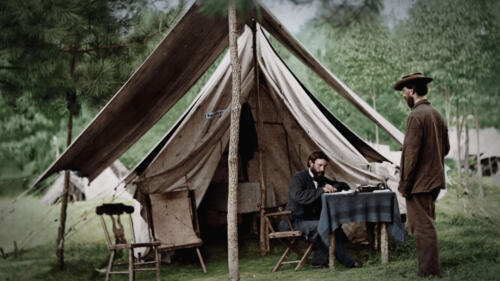
By late 1863, the American Civil War had dragged on for over two bloody, exhausting years. The initial romanticism of the war had long vanished, replaced by a grim realization of the staggering human cost required to preserve the Union. The Battle of Gettysburg, fought from July 1 to July 3, 1863, represented a catastrophic clash of armies [3]. General Robert E. Lee’s Confederate Army of Northern Virginia had marched into Pennsylvania, hoping to secure a decisive victory on Northern soil that would force the Union to negotiate. Instead, they were met by General George G. Meade’s Army of the Potomac.
The resulting three-day battle became the bloodiest engagement ever fought on North American soil. Staggering casualties exceeded 50,000 men killed, wounded, or captured. The aftermath was a logistical and humanitarian nightmare for the small town of Gettysburg. Thousands of shallow, makeshift graves littered the countryside, prompting local citizens, led by attorney David Wills, to establish a proper National Cemetery. To dedicate this sacred ground, a massive ceremony was planned. While the famed orator Edward Everett was selected to deliver the primary address, President Lincoln was invited to offer a few concluding, appropriate remarks to officially consecrate the fields.
Why Lincoln Bypassed the Constitution for the Declaration
To understand the revolutionary nature of the Gettysburg Address, one must examine how Lincoln chose to define the American experiment. In his famous opening line, “Four score and seven years ago,” Lincoln pointedly directed his audience’s memory back to 1776—the year the Declaration of Independence was signed. He deliberately did not reference 1787, the year the United States Constitution was drafted. This was a calculated, brilliant political and philosophical choice.
The U.S. Constitution was a compromise document. In order to bind the southern slaveholding states and northern free states together, the framers had legally tolerated, protected, and codified the institution of chattel slavery. The Declaration of Independence, however, boldly proclaimed as a self-evident truth that “all men are created equal.” By anchoring the Union’s war effort in the moral philosophy of the Declaration, Lincoln argued that the true founding principle of America was human equality, not state sovereignty or legalistic compromises. Historically, when the controversial anti-slavery passage was removed from the Declaration during its initial drafting, the nation deferred its moral reckoning. Lincoln used his short address to force that reckoning, asserting that the Civil War was the ultimate trial of whether a nation so conceived could long survive.
Key Events and Timeline of the Gettysburg Consecration
To grasp the chronological flow of this defining historical moment, we must look at the sequence of events that culminated on that fateful November afternoon:
- July 1–3, 1863: The Battle of Gettysburg is fought, resulting in a critical Union victory but devastating casualties on both sides [3].
- July 4, 1863: General Lee begins his retreat to Virginia; simultaneously, Vicksburg surrenders to Union General Ulysses S. Grant, turning the tide of the war.
- August 1863: David Wills secures funding and land for the Soldiers’ National Cemetery in Gettysburg to properly inter Union soldiers.
- November 2, 1863: Lincoln receives a formal invitation to deliver “a few appropriate remarks” at the consecration ceremony.
- November 18, 1863: Lincoln arrives in Gettysburg by train, spending the evening refining his brief speech at the Wills House.
- November 19, 1863: The dedication ceremony takes place. Edward Everett speaks for two hours; Lincoln follows with his 272-word address.
Prominent Figures and Their Lasting Impact
Several key individuals shaped the events and legacy of the Gettysburg Address, each leaving a lasting imprint on American history:
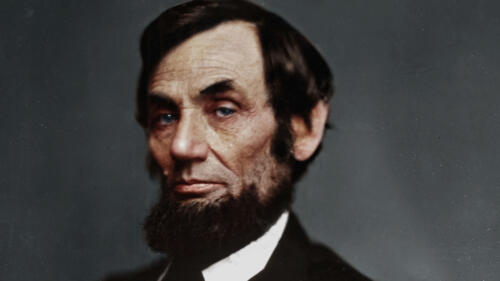
- Abraham Lincoln: As the 16th President of the United States, his role was to provide moral leadership to a grieving, deeply divided Union [1]. His brief speech transformed how Americans understood their own country, elevating the concept of equality to the very center of the American identity.
- Edward Everett: A legendary diplomat, governor, and academic who was the primary speaker of the day. Everett spoke for over two hours, delivering a classical, sweeping oration. However, Everett recognized the genius of Lincoln’s brevity, writing to the President the next day: “I should be glad if I could flatter myself that I came as near to the central idea of the occasion, in two hours, as you did in two minutes.”
- David Wills: The prominent Gettysburg lawyer whose vision for a dignified resting place for fallen Union soldiers created the physical and symbolic stage upon which Lincoln spoke, ensuring that the human cost of the battle would never be forgotten.
Major Turning Points: Reinterpreting the Union
The Gettysburg Address marked a profound linguistic and psychological turning point for the United States. Before the Civil War, the term “United States” was typically treated as a plural noun—as in, “the United States are a vast country.” Citizens viewed the nation as a collection of independent, sovereign states bound together by a legal contract. After Lincoln’s address and the eventual Union victory, the “United States” became a singular noun: “the United States is.”
Lincoln’s speech shifted the national consciousness. He did not mention “the Constitution,” “the Confederacy,” or “slavery” explicitly. Instead, he spoke of a “new birth of freedom” and “government of the people, by the people, for the people.” This linguistic shift cemented the idea of a single, indivisible nation dedicated to a shared moral purpose. By defining the war as a test of democracy itself, Lincoln ensured that the Union was no longer just a political arrangement, but a sacred, moral crusade.
Long-Term Impact on the American Identity
The long-term legacy of the Gettysburg Address cannot be overstated. It became the ultimate template for American civic religion. By linking the sacrifice of Union soldiers to a broader global mission, Lincoln argued that the survival of American democracy was essential to the survival of free government worldwide. This powerful rhetoric paved the way for the passage of the Reconstruction Amendments (the 13th, 14th, and 15th Amendments), which legally abolished slavery and established equal protection under the law.
The address successfully re-aligned the nation with the original ideals of the Founding Fathers, correcting what Lincoln saw as a historical deviation. It established a standard of democracy that subsequent generations, from the suffragists of the early 20th century to Civil Rights leaders like Dr. Martin Luther King Jr., would continuously cite in their own struggles for equality.
Lesser-Known Facts About the Gettysburg Address
While almost every American is familiar with the opening line “Four score and seven years ago,” several fascinating details about the speech remain widely overlooked:
- The “Back of an Envelope” Myth: A popular legend claims Lincoln scribbled the speech on the back of an envelope while riding the train to Gettysburg. In reality, Lincoln spent days meticulously drafting and revising the speech, writing several drafts on Executive Mansion stationery before finalizing it in Gettysburg.
- The Forgotten Orator: Edward Everett’s massive two-hour speech was highly praised at the time, but it has been completely overshadowed by Lincoln’s two-minute remarks. Today, Everett’s 13,000-word oration is a historical footnote, while Lincoln’s 272 words are carved in stone at the Lincoln Memorial.
- The Only Photo of Lincoln at Gettysburg: There are very few photographs of the dedication ceremony, and for decades, historians believed no photo of Lincoln delivering the speech existed. However, a highly detailed crowd photo was later discovered showing Lincoln on the speaker’s platform, though he is blurry because he sat down so quickly after speaking that the photographer barely had time to adjust his camera.
Why the Gettysburg Address Still Matters Today
In the twenty-first century, the Gettysburg Address remains as vital as it was in 1863. As modern societies grapple with intense political polarization, questions of systemic inequality, and challenges to democratic institutions, Lincoln’s words serve as both a warning and an inspiration. The central question he posed on the battlefield—whether a nation “so conceived and so dedicated, can long endure”—is a question that every generation of Americans must answer for themselves. The promise of a “government of the people, by the people, for the people” is not a guaranteed inheritance, but an ongoing project that requires active civic engagement, mutual respect, and a shared commitment to the proposition of human equality.
People Also Ask
What is the main message of the Gettysburg Address?
The main message of the Gettysburg Address is that the American Civil War was a test of whether a democratic nation dedicated to the principle of human equality could survive. Lincoln called on the living to honor the fallen by continuing their fight to ensure a “new birth of freedom” and the survival of self-governance.
Why did Lincoln say “four score and seven years ago”?
A “score” is twenty years, making “four score and seven” equal to eighty-seven years. Since Lincoln spoke in 1863, subtracting eighty-seven years points directly back to 1776, the year of the Declaration of Independence. Lincoln used this phrase to emphasize that America’s true founding was based on the promise of human equality, rather than the political compromises of the Constitution.
How many words are in the Gettysburg Address?
The standard version of the Gettysburg Address, known as the Bliss Copy, contains exactly 272 words. Despite its brief length, it is widely considered one of the most powerful and influential speeches in human history.
Conclusion: A Second Founding
Ultimately, the Gettysburg Address was much more than a dedication speech; it was a profound re-interpretation of the American contract. By raising the ideals of the Declaration of Independence above the legal mechanisms of the Constitution, Abraham Lincoln provided the United States with a moral framework that continues to guide its democratic journey. The speech transformed the horrific loss of life at Gettysburg into a sacred pledge, ensuring that those who died did not do so in vain, but rather laid the foundation for a more perfect, equal, and enduring Union.


