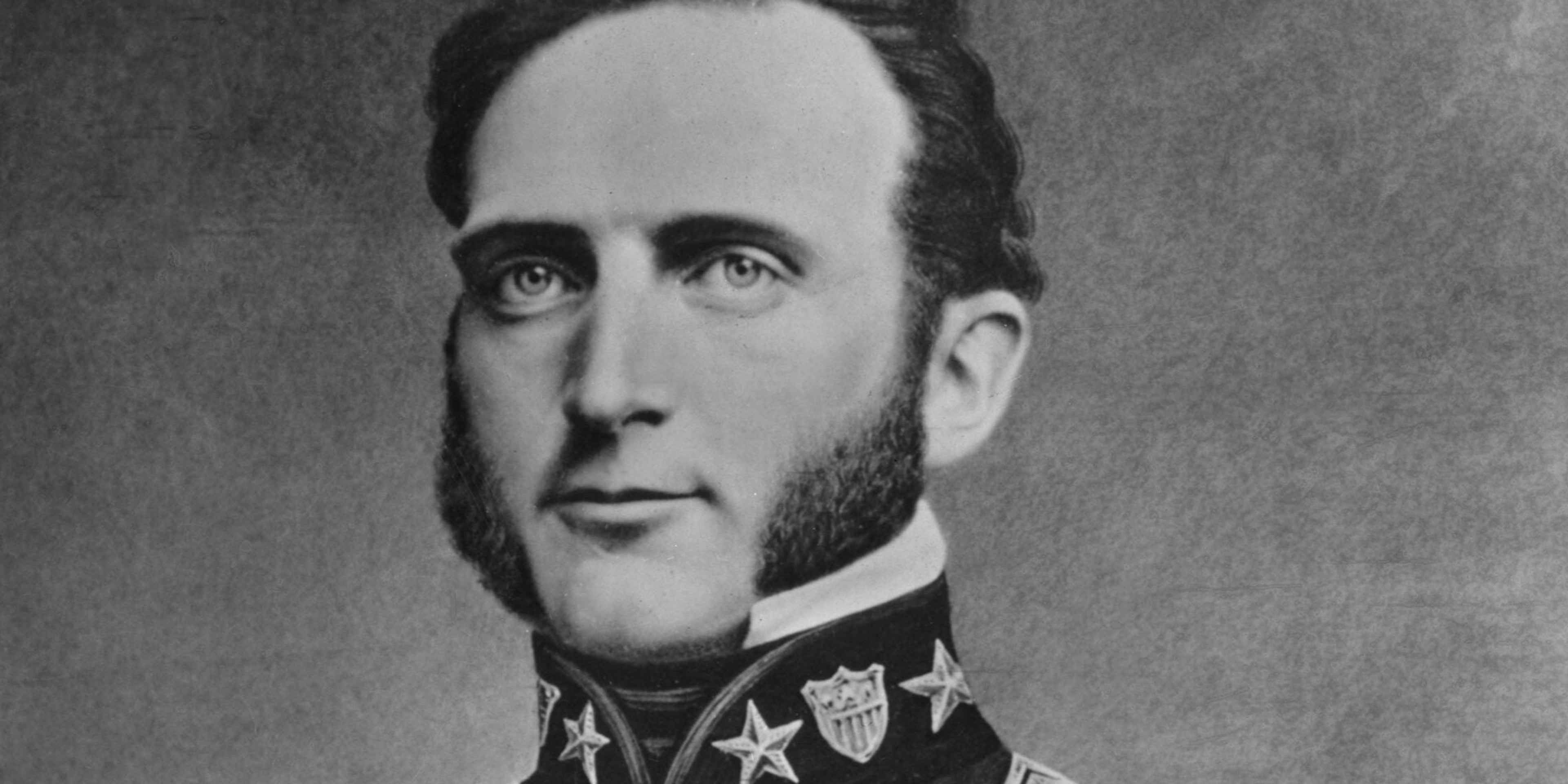
Thomas “Stonewall” Jackson remains one of the most polarizing and brilliant military minds in American history. Serving as a Confederate general during the American Civil War (1861–1865), Jackson earned a reputation for tactical audacity, relentless speed, and unyielding defense. His maneuvers in the Shenandoah Valley and his partnership with General Robert E. Lee redefined the limits of operational warfare, leaving an indelible mark on the conflict’s outcome. Understanding Jackson is key to analyzing the strategic dimensions of the war, the deep contradictions of Southern society, and the devastating human toll of the era.
Historical Background: From Humble Roots to West Point
Thomas Jonathan Jackson was born on January 21, 1824, in Clarksburg, Virginia (now West Virginia). His early life was defined by extreme tragedy and hardship. When he was just two years old, his older sister and his father, Jonathan Jackson, both died of typhoid fever, leaving his mother, Julia, with three young children and crippling debt. After his mother remarried and subsequently died when Jackson was only seven, he was sent to live with relatives. He grew up working on his uncle’s mill in Jackson’s Mill, Virginia, receiving only a rudimentary education.
Despite his limited schooling, Jackson was determined to improve his station. In 1842, he secured an appointment to the United States Military Academy at West Point. Initially lagging far behind his peers due to his poor academic preparation, Jackson exhibited an ironclad work ethic. He famously studied by firelight long after the other cadets had gone to sleep. By the time he graduated in 1846, he had climbed from the bottom of his class to a highly respectable 17th out of 59 graduates—a class that included future Civil War adversaries and allies alike.
Causes and Context: Secession and State Loyalty
Upon graduation, Jackson was commissioned into the artillery and immediately sent to fight in the Mexican-American War (1846–1848). He proved his courage under fire, earning rapid promotions to the rank of brevet major. After the war, however, he grew restless with peacetime military life and resigned his commission in 1851 to become a professor of natural philosophy and artillery tactics at the Virginia Military Institute (VMI) in Lexington.
For ten years, Jackson lived a quiet, deeply religious life in Lexington. Although he personally hoped that Virginia would remain in the Union during the secession crisis of 1860–1861, his ultimate loyalty lay with his home state. When Virginia seceded in April 1861 following the bombardment of Fort Sumter, Jackson did not hesitate to offer his services to the newly formed Confederate States of America, prioritizing local allegiance over his federal oath.
Major Turning Points and the Birth of a Legend
The First Battle of Bull Run
Jackson’s rise to national prominence was meteoric. At the First Battle of Bull Run in July 1861, the Confederate lines began to crumble under a ferocious Union assault. Amid the chaos, Jackson refused to retreat, holding his brigade firmly on Henry House Hill. Observing his steadfastness, Confederate General Barnard Bee rallied his own retreating men by shouting, ‘Look, men, there is Jackson standing like a stone wall!’ The nickname stuck, and from that day forward, he was known as ‘Stonewall’ Jackson.
The Shenandoah Valley Campaign
In the spring of 1862, Jackson assumed independent command in the Shenandoah Valley. Tasked with preventing Union forces from reinforcing General George McClellan’s march on Richmond, Jackson executed one of the most brilliant campaigns in military history. Leading an army of only 15,000 to 18,000 men, he utilized rapid marches—earning his troops the moniker ‘foot cavalry’—to defeat three separate Union armies totaling over 60,000 men. Through speed, deception, and precise strikes, Jackson neutralized the Union threat, kept Richmond safe, and electrified the Southern public.
Subsequent Campaigns and Lee’s Right Hand
Recognizing his genius, General Robert E. Lee integrated Jackson’s forces into the Army of Northern Virginia. Jackson became Lee’s most trusted lieutenant, executing bold flanking maneuvers that secured spectacular victories. His tactical coordination was vital at the Second Battle of Bull Run, where Jackson’s forces drew and absorbed the Union attack, allowing James Longstreet to deliver a crushing counterblow. This partnership continued to yield victories at Antietam, Fredericksburg, and ultimately Chancellorsville.
The Battle of Chancellorsville and Tragic Death
In May 1863, Lee and Jackson faced their greatest challenge at Chancellorsville, outnumbered more than two-to-one by Union General Joseph Hooker. Rather than retreating, Lee and Jackson devised an incredibly risky plan. Jackson led 28,000 men on a stealthy, 15-mile march around the Union army’s exposed right flank. At dusk on May 2, Jackson’s men launched a surprise attack that completely shattered the Union line, forcing a panicked retreat.
However, this spectacular victory ended in tragedy. While scouting ahead of his lines after dark to plan a night attack, Jackson and his staff were mistaken for Union cavalry by a North Carolina regiment. The Confederate soldiers opened fire, striking Jackson three times. His left arm was shattered and had to be amputated. Though he initially showed signs of recovery at a nearby field hospital, Jackson contracted pneumonia and died on May 10, 1863, at the age of 39. His final words were, ‘Let us cross over the river, and rest under the shade of the trees.’
Key Figures of the Jackson Era
- Thomas ‘Stonewall’ Jackson: The highly religious, eccentric, and brilliant commander whose aggressive maneuvering changed the course of the early Civil War campaigns.
- Robert E. Lee: General of the Army of Northern Virginia who famously referred to Jackson as his ‘right arm’ and lamented that Jackson’s death was an irreplaceable loss to the Southern cause.
- Barnard Bee: The Confederate general who coined the famous nickname ‘Stonewall’ at the First Battle of Bull Run shortly before being mortally wounded.
Lesser-Known Facts About Stonewall Jackson
His Odd Physical Eccentricities
Jackson was highly eccentric and a known hypochondriac. He believed that his internal organs were misaligned, which led him to keep one arm raised in the air during battle to ‘balance his fluids.’ He also sat perfectly straight in chairs to keep his colon aligned and had a legendary, though sometimes exaggerated, affinity for sucking on lemons to aid his digestion.
Unpopular as a Professor
Before the war, Jackson was widely disliked by his students at VMI. Cadets found his lectures dry, repetitive, and completely devoid of flexibility. He was mocked as ‘Tom Fool Jackson’ and frequently had pranks played on him, a stark contrast to the absolute devotion he would later command from his soldiers on the battlefield.
The Dual Burials
Because his arm was amputated days before his death, Jackson has two separate graves. His arm was buried in a family cemetery at Ellwood Manor near Chancellorsville, while his body was transported to Lexington, Virginia, where it was buried with full military honors.
Long-Term Impact on America and the Civil War
The death of Stonewall Jackson was a devastating psychological blow to the Confederacy, marking a critical turning point from which the Southern army never fully recovered. Tactically, his absence was sorely felt at the Battle of Gettysburg just two months later, where Lee struggled to execute the swift flanking maneuvers that had once been Jackson’s specialty. Furthermore, the massive outpouring of grief and the nationwide focus on his demise highlighted the profound changes in how Americans processed loss. During this period, how Civil War deaths advanced America’s funeral industry became highly apparent, as advanced embalming techniques and public mourning rituals were popularized to cope with the unprecedented scale of military casualties.
Why It Still Matters Today
Stonewall Jackson’s legacy remains a subject of intense debate in modern America. While military academies worldwide continue to study his Shenandoah Valley Campaign as a masterpiece of mobile warfare, his role as a defender of a secessionist government dedicated to preserving slavery has made him a controversial figure. The modern removal of his statues and the renaming of institutions dedicated to his memory reflect America’s ongoing effort to reconcile military brilliance with the moral realities of the Civil War.
People Also Ask
Did Stonewall Jackson own slaves?
Yes, Jackson owned several enslaved people whom he acquired through marriage or purchase. However, in a historical contradiction, he also broke Virginia law by establishing a Sunday school class for enslaved and free Black children in Lexington, teaching them how to read the Bible.
What was Jackson’s cause of death?
Though wounded by friendly fire and having his arm amputated, Jackson actually died of pneumonia eight days later at a plantation in Guinea Station, Virginia.
Conclusion
Thomas ‘Stonewall’ Jackson was a complex figure—a deeply devout, eccentric Presbyterian who excelled at the brutal art of war. His tactical innovations defined the early years of the Civil War, and his tragic death at Chancellorsville deprived the Confederacy of its most effective tactical leader. Today, his life serves as a window into the passion, division, and profound tragedy of the American Civil War.


