Before the mid-19th century, death in America was an intimate, domestic affair. When a loved one passed, they died at home, their body was washed and prepared by family members, and they were quickly buried in local churchyards or family plots. However, the outbreak of the American Civil War (1861–1865) shattered this localized tradition. With hundreds of thousands of young men dying on distant battlefields, families faced the agonizing reality of never seeing their loved ones again. Out of this profound national grief and logistical crisis, a specialized, highly commercialized industry was born. The practice of chemical preservation—initially a crude medical novelty—suddenly became a massive commercial enterprise. This shift did not just change how the dead were handled; it completely revolutionized the American cultural relationship with mortality, transforming private mourning into a highly professionalized, multi-billion-dollar funeral industry that endures to this day.
Historical Background: A Nation Confronting Unprecedented Loss
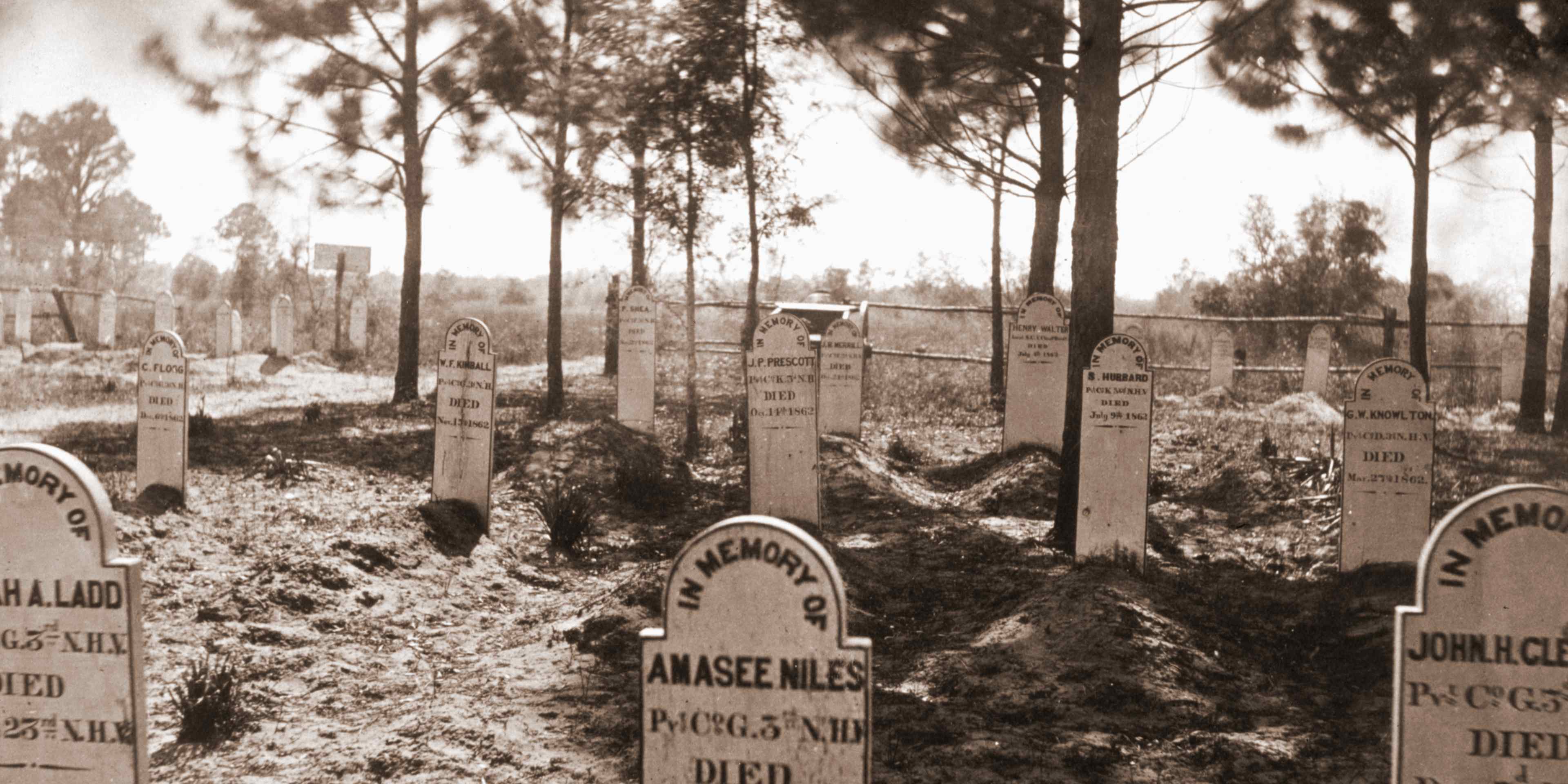
Prior to the 1860s, Americans adhered to the concept of the “Good Death.” This cultural ideal dictated that a person should die at home, surrounded by family, conscious of their impending mortality, and making peace with God. The family, particularly women, took charge of preparing the body—washing it, dressing it, and laying it out in the home parlor for a brief viewing before burial in a nearby plot. However, the American Civil War disrupted this sacred ritual on an unimaginable scale.
Between 1861 and 1865, more than 600,000 soldiers lost their lives. The sheer volume of casualties on remote Southern battlefields made traditional home burials impossible. When epidemics or battle wounds claimed lives, bodies decomposed rapidly under the hot Southern sun. Long-distance transport via train without preservation was out of the question due to sanitation risks and train conductors refusing to carry decaying remains. Desperate for closure, grieving northern families began seeking alternative methods to bring their dead sons home. Decades earlier, New Englanders blamed vampires for tuberculosis deaths because they lacked medical answers for rapid, terrifying wasting diseases; now, faced with another massive crisis of mortality, Americans turned to emerging science rather than folklore to cope with the reality of death.
Key Events Timeline: The Rise of the Embalming Trade
The transformation of American death care happened rapidly over the course of four bloody years. Below is a chronological breakdown of how the industry evolved:
- May 24, 1861: Colonel Elmer Ellsworth, a close friend of Abraham Lincoln, becomes the first conspicuous Union officer killed in the war. His body is successfully embalmed by Dr. Thomas Holmes, establishing a high-profile precedent.
- 1862–1863: As major battles like Antietam and Gettysburg produce massive casualties, entrepreneurial embalmers set up makeshift tents directly behind military lines, offering their services to soldiers and visiting families.
- 1864: Extreme commercialization leads to scandals. Rogue embalmers are accused of “corpse-holding” and price gouging, prompting public outcry over the lack of ethical standards.
- March 1865: The War Department intervenes, issuing General Order 39. This directive establishes a licensing system for battlefield embalmers, laying the groundwork for professional standards.
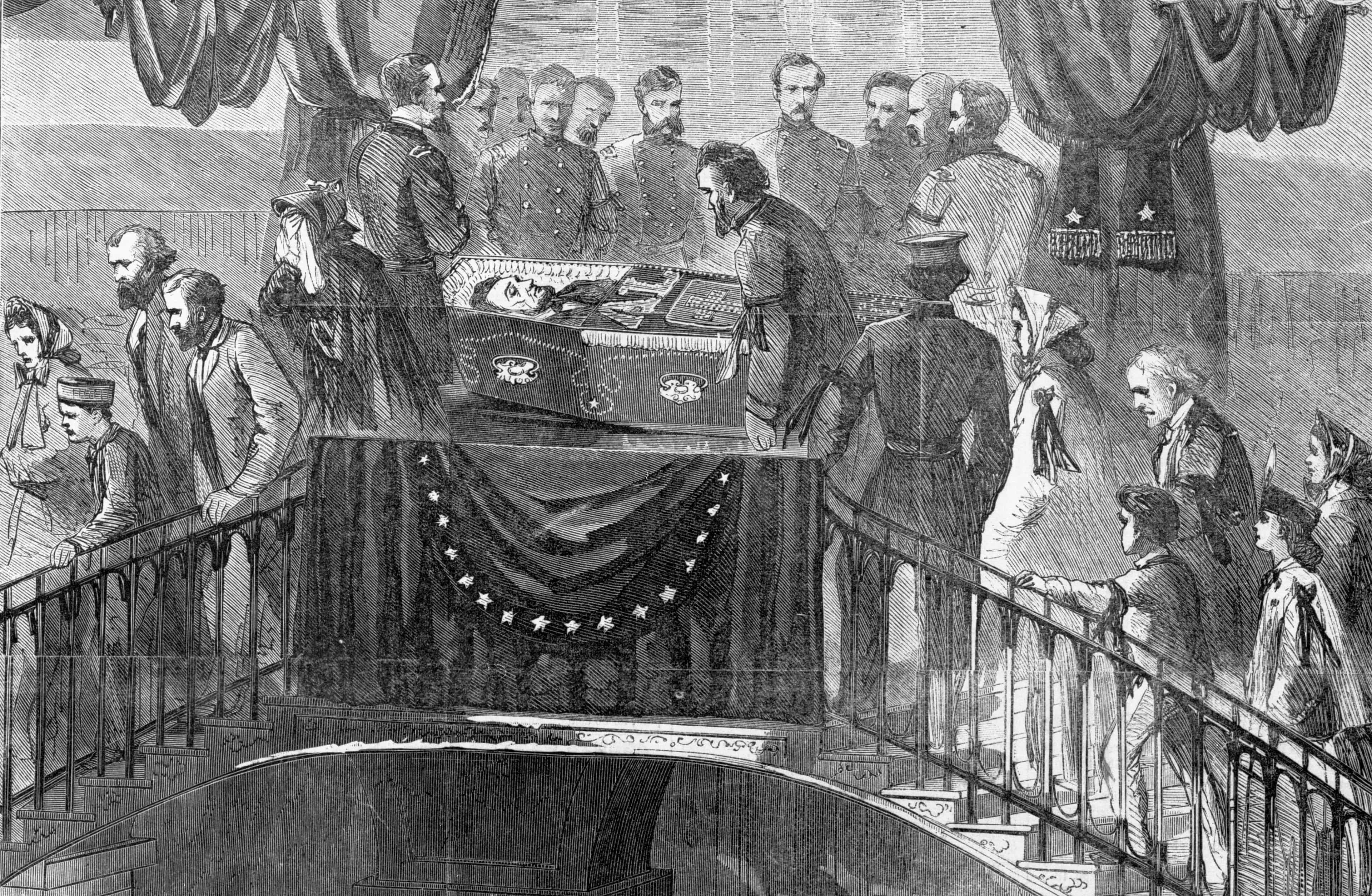
- April 1865: Following his assassination, President Abraham Lincoln’s embalmed body is taken on a 1,600-mile train journey across the North. Millions view his remarkably preserved remains, permanently cementing the practice of embalming in the public consciousness.
Important Figures of the Funerary Revolution
Several key historical figures played instrumental roles in shifting American funeral practices from amateur domestic duties to a highly specialized commercial field:
Dr. Thomas Holmes
Widely regarded as the “father of American embalming,” Holmes was a coroner’s physician in New York before the war. Having experimented with arterial preservation techniques for anatomical study, he recognized the commercial potential of his methods when the war broke out. Holmes patented an embalming fluid and claimed to have personally preserved over 4,000 soldiers during the conflict, charging families hefty fees of up to $100 per body.
Colonel Elmer Ellsworth
Ellsworth was a young Union officer whose death shocked the nation. By undergoing embalming and having his body lie in state in the White House, Ellsworth served as the ultimate advertisement for the procedure. His lifelike appearance in his casket convinced the public that chemical preservation was a dignified and beautiful way to present the dead.
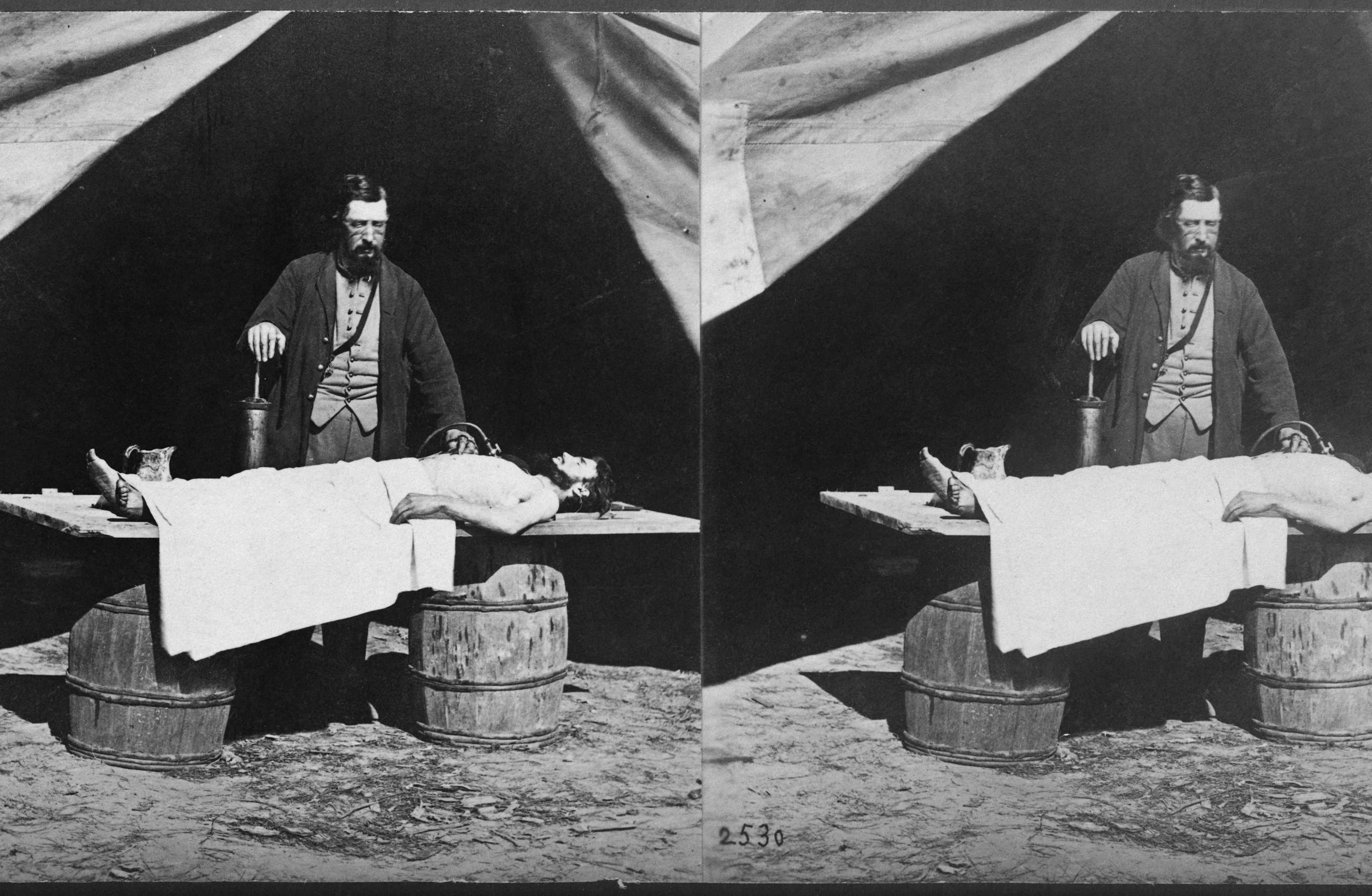
Dr. Richard Burr
An army surgeon turned battlefield embalmer, Burr became the face of the industry’s darker, opportunistic side. He was photographed hand-pumping chemicals into a soldier’s body, an image that remains one of the most famous visual records of Civil War embalming. Burr’s aggressive business practices, including embalming bodies without permission and demanding payment from grieving families, directly forced the military to regulate the profession.
Causes and Context: The Crisis of the Distant Grave
The sudden demand for embalming was driven by a mix of technological progress, geographic distance, and deep-seated cultural anxieties. The Civil War was the first industrial war, featuring advanced weaponry like the minie ball, which caused horrific wounds and high mortality rates. This scale of warfare meant that thousands of families from Massachusetts, Ohio, or New York had loved ones dying hundreds of miles away in Virginia, Georgia, or Tennessee.
The thought of a son being buried in an unmarked, mass southern grave was deeply distressing to Victorian-era Americans. The desperate urge to look upon the face of the deceased one last time—to verify their death and say a proper goodbye—created a massive market for embalming. Soldiers themselves were acutely aware of this; many purchased pre-paid embalming contracts before heading into battle. Along with these northern soldiers, many black heroes throughout US military history fought and died in the Union army, and their families, like all others, shared the universal human desire to honor their fallen with a dignified final rest.
Major Turning Points: From Chaos to Regulation
The wild-west era of battlefield embalming could not last. In the early years of the war, anyone with a basic knowledge of chemistry or woodworking could pitch a tent near an army camp and call themselves an embalmer or undertaker. These operators used highly toxic chemical mixtures containing arsenic, mercury, zinc chloride, and creosote to halt decay. While highly effective at preservation, these chemicals poisoned the local water tables and posed severe health risks to the practitioners themselves.
The turning point came in 1865. The issuing of General Order 39 by the War Department was the first time the United States government regulated the handling of human remains. By requiring embalmers to be licensed and establishing fixed prices for services, the government transformed a chaotic, speculative trade into a regulated, respected profession. Shortly after, the massive public spectacle of Lincoln’s funeral train proved to the average citizen that embalming was not just for the wealthy or elite, but a standard, respectable practice for all Americans.
Long-Term Impact on America: The Birth of the Undertaker
The end of the Civil War did not end the practice of embalming. Instead, battlefield embalmers returned to their hometowns and established permanent businesses. This marked the birth of the modern undertaker. The role of managing death completely shifted away from the home and the family parlor to the professional “funeral parlor.”
Over the late 19th and early 20th centuries, this burgeoning industry expanded to include specialized casket manufacturers, hearse transportation, cosmetic restoration, and professional mortuary schools. Standardized regulations eventually banned the use of toxic heavy metals like arsenic, replacing them with formaldehyde-based fluids. The American way of death became highly commercialized, institutionalized, and distinct from European traditions, focusing heavily on presenting the deceased in a lifelike, peaceful state of “sleep.”
Lesser-Known Facts About Civil War Embalming
- Toxic Soil Legacy: Because Civil War embalmers used massive amounts of arsenic, the soil around former wartime embalming stations and 19th-century cemeteries still contains highly elevated levels of heavy metals today. Soil scientists can often locate old military medical tents by mapping arsenic hotspots.
- Thomas Holmes’ Irony: Despite making a literal fortune selling embalming fluid and preserving thousands of bodies, Dr. Thomas Holmes grew highly skeptical of the practice in his later years. Upon his death in 1900, he specifically requested that his own body not be embalmed.
- An Early Form of Life Insurance: The fear of being buried in an anonymous grave was so intense that some entrepreneurial embalmers sold paper “certificates of preservation” to soldiers. These certificates acted like insurance policies, guaranteeing that if the soldier died, the embalming company would retrieve and preserve their body for shipment home.
Why It Still Matters Today
The legacy of the Civil War embalming boom is visible in almost every modern American funeral. The transition from private, family-led death care to a commercialized, professionalized industry set the stage for how we grieve today. Today, the funeral industry is a multi-billion-dollar sector, yet it faces new cultural shifts. Many modern Americans are moving away from chemical preservation in favor of “green burials” and eco-friendly alternatives—ironically returning to the simple, natural practices that existed before the Civil War. Understanding this history helps us recognize that our current funeral customs are not ancient, immutable traditions, but rather the direct result of wartime logistics and 19th-century industrial capitalism.
People Also Ask
Why did the Civil War change the funeral industry?
The Civil War produced an unprecedented number of casualties far from home. To return the bodies of fallen soldiers to their families for a proper burial, chemical preservation (embalming) became necessary, which birthed the professional undertaker and funeral home industry.
What chemicals were used to embalm Civil War soldiers?
Early embalmers used highly toxic mixtures of arsenic, zinc chloride, mercury, creosote, and alcohol. Modern formaldehyde-based embalming fluids were not widely adopted until decades after the war.
Who popularized embalming in America?
Dr. Thomas Holmes pioneered the commercial practice during the Civil War, but it was the high-profile embalmings of Colonel Elmer Ellsworth and President Abraham Lincoln that fully normalized and popularized the practice for the American public.
Conclusion
The modern American funeral industry was forged on the battlefields of the Civil War. What began as a desperate logistical solution to preserve the bodies of fallen Union and Confederate soldiers ultimately transformed the cultural landscape of the United States. By replacing the intimate, domestic rituals of the “Good Death” with professional chemical preservation, specialized caskets, and institutionalized funeral parlors, this era forever changed how Americans view, process, and pay tribute to the dead.


