The saga of the American Civil War is often told through the grand maneuvers of generals and the political calculations of Washington and Richmond. Yet, some of the most vital chapters of this conflict were written by the courage, blood, and perseverance of Black Civil War soldiers. When the war began in 1861, African Americans were barred from serving in the United States Army, reflecting deep-seated racial prejudices and political anxieties. However, as the bloody struggle dragged on, their enlistment became not only a moral imperative but also a strategic necessity for the Union’s survival. Over 180,000 Black men took up arms, representing approximately ten percent of the entire Union fighting force, and in doing so, they completely reshaped the course of American liberty. Their journey from the chains of enslavement to the uniform of the United States military constitutes one of the most remarkable chapters of civil rights advocacy and military valor in human history.
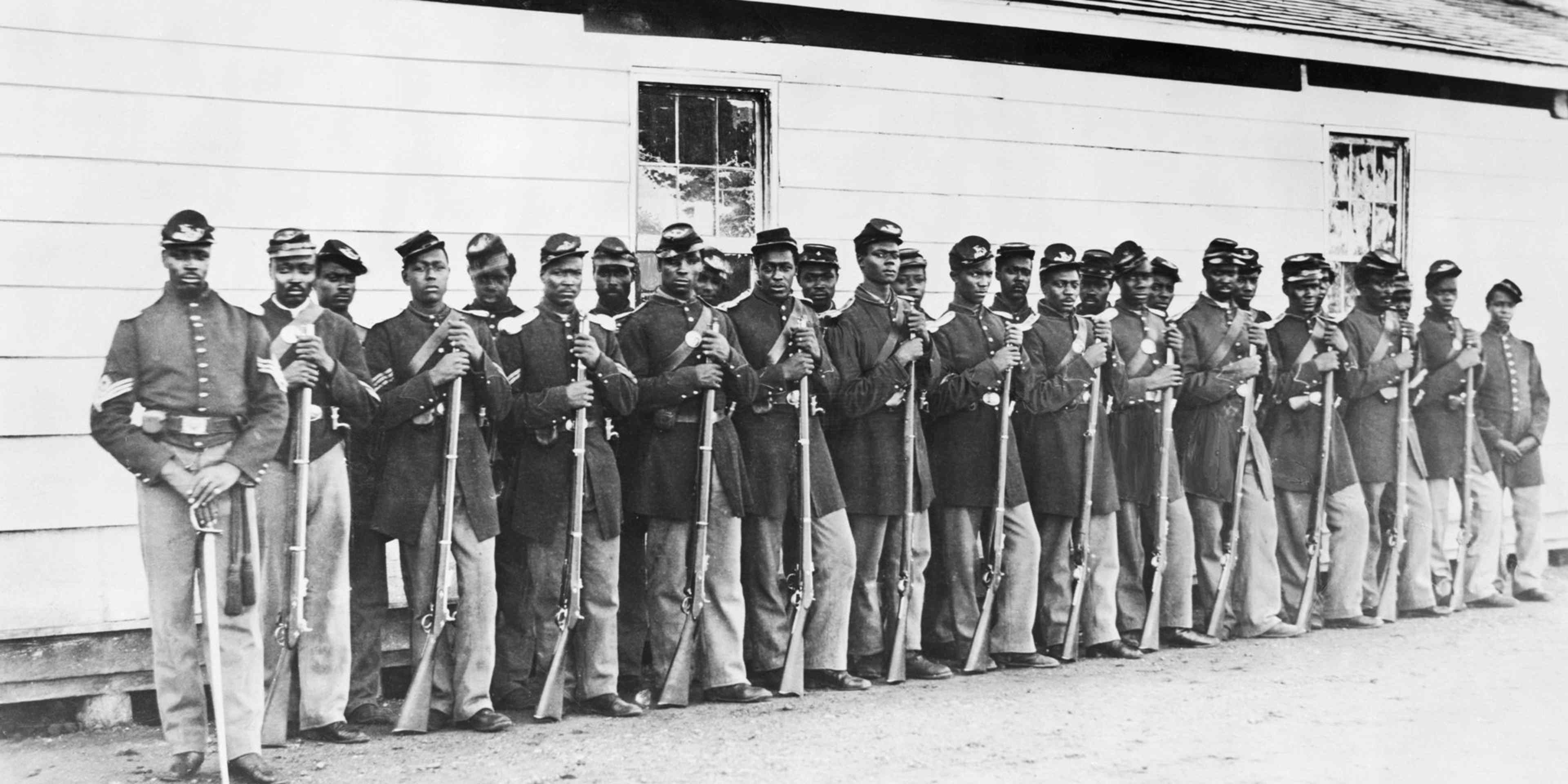
The Path to Arms: Historical Background and Pre-War Exclusion
To understand the monumental significance of Black enlistment during the Civil War, one must examine the legal and social barriers that preceded it. Under the federal Militia Act of 1792, state militias were restricted strictly to “free able-bodied white male citizens.” This statutory exclusion kept African Americans officially out of the nation’s formal land defenses for nearly three-quarters of a century. While Black patriots had fought bravely during the Revolutionary War and in an unofficial capacity during the War of 1812, their contributions were systematically sidelined. In contrast, the United States Navy adopted a more progressive approach; by 1861, African Americans were actively serving shipboard as firemen, stewards, coal heavers, and even boat pilots, navigating hazardous waters under federal command.
When the Southern states seceded in 1861, triggering the conflict, thousands of free Black men in the North immediately offered their services to the Union. However, their enthusiasm was met with outright rejection. President Abraham Lincoln and his administration feared that arming African Americans—especially escaped enslaved people—would alienate the politically sensitive border states of Kentucky, Maryland, Missouri, and Delaware. Keeping these slave-holding border states loyal to the Union was considered crucial to winning the war. Consequently, the war was initially framed strictly as a preservation of the Union rather than a campaign to end slavery, a decision that deeply frustrated abolitionists who viewed the conflict as an inescapable moral confrontation. This hesitation contributed to the broader, complex tapestry of American Civil War history, where questions of human bondage and federal authority constantly collided.
Chronology of Enlistment: Crucial Milestones and Key Dates
The transition from complete exclusion to active military participation was a gradual process marked by political maneuvers, legislative acts, and battlefield demonstrations. Below is the historical timeline of this monumental transition:
- July 17, 1862: The United States Congress passes the Second Confiscation and Militia Act. While it did not explicitly invite Black men to fight as infantrymen, it authorized the President to employ “persons of African descent” in any capacity he deemed necessary for the suppression of the rebellion, representing the first major crack in the military ban.
- October 1862: Showcasing early combat initiative, the First Kansas Colored Infantry (later designated the 79th United States Colored Infantry) engages Confederate forces at the Battle of Island Mound in Missouri, proving their tactical mettle even before their formal federal muster.
- January 1, 1863: President Lincoln signs the historic Emancipation Proclamation. In addition to declaring enslaved people in rebelling states “forever free,” the document officially declares that African Americans of suitable condition will be received into the armed service of the United States.
- February 1863: Abolitionist Governor John A. Andrew of Massachusetts issues the North’s first official call for Black soldiers, leading to the rapid formation of the famous 54th Massachusetts Infantry.
- July 18, 1863: The 54th Massachusetts leads a daring, heroic assault on Fort Wagner near Charleston, South Carolina, demonstrating immense valor and shattering long-standing prejudices about the courage of Black soldiers.
- June 15, 1864: After intense pressure from soldiers and abolitionist allies, Congress passes a bill granting equal pay retrospectively to Black soldiers who had been free at the start of the war, resolving a bitter dispute over military compensation.
- June 1865: Enslaved people in Texas are finally informed of their freedom under the Emancipation Proclamation, an event that would be celebrated for generations as Juneteenth, following the arrival of Union troops.
The 54th Massachusetts and the Crucible of Fort Wagner
Perhaps no regiment in the Civil War represents the courage and sacrifice of Black soldiers more than the legendary 54th Massachusetts Infantry Regiment. Formed under the passionate advocacy of Governor John A. Andrew, this unit comprised free Black men from all walks of life, including some from Canada and the Caribbean, as well as Charles and Lewis Douglass, the sons of the famed abolitionist Frederick Douglass. To command this pioneering regiment, Governor Andrew appointed Colonel Robert Gould Shaw, a young white officer from a prominent Boston abolitionist family.
On July 18, 1863, the 54th Massachusetts was selected to lead the assault on Fort Wagner, a heavily fortified Confederate stronghold guarding the harbor of Charleston, South Carolina. Faced with devastating defensive artillery and outnumbered by nearly three to one, the 600 charging men of the 54th advanced with incredible discipline and bravery. Although they breached the outer ramparts, they were ultimately repulsed, suffering massive casualties. Colonel Shaw and nearly half of the regiment’s men were killed, wounded, or captured. Despite the tactical defeat, the Battle of Fort Wagner was a massive ideological turning point. The extraordinary valor displayed by the men of the 54th silenced skeptics across the North, proving once and for all that Black soldiers were fully capable of disciplined combat and unmatched heroism under fire.
Prominent Figures and Visionary Leaders
The mobilization of African American troops was propelled by brilliant advocates, courageous soldiers, and strategic commanders whose actions left an indelible mark on American history:
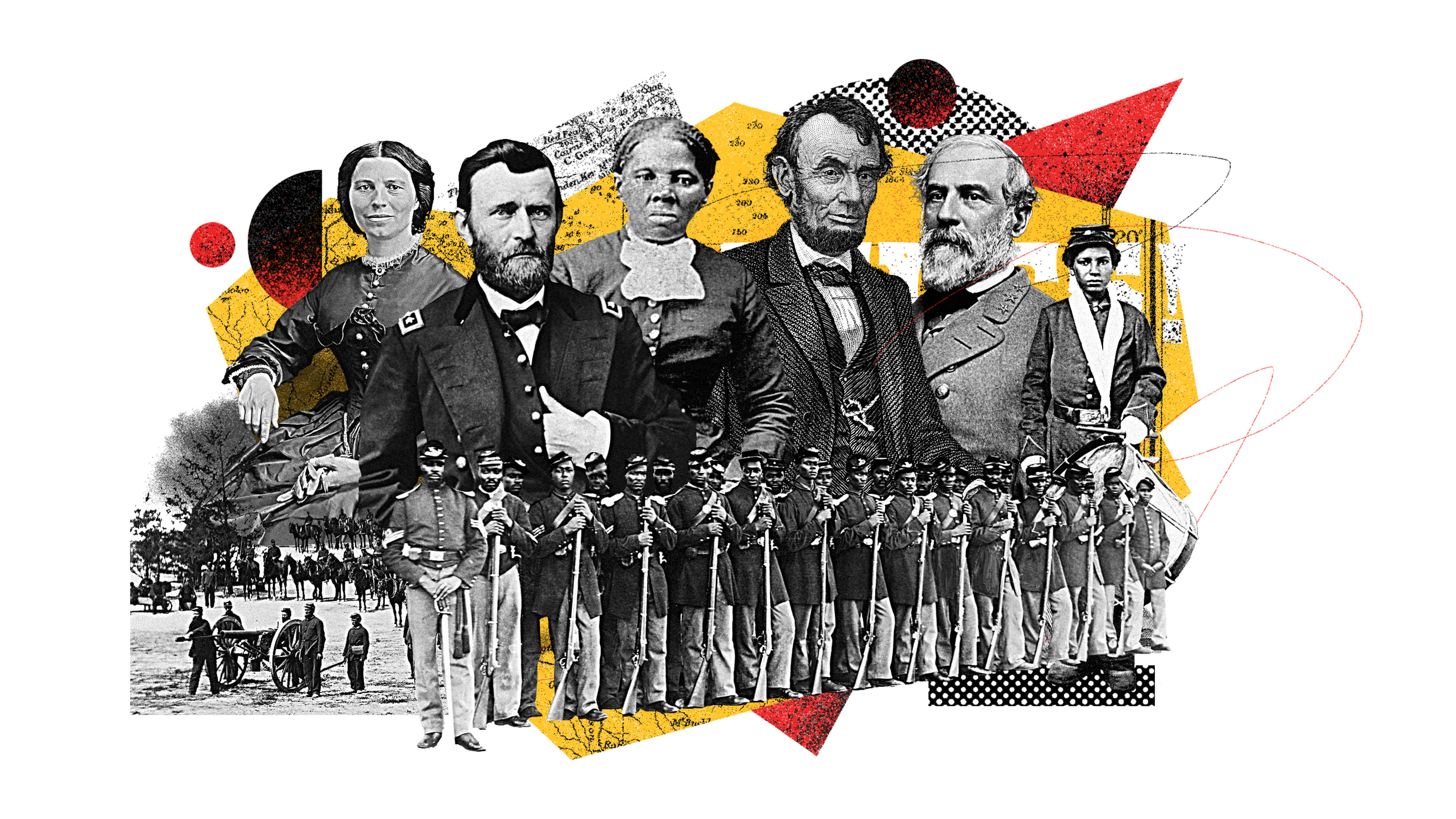
- Frederick Douglass: As a leading abolitionist, Douglass was one of the most vocal advocates for the arming of Black men. He famously proclaimed that once a Black man carried a musket and wore the letters “U.S.” on his buttons, no power on earth could deny his right to citizenship. Douglass actively recruited soldiers for the Union, including his own sons.
- Colonel Robert Gould Shaw: The young commander of the 54th Massachusetts, Shaw believed passionately in the capabilities of his men. His death alongside his soldiers at Fort Wagner and his subsequent burial in a mass grave with them became a powerful symbol of interracial unity and shared sacrifice.
- Sergeant William Harvey Carney: A member of the 54th Massachusetts, Carney exhibited extraordinary bravery during the assault on Fort Wagner. When the flag bearer was shot, Carney seized the American flag, planted it on the fort’s parapet, and kept it flying despite sustaining multiple severe wounds. For his actions, he became the first African American to perform a feat that would earn the Congressional Medal of Honor.
Hardships, Disparity, and the Grim Reality of War
Despite their bravery, Black soldiers faced a double warfare: they fought the Confederate enemy on the battlefield and institutional racism within their own ranks. For much of the war, Black soldiers were paid significantly less than their white counterparts. While white soldiers received $13 per month plus a clothing allowance, Black soldiers were paid only $10 per month, from which a $3 clothing deduction was often taken. Many regiments, including the 54th Massachusetts, refused to accept any pay at all until Congress finally mandated equal compensation in 1864.
Furthermore, Black soldiers and their white officers faced extreme danger if captured by the Confederacy. Confederate President Jefferson Davis issued an executive decree stating that Black Union soldiers captured in arms would be treated as escaped slaves inciting servile insurrection, subject to immediate execution or sale into slavery. Their white commanders faced execution as well. This threat materialized in tragic events such as the Fort Pillow Massacre in April 1864, where Confederate cavalry under General Nathan Bedford Forrest slaughtered surrendering Black Union troops. These severe dangers meant that every Black soldier who put on a Union uniform was taking a massive, heroic risk far beyond the standard hazards of military service.
Enlistment Demographics and the Heavy Price of Freedom
By the time the American Civil War concluded in the spring of 1865, approximately 180,000 Black men had served in the Union Army, with an additional 19,000 serving in the Navy. This massive enlistment represented about ten percent of the entire Union military force. Of these soldiers, approximately 90,000 were “contrabands” or formerly enslaved individuals who had escaped from the seceding Confederate states, eager to fight for the liberation of their families. Another 45,000 were free Black men from the Northern states, and the remaining portion came from the loyal border states.
The cost of their service was incredibly high. Around 40,000 Black soldiers lost their lives during the war. Due to systemic inequities, poor camp conditions, and the assignment of Black regiments to labor-intensive fatigue duties in swampy, disease-ridden regions, approximately 30,000 of these deaths were due to disease and infection, while 10,000 occurred in direct combat. Despite these heartbreaking statistics, the profound contributions of these brave men were vital in tipping the balance of the war in favor of the Union. Their sacrifice represents a crucial milestone in the history of Blacks in the military, proving that the preservation of the United States and the destruction of slavery were paid for in full by the blood of Black patriots.
Lesser-Known Historical Anecdotes
While the story of the 54th Massachusetts is famous, other facets of Black Civil War history remain lesser-known but equally fascinating:
- The Louisiana Native Guard: In New Orleans, free men of color organized their own militia units very early in the war. Initially operating under state-level confederate control out of self-preservation, they quickly offered their allegiance to the Union once federal troops captured New Orleans, forming some of the first official United States Colored Troops (USCT) regiments.
- The Role of Asian and Indigenous Soldiers: The Civil War was a deeply multicultural conflict. Alongside Black regiments, a proportionally high number of Asian and Native American soldiers enlisted and fought, navigating their own complex social struggles while contributing to the war effort.
- A Pioneer of Medicine: Beyond infantry soldiers, Black Americans served in other vital medical roles. Dr. Alexander Thomas Augusta became the first African American to be commissioned as a medical officer in the Union Army, rising to the rank of Lieutenant Colonel and serving as a surgeon.
Why It Still Matters Today
The legacy of Black Civil War soldiers is not merely a collection of dates and battle statistics; it is a living foundation of modern American democracy. By fighting for the Union, Black soldiers fundamentally altered the political debate surrounding citizenship. Their undeniable military service made the denial of their basic constitutional rights untenable, directly paving the way for the Reconstruction Era amendments—most notably the Fourteenth Amendment, which guaranteed birthright citizenship and equal protection under the law, and the Fifteenth Amendment, which secured voting rights.
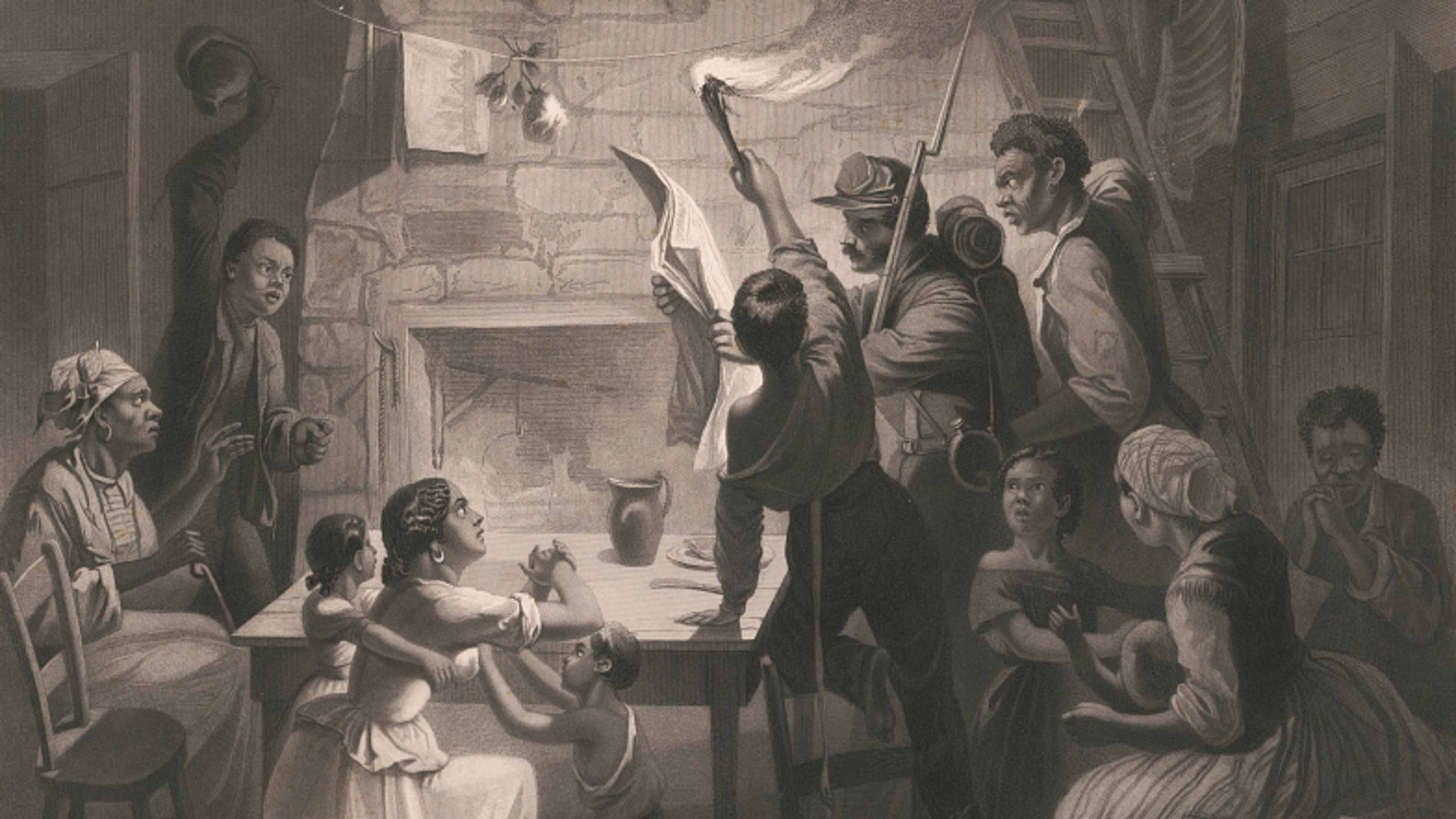
Today, the courage of these soldiers continues to inspire discussions about civil rights, military equality, and historical justice. They stood at the crossroads of a fractured nation, choosing to fight for a country that had systematically oppressed them, in the hope of securing a better, more equitable future for their descendants. Their legacy serves as a powerful reminder that the fight for freedom is continuous, requiring unwavering courage in the face of daunting adversity.
People Also Ask (FAQ)
How many Black soldiers fought in the Civil War?
Approximately 180,000 Black soldiers served in the Union Army, and about 19,000 served in the Union Navy. Together, they made up about ten percent of the total Union fighting forces by the end of the conflict in 1865.
Did Black Civil War soldiers receive equal pay?
Initially, no. Black soldiers were paid $10 per month (with a $3 deduction for clothing), while white soldiers received $13 per month plus a clothing allowance. After widespread protests and boycotts by regiments like the 54th Massachusetts, Congress passed a bill in June 1864 establishing equal pay retroactive to the time of enlistment.
What dangers did Black soldiers face if captured by the Confederacy?
Confederate President Jefferson Davis decreed that captured Black soldiers would not be treated as prisoners of war but rather as escaped slaves, which meant they faced immediate enslavement or execution on the spot. Their white officers were also targeted for execution for inciting servile insurrections.
Who was the first Black soldier to receive the Medal of Honor?
Sergeant William Harvey Carney of the 54th Massachusetts Infantry was the first African American to perform an action that earned the Congressional Medal of Honor, which he received for his heroic defense of the American flag during the Battle of Fort Wagner in July 1863.
Conclusion
The story of Black Civil War soldiers is an enduring testament to the power of human agency and the pursuit of liberty. Confronted by systemic racism, unequal compensation, and the terrifying threat of Confederate execution, these brave men nevertheless volunteered by the thousands to fight for the survival of the Union and the eradication of slavery. Through their unwavering resolve on bloody battlefields like Fort Wagner, Port Hudson, and Petersburg, they dismantled long-standing racial myths and earned an undeniable claim to full citizenship. Their sacrifice did not just help win a war; it redefined the moral soul of America, laying the groundwork for the modern civil rights movement and securing an honored place in the eternal struggle for human dignity.


