Pierre Gustave Toutant Beauregard, colloquially remembered as P.G.T. Beauregard, remains one of the most enigmatic, brilliant, and polarizing military figures of the American Civil War. As a proud Louisiana native of French-Creole descent, his theatrical persona, engineering genius, and combative temperament earned him nicknames like the “Little Napoleon” and the “Little Creole.” Beauregard held the unique historical distinction of ordering the very first shots of the war at Fort Sumter, propelling the nation into its bloodiest domestic conflict. Despite his early military triumphs and strategic innovation, his career was constantly overshadowed by a venomous, ongoing feud with Confederate President Jefferson Davis. Understanding Beauregard’s life offers a fascinating window into the military strategy, political infighting, and cultural complexities that defined the Southern Confederacy.
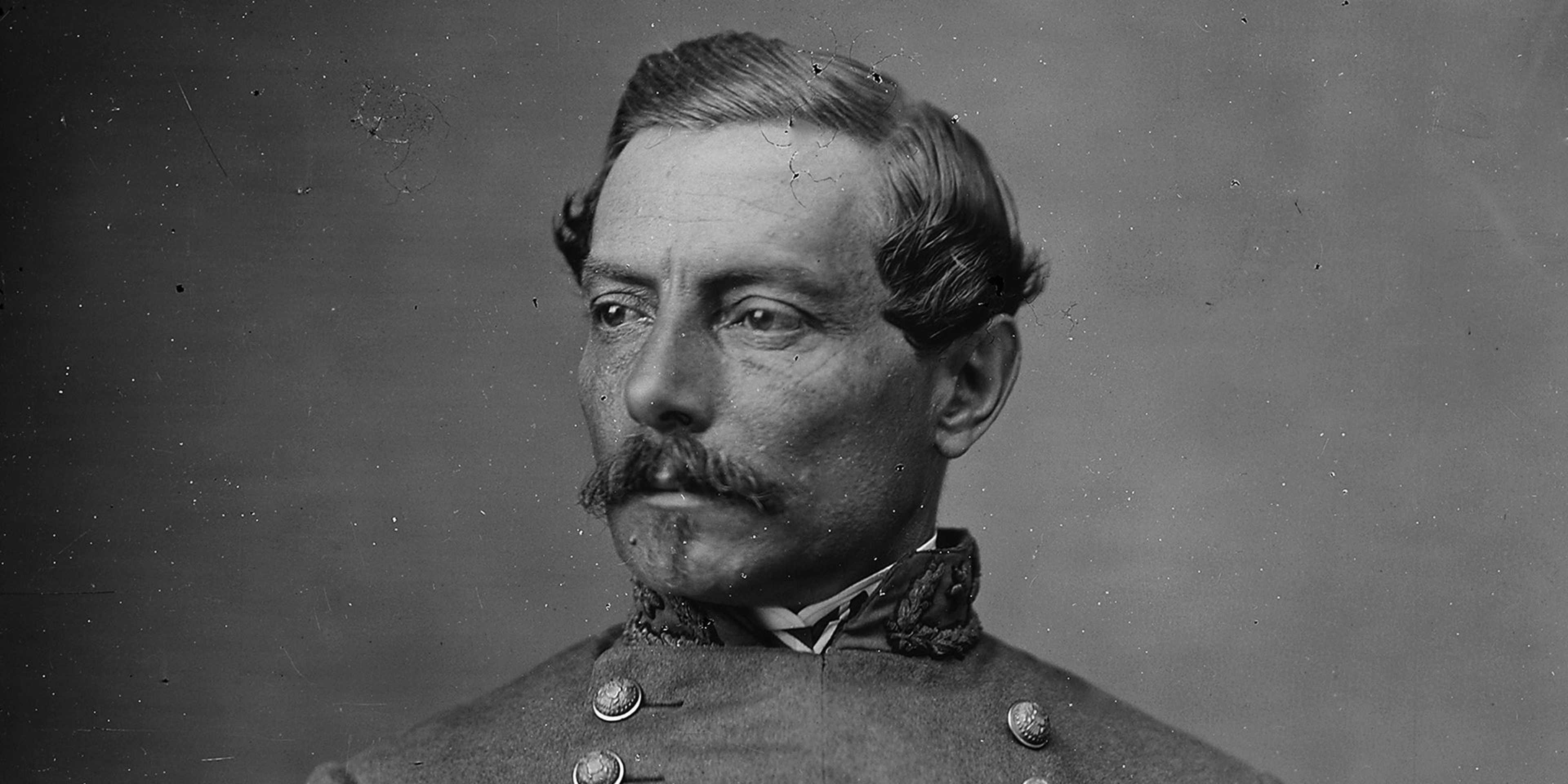
The Creole Soldier: Historical Background and Early Career
To understand the rise of P.G.T. Beauregard, one must examine the unique socio-cultural landscape of early 19th-century Louisiana. Born on May 28, 1818, in St. Bernard Parish, Beauregard grew up on a wealthy sugarcane plantation surrounded by French-Creole culture. He did not speak fluent English until he was sent to school in New York City at the age of twelve. This European heritage profoundly influenced his worldview, manners, and military philosophy throughout his life.
In 1834, Beauregard entered the United States Military Academy at West Point. A brilliant student, he graduated second in the legendary class of 1838. His early career as a military engineer was marked by extreme distinction. During the Mexican-American War (1846–1848), he served under General Winfield Scott, playing a critical role in the engineering operations that led to the capture of Mexico City. He was wounded twice, earned two brevet promotions, and established himself as one of the finest engineering minds in the U.S. Army. However, as the 1850s progressed, the United States was torn apart by the sectional disputes and events that led to the Civil War. When Louisiana seceded from the Union in early 1861, Beauregard resigned his commission, setting the stage for his transformation into a Confederate icon.
Chronological Timeline of Key Events
The military career of P.G.T. Beauregard is punctuated by some of the most critical engagements of the Civil War. Below is a detailed chronological breakdown of his wartime trajectory:
- January 1861: Appointed Superintendent of West Point, only to be dismissed after a few days due to his southern sympathies.
- February 1861: Resigns from the U.S. Army to join the newly formed Confederate States Army as its first brigadier general.
- April 12–14, 1861: Commands the defense forces in Charleston and orders the bombardment of Fort Sumter, sparking the Civil War.
- July 21, 1861: Serves as second-in-command during the stunning Confederate victory at the First Battle of Bull Run.
- April 1862: Assumes command at the Battle of Shiloh following the death of General Albert Sidney Johnston.
- May 1862: Oversees the tactical withdrawal from the besieged rail hub of Corinth, Mississippi, earning the ire of Jefferson Davis.
- 1863–1864: Directs the highly successful coastal defense of Charleston against relentless Union naval assaults.
- June 1864: Conducts a masterful defense at the Second Battle of Petersburg, preventing a quick Union victory and saving Richmond.
- April 1865: Surrenders alongside General Joseph E. Johnston to Union General William T. Sherman in North Carolina.
Key Figures and Their Dynamic Relationships
Beauregard did not operate in a vacuum; his career was heavily shaped by his interactions with other prominent leaders of the era:
Jefferson Davis
Perhaps no relationship was more detrimental to the Confederate war effort than the toxic feud between President Jefferson Davis and P.G.T. Beauregard. Beauregard was highly vocal about his strategic ideas, which often clashed with Davis’s defensive policy. Davis viewed Beauregard as arrogant and insubordinate, while Beauregard regarded Davis as an incompetent micromanager. This friction resulted in Beauregard being repeatedly sidelined, reassigned, or denied independent field commands at critical junctures of the war.
Albert Sidney Johnston
At the Battle of Shiloh, Beauregard served as second-in-command to Albert Sidney Johnston. Johnston was highly respected, and his death on the first day of battle thrust Beauregard into a difficult position. Beauregard’s subsequent decisions at Shiloh remained a point of contention for decades, particularly among Johnston’s staunch supporters.
Ulysses S. Grant
As the commander of the Union forces at Shiloh, General Ulysses S. Grant was Beauregard’s primary opponent. The clash of tactics between Grant’s relentless determination and Beauregard’s calculated engineering approach highlighted the changing nature of modern warfare.
Major Turning Points in Beauregard’s War Career
Two major battles define the high-water marks and the controversies of Beauregard’s military leadership.
The Controversy at Shiloh (April 1862)
After General Albert Sidney Johnston fell mortally wounded on April 6, 1862, Beauregard took command of the Confederate Army of the Mississippi. Having pushed the Union forces back near the Tennessee River, Beauregard made the fateful decision to halt the attacks at nightfall, believing his men were too exhausted and that victory could be completed the next morning. However, overnight, Grant received massive reinforcements. The subsequent Union counterattack drove the Confederates from the field, turning what seemed like a Southern triumph into a bloody defeat that shook the Confederacy.
The Defense of Petersburg (June 1864)
Often considered his finest tactical hour, Beauregard was tasked with defending the vital rail junction of Petersburg, Virginia, with a mere 2,200 men against a Union force of over 16,000. Through brilliant bluffing, strategic positioning, and sheer determination, Beauregard held the Union army at bay for three days until Robert E. Lee’s reinforcements arrived. This critical defense saved the Confederate capital of Richmond from immediate capture and forced a ten-month siege that prolonged the war.
The Battle Flag: A Lasting Cultural Symbol
In the aftermath of the First Battle of Bull Run, Beauregard realized that the original Confederate national flag, the “Stars and Bars,” looked far too similar to the Union’s stars and stripes through the thick smoke of the battlefield. This confusion nearly led to friendly fire incidents. To remedy this, Beauregard, along with Generals Joseph E. Johnston and William Porcher Miles, championed the creation of a distinct battle flag. This red flag featuring a blue St. Andrew’s Cross adorned with white stars became the iconic symbol of the Army of Northern Virginia and, eventually, the most recognized and debated symbol of the Confederacy itself. Understanding this origin is essential when exploring the broader context of American Civil War history and its enduring visual legacy.
Lesser-Known Facts About P.G.T. Beauregard
- The West Point Whirling Dervish: Beauregard served as the Superintendent of West Point for only five days in January 1861. As Southern states began to secede, his pro-secessionist views made his position untenable, leading to one of the shortest tenures in the academy’s history.
- Pioneering Underwater Warfare: During his defense of Charleston, Beauregard enthusiastically supported the development of innovative marine technology, including the CSS H.L. Hunley, the world’s first combat submarine to successfully sink an enemy warship.
- An International Mercenary Offer: Following the war, Beauregard was so highly regarded globally that he was offered command of the Romanian Army in 1866 and later the Egyptian Army in 1869. He politely declined both offers to remain in the United States.
Post-War Innovations and Modern Relevance
Unlike many of his contemporaries who struggled to adapt to the post-war era, Beauregard found significant success in the private sector. He became a highly successful railroad executive, serving as the president of the New Orleans and Carrollton Street Railway, where he patented a system for cable-powered streetcars. He also amassed a fortune supervising the highly lucrative, albeit controversial, Louisiana State Lottery alongside former Confederate General Jubal Early.
Today, P.G.T. Beauregard remains a highly relevant figure in contemporary discussions about historical memory, monuments, and the legacy of the Old South. In 2017, a prominent equestrian statue of Beauregard in New Orleans was removed amid national debates over Confederate monuments. His life challenges us to look past simplistic historical narratives and examine the deep complexities of loyalty, identity, and reconciliation in American history.
People Also Ask (FAQ)
What does P.G.T. stand for in Beauregard’s name?
P.G.T. stands for Pierre Gustave Toutant. Although he was baptized with this full name reflecting his French-Creole ancestry, he preferred to be addressed as G.T. Beauregard throughout his adult life.
Why did P.G.T. Beauregard clash with Jefferson Davis?
Their conflict stemmed from a clash of strong personalities and military strategies. Beauregard favored aggressive, concentrated offensives and frequently publicized his grand strategies, which offended Davis, who favored a more defensive posture and demanded strict adherence to political hierarchy.
Did P.G.T. Beauregard support civil rights after the Civil War?
In a surprising post-war turn, Beauregard briefly aligned with the Reform Movement in Louisiana in 1873. He advocated for civil and voting rights for newly freed African Americans, arguing that cooperation was essential for Southern economic recovery, though his motivations were highly pragmatic rather than purely egalitarian.
Conclusion
P.G.T. Beauregard’s journey from a sugarcane plantation in Louisiana to the highest ranks of the Confederate military reflects the turbulent nature of 19th-century America. As an engineer, strategist, and post-war innovator, he left an indelible mark on the nation’s history. While his military decisions at Shiloh and his political clashes with Jefferson Davis prevented him from achieving the legendary status of Robert E. Lee, his tactical brilliance at Petersburg and Charleston solidifies his place as one of the Civil War’s most formidable commanders.


