The Siege of Vicksburg was arguably the most strategically decisive campaign of the American Civil War, fundamentally altering the trajectory of the conflict and securing a pathway to Union victory. Sitting high on the bluffs overlooking a hairpin turn in the Mississippi River, Vicksburg, Mississippi, was known as the “Gibraltar of the Confederacy.” For over a year, this heavily fortified stronghold blocked Union shipping, prevented the North from utilizing the nation’s primary water highway, and kept the western Confederate states of Texas, Arkansas, and Louisiana connected to the rest of the rebellion. President Abraham Lincoln famously declared that Vicksburg was “the key,” believing the war could never be successfully concluded until that key was firmly in Union hands. When Major General Ulysses S. Grant launched his daring campaign to capture the city, he embarked on an arduous, multi-phase military endeavor that culminated in the dramatic Confederate surrender on July 4, 1863. This critical victory, paired with the Union triumph at Gettysburg just one day prior, shattered Southern morale and permanently divided the Confederacy, cementing Vicksburg’s place as a towering turning point in American history.
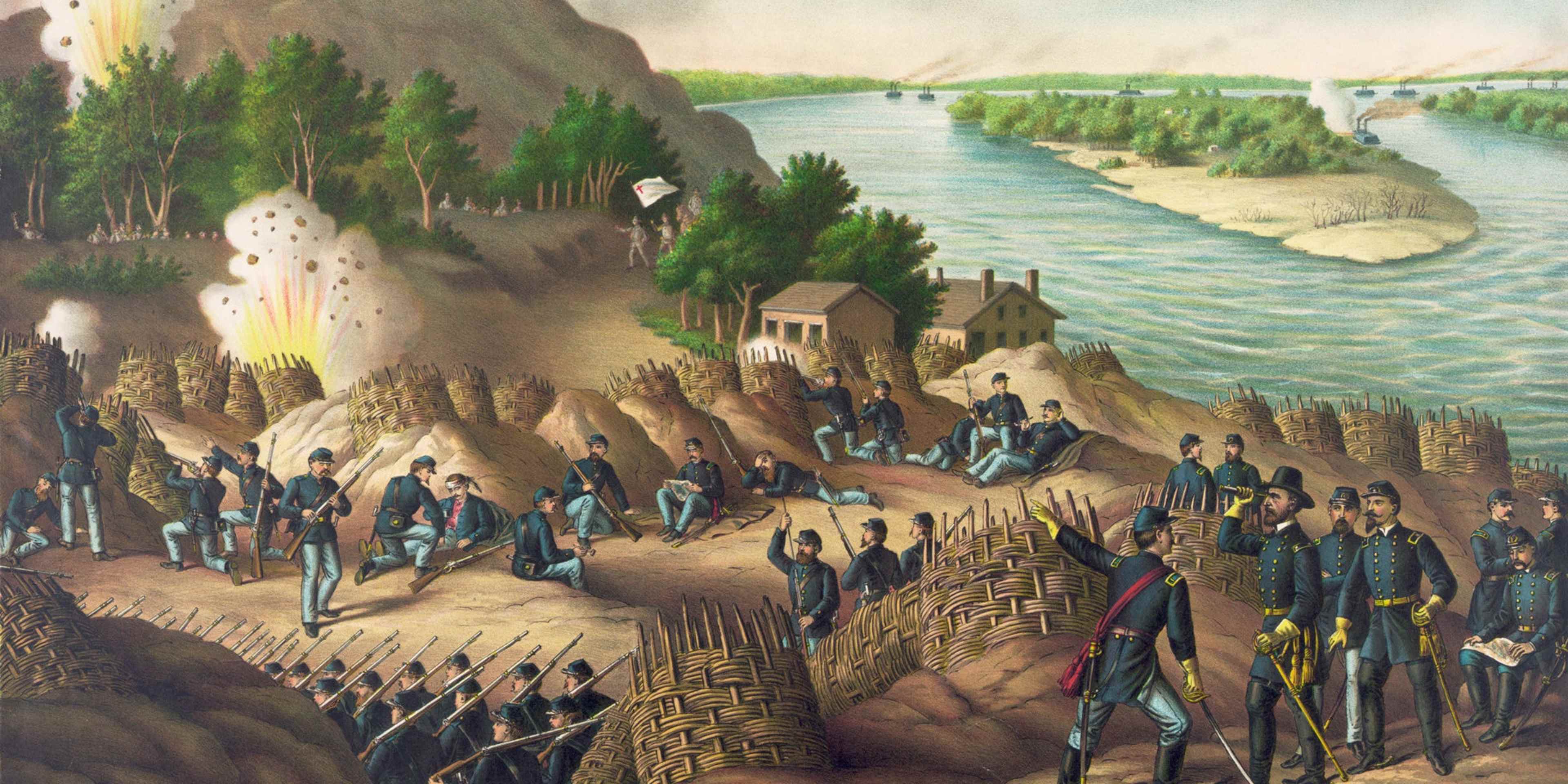
Historical Background: The Gibraltar of the Confederacy
To understand why the Union captured Vicksburg with such urgency, one must understand the geographic and economic realities of the 1860s. The Mississippi River was the economic lifeblood of the United States. Midwestern farmers relied on it to transport their goods to international markets via New Orleans, while the Confederacy relied on it to transport vital supplies, troops, and cattle from the trans-Mississippi West to the battlefields of the East.
In 1862, Vicksburg stood as the last major Confederate obstacle on the river. Perched on high bluffs, its heavy artillery batteries could easily rain devastating fire down upon any Union gunboats attempting to pass. Recognizing its immense value, Confederate President Jefferson Davis referred to Vicksburg as the “nailhead that holds the South’s two halves together.”
Initial Union efforts to neutralize Vicksburg were humiliating failures. In May and June of 1862, a Union naval flotilla commanded by Admiral David Farragut bombarded the city but could not force a surrender due to the high elevation of the Confederate batteries. In the winter of 1862, Grant tried to approach Vicksburg from the north through the swampy Chickasaw Bayou, but the terrain was virtually impassable, and Confederate defenses under Lieutenant General John C. Pemberton easily repulsed the Union advance. It became clear that Vicksburg could not be taken by a straightforward frontal assault.
Grant’s Bold Campaign: The Strategic Masterstroke
In the spring of 1863, General Ulysses S. Grant conceived a high-stakes plan that many of his contemporaries—including his trusted advisor, General William Tecumseh Sherman—deemed reckless. Rather than retreating to Memphis to regroup, Grant decided to march his Army of the Tennessee down the western bank of the Mississippi River through Louisiana, bypass the Vicksburg guns, and cross back over to the eastern bank south of the city.
This plan required extraordinary coordination between the army and the navy. On the night of April 16, 1863, Rear Admiral David Dixon Porter led a fleet of Union gunboats and transports directly past the roaring Confederate batteries of Vicksburg. Despite taking heavy fire, most of Porter’s vessels survived, meeting Grant’s forces downstream.
On April 30, 1863, Grant began crossing his troops over the river at Bruinsburg, Mississippi. This massive landing involved over 17,000 Union soldiers and stood as the largest amphibious operation in American military history until the D-Day landings of World War II. Once on the eastern bank, Grant cut himself off from his primary supply lines, choosing to forage off the Mississippi countryside while moving rapidly northeastward. This strategic maneuver completely bewildered the Confederate commanders.
Key Events Timeline
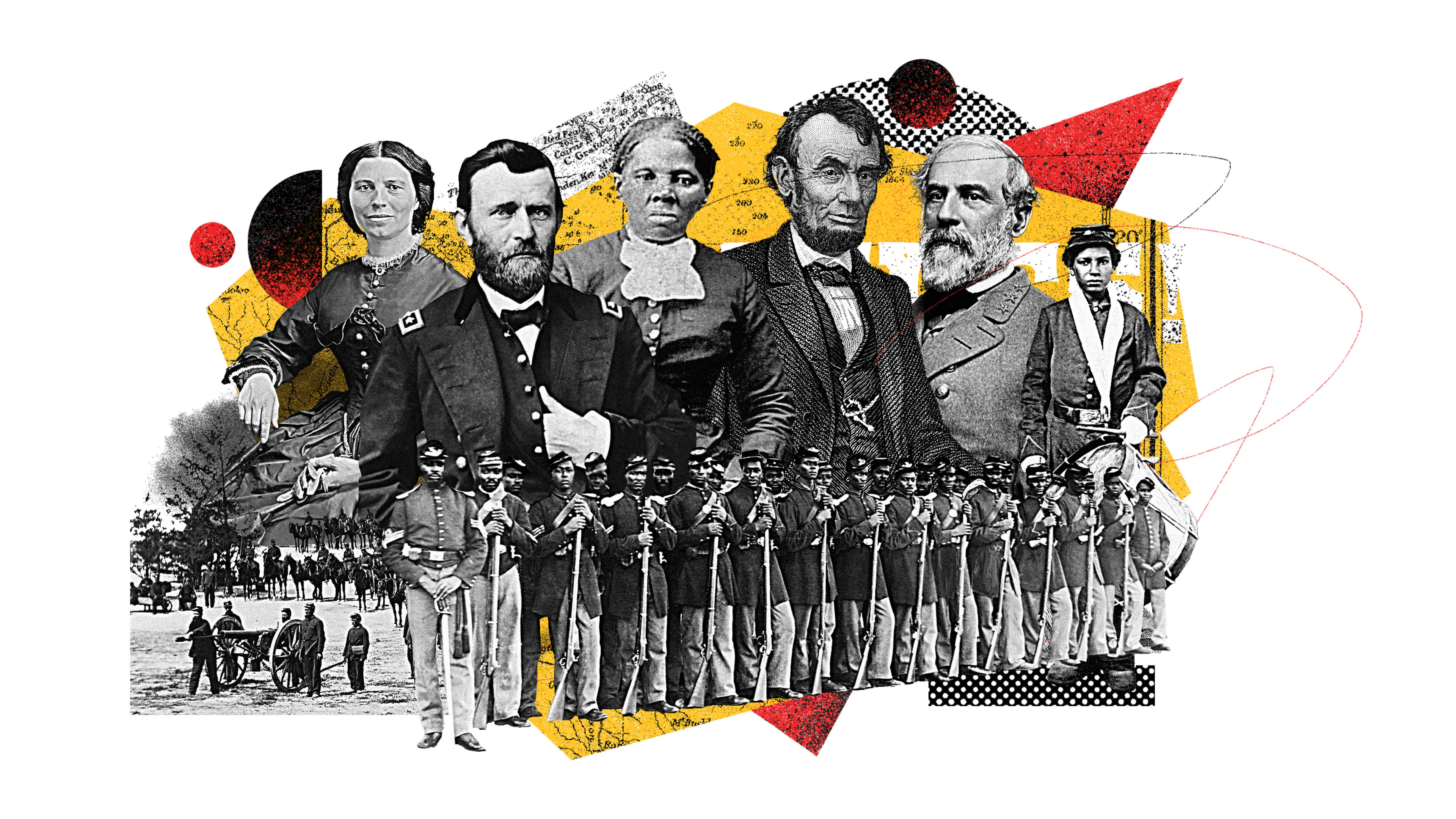
The Vicksburg Campaign was a masterclass in rapid maneuver warfare. The chronological sequence of events demonstrates how Grant systematically isolated the city:
- March 29, 1863: Grant’s troops begin their arduous march south from Milliken’s Bend, Louisiana.
- April 16, 1863: Admiral Porter’s flotilla successfully runs past the Vicksburg batteries under cover of darkness.
- April 30–May 1, 1863: Union forces execute the historic amphibious landing at Bruinsburg, Mississippi.
- May 12, 1863: Union troops defeat Confederate forces at the Battle of Raymond, signaling Grant’s intent to strike inland.
- May 14, 1863: Grant captures Jackson, the state capital of Mississippi, scattering the forces of Confederate General Joseph E. Johnston and destroying vital railroad connections.
- May 16, 1863: The Battle of Champion Hill takes place. This bloody and decisive engagement forces Pemberton’s army to retreat. While military history often highlights some of the most strategic military retreats, Pemberton’s withdrawal into the Vicksburg defenses ultimately sealed the doom of his entire command.
- May 19–22, 1863: Grant launches immediate assaults against the Vicksburg earthworks, but is repulsed with heavy casualties. Realizing the strength of the fortifications, he orders a formal siege.
- May 25–July 3, 1863: The Union army seals off the city, conducting a grueling, 47-day bombardment.
- July 4, 1863: General Pemberton surrenders Vicksburg and his entire army of 29,000 men to General Grant.
Living Under Siege: The Agony of Vicksburg
For the soldiers and civilians trapped inside Vicksburg, the forty-seven days of the siege were a waking nightmare. Grant’s army dug miles of trenches, completely surrounding the city and cutting off all incoming food, ammunition, and mail. Simultaneously, Union gunboats on the river and artillery batteries on land subjected Vicksburg to near-constant bombardment.
To escape the terrifying iron shells raining down from above, the citizens of Vicksburg took to the hills. They dug over 500 caves into the city’s yellow clay hillsides, turning these underground damp bunkers into temporary homes complete with carpets, beds, and furniture.
Food supplies quickly vanished. Daily rations for Confederate soldiers were cut to starvation levels, consisting of tiny portions of rancid bacon, pea-meal bread, and eventually, mule meat. Scurvy, dysentery, and malaria ran rampant through the trenches. By late June, Pemberton received an anonymous petition signed by “Many Soldiers” pleading with him to either feed them or surrender, warning that hungry soldiers could not stand against the Union army.
The Twin Turning Points of the Civil War
The surrender of Vicksburg on July 4, 1863, was a catastrophic blow to the Confederacy. Crucially, it occurred just one day after General Robert E. Lee’s disastrous defeat at the Battle of Gettysburg in Pennsylvania on July 3. Together, these twin Union victories represented the definitive turning point of the American Civil War. The simultaneous resolution of these monumental battles stands as one of the most remarkable historical coincidences in military annals, shifting the global perception of the war and convincing European powers like Great Britain and France to permanently withhold official recognition of the Confederacy.
By capturing Vicksburg, the Union secured total control over the Mississippi River, effectively slicing the Confederacy in two. Texas, Arkansas, and Louisiana were isolated, unable to send cattle, agricultural goods, or reinforcements to the eastern theaters of war. Furthermore, the campaign established Ulysses S. Grant as the Union’s premier military commander, paving his way to becoming the general-in-chief of all Union armies and, eventually, President of the United States.
Lesser-Known Facts About Vicksburg
While the broad strokes of the Vicksburg campaign are widely taught, several fascinating anecdotes highlight the unique nature of this historic event:
- The Wallpaper Newspaper: As the siege dragged on, the local newspaper, the Vicksburg Daily Citizen, ran completely out of paper. Refusing to cease publication, the editor printed the paper on the blank back of rolls of decorative floral wallpaper. When Union soldiers entered the city on July 4, they found the type for the next issue still set. They added a humorous note of their own to the bottom of the page and printed it as a historic souvenir.
- The “No July 4th” Myth: A popular historical legend claims that the citizens of Vicksburg were so bitter about surrendering on Independence Day that the city refused to celebrate the Fourth of July for eighty-one years, until World War II. While it is true that official, city-sanctioned parades were absent for decades, historians have shown that private families, businesses, and the large population of Union veterans and newly emancipated African Americans in the area routinely celebrated the national holiday throughout the late 19th and early 20th centuries.
- The Heroism of Black Troops: The Vicksburg Campaign witnessed some of the earliest combat engagements of newly formed United States Colored Troops (USCT). At the Battle of Milliken’s Bend on June 7, 1863, African American soldiers, many of whom were recently enslaved, fought with incredible bravery in hand-to-hand combat to defend Grant’s supply depots, proving their mettle to skeptical northern observers.
Why Vicksburg Matters Today
The legacy of Vicksburg extends far beyond the tactical movements of the 19th century. The campaign remains a standard subject of study at military academies worldwide, demonstrating the effectiveness of joint army-navy operations, psychological warfare, and total war strategies.
Furthermore, the Union victory at Vicksburg accelerated the destruction of slavery in the Mississippi River Valley. As Union forces advanced, thousands of enslaved people bravely fled plantations to seek refuge behind Union lines, actively dismantling the Southern plantation economy from within. This mass self-emancipation, paired with the enlistment of Black soldiers, marked some of the most significant great strides for freedom in U.S. history, laying the groundwork for the modern civil rights movements and the redefinition of American citizenship.
People Also Ask
Why was Vicksburg called the “Gibraltar of the Confederacy”?
Vicksburg was nicknamed the “Gibraltar of the Confederacy” because of its strategic position on high, defensive bluffs overlooking a sharp bend in the Mississippi River. Like the legendary European fortress of Gibraltar, Vicksburg was heavily fortified with formidable artillery batteries, making it virtually impregnable to direct naval and land assaults from the north and west.
What were the total casualties of the Vicksburg Campaign?
The entire Vicksburg Campaign, which spanned several months of maneuvering and battles, resulted in approximately 10,000 Union casualties (killed, wounded, or missing) and around 9,000 Confederate casualties. However, the surrender on July 4, 1863, resulted in the capture of an additional 29,495 Confederate soldiers, representing a devastating loss of manpower from which the Southern war effort never fully recovered.
Did civilians die during the Siege of Vicksburg?
Despite the intense, 47-day bombardment of the city by Union artillery and gunboats, civilian casualties were remarkably low. Historical records indicate that fewer than twenty civilians were killed during the siege. This low number is primarily attributed to the resourcefulness of Vicksburg’s residents, who dug hundreds of protective caves into the clay hills to shelter from the daily shelling.
Conclusion
The fall of Vicksburg was more than just a successful military siege; it was the moment the Confederacy’s fate was sealed. By reclaiming the Mississippi River for the Union, Ulysses S. Grant’s forces reconnected the American Midwest to the global economy and broke the back of the Southern rebellion. The grueling 47 days of starvation, bombardment, and underground survival endured by Vicksburg’s citizens stand as a stark testament to the devastating costs of the Civil War. Today, Vicksburg National Military Park preserves this hallowed ground, offering visitors a profound look at the strategic genius, human sacrifice, and transformative struggles that redefined the United States of America.


