On March 9, 1862, the murky waters of Virginia’s Elizabeth River became the stage for a technological revolution that would instantly render every navy on Earth obsolete. The Battle of Hampton Roads, fought between the bizarre Union ironclad USS Monitor and the formidable Confederate behemoth CSS Virginia, was the first-ever clash between armored, steam-powered warships. This pivotal Civil War encounter did not merely decide the fate of a local naval blockade; it shattered centuries of maritime tradition, permanently ending the age of wooden sailing ships and ushering in the era of modern steel navies. For generations of sailors, naval combat would never be the same again, making this legendary duel a cornerstone of American military history.
The Crucible of 1862: Historical Background and the Ironclad Arms Race
The American Civil War was barely a year old when both the Union and the Confederacy realized that the war would not be won solely on land. In April 1861, President Abraham Lincoln instituted a sweeping naval blockade of Southern ports to choke off the Confederacy’s economy and prevent them from exporting cotton or importing foreign arms. To break this stranglehold, the Confederate Navy, under the visionary leadership of Secretary of the Navy Stephen Mallory, had to innovate. Lacking the massive shipbuilding infrastructure of the industrialized North, the South turned to cutting-edge technology: ironclad warships.
The race was on. In the North, Union Secretary of the Navy Gideon Welles appointed an “Ironclad Board” to evaluate designs that could counter the rumored Southern threat. This led to a desperate, high-stakes arms race. While Northern shipyards buzzed with activity, Southern engineers worked feverishly at the captured Gosport Navy Yard in Portsmouth, Virginia, to construct a metal leviathan that could smash the Union’s wooden fleet to splinters.
Causes and Context: The Fight for the Rivers and the Sea
At the heart of the conflict was Hampton Roads, a critical roadstead where the Elizabeth, Nansemond, and James Rivers converge before emptying into the Chesapeake Bay. This body of water was the maritime gateway to Richmond, the Confederate capital, and Norfolk, a vital Southern industrial center. If the Union maintained its blockade here, the South would be suffocated. If the Confederacy could break it, they could potentially open the James River to European trade and threaten Washington, D.C. from the sea. This geopolitical desperation set the stage for the creation of two of the most unusual ships ever built.
A Tale of Two Metal Giants: USS Monitor vs. CSS Virginia
The opposing vessels represented two completely different philosophies of naval engineering:
The “Tin Can on a Shingle”: John Ericsson’s USS Monitor
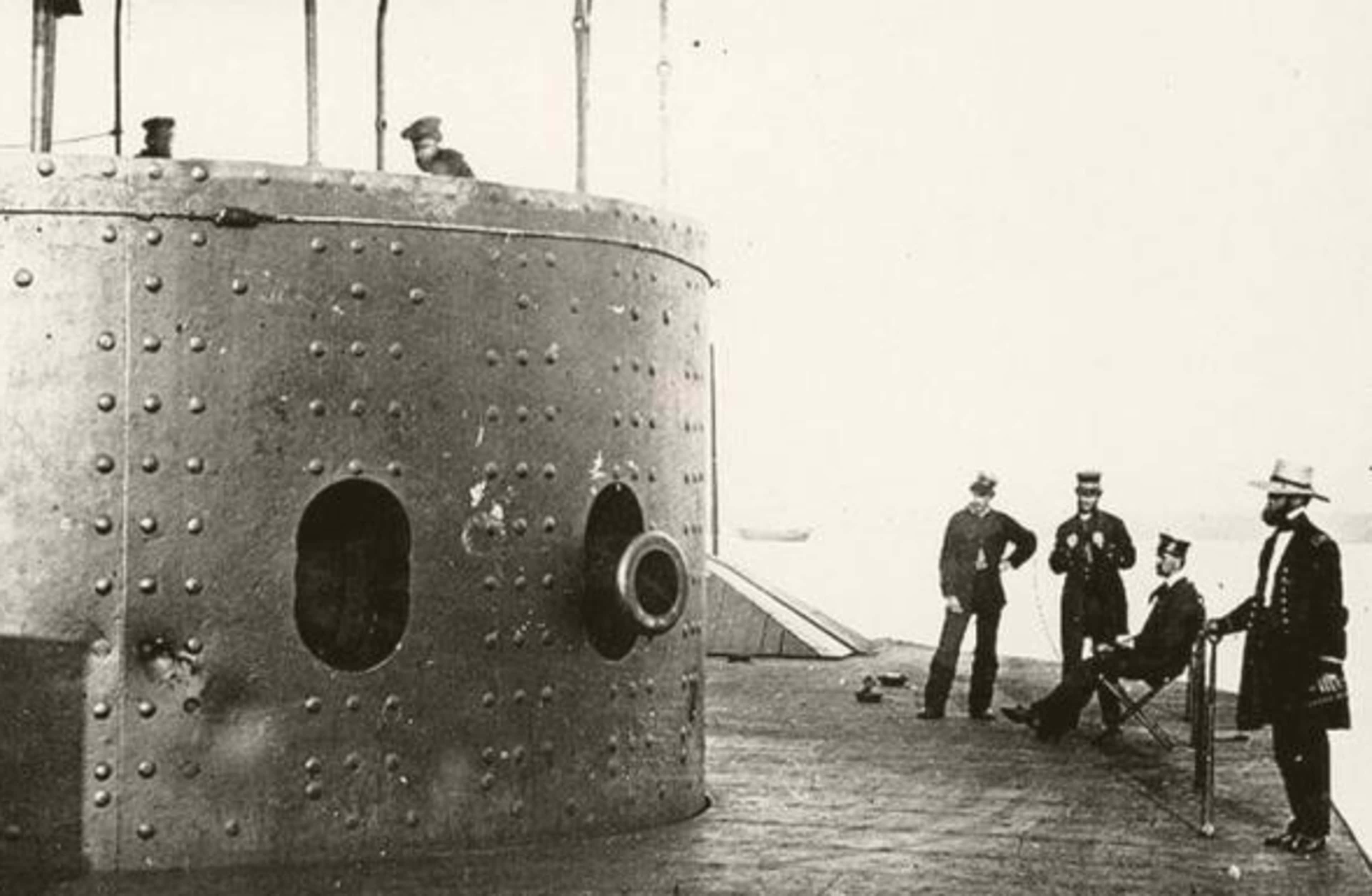
Designed by the brilliant Swedish-born engineer John Ericsson, the USS Monitor was a radical departure from traditional ship design. Sitting incredibly low in the water—with its main deck just 18 inches above the waterline—the Monitor was a difficult target to hit. Its most revolutionary feature was a steam-powered, revolving cylindrical turret housing two massive 11-inch Dahlgren guns. This 360-degree range of fire was completely unprecedented, allowing the gun crew to shoot in any direction regardless of the ship’s course. Critics ridiculed it as a “cheesebox on a raft,” but its engineering was decades ahead of its time.
The Floating Barn Roof: The Salvaged CSS Virginia
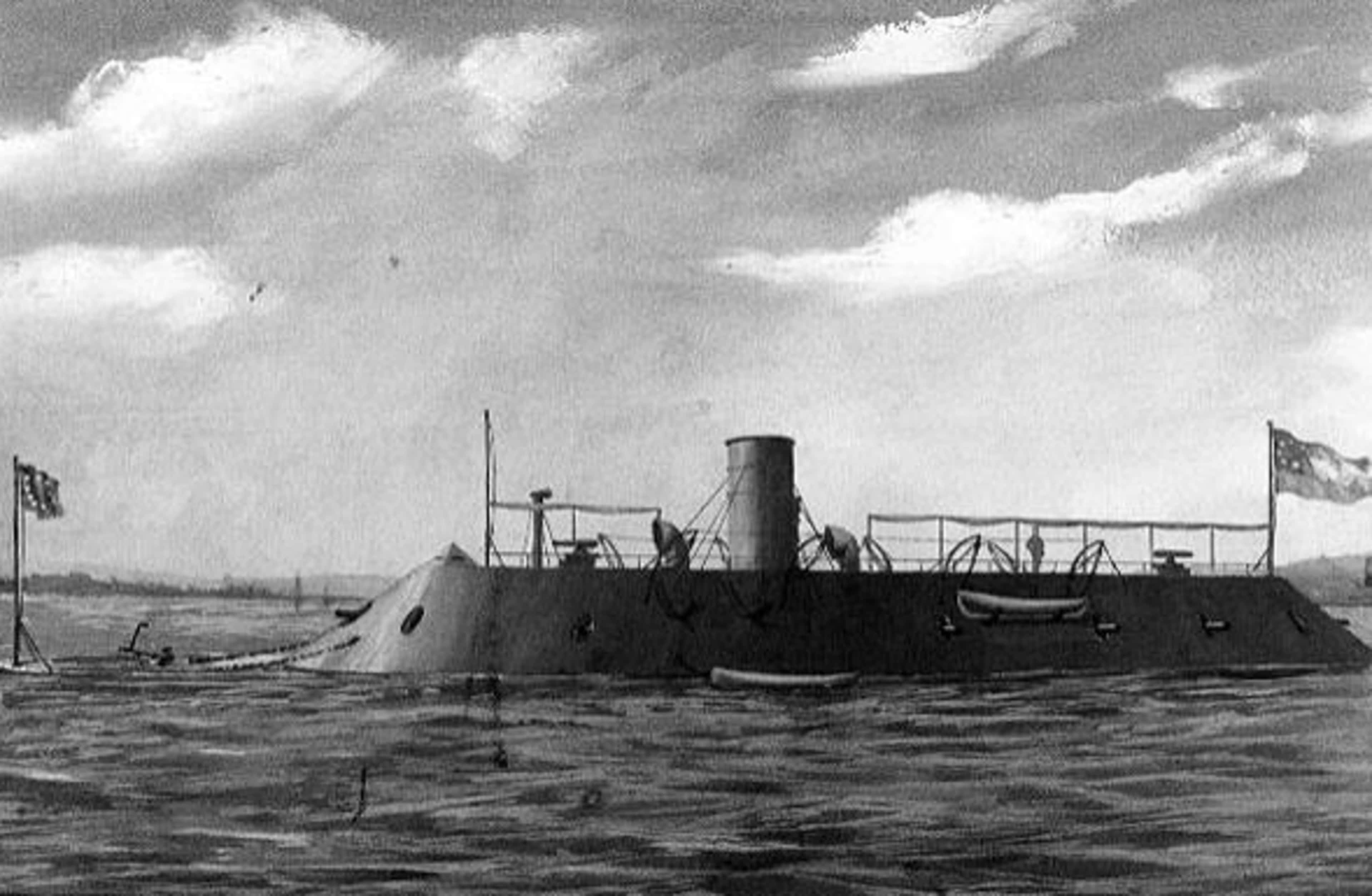
In contrast, the CSS Virginia was a massive, improvised fortress built from the wreckage of the USS Merrimack, a wooden steam frigate that retreating Union forces had burned and scuttled. The Confederates raised the vessel, cut down its damaged upper works, and covered its deck with a heavy, sloping casemate made of four-inch-thick iron plates. It carried a formidable battery of ten cannons and was fitted with a 1,500-pound iron battering ram on its bow. Looking like a floating barn roof belching black smoke, the Virginia was built as a floating battering ram designed to crush wooden hulls.
Chronology of Chaos: The Timeline of Hampton Roads
- April 1861: Union forces abandon Gosport Navy Yard, burning the USS Merrimack. Confederates salvage the hull to build the CSS Virginia.
- August 1861: Union Navy calls for ironclad proposals, ultimately greenlighting John Ericsson’s Monitor design.
- March 6, 1862: The newly completed USS Monitor departs Brooklyn, sailing south into a turbulent sea.
- March 8, 1862 (The First Day): CSS Virginia makes its maiden voyage into Hampton Roads. In a horrific display of iron’s superiority over wood, the Virginia rams and sinks the USS Cumberland and forces the USS Congress to run aground and surrender, killing over 240 Union sailors.
- Night of March 8, 1862: The USS Monitor arrives in Hampton Roads, guided by the fiery glow of the burning USS Congress.
- March 9, 1862 (The Second Day): The CSS Virginia returns to destroy the grounded USS Minnesota, only to be intercepted by the Monitor. The two ironclads engage in a fierce four-hour duel.
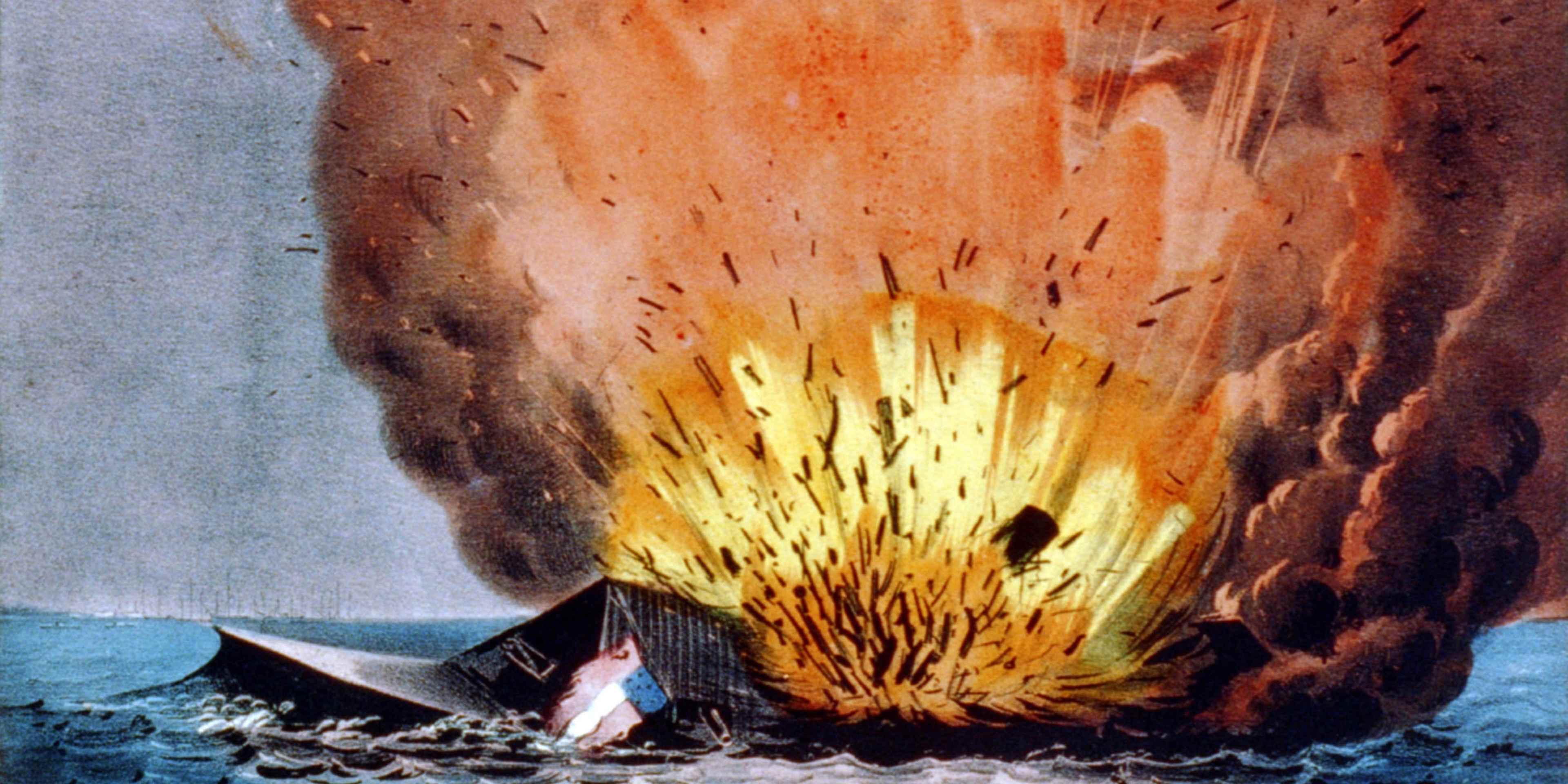
- May 1862: Union forces recapture Norfolk. Unable to navigate the shallow James River to escape, the crew of the CSS Virginia intentionally blows up their beloved ship to prevent its capture.
- December 31, 1862: The USS Monitor founders and sinks during a violent gale off the coast of Cape Hatteras, North Carolina.
Key Figures and Their Lasting Impact
- John Ericsson: The eccentric inventor of the Monitor. His pioneering work on the revolving turret and low-profile hull laid the foundation for modern naval architecture.
- Flag Officer Franklin Buchanan: The aggressive first commander of the CSS Virginia. He orchestrated the devastating assault on March 8, proving the terrifying power of ironclads, but was wounded and could not command on the second day.
- Lieutenant John Worden: The courageous commander of the USS Monitor. He successfully defended the Union fleet on March 9 but was temporarily blinded when a Confederate shell exploded against the pilothouse’s viewing slits.
- Lieutenant Catesby ap Roger Jones: The executive officer who took command of the CSS Virginia on March 9, masterminding the historic duel against the Monitor.
Turning Points and Technical Friction
The battle on March 9 was characterized by extreme proximity and frustrating tactical friction. For four hours, the two ships circled each other, often firing at point-blank range. The waters echoed with the deafening clang of heavy iron balls bouncing harmlessly off metal plating. Inside, the heat was suffocating, and the air was thick with black powder smoke.
Both crews grappled with major mechanical issues. The Monitor’s revolving turret was difficult to control, forcing gunners to fire on the move. Meanwhile, the heavy, sluggish Virginia ran aground in the shallows and struggled to maneuver. When the Virginia attempted to ram the Monitor, she slipped off harmlessly because her iron ram had broken off in the hull of the USS Cumberland the day before. The stalemate ended when a shell blinded Worden, causing the Monitor to briefly pull away, after which the low-on-fuel Virginia withdrew to Portsmouth.
The arrival of the USS Monitor just hours after the Virginia had decimated the Union’s wooden fleet stands as one of those famous coincidences in military history that completely altered the trajectory of an entire campaign, saving the remaining Union fleet from absolute annihilation.
The Long-Term Impact: How Hampton Roads Redefined Global Navies
Though the battle ended in an indecisive tactical draw, its strategic implications were seismic. Overnight, the naval ministries of Great Britain, France, and other global powers realized their massive fleets of wooden ships of the line were obsolete. Prime Minister Lord Palmerston of Britain famously remarked that the battle made the Royal Navy’s wooden ships look like “mere eggshells.”
The United States and the Confederacy immediately pivoted to massive ironclad construction programs, producing dozens of these metal monsters before the war’s conclusion. While the war continued to rage on land, this naval standoff secured the Union’s blockade, which played a decisive role in the ultimate defeat of the Confederacy. This preservation of the Union and the subsequent abolition of slavery represented one of the most significant and great strides for freedom in U.S. history, deeply shaping the modern American legacy.
Lesser-Known Facts About the Battle of Hampton Roads
- A Tragic Fraternal Conflict: During the battle on March 8, the commander of the CSS Virginia, Franklin Buchanan, ordered the destruction of the USS Congress, knowing full well that his own brother, McKean Buchanan, was serving as a paymaster aboard the Union vessel. McKean survived, but the incident underscored the heartbreaking family divisions of the Civil War.
- Whiskey as Fuel: Before entering battle on the morning of March 9, the acting commander of the CSS Virginia, Catesby Jones, steeled his exhausted crew by distributing a double ration of whiskey (two jiggers per man) to prepare them for the grueling heat of the ironclad’s interior.
- The Modern Sanctuary: In 1973, scientists located the wreck of the USS Monitor off the coast of North Carolina. In 1975, it was designated as America’s very first National Marine Sanctuary, ensuring that this legendary pioneer of naval engineering would be protected for future generations.
Why the Battle of Hampton Roads Matters Today
The duel of the ironclads represents the dawn of modern technological warfare. Before 1862, battles were decided primarily by the bravery of sailors and the favorability of the wind. Hampton Roads proved that industrial capacity, scientific innovation, and technological superiority would define the future of global conflict. As the Monitor and Virginia withdrew at the end of their famous duel, they executed maneuvers that, while not matching the most famous and brilliant military retreats of history, successfully preserved their pioneering hulls and marked the beginning of a high-tech naval arms race that continues into the modern era of stealth ships and nuclear submarines.
People Also Ask (FAQs)
Who won the Battle of Hampton Roads?
The battle is widely considered a tactical draw. Neither the USS Monitor nor the CSS Virginia was able to severely damage or destroy the other. However, it was a strategic victory for the Union, as the Monitor successfully protected the remaining wooden fleet and maintained the blockade.
What happened to the USS Monitor and CSS Virginia after the battle?
Neither ship survived the year. In May 1862, the CSS Virginia was blown up by her own crew to prevent her from falling into Union hands during the evacuation of Norfolk. On December 31, 1862, the USS Monitor sank during a powerful storm off Cape Hatteras, North Carolina.
Why was the CSS Virginia sometimes called the Merrimack?
The CSS Virginia was constructed using the salvaged hull and engines of the USS Merrimack, a Union steam frigate that had been burned and scuttled. Many Union sailors and contemporary newspapers continued to refer to the Confederate ironclad as the “Merrimack.”
Conclusion
The Battle of Hampton Roads remains one of the most transformative moments in military history. By proving that iron could easily withstand the heaviest artillery of the era, the USS Monitor and the CSS Virginia closed the book on the age of sail and opened a new chapter of steam, steel, and industrial warfare. The legacy of their dramatic four-hour duel still echoes in the design of every modern warship patrolling the oceans today, standing as an enduring testament to the power of American innovation and the brutal realities of the Civil War.


