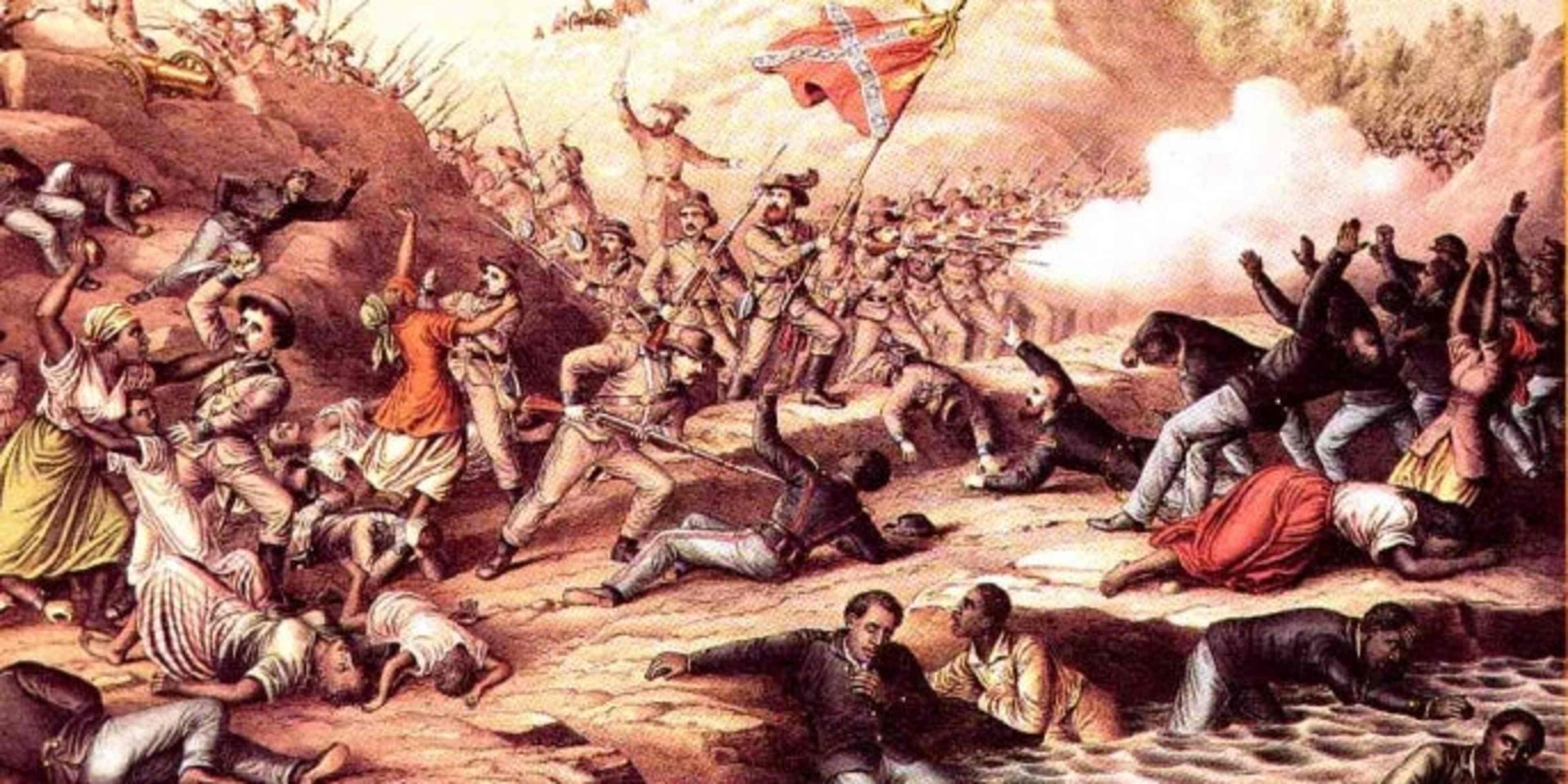
The Fort Pillow Massacre on April 12, 1864, remains one of the most polarizing and agonizing episodes of the American Civil War. Perched on the steep, muddy bluffs overlooking the Mississippi River, forty miles north of Memphis, Tennessee, this Union-held fortification became the site of a brutal confrontation that forever changed the racial and military dynamics of the war. What began as a tactical assault by Confederate cavalry under Major General Nathan Bedford Forrest culminated in a devastating slaughter that disproportionately targeted African-American soldiers of the United States Colored Troops (USCT). Today, the event stands as a grim reminder of the fierce prejudices that defined the era, acting as a crucial touchstone for understanding the intersecting legacies of slavery, military service, and the struggle for human rights in nineteenth-century America.
Historical Background: A Citadel on the Bluffs
Originally constructed by the Confederate Army in 1861 and named after Tennessee native General Gideon Johnson Pillow, Fort Pillow was designed to secure the Mississippi River as a key logistics artery. However, following the fall of Memphis to federal forces in June 1862, the Confederacy abandoned the post, allowing Union troops to occupy and refortify the high bluffs. By the spring of 1864, the fort was garrisoned by approximately 600 soldiers, split almost equally between white Southern Unionists (contemptuously dubbed “homemade Yankees” by Confederates) of the 13th West Tennessee Cavalry and African-American artillerymen of the 6th U.S. Colored Heavy Artillery and the 2nd U.S. Colored Light Artillery.
The geopolitical backdrop to the battle was fraught with extreme tension. In 1863, the Union’s decision to actively recruit Black soldiers had sparked outrage across the South. In response, the Confederate Congress issued a decree stating that captured Black troops and their white officers would not be treated as traditional prisoners of war. Instead, they would be viewed as slave insurrectionists and accomplices, a capital offense carrying the penalty of execution or re-enslavement. This volatile policy set a deadly stage for the conflict at Fort Pillow, establishing an environment where standard military protocol was discarded in favor of racial animus.
The Battle and the Slaughter: A Chronological Timeline
The tragic events of April 12, 1864, unfolded with rapid, chaotic violence. To understand the progression of the confrontation, historians rely on the following chronological timeline of that fateful Tuesday:
- 05:30 AM: Lead elements of Confederate Major General Nathan Bedford Forrest’s cavalry corps, under Brigadier General James R. Chalmers, launch a surprise assault on the outer pickets of Fort Pillow.
- 09:00 AM: Forrest arrives on the battlefield to take direct command of the roughly 1,500 to 2,500 Confederate troops. He successfully maneuvers his forces to occupy high knolls commanding the inner Union breastworks.
- 09:30 AM: Union Commander Major Lionel F. Booth is killed by a Confederate sharpshooter. Command of the garrison devolves to Major William F. Bradford, who withdraws his troops to the inner coal-shute fortification.
- 11:00 AM: Confederate forces tighten their stranglehold on the fort. The Union gunboat New Era attempts to provide naval artillery support, but the rugged terrain prevents it from effectively shelling the ravines where Confederate troops are massing.
- 03:30 PM: Forrest initiates a temporary truce and sends a formal demand for unconditional surrender. He warns Major Bradford that his men are fully supplied and prepared to storm the fort, adding, “Should my demand be refused, I cannot be responsible for the fate of your command.”
- 03:50 PM: Bradford, hoping for reinforcements from incoming Union transports, requests an hour-long ceasefire. Fearing Union gunboats might arrive to reinforce the garrison, Forrest counters by granting only twenty minutes. Bradford formally refuses the surrender.
- 04:00 PM: The Confederate bugle sounds the charge. Forrest’s troops swarm over the low dirt parapet, overwhelming the Union lines within minutes. Panic ensues as Union troops flee toward the riverbank under a blistering crossfire.
- 04:15 PM – Dusk: The massacre occurs. Despite many Union soldiers throwing down their weapons and attempting to surrender, Confederate troops open fire on the defenseless men. Eyewitnesses describe a horrific scene where Black soldiers are shot in cold blood, bayoneted, or chased into the river and drowned.
Major Turning Points and the Massacre Controversy
The core controversy surrounding the Fort Pillow Massacre centers on whether the mass killings were a premeditated atrocity ordered by General Forrest or a chaotic consequence of battlefield hysteria. Proponents of Forrest argue that because the Union flag was not formally lowered and Major Bradford failed to order a proper surrender, Confederate soldiers assumed active resistance was continuing. Unlike the tactical maneuvers seen in brilliant military retreats, the Union flight down the bluffs was disorganized, leaving many men with weapons still in hand as they ran.
However, overwhelming historical evidence, including the stark casualty rates and testimonies from Confederate participants, points to a targeted execution of surrendering troops. Out of the 262 U.S. Colored Troops at the fort, only about sixty-two survived the battle, representing a staggering casualty rate of nearly 76 percent. In contrast, the white Union troops suffered a much lower mortality rate, and the Confederate forces lost just fourteen men. A letter written home by Confederate Sergeant Achilles Clark shortly after the battle vividly detailed the horrific scene: “The poor deluded Negroes would run up to our men, fall upon their knees, and with uplifted hands scream for mercy, but they were ordered to their feet and then shot down.” Such accounts strongly support the conclusion that racial hostility drove the senseless bloodshed.
Long-Term Impact on the American Civil War
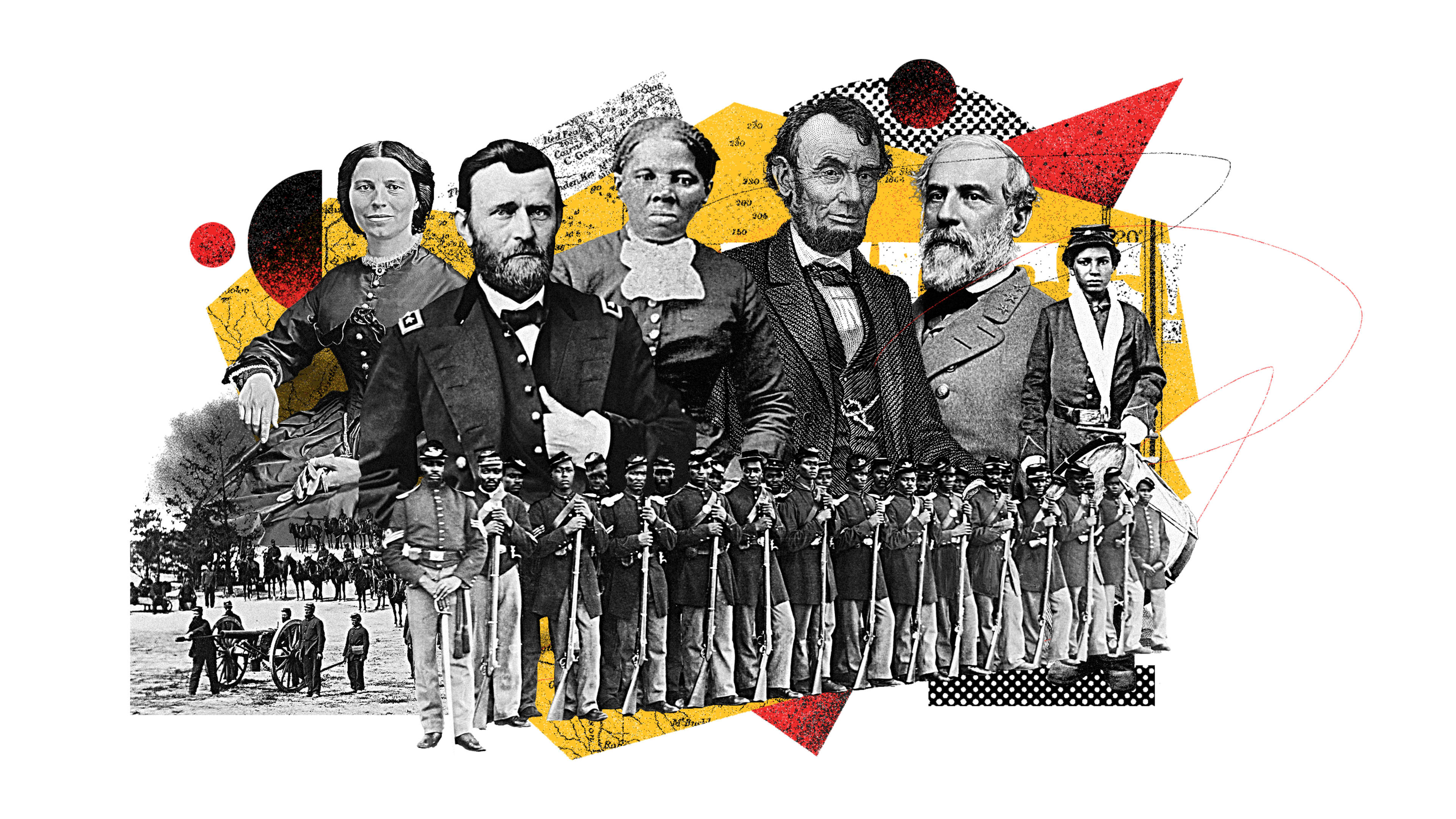
The fallout from Fort Pillow reverberated far beyond the banks of the Mississippi River, altering the conduct of the entire war. The immediate consequence was the collapse of the formal prisoner exchange system, known as the Dix-Hill Cartel. General Ulysses S. Grant refused to sanction further exchanges unless the Confederacy agreed to treat Black soldiers equally to white soldiers. The Confederacy’s refusal meant that captured troops on both sides were relegated to overcrowded, disease-ridden military prisons, directly contributing to the humanitarian disasters at camps like Andersonville.
For African-American soldiers, the massacre was not a deterrent, but a powerful catalyst. “Remember Fort Pillow!” became a fierce rallying cry for USCT regiments throughout the remainder of the war, inspiring a dogged determination on battlefields like Petersburg and Nashville. Their bravery on the front lines helped secure victory for the Union, contributing to the broader, systemic changes that marked great strides for freedom in U.S. history.
Additionally, the legal and social struggle of the survivors’ families sparked historic policy changes. Elizabeth Booth, the widow of Major Lionel Booth, traveled to Washington, D.C., to meet with President Abraham Lincoln. She passionately lobbied for equal pension benefits for the widows and orphans of African-American soldiers who perished in the battle. This crucial civil rights victory, enacted in July 1864, echoed earlier historic legal milestones, such as when Elizabeth Freeman sued for her freedom in Massachusetts, proving that systemic injustice could be successfully challenged through persistent advocacy.
Lesser-Known Facts about Fort Pillow
- The Tragic Fate of Major Bradford: Unlike many white officers who were taken prisoner, Major William F. Bradford did not survive the aftermath of the battle. He was captured by Confederate forces and marched toward Memphis, but was shot and killed under highly suspicious circumstances along the road. Confederates claimed he was shot while attempting to escape, while Union loyalists insisted it was a targeted execution.
- The Reprisal Conundrum: Following the public outcry over the massacre, Northern citizens demanded that President Lincoln execute Confederate prisoners of war in equal numbers as retaliation. Lincoln and his cabinet ultimately decided against reprisal executions, realizing that it would initiate an endless, savage cycle of tit-for-tat killings without bringing back the lost Union soldiers.
- Fires and Defiled Graves: In the days immediately following the battle, Union burial details returning to the site discovered that some wounded Black soldiers had been buried alive or burned in their tents. The intense hatred harbored by the Confederate cavalrymen was directed not only at the Black troops, but also at the white Tennessee Unionists, whom they viewed as traitorous renegades.
Why It Still Matters Today
More than 160 years later, the legacy of Fort Pillow continues to provoke deep discussions about historical memory, race, and the preservation of Civil War monuments. General Nathan Bedford Forrest remains one of the most controversial figures in Southern history. In the decades after the war, Forrest reportedly became the first Grand Wizard of the newly formed Ku Klux Klan during Reconstruction, cementing his role as a symbol of white supremacy. In recent years, protests by civil rights activists led to the removal of Forrest’s remains and his bronze equestrian monument from a public park in Memphis, highlighting the ongoing national reckoning with the symbols of the Confederacy. The debate over Fort Pillow is not merely an academic disagreement about the events of 1864; it is a living debate about how America chooses to remember its past and honor the victims of historic atrocities.
People Also Ask
Was Fort Pillow a battle or a massacre?
While the initial encounter on the morning of April 12, 1864, was an active military battle, the overwhelming historical consensus is that the post-surrender actions of the Confederate troops constituted a massacre. The systematic slaughter of unarmed, surrendering soldiers—specifically targeting the United States Colored Troops—elevated the engagement from a standard battle to an atrocity.
Did Nathan Bedford Forrest order the Fort Pillow Massacre?
There is no surviving written order from General Forrest commanding his troops to slaughter the garrison. However, critics point out that Forrest’s pre-battle warning to Major Bradford that he “would not be responsible for the fate of your command” created an environment that implicitly condoned extreme violence. While his defenders claim he eventually rode in to stop the killing, his failure to maintain discipline among his troops makes him historically responsible for the outcome.
What were the casualties at Fort Pillow?
Out of approximately 600 Union soldiers in the garrison, over 300 were killed. The losses were disproportionately borne by the African-American soldiers of the U.S. Colored Troops, who suffered a 64 to 76 percent mortality rate, with only sixty-two known survivors. In contrast, Confederate forces sustained incredibly low casualties, with only fourteen men killed and eighty-six wounded.
Conclusion: The Undying Echoes of Fort Pillow
The tragedy at Fort Pillow remains a sobering chapter in the American story, illustrating the extreme depths of racial animosity and the brutal realities of the Civil War. By examining the context, timeline, and long-term impacts of this event, we gain a clearer, more honest understanding of the sacrifices made by African-American soldiers who fought not only for the Union, but for their very humanity. As modern discussions around historical monuments and systemic inequality continue to evolve, the lessons of Fort Pillow remind us that the struggle to preserve historical truth is an ongoing duty for every generation.


