The American Civil War (1861–1865) is frequently remembered as the first modern war, a watershed conflict where industrial-era engineering clashed violently with archaic, Napoleonic-style battlefield tactics. While iconic muzzle-loading firearms like Springfield muskets and Colt revolvers dominated the front lines, the sheer desperation and rapid technological acceleration of the era gave rise to a bizarre array of experimental military gadgets. Inventors and military minds on both sides of the Mason-Dixon line scrambled to gain any tactical advantage, producing some of the most extraordinary and unusual Civil War weapons ever witnessed in the history of human combat. These curious anomalies—ranging from early hand grenades and rocket launchers to steam-powered guns and searchlights—pushed the absolute boundaries of 19th-century military engineering, forever changing how nations conceptualized warfare.
The Technological and Sociopolitical Landscape of the 1860s
To understand why such unusual Civil War weapons emerged, one must examine the deep contrast between the two warring factions. The industrialized Union possessed a vast network of factories, railroads, and advanced manufacturing centers, allowing for rapid trial-and-error prototyping of military equipment. Conversely, the agrarian Confederacy struggled under a suffocating naval blockade, forcing Southern engineers to rely heavily on improvisation, raw ingenuity, and imported European designs. Both governments were highly receptive to civilian patents, opening the floodgates for eccentric inventors who promised “superweapons” capable of ending the bloody conflict overnight. This atmosphere of desperation and rapid industrialization created a perfect breeding ground for experimental armaments.
8 Unusual Civil War Weapons That Defied Tradition
1. The Ketchum Hand Grenade
While soldiers on both sides frequently constructed jury-rigged explosives using simple fuses and gunpowder, the Union sought a standardized, aerodynamic hand grenade. The result was the Ketchum grenade, patented by Philip Ketchum. Looking strikingly like a modern lawn dart, this projectile came in one-, three-, and five-pound models. It featured stabilizer fins made of wood or cardboard and a nose-mounted metal plunger. When thrown, the fins ensured the grenade landed nose-first, driving the plunger into an internal percussion cap to detonate the main gunpowder charge.
Though ingenious in theory, the Ketchum grenade was highly unreliable in practice. During the grueling 1863 Siege of Port Hudson in Louisiana, Union troops bombarded Confederate trenches with these explosives. Because the ground was soft and muddy, many plungers failed to detonate upon impact. Seeing their chance, resourceful Confederate soldiers used thick blankets to catch the live grenades mid-air or scooped them off the mud, throwing them back at their startled Union attackers.
2. Early Rocket Launchers: Congreve and Hale Rockets
The concept of rocket warfare was not born in the 20th century. During the Civil War, both forces experimented with rocket launchers. The Confederacy utilized the Congreve rocket, a British-designed explosive that had famously been used in the War of 1812. These weapons resembled massive bottle rockets with long wooden guide sticks. However, they were so notoriously inaccurate and prone to erratic flight paths that Confederate forces eventually abandoned them.
The Union, meanwhile, adopted the Hale patent rocket launcher. This weapon utilized a metal tube to fire spin-stabilized rockets of up to ten inches in length. Unlike the Congreve, William Hale’s design featured angled exhaust vents at the rear, causing the rocket to spin like a rifle bullet for improved stability and a range of up to 2,000 yards. While a significant improvement, the launchers remained highly volatile and difficult to aim, leading the U.S. Army to relegate them almost exclusively to naval operations.
3. Precursors to the Machine Gun: Gatling and Battery Guns
The 1860s saw the infancy of rapid-fire mechanization. The most famous of these innovations was the Gatling gun, invented by Dr. Richard J. Gatling. Patented in 1862, this terrifying weapon featured six rotating barrels turned by a hand crank, capable of firing up to 350 rounds per minute. Although the U.S. government was hesitant to purchase the weapon in bulk, Union General Benjamin Butler privately bought several Gatling guns with his own funds in 1863, deploying them to devastating effect during the Petersburg Campaign.
Other rapid-fire systems emerged as well. The Williams gun, first unveiled by the Confederacy at the Battle of Seven Pines in 1862, was a steel breechloader that fired single-pound shells. Additionally, the Billinghurst-Requa battery gun featured 25 rifle barrels arranged side-by-side on a light wheeled carriage, resembling a pipe organ. Because these early machine guns were heavy, prone to jamming, and consumed ammunition at an unsustainable rate, they were primarily utilized for static defenses, such as guarding bridges and crucial choke points.
4. Land Torpedoes (The First Landmines)
The modern landmine owes its grim origin to Confederate General Gabriel J. Rains. During the 1862 Peninsula Campaign, Rains designed subterranean “land torpedoes”—iron containers filled with gunpowder, rigged with highly sensitive brass friction primers. When buried just beneath the dirt road surface, they exploded under the weight of passing infantry or horses. Rains buried thousands of these lethal booby traps across the Deep South to slow down the advancing Union armies.
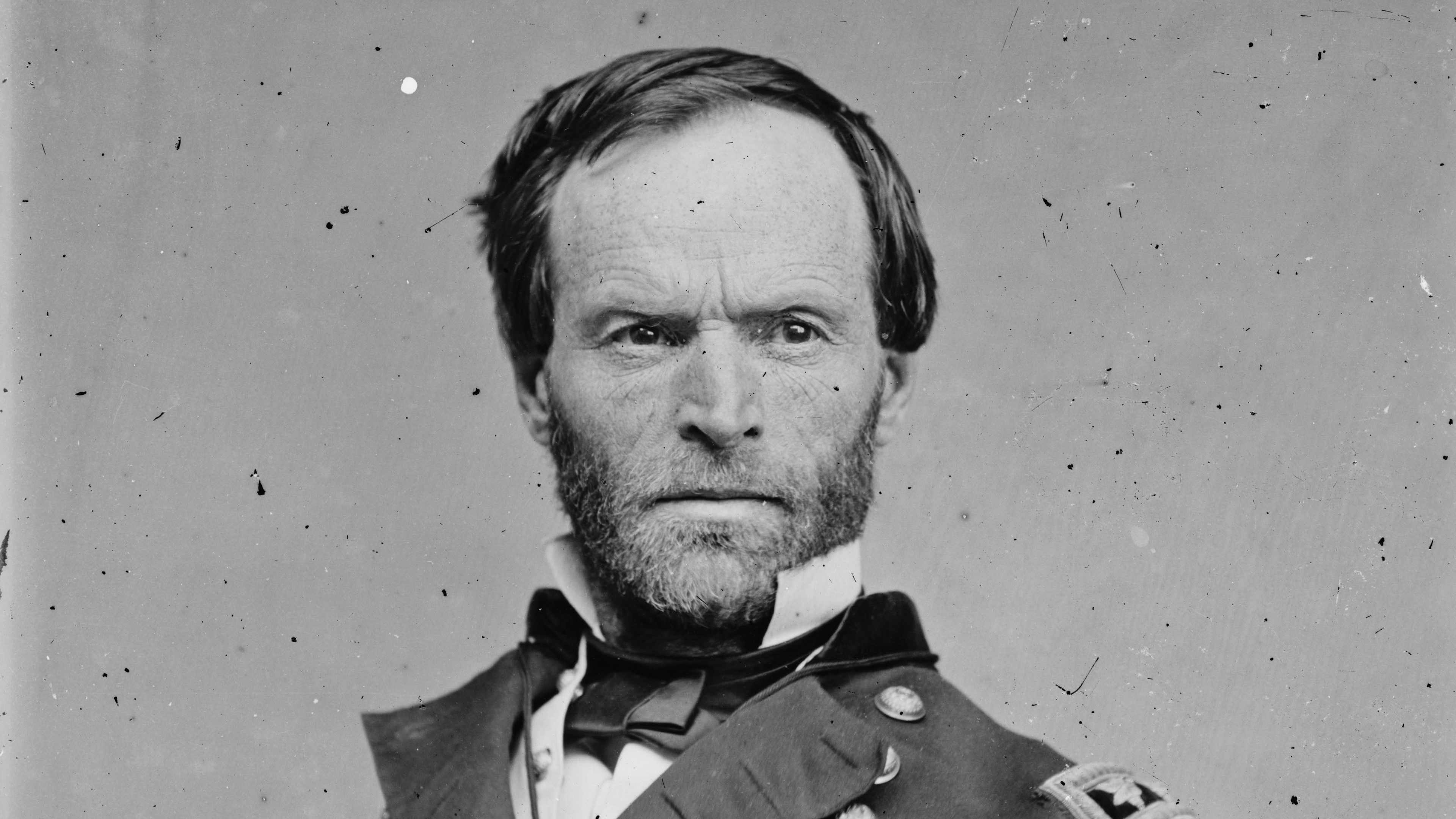
The deployment of land torpedoes sparked a fierce ethical debate. Union General George B. McClellan condemned the practice as “barbarous,” and even Confederate General James Longstreet briefly banned their use, viewing them as dishonorable. Perhaps their most vocal opponent was Union General William T. Sherman. After losing several soldiers to hidden landmines during his March to the Sea, an infuriated Sherman forced Confederate prisoners of war to march at the very front of his advancing columns to trigger any concealed mines. These minefields and booby traps allowed retreating forces to delay pursuers, proving to be a decisive technological addition during tactical maneuvers and brilliant military retreats where buying time was of the essence.
5. Underwater Mines and the First Combat Submarines
Just as land torpedoes guarded the Southern clay, underwater torpedoes (naval mines) guarded Southern waterways. Famed oceanographer and Confederate officer Matthew Fontaine Maury developed sophisticated “infernal machines” to defend vital waterways like the James River, Mobile Bay, and Charleston Harbor. These underwater mines were incredibly successful; they destroyed dozens of Union vessels, including the ironclad USS Cairo in late 1862, making it the first armored warship in history to be sunk by an underwater explosive.
The Confederacy took this technology a step further by seeking a vessel capable of delivering these explosives dynamically. In 1864, the experimental Confederate submarine, the H.L. Hunley, made naval history. Armed with a long spar-mounted torpedo on its bow, the Hunley rammed and successfully sank the Union sloop USS Housatonic in Charleston Harbor. Although the submarine itself sank shortly after the attack, taking its crew to a watery grave, it cemented the submarine as a viable offensive weapon of modern warfare.
6. The Calcium Light (Limelight)
Nighttime operations during the Civil War were notoriously difficult, but Union General Quincy Adams Gillmore found a brilliant chemical solution during the 1863 siege of Fort Wagner in South Carolina. Gillmore’s engineers deployed the “calcium light,” or limelight. Originally used in theaters and lighthouses since the 1830s, this device created an incredibly bright, incandescent white glow by heating a cylinder of quicklime (calcium oxide) with an oxygen-hydrogen flame.
By shining these powerful searchlights on Fort Wagner, Union forces accomplished two tactical objectives simultaneously: they illuminated the Confederate fortifications for nighttime artillery bombardments while completely blinding the enemy’s riflemen and gunners. These Drummond lights were later used along the James River to spot stealthy Confederate ironclads and blockade runners attempting to slip through the dark.
7. Reconnaissance Balloons and Aerial Espionage
For the first time in American history, commanders took to the skies to gain high-altitude intelligence. The Union Army established an official Balloon Corps headed by “Chief Aeronaut” Thaddeus Lowe. Lowe operated a fleet of seven hydrogen-gas balloons, including the famous Intrepid. Tethered to the ground by heavy ropes that also carried telegraph wires, Lowe ascended to heights of 1,000 feet, transmitting real-time intelligence on Confederate troop movements directly to commanders on the ground during battles like Bull Run, Fredericksburg, and Chancellorsville.
While earlier conflicts relied heavily on ground scouts and secret networks—much like how espionage and unconventional warfare tactics helped secure victory in the Revolutionary War—the Civil War introduced the vertical dimension to military intelligence. The Confederacy attempted to replicate this aerial success, but lacked the resources to manufacture proper rubberized silk balloons. Their sole operational airship, a colorful patchwork made of imported silk bolts, was captured in 1862 when the tugboat transporting it ran aground on the James River.
8. The Winans Steam Gun
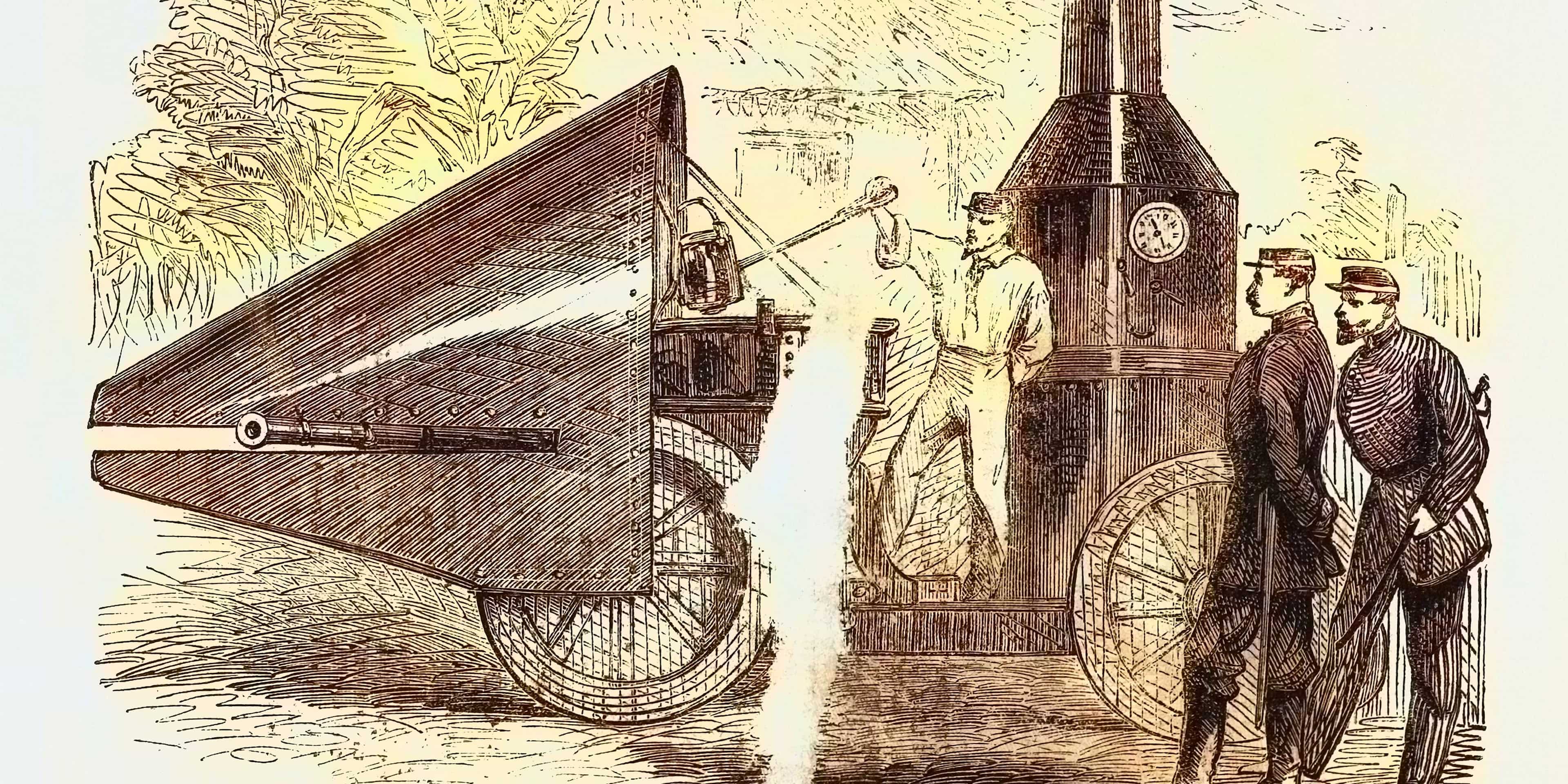
Perhaps the most bizarre weapon of the entire conflict was the Winans steam gun. Built by Ohio inventors William Joslin and Charles Dickinson, this massive, armored vehicle utilized high-pressure steam rather than gunpowder to propel projectiles. Sitting atop a heavy iron carriage, the centrifugal steam gun was designed to rapidly fling iron balls through a rotating barrel at a projected rate of 200 rounds per minute.
The weapon was widely sensationalized in newspapers as an unstoppable war machine. However, it never saw actual combat. In May 1861, as Dickinson attempted to smuggle the gun to Harpers Ferry to sell it to the Confederacy, Union forces intercepted him and confiscated the machine. The steam gun was sent to Fortress Monroe, Virginia, and eventually sold for scrap, having failed to live up to its formidable, steam-powered hype.
Key Timeline of Civil War Weapon Innovations
- May 1861: Union forces capture the experimental Winans steam gun in Maryland, preventing it from reaching Confederate hands.
- Late 1861: Matthew Fontaine Maury successfully demonstrates the devastating potential of electrical naval mines in the James River.
- May 1862: General Gabriel J. Rains deploys the first land torpedoes (landmines) during the Battle of Williamsburg, sparking widespread ethical debates.
- May 1862: The Williams rapid-fire gun is introduced by Confederate forces at the Battle of Seven Pines.
- December 1862: The ironclad USS Cairo is destroyed by a Confederate naval mine in the Yazoo River.
- May–July 1863: Union forces throw Ketchum hand grenades at the Siege of Port Hudson; Confederates catch them in blankets.
- July 1863: Union General Quincy Adams Gillmore utilizes calcium lights (limelights) to illuminate and blind Fort Wagner.
- February 1864: The Confederate submarine H.L. Hunley sinks the USS Housatonic, marking the first successful submarine attack in combat history.
- Late 1864: General William T. Sherman’s troops encounter defensive land torpedoes during his infamous March to the Sea.
Prominent Historical Figures of Civil War Innovation
- Thaddeus Lowe (1832–1913): Named “Chief Aeronaut” of the Union Army Balloon Corps, Lowe pioneered the field of aerial reconnaissance and military telegraphy.
- Gabriel J. Rains (1803–1881): A Confederate Brigadier General who specialized in explosives, Rains is widely regarded as the pioneer of modern landmine and booby-trap warfare.
- Richard J. Gatling (1818–1903): An American inventor who created the Gatling gun. Ironically, Gatling designed the rapid-fire gun hoping it would reduce the size of armies and show the futility of war.
- Matthew Fontaine Maury (1806–1873): A world-renowned oceanographer who resigned his U.S. Navy commission to assist the Confederacy, utilizing his deep knowledge of marine science to develop lethal naval mines.
Long-Term Impact on America and the Evolution of Modern Warfare
The unusual Civil War weapons developed during this bloody four-year struggle laid the direct groundwork for 20th-century warfare. The rapid-fire mechanics of the Gatling gun directly evolved into the automatic machine guns that dominated the trenches of World War I. Similarly, Gabriel Rains’ land torpedoes and Matthew Fontaine Maury’s naval mines pioneered the terrifying concepts of area denial, which remain standard military doctrine today. The calcium lights paved the way for modern military searchlights, and Thaddeus Lowe’s balloon experiments evolved into aerial drones and satellite surveillance. The ultimate Union victory paved the way for the Reconstruction era and marked one of the most critical strides for freedom in U.S. history, dismantling the institution of slavery once and for all. However, the legacy of these weapons also forced the international community to draft the Geneva Conventions to regulate the ethical boundaries of industrialized warfare.
Lesser-Known Historical Anecdotes
- The Blanket Catchers: At the Siege of Port Hudson, the mud was so soft that the Union’s Ketchum hand grenades did not explode on impact. Confederate soldiers actively caught the incoming grenades in stretched blankets and successfully threw them back before they could go off.
- The Silk Dress Balloon: The Confederacy was so low on resources that they had to stitch their reconnaissance balloon together using a colorful patchwork of imported silk. This gave it a vibrant, multi-colored appearance that was highly visible to Union forces before its ultimate capture.
- Active Threat 100 Years Later: Gabriel Rains’ land torpedoes were made so securely that several still-active Confederate landmines were discovered and safely defused in Alabama as recently as the 1960s.
Why It Still Matters Today
The history of these unusual Civil War weapons serves as a powerful reminder of how quickly technology can outpace human ethics. Today, as we debate the implementation of artificial intelligence, autonomous drone warfare, and cyber weapons, we face the exact same moral dilemmas that Union and Confederate generals faced when confronting Rains’ landmines or Gatling’s machine guns. Understanding the leap from industrial-era innovations to modern warfare helps us comprehend the destructive trajectory of global military science and emphasizes the continuous need for humanitarian rules of engagement.
People Also Ask (FAQ)
What was the most unusual weapon used in the Civil War?
While opinions vary, the Ketchum grenade (which looked like a lawn dart) and the Winans steam gun (a steam-powered armored railcar gun) are widely considered the most unusual weapons conceived during the Civil War.
Were rockets used in the Civil War?
Yes, both the Union and the Confederacy experimented with rockets. The Confederacy tried using British Congreve rockets, while the Union employed the spin-stabilized Hale patent rocket, which was primarily utilized by the Navy due to its inaccuracy on land.
Did landmines exist during the Civil War?
Yes. Developed by Confederate General Gabriel J. Rains, they were known as “land torpedoes” and were buried in roads and fields to deter advancing Union forces. They were highly controversial and condemned as unethical by generals on both sides.
Conclusion
The American Civil War was an era of profound tragedy, but it was also a period of unparalleled, albeit destructive, scientific ingenuity. The unusual Civil War weapons of the 1860s bridged the gap between the ancient ways of fighting and the mechanized horrors of modern industrial warfare. While many of these inventions were flawed, unreliable, or deemed flatly unethical, they laid the foundation for the military technology of the 20th and 21st centuries, shaping the global geopolitics we observe to this day.


