In 1898, the city of Wilmington, North Carolina, stood as a radiant beacon of post-Civil War progress. It was a thriving, integrated port city where a successful biracial government proved that multiracial democracy was not only possible but highly prosperous. However, on November 10, 1898, this progressive dream was violently shattered in what remains the only successful coup d’état on United States soil. A coordinated, armed insurrection of white supremacists overthrew the democratically elected Fusionist government, slaughtered dozens of Black citizens, burned down the city’s leading Black newspaper, and forced thousands of residents to flee for their lives. This brutal event, often historically sanitized as a “race riot,” was in fact a meticulously planned overthrow that systematically dismantled Black political and economic power, fundamentally altering the trajectory of American civil rights for nearly a century.
Historical Background: The Rise of Fusion Politics in North Carolina
Following the end of the Civil War and the dawn of Reconstruction, African Americans in the South made remarkable strides in securing political office, building wealth, and establishing vibrant communities. By the mid-1890s, Wilmington had become North Carolina’s largest city and its most progressive urban center. Boasting a majority-Black population, the city was home to a flourishing Black middle class, including doctors, lawyers, real estate developers, and municipal workers like policemen and firemen.
This unprecedented success was nurtured by a unique political alliance known as Fusion politics. In the 1890s, the Populist Party—composed primarily of struggling, working-class white farmers—joined forces with the Republican Party, which represented the vast majority of freed Black Americans. These two disparate groups realized they shared common economic grievances against the conservative, pro-business Democratic Party, which was then controlled by wealthy white elites. By aligning their votes, the Fusionists swept the state elections in 1894 and 1896, successfully ousting the white-supremacist Democrats from power and electing a biracial coalition to run the state and local governments.
While North Carolina had historically prideful political traditions—with some local historians famously debating whether North Carolina issued the first declaration of independence in the colonial era—the events of 1898 demonstrated how quickly constitutional ideals could be cast aside when racial hierarchies were threatened.
The Conspiracy: Orchestrating the White Supremacy Campaign
The political defeat of 1894 and 1896 infuriated the state’s white Democratic elite, who viewed biracial governance as an existential threat to white supremacy. Prominent state and local Democrats, including Josephus Daniels (publisher of the state’s largest newspaper, The News & Observer), future state Governor Charles Aycock, and former Confederate soldier Alfred Moore Waddell, orchestrated a multi-pronged conspiracy. Their goal was simple: destroy the Fusionist alliance, terrorize Black voters, and seize complete municipal power.
Josephus Daniels weaponized his publication, printing heavily sensationalized, fabricated stories of the “Negro menace.” These articles falsely claimed that Black men were preying on white women and that an uprising of Black citizens was imminent. This weaponization of print media was a dark evolution from the early days of American journalism, far removed from the foundational, community-focused objectives of America’s first newspaper. By stoking public hysteria and white resentment, the conspirators successfully sowed deep racial divisions.
The Catalyst: Alex Manly’s Scathing Editorial
The powder keg was ignited by an editorial written by Alex Manly, the courageous light-skinned Black editor of Wilmington’s leading African American newspaper, The Daily Record. In August 1898, a prominent white Georgia writer named Rebecca Felton gave a speech advocating for the lynching of Black men to protect white women. Repulsed by this rhetoric, Manly penned a blistering response in his newspaper. He pointed out the hypocrisy of white segregationists, noting that romantic relationships between white women and Black men were often consensual, and that white men had historically engaged in widespread, non-consensual exploitation of Black women during and after slavery.
White Democrats seized on Manly’s editorial, reprinting it across the state as “proof” of Black insolence and an assault on white womanhood. The editorial became the ultimate rally cry for white vigilante groups, including the notorious Red Shirts, a paramilitary organization akin to the Ku Klux Klan.
Timeline of Terror: The Events of November 1898
The coup was executed with terrifying precision through a series of escalating events in the fall of 1898:
- Late October 1898: Former Congressman Alfred Moore Waddell delivers a public address, infamously promising to “choke the current of the Cape Fear River with carcasses” rather than submit to “Negro domination.”
- November 8, 1898 (Election Day): Heavily armed Red Shirts patrol Wilmington’s streets on horseback. They whip Black residents, blockade polling stations, and threaten anyone attempting to vote. Unsurprisingly, the Democrats sweep the sham election.
- November 9, 1898: Encouraged by their victory, Wilmington Democrats draft “The White Declaration of Independence.” The document asserts that white men will never be ruled by African Americans, demands that all Black city officials resign, and orders Alex Manly to destroy his printing press and leave town.
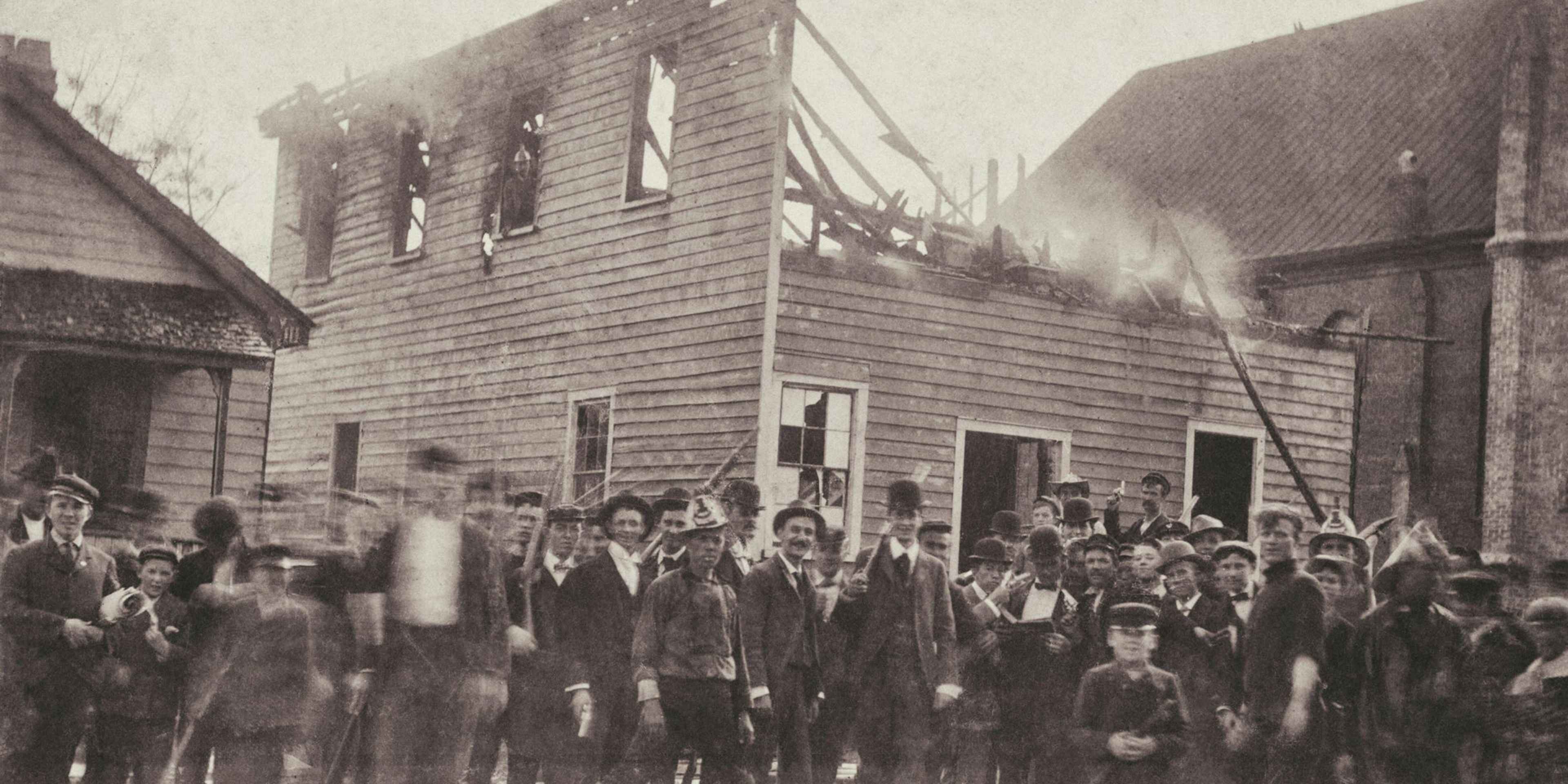
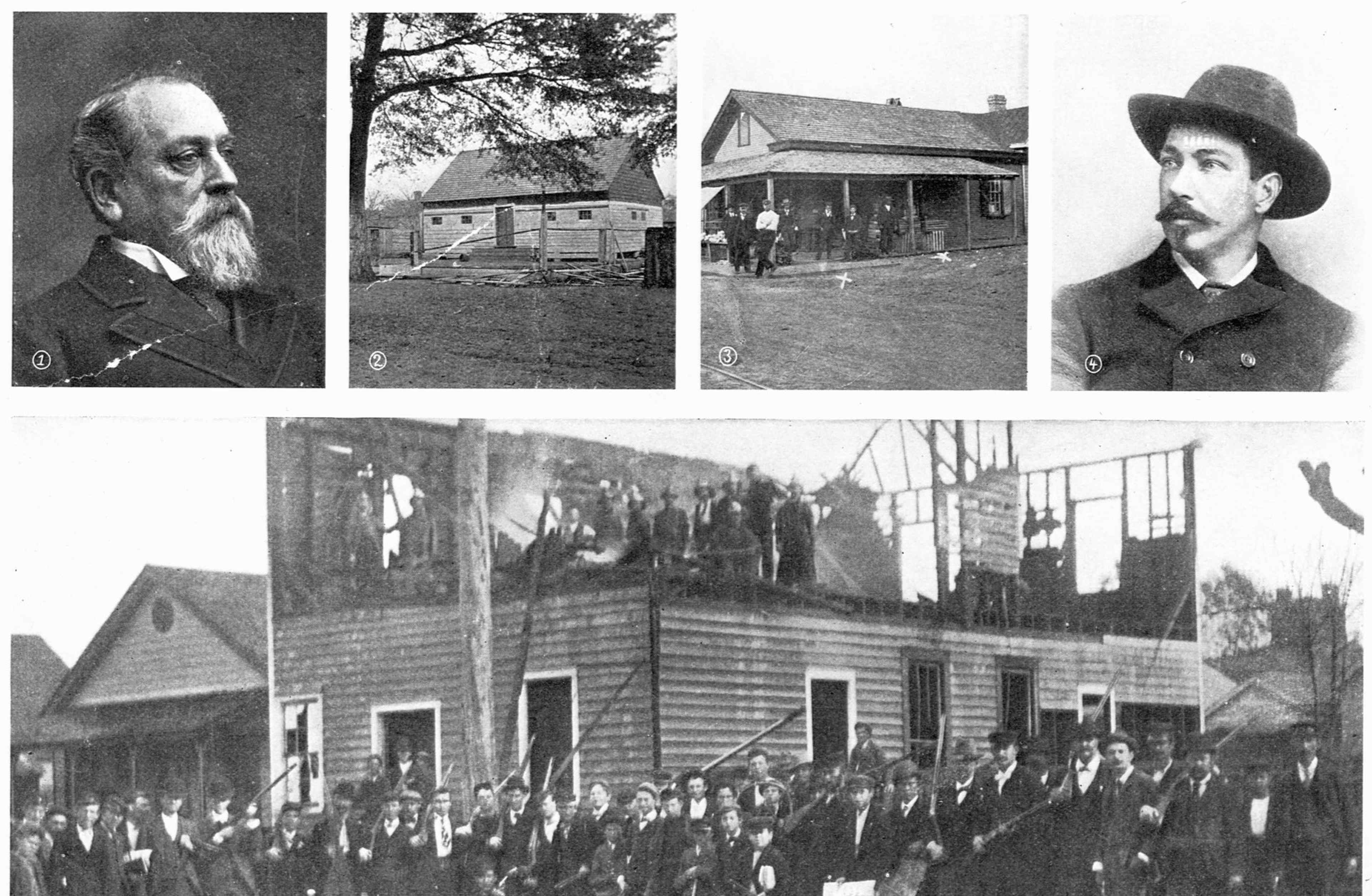
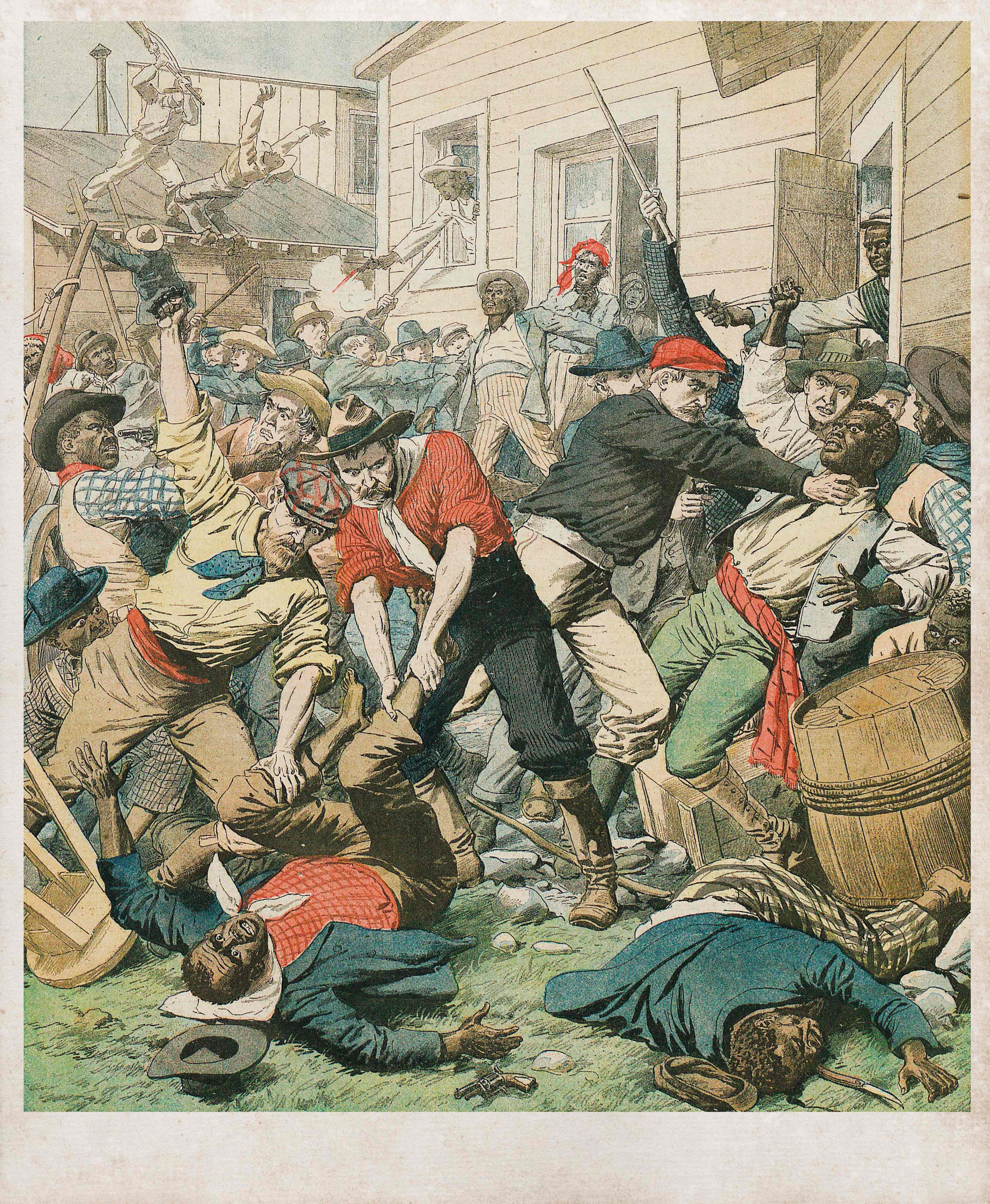
- November 10, 1898 (The Coup and Massacre): When Manly’s response is not received by the 7:30 AM deadline, Waddell leads an armed mob of nearly 2,000 men to the offices of The Daily Record, burning it to the ground. The mob then marches to City Hall. At gunpoint, Mayor Silas P. Wright and the entire biracial city council are forced to resign. Waddell is immediately installed as the illegal new mayor. Concurrently, white vigilantes equipped with a military-grade rapid-fire machine gun begin massacring Black citizens in the streets, murdering between 60 and 300 people.
The Devastating Aftermath and Long-Term Impact on America
The aftermath of the Wilmington coup was immediate and catastrophic. Thousands of Black residents fled into the surrounding swamps to escape the bloodshed, and over 2,100 of the city’s middle-class Black professionals, entrepreneurs, and laborers permanently abandoned the city. Overnight, a booming Black-majority metropolis was transformed into a white-dominated stronghold.
The newly installed white supremacist government systematically coded racial segregation into law, pioneering the Jim Crow system that would define the American South for the next seventy years. In 1900, North Carolina passed a constitutional amendment implementing poll taxes and literacy tests, effectively disenfranchising the state’s Black voters. The number of registered Black voters in North Carolina plummeted from over 125,000 in 1896 to barely 6,100 by 1902.
Though the event was a devastating blow to civil rights, it remains a critical point of study alongside the nation’s later great strides for freedom in US history, showing that progress is never guaranteed and must be actively defended.
Lesser-Known Facts About the 1898 Wilmington Coup
- The Colt Rapid-Fire Machine Gun: The white insurrectionists did not just carry rifles; they purchased a state-of-the-art, military-grade Colt machine gun. This devastating weapon was mounted on a wagon and driven through Black neighborhoods, firing blindly into homes and churches to terrorize residents.
- The Secret “Committee of Nine”: While Waddell was the public face of the coup, a highly secretive group of nine wealthy elite businessmen known as the “Committee of Nine” met behind closed doors to plan the logistics of the armed overthrow and identify which Black citizens to banish from the city.
- The 100-Year Cover-Up: For over a century, the event was scrubbed from mainstream textbooks. Local and state newspapers framed the massacre as a “race riot” sparked by Black instigators, depicting the white vigilantes as heroic citizens who restored “law and order.” It wasn’t until a state-appointed commission published an exhaustive report in 2006 that the state officially recognized the event as a coup d’état.
Why the Wilmington Coup Still Matters Today
The Wilmington Coup of 1898 is not merely a distant historical tragedy; it is a stark, cautionary tale about the fragility of democracy and the dangerous potential of politically motivated disinformation. The coup demonstrated how easily democratic institutions can be subverted when a powerful faction refuses to accept election results and uses violence to capture power. Modern discussions regarding voter suppression, media disinformation, and systemic inequality trace their roots directly back to the dark precedents set in Wilmington. Acknowledging this history is essential to protecting contemporary civil rights and ensuring that such an insurrection never happens again.
People Also Ask (FAQ)
Was anyone ever prosecuted for the Wilmington Coup of 1898?
No. None of the white insurrectionists, vigilantes, or political leaders who planned and executed the massacre and coup were ever arrested, indicted, or prosecuted. In fact, many of the ringleaders went on to have highly successful political careers. Alfred Moore Waddell remained mayor of Wilmington, and Charles Aycock became the Governor of North Carolina in 1901.
How many people actually died in the Wilmington Massacre?
The exact death toll remains unknown. While early official reports claimed that only around a dozen Black citizens died, modern historians and the 2006 Wilmington Race Riot Commission estimate that between 60 and 300 African Americans were murdered during the violence on November 10, 1898.
What was “The White Declaration of Independence”?
This was a proclamation drafted by Wilmington’s white elite on November 9, 1898. It explicitly declared that white men would no longer be ruled by people of African descent, stripped Black citizens of their constitutional voting rights, demanded the resignation of elected Black officials, and asserted that white supremacy was the only acceptable social order.
Conclusion: A Dark Turning Point in American History
The Wilmington coup d’état of 1898 serves as a sobering reminder of how quickly progress can be undone by hatred and political violence. The destruction of Wilmington’s thriving biracial democracy showed that the promises of Reconstruction were fragile and easily crushed under the heel of white supremacy. By remembering the victims, understanding the complex historical context, and examining the mechanisms of the coup, we can better safeguard our modern democratic institutions and strive toward a more just and equitable future.


