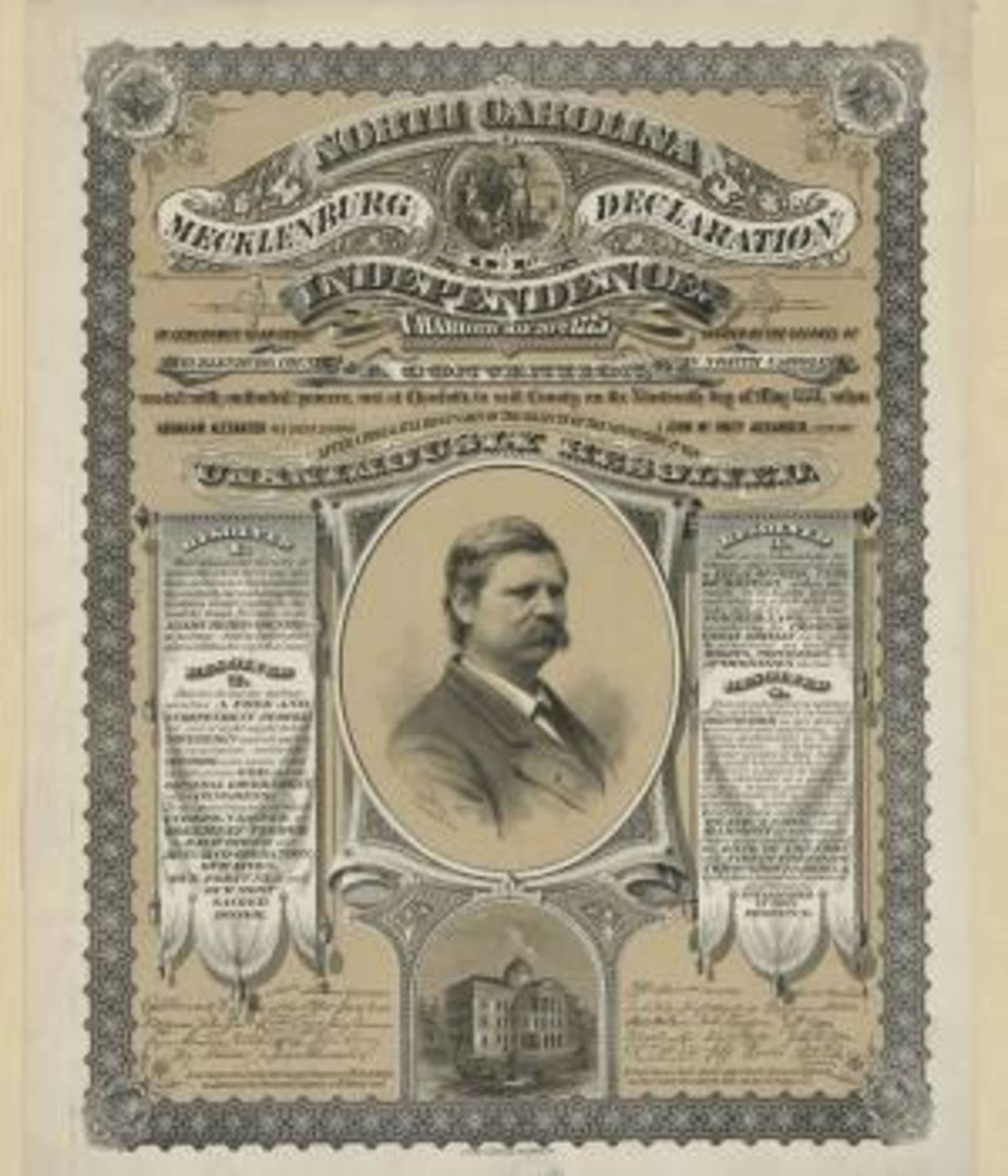
The story of American independence is often told through a sequence of iconic milestones: the Boston Tea Party, the midnight ride of Paul Revere, and the signing of the Declaration of Independence on July 4, 1776. Yet, deep in the historical archives of North Carolina lies a fascinating, highly contested claim that a small southern county beat Thomas Jefferson to the punch by more than a year. Known as the Mecklenburg Declaration of Independence—or simply the “Meck Dec”—this document allegedly severed ties with the British Crown on May 20, 1775. If true, it completely redefines our understanding of the revolutionary timeline, positioning North Carolina as the true cradle of American liberty. Long before the events in Philadelphia took center stage, tension was bubbling across the original 13 colonies, as colonists grew weary of British oppression and sought local autonomy.
The Spark in the Wilderness: Historical Background of 1775
To understand how a remote county in North Carolina could make such a bold claim, we must look at the geopolitics of the era. In May 1775, Mecklenburg County was a rugged, sparsely populated frontier region. The county seat, Charlottetown (now Charlotte), was little more than a dusty crossroads where independent-minded Scotch-Irish Presbyterian settlers had made their homes. These pioneers had a reputation for fierce independence and a deep-seated distrust of royal authority.
On May 19, 1775, a committee of local leaders gathered at the Mecklenburg Courthouse to discuss the ongoing grievances with Great Britain. Mid-meeting, a horse rider arrived bearing shocking news: British soldiers had clashed with American minutemen at the Battle of Lexington and Concord in Massachusetts just a month earlier. The “shot heard ’round the world” had been fired, and innocent American blood had been shed on American soil. Overcome with a mixture of grief and fury, the local leaders under the guidance of Colonel Thomas Polk reportedly stayed up through the night to draft a radical set of resolutions, culminating in the Mecklenburg Declaration of Independence, which was read to a cheering crowd the very next day, May 20, 1775.
Chronology of a Colonial Controversy: Key Events Timeline
The timeline of the “Meck Dec” is a mixture of verified historical acts and disputed oral histories:
- April 19, 1775: The American Revolutionary War officially begins with the Battles of Lexington and Concord in Massachusetts.
- May 19, 1775: News of the battles reaches Charlottetown, sparking a heated meeting of local patriots.
- May 20, 1775: The Mecklenburg Declaration is allegedly drafted, signed by over two dozen delegates, and read aloud from the courthouse steps.
- May 31, 1775: The committee meets again and adopts the historically verified Mecklenburg Resolves, which suspended royal authority without declaring total independence.
- June 1775: Captain James Jack rides on horseback to Philadelphia to deliver these revolutionary documents to North Carolina’s delegates in Congress.
- 1800: A catastrophic fire destroys the home of John McKnitt Alexander, taking the original papers and minutes of the 1775 meeting with it.
- April 1819: The Raleigh Register publishes the text of the Mecklenburg Declaration, reconstructed from memory by Alexander’s son.
- July 1819: Thomas Jefferson reads the article and famously denounces the document as “spurious,” starting a century-long debate.
- 1838: Archivist Peter Force discovers the forgotten May 31 Mecklenburg Resolves printed in a 1775 newspaper, casting immense doubt on the May 20 Declaration.
The Dramatis Personae: Key Figures of the “Meck Dec”
Several critical figures have had their names forever bound to this enduring historical mystery:
- Colonel Thomas Polk: The commander of the Mecklenburg militia who convened the fateful meeting in Charlottetown and read the resolutions to the public.
- John McKnitt Alexander: The secretary of the 1775 committee whose notes survived the war but perished in an 1800 house fire. His attempts to reconstruct the declaration from memory became the foundation of the 1819 publication.
- Captain James Jack: The local tavern owner who undertook a perilous “Paul Revere-esque” ride to deliver Mecklenburg’s statements to the Second Continental Congress in Philadelphia.
- Thomas Jefferson: The legendary author of the 1776 United States Declaration of Independence, who was deeply offended by the “Meck Dec” because its language closely mirrored his own draft, implying he had committed plagiarism.
Causes, Context, and the Power of the Press
To fully grasp this controversy, one must understand how revolutionary ideas were recorded and distributed. Long before this event made waves, the power of print had been established by early American newspapers, which served as vital pipelines for revolutionary ideas. When the Mecklenburg committee drafted their statements, they relied on local couriers and newspapers to spread the word. However, because Mecklenburg was remote, its papers did not gain the immediate, widespread traction of documents printed in Boston or Philadelphia.
The geopolitical stage was primed for rebellion. The Royal Governor of North Carolina, Josiah Martin, had fled his post, and royal authority was disintegrating. The citizens of Mecklenburg felt they had no choice but to establish a temporary, localized form of self-government to prevent total anarchy.
Major Turning Points: The Resolves vs. The Declaration
For decades, North Carolinians proudly pointed to the May 20 Mecklenburg Declaration as proof that they were the first to stand up to the King. However, a major turning point in the historical consensus occurred in 1838. Archivist Peter Force discovered a newspaper from June 1775 containing the Mecklenburg Resolves of May 31, 1775.
The Resolves were a series of highly radical statements, but they differed from the Declaration in one crucial way: they did not officially declare independence. Instead, they declared that all laws and commissions derived from the King were “annulled and vacated” only until the British Parliament addressed colonial grievances. When Captain James Jack arrived in Philadelphia, the delegates at the Continental Congress were still desperately trying to reconcile with King George III and considered such a radical declaration highly premature.
Most modern historians believe that the elderly veterans interviewed in the early 19th century had simply misremembered the details. Over 40 years, their memories of the radical Mecklenburg Resolves of May 31 had morphed into a recollection of a full-blown Declaration of Independence on May 20.
Lesser-Known Facts of the Mecklenburg Mystery
- The Calendar Shift Theory: Some historians argue that the 11-day gap between May 20 and May 31 was simply a confusion over calendar systems. Under the old Julian calendar (which some colonists still unofficially used), the dates shifted by exactly 11 days compared to the modern Gregorian calendar.
- The Plagiarism Accusation: John Adams privately suspected that Thomas Jefferson might have plagiarized the Mecklenburg Declaration, noting that some phrases matched Jefferson’s 1776 document verbatim. Jefferson vehemently denied this, arguing the “Meck Dec” was a modern hoax modeled after his own writing.
- Presidential Backing: Despite historical skepticism, four sitting American presidents—William Howard Taft, Woodrow Wilson, Dwight D. Eisenhower, and Gerald Ford—have traveled to Charlotte to participate in the city’s official “Meck Dec Day” celebrations.
The Long-Term Impact on North Carolina and America
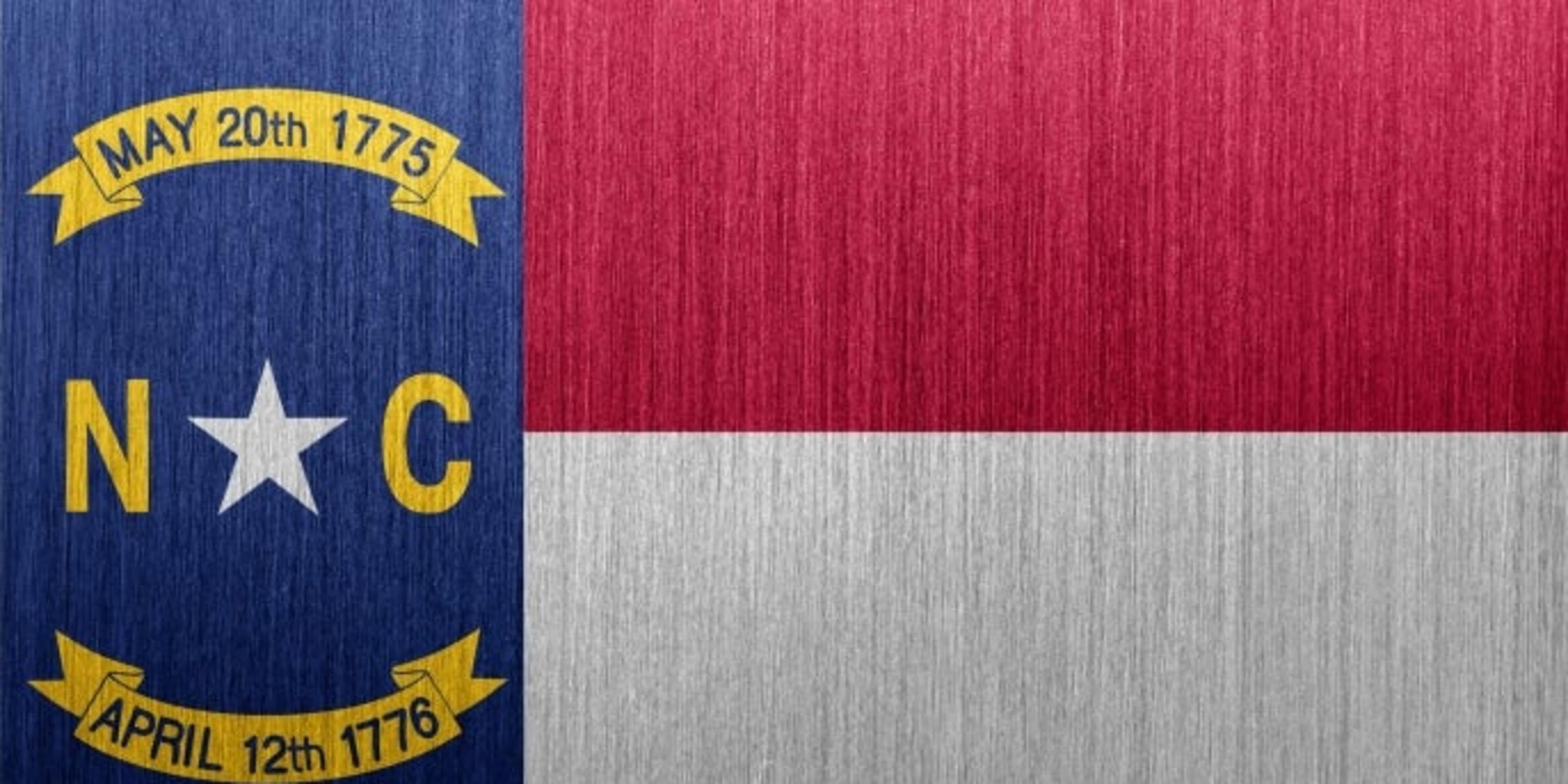
While mainstream historians remain highly skeptical of the “Meck Dec’s” authenticity, its legacy is deeply embedded in the identity of North Carolina. The state’s official flag and state seal proudly display two dates: May 20, 1775 (the Mecklenburg Declaration) and April 12, 1776 (the Halifax Resolves, which was the first official state-wide call for independence). Furthermore, North Carolina license plates still carry the slogan “First in Freedom” as a direct nod to this legendary act of defiance.
Why the Mecklenburg Controversy Still Matters Today
The debate surrounding the Mecklenburg Declaration is a masterclass in how history, memory, and myth-making intersect. It demonstrates how oral histories can shift over decades and how communities construct historical narratives to foster pride and solidarity. Whether the document was real or a product of misremembered patriotic zeal, it highlights the intense, localized revolutionary spirit that pushed the American colonies toward independence.
People Also Ask
What is the difference between the Mecklenburg Declaration and the Mecklenburg Resolves?
The Mecklenburg Declaration (May 20, 1775) is a disputed document that claims to have declared total independence from Britain. The Mecklenburg Resolves (May 31, 1775) are historically verified resolutions that suspended royal authority but stopped short of a permanent declaration of independence.
Why is May 20, 1775, on the North Carolina state flag?
It commemorates the supposed signing of the Mecklenburg Declaration of Independence, a moment of immense local pride and a symbol of the state’s early commitment to liberty.
Did Thomas Jefferson plagiarize the Mecklenburg Declaration?
No. Modern historical consensus is that Thomas Jefferson’s 1776 Declaration of Independence was entirely original, and that the reconstructed 1819 Mecklenburg text accidentally incorporated Jefferson’s famous phrasing when it was written down from memory decades later.
Conclusion: A Hornet’s Nest of Rebellion
Ultimately, whether the citizens of Charlotte signed an official declaration on May 20, 1775, matters less than the undisputed reality of their revolutionary fervor. British General Charles Cornwallis would later refer to Mecklenburg County as a “hornet’s nest” of rebellion. The passion, defiance, and courage of these early North Carolina patriots helped pave the way for the birth of a new nation, securing their place in the grand tapestry of American history.


