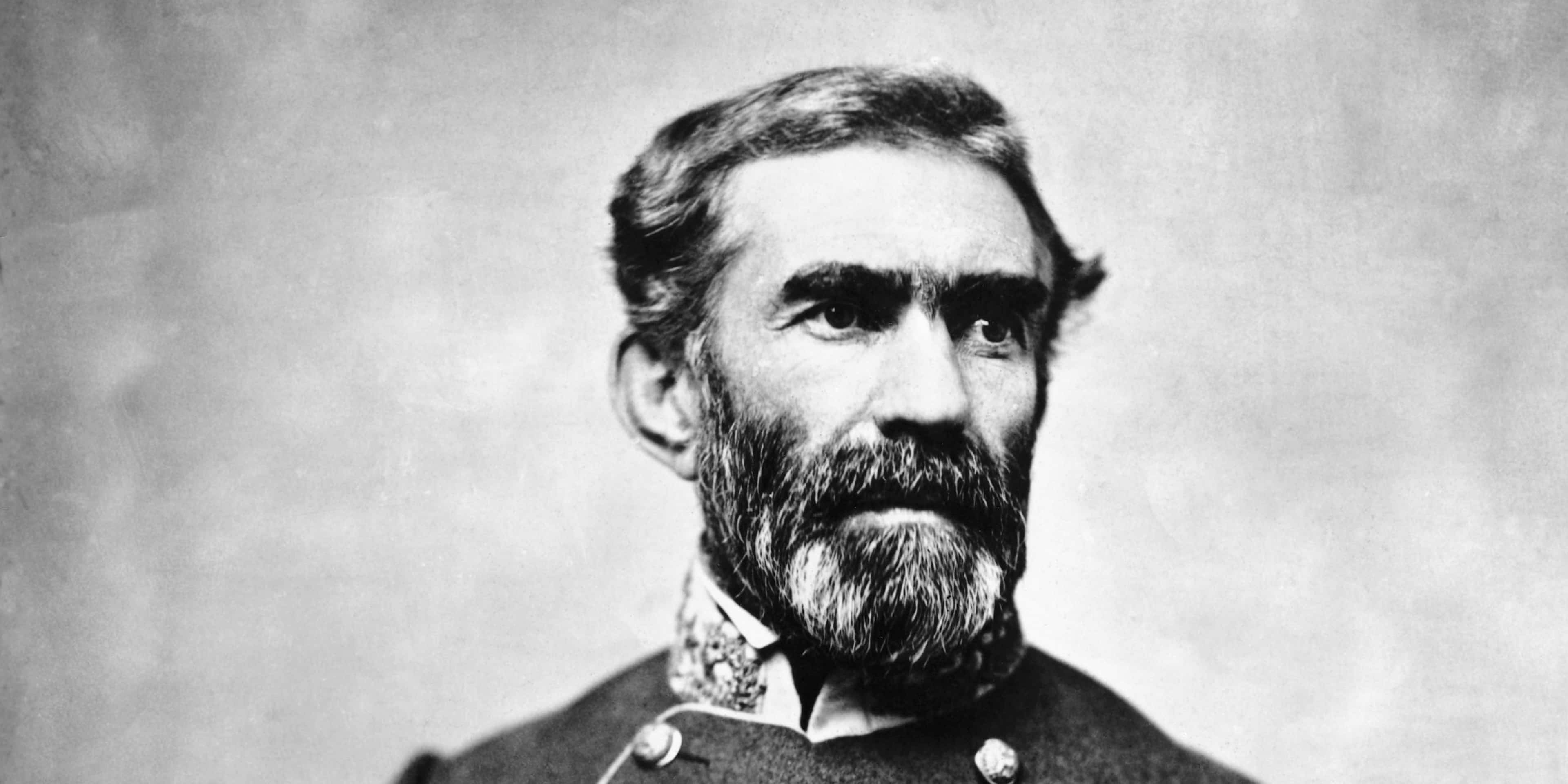
Few military figures in the American Civil War evoke as much intense debate, historical scrutiny, and controversy as General Braxton Bragg. As the primary commander of the Confederate Army of Tennessee, Bragg was central to some of the most critical engagements of the Western Theater, a vital front where the fate of the Confederacy was ultimately decided. From his early days as a highly decorated artillery officer in the Mexican-American War to his tempestuous tenure leading the Western forces, Bragg’s career was defined by brilliant tactical openings undermined by administrative friction, strategic hesitation, and a notorious inability to cooperate with his subordinates. His story is not merely one of battlefield maneuvers, but a compelling study of how personal temperament can alter the course of national history, illustrating the complex sociopolitical dynamics of a nation torn apart. Understanding his legacy offers vital insights into the structural weaknesses of the Confederacy and the relentless mechanics of 19th-century warfare.
Historical Background: From West Point to the Western Theater
Braxton Bragg was born on March 22, 1817, in Warrenton, North Carolina. His family operated on the margins of the Southern aristocracy; his father was a contractor of modest means, and his mother experienced significant social ostracization. Although Bragg’s family struggled financially throughout his youth in North Carolina, unlike some historical figures who grew up as orphans, he benefited from the assistance of a politically connected older brother who helped him secure an appointment to the United States Military Academy at West Point in 1833. Bragg excelled academically, graduating fifth in a class of fifty cadets in 1837.
Commissioned into the 3rd U.S. Artillery, Bragg first saw combat in the Second Seminole War (1835–1842) in Florida, where he developed a reputation for rigid adherence to regulations. He later served under General Zachary Taylor in the Mexican-American War, where his tactical brilliance and courageous defense during the Battle of Buena Vista in 1847 made him a national hero. After resigning from the U.S. Army in 1855, Bragg purchased a sugar plantation in Louisiana, relying heavily on enslaved labor. This dark reality of antebellum southern life stood in stark contrast to the emerging stories of bravery from black heroes throughout US military history who fought fiercely for emancipation and the Union.
Key Events Timeline of Bragg’s Military Career
- March 22, 1817: Born in Warrenton, North Carolina.
- 1837: Graduates 5th in his class from West Point.
- 1847: Becomes a national hero at the Battle of Buena Vista during the Mexican-American War.
- 1855: Resigns from the U.S. Army to operate a sugar plantation in Louisiana.
- 1861: Enters the Confederate Army as a Brigadier General, later promoted to Major General.
- April 1862: Fights at the Battle of Shiloh; promoted to full General following the death of Albert Sidney Johnston.
- Late 1862: Launches the Kentucky Campaign, fighting at Perryville, followed by a costly draw at Stones River.
- September 1863: Wins his greatest tactical triumph at the Battle of Chickamauga.
- November 1863: Suffers a devastating defeat at Chattanooga at the hands of Ulysses S. Grant; resigns command.
- 1864–1865: Serves as military advisor to President Jefferson Davis and oversees coastal defenses.
- September 27, 1876: Dies in Galveston, Texas, at the age of 59.
Important Figures in Bragg’s Civil War Orbit
Bragg’s command was deeply defined by his relationships with both political allies and military rivals. To understand his trajectory, one must examine the key individuals who influenced his career:
- Jefferson Davis: The President of the Confederacy was Bragg’s most steadfast supporter. Davis frequently defended Bragg against a mutinous officer corps, valuing his administrative efficiency and loyalty, even when Bragg’s field decisions proved disastrous.
- General Ulysses S. Grant: Bragg’s ultimate Union nemesis. Grant’s decisive actions during the Chattanooga Campaign shattered Bragg’s siege and forced him out of active field command.
- General William Rosecrans: Bragg’s primary Union opponent during the middle years of the war. Rosecrans outmaneuvered Bragg during the Tullahoma Campaign but suffered a catastrophic defeat at Bragg’s hands at Chickamauga.
- Lieutenant General Leonidas Polk: A powerful Confederate corps commander (and Episcopal bishop) who openly despised Bragg. Polk’s insubordination and delays frequently undermined Bragg’s strategic plans.
Causes and Context: The Struggle for the West
While the Eastern Theater around Richmond captured the public’s imagination, the Western Theater of the Civil War was strategically vital. The vast geography stretching from the Appalachian Mountains to the Mississippi River held the agricultural and industrial resources necessary to sustain the Confederacy. Recognizing this, Confederate leadership tasked the Army of Tennessee with holding this gateway.
Bragg was appointed to command this army due to his unparalleled administrative skills. He was a master of organization, transforming raw recruits into highly disciplined combat units. However, the socio-political climate of the Confederate officer corps—highly sensitive to honor and resistant to strict centralization—clashed violently with Bragg’s uncompromising, abrasive personality. Bragg’s insistence on absolute discipline earned him few friends and many powerful enemies, setting the stage for paralyzing internal conflicts.
Major Turning Points under Bragg’s Command
The Rise: From Shiloh to Kentucky (1862)
Bragg’s first major combat test in the Civil War occurred at the Battle of Shiloh in April 1862. Following the death of General Albert Sidney Johnston, Bragg was promoted to full general. He quickly organized a bold invasion of Kentucky alongside General Edmund Kirby Smith, aiming to rally the state to the Confederate cause. Though his forces achieved tactical successes, most notably at the Battle of Perryville, Bragg chose to withdraw rather than risk his army, a decision that drew fierce criticism from his subordinates and established a pattern of strategic hesitation.
The Zenith: The Battle of Chickamauga (September 1863)
After being pushed out of Tennessee during the brilliant Tullahoma Campaign led by Union General William Rosecrans, Bragg consolidated his forces in northern Georgia. Reinforced by James Longstreet’s corps from the East, Bragg launched a massive counteroffensive at the Battle of Chickamauga. The assault broke the Union line, sending Rosecrans’s army fleeing back to Chattanooga. It was the most significant Confederate victory in the Western Theater, but it came at a staggering cost of over 18,000 Confederate casualties.
The Fall: The Disaster at Chattanooga (November 1863)
Rather than pursuing and destroying the broken Union army, Bragg besieged Chattanooga from the surrounding heights of Lookout Mountain and Missionary Ridge. This delay allowed the Union to reinforce under Ulysses S. Grant. In late November 1863, Grant launched a series of coordinated assaults. At Missionary Ridge, Union soldiers spectacularly routed Bragg’s demoralized forces. This crushing defeat permanently broke the Confederate grip on Tennessee and forced Bragg to resign his command in December 1863.
Long-Term Impact on America
The failures of Bragg’s campaigns in the Western Theater hastened the collapse of the Confederacy. By losing Chattanooga, the door was opened for William Tecumseh Sherman’s Atlanta Campaign and subsequent “March to the Sea,” which sliced through the deep South and broke the back of the rebellion. Bragg’s career illustrated the profound limitations of the Confederate high command, highlighting how internal political division, personal vanity, and lack of unified strategic vision crippled their military efforts.
Captured by Union forces in May 1865, Bragg was paroled shortly thereafter under the evolving policies of Reconstruction, a process tied directly to the debate over how American presidents ended up with the kingly power to pardon former Confederate leaders. In the post-war era, Bragg worked diligently as a civil engineer in Louisiana, Alabama, and Texas, helping to rebuild the physical infrastructure of a nation he had spent four years trying to divide.
Lesser-Known Facts about Braxton Bragg
- An Argument with Himself: A famous peacetime anecdote from his early military career claims that Bragg once served simultaneously as both a company commander and a temporary quartermaster. As company commander, he submitted a request for supplies, which he then denied in his role as quartermaster. When he wrote a rebuttal to his own denial, a superior officer supposedly exclaimed, “My God, Mr. Bragg, you have quarreled with every officer in the Army, and now you are quarreling with yourself!”
- The Assassination Attempt: Bragg’s strictness made him highly unpopular even during his pre-Civil War career. While stationed in the West, an unknown soldier exploded a mortar shell underneath Bragg’s cot. Miraculously, though his quarters were demolished, Bragg escaped without a scratch.
- His Mother’s Dark Legacy: Bragg rarely spoke of his mother, Margaret, who had been imprisoned in North Carolina under suspicion of killing a freed Black man. Although she was eventually acquitted, the scandal cast a long shadow over Bragg’s youth and social standing.
Why It Still Matters Today
Braxton Bragg’s legacy remains highly relevant in modern discussions of historical memory and national values. For over a century, one of the U.S. Army’s largest installations, Fort Bragg in North Carolina, bore his name. In June 2023, as part of a nationwide effort to rename military bases named after Confederate figures, the installation was officially renamed Fort Liberty. This transition highlights how contemporary society continues to grapple with the symbols of the Civil War, questioning whether individuals who fought against the United States government should be honored by its modern institutions.
People Also Ask
Why was Braxton Bragg so unpopular with his men and officers?
Bragg was a severe disciplinarian and a “martinet” who was quick to criticize others but highly sensitive to any pushback. His abrasive personality, tendency to blame subordinates for his own strategic missteps, and refusal to communicate his battle plans clearly fostered an environment of mutual distrust and insubordination within his high command.
What was Braxton Bragg’s greatest victory?
His greatest tactical victory was the Battle of Chickamauga in September 1863. However, because he failed to quickly follow up on the victory and allowed the Union Army to retreat and reinforce at Chattanooga, the long-term strategic value of the triumph was completely lost.
What did Braxton Bragg do after the Civil War?
After losing his Louisiana plantation to Union forces, Bragg worked in various civil engineering capacities. He served as the superintendent of the New Orleans Waterworks, the chief engineer of Alabama, and later as a railroad engineer and state inspector in Texas before his sudden death in 1876.
Conclusion
General Braxton Bragg remains one of the most polarizing figures of the American Civil War. Blessed with an exceptional mind for logistics and organization, his battlefield effectiveness was ultimately paralyzed by his toxic personality and strategic indecisiveness. His life and career serve as a powerful historical reminder that successful leadership requires not just technical skill and rigid discipline, but empathy, communication, and the ability to inspire trust among those you lead.


