The scorching summer heat of July 1863 bore witness to the defining crucible of the American Civil War: the Battle of Gettysburg. For three agonizing days, from July 1 to July 3, the sleepy crossroads town of Gettysburg, Pennsylvania, became the epicenter of a divided nation’s destiny. Over 160,000 Union and Confederate soldiers collided in a chaotic symphony of musketry, artillery, and raw human courage. Often hailed as the high-water mark of the Confederacy, this colossal confrontation halted General Robert E. Lee’s ambitious second invasion of the North, fundamentally shattering the illusion of Confederate invincibility. It was not merely a military victory for the Union’s Army of the Potomac; it was a profound spiritual and political turning point that salvaged the fractured experiment of American democracy. Following the unimaginable slaughter, President Abraham Lincoln would deliver the Gettysburg Address, forever tying the sacrifice of the fallen to a ‘new birth of freedom.’ Understanding this titanic clash is essential to understanding the very soul of modern America.
Historical Background and the Catalysts of Conflict
To understand why the Battle of Gettysburg occurred, one must look at the geopolitical and military landscape of mid-1863. The Confederate Army of Northern Virginia, commanded by the brilliant General Robert E. Lee, was riding high after a stunning victory at the Battle of Chancellorsville in May. Seeking to capitalize on this momentum, Lee proposed a daring strategy: invade the North. By bringing the war into Pennsylvania, Lee hoped to relieve the pressure on war-torn Virginia, gather vital food and livestock from rich northern agricultural lands, and strengthen the growing anti-war movement in the North. Furthermore, Lee believed that a decisive Confederate victory on Northern soil would finally force Great Britain and France to officially recognize and aid the Confederacy.
On the Union side, morale was severely depleted after a series of military blunders and losses. President Abraham Lincoln was desperately searching for a general who could effectively counter Lee. Just three days before the battle commenced, Lincoln appointed Major General George G. Meade to lead the Army of the Potomac. Meade inherited a massive army but had almost no time to plan a campaign, setting the stage for a sudden, unpredictable collision in the hills of Pennsylvania.
The Three-Day Battle: A Chronological Timeline
July 1, 1863 – Day One: The Unplanned Collision
The battle did not begin with a grand tactical plan; instead, it started as an accidental encounter. On the morning of July 1, Confederate division commander Henry Heth sent troops toward Gettysburg to search for supplies. There, they collided with Union cavalry under Brigadier General John Buford. Recognizing the tactical importance of the high ground surrounding the town, Buford ordered his men to dismount and conduct a fighting retreat to buy time for the Union infantry to arrive. Although the Union forces were initially outnumbered and pushed back through the streets of Gettysburg, they managed to retreat and fortify the formidable high ground south of town, specifically Cemetery Hill and Culp’s Hill, setting up a strong defensive perimeter.
July 2, 1863 – Day Two: Assaults on the Flanks
With both armies fully gathered, General Lee sought to crush the Union forces by attacking their flanks. The Union defensive line had formed a shape resembling a giant fishhook, stretching from Culp’s Hill and Cemetery Hill down to the rocky eminences of Little Round Top and Big Round Top. On the afternoon of July 2, Confederate forces launched fierce assaults on the Union left. This resulted in brutal, close-quarters combat in legendary locations such as the Peach Orchard, the Wheatfield, and Devil’s Den. The peak of this drama occurred on Little Round Top, where Colonel Joshua Lawrence Chamberlain and his 20th Maine Regiment ran out of ammunition but successfully defended the Union flank by executing a desperate, sweeping bayonet charge.
July 3, 1863 – Day Three: Pickett’s Charge and the Final Climax
Believing the Union flanks had been weakened, Lee decided to stake everything on a massive, direct assault against the Union center on Cemetery Ridge. Following a deafening two-hour artillery duel, approximately 12,500 Confederate soldiers under Major General George Pickett stepped out of the tree line and marched across nearly a mile of open field. This assault, famously known as Pickett’s Charge, was met with devastating Union artillery and rifle fire. Although a tiny fraction of Confederates briefly breached the Union line at a point known as the ‘High Water Mark,’ they were quickly overwhelmed. The charge was a catastrophic failure, resulting in over 6,000 Confederate casualties. On July 4, under the cover of rain, Lee began his long, somber retreat back to Virginia.
Key Historical Figures and Their Legacies
Several prominent individuals shaped the outcome and lasting legacy of this historic battle:
- General Robert E. Lee: The iconic Confederate commander whose supreme confidence in his infantry led to tactical errors, particularly the tragic decision to launch Pickett’s Charge.
- Major General George G. Meade: The meticulous Union general who, despite being new to his command, utilized defensive advantages beautifully and successfully coordinated his corps commanders.
- Colonel Joshua Lawrence Chamberlain: The academic-turned-soldier whose split-second decision to charge down Little Round Top saved the Union army from being flanked and potentially destroyed.
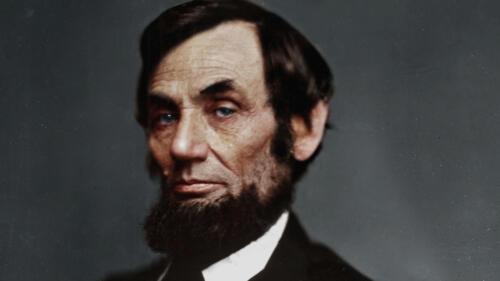
- President Abraham Lincoln: Although he was not present on the battlefield during the fighting, his leadership guided the nation through the dark aftermath. Lincoln’s profound rhetoric reflected the deep ideals found in the Founding Fathers’ visionary documents, giving ultimate meaning to the horrific sacrifice of the Union dead.
The Long-Term Impact on the American Nation
The victory at Gettysburg was a monumental turning point that fundamentally shifted the trajectory of the American Civil War. When coupled with General Ulysses S. Grant’s capture of Vicksburg, Mississippi, on July 4, 1863, the Union had gained complete control of the Mississippi River and halted the Confederate invasion of the North. Tactically, the Confederacy would never recover the manpower or resources lost during those three days. Geopolitically, the defeat ended any hope of European recognition for the South, isolating the Confederacy on the global stage.
Furthermore, the battle accelerated the social and constitutional evolution of the United States. It solidified the North’s commitment to ending slavery and reshaped the national identity. This conflict also served as a proving ground for diverse communities, contributing to the rich legacy of black heroes throughout U.S. military history who fought for the promise of true freedom. In the decades that followed, the trauma of Gettysburg would influence national discussions on peace, reconciliation, and the moral boundaries of warfare, mirroring the complex history of anti-war movements in America.
Fascinating and Lesser-Known Facts
- The Myth of the Shoe Warehouse: While popular history suggests the battle started because Confederate soldiers were searching for shoes, historical records show that while shoes were desperately needed, the initial clash was actually an unplanned meeting between reconnaissance forces.
- The Tragic Fate of Jenny Wade: The only direct civilian casualty of the battle was 20-year-old Mary Virginia ‘Jenny’ Wade, who was struck by a stray Confederate bullet while baking bread in her sister’s kitchen for Union soldiers.
- The Carnage of the Horses: It was not only human lives that were lost; more than 3,000 horses perished during the battle. The town’s residents spent weeks burning and burying the carcasses to prevent the spread of disease.
Why Gettysburg Still Matters Today
Today, the rolling hills of Gettysburg National Military Park stand as a solemn monument to the price of division. The battle reminds us of the fragility of democracy and the monumental cost of safeguarding civil liberties. In a modern era marked by political polarization, Gettysburg serves as a powerful historical warning: a house divided against itself cannot stand, and the preservation of unified, democratic principles requires constant dedication and mutual understanding.
People Also Ask
What was the bloodiest battle of the American Civil War?
The Battle of Gettysburg was the bloodiest battle of the Civil War, resulting in an estimated 51,000 casualties (killed, wounded, captured, or missing) over the course of three days.
Why is the Battle of Gettysburg considered a turning point?
It is considered the turning point because it shattered General Robert E. Lee’s offensive capabilities, permanently prevented a Southern invasion of the North, and convinced European powers to withhold diplomatic recognition of the Confederacy.
What did Abraham Lincoln say in the Gettysburg Address?
Lincoln spoke for just over two minutes, delivering a powerful tribute that framed the war not as a mere geopolitical conflict, but as a test of whether a nation dedicated to human equality could endure.


