On the frigid, rain-swept morning of February 6, 1862, the trajectory of the American Civil War shifted dramatically along the muddy banks of the Tennessee River. The Battle of Fort Henry emerged as the first significant Union victory of the conflict, shattering the illusion of Confederate invincibility in the Western Theater and establishing a crucial template for combined army-navy operations. Prior to this engagement, the Union had struggled to find strategic momentum, but the sudden fall of this poorly positioned earthen fort galvanized Northern morale and opened a watery highway directly into the Confederate heartland. Orchestrated by an ambitious but then-unproven Brigadier General Ulysses S. Grant and the stoic Flag Officer Andrew Hull Foote, the assault proved that the key to dismantling the Southern rebellion lay not just in massive land clashes, but in dominating the vital river systems that served as the Confederacy’s economic and logistical arteries. Understanding this pivotal confrontation is essential, as it set the stage for the rise of legendary commanders, redefined naval warfare with the introduction of ironclad gunboats, and initiated a domino effect that would ultimately tear the Western Confederacy apart.
Historical Background: A Flawed Fortress on the Water
To understand the Battle of Fort Henry, one must look back to the spring of 1861 when Tennessee formally seceded from the Union. Southern leaders desperately hoped that Kentucky would join their cause, which would have established a highly defensible natural border along the Ohio River. However, Kentucky’s declaration of neutrality forced Tennessee’s governor, Isham G. Harris, to hastily organize a defensive line along the state’s northern border. He commissioned engineers to select sites to defend the Cumberland and Tennessee rivers—two major water highways that flowed south directly into the Confederate interior.
The site chosen for Fort Henry on the eastern bank of the Tennessee River was, from its inception, an engineering disaster. Selected by state engineers under intense political pressure to keep fortifications within Tennessee’s borders, the fort was built on low-lying floodplains. Named in honor of Confederate Senator Gustavus Henry, the five-sided, open-bastioned earthen fort was designed to block Union shipping traffic. Unfortunately, the engineers overlooked the fact that during late winter and spring, the Tennessee River regularly overflowed its banks. By the time of the Union offensive in early 1862, the fort was already partially submerged by rising floodwaters, leaving its garrison cold, damp, and highly susceptible to illness.
Causes and Context: The Fight for the Great Waterways
In the early months of 1862, the Western Theater of the Civil War was defined by a struggle for logistical control. The Confederacy possessed vast territories but lacked the dense railroad networks of the North. Consequently, both sides recognized that rivers—specifically the Mississippi, the Tennessee, and the Cumberland—were the true strategic keys to the Upper South. Controlling these rivers meant the Union could bypass overland defenses, transport thousands of troops deep into enemy territory, and cut off vital supply lines.
The Union command structure in the West was initially fragmented. Major General Henry Halleck, commanding the Department of the Missouri, and Brigadier General Don Carlos Buell, leading the Department of the Ohio, operated independently. Eager to outshine Buell and under pressure from President Abraham Lincoln to produce a decisive victory, Halleck finally authorized a joint army-navy expedition on January 30, 1862. The objective was clear: capture Fort Henry on the Tennessee River, and then quickly pivot to Fort Donelson, located just twelve miles away on the Cumberland River.
The reliance on river systems to bypass heavily fortified overland positions was not a new concept in American conflict; indeed, strategic transport along waterways was a hallmark of the Revolutionary War timeline and battles, where controlling rivers often decided the fate of entire colonies. In the Civil War, this maritime approach was supercharged by industrial-era steam power and iron armor.
The Key Events Timeline of February 1862
The campaign to take Fort Henry unfolded rapidly over just a few days, culminating in a short but incredibly intense bombardment. Below is the chronological breakdown of the events:
- January 30, 1862: General Halleck officially authorizes Brigadier General Ulysses S. Grant and Flag Officer Andrew H. Foote to launch an attack on Fort Henry.
- February 4–5, 1862: Grant lands two Union divisions—approximately 15,000 soldiers—just north of Fort Henry on the eastern bank of the river, while a small force occupies the high ground at Fort Heiman on the western bank to prevent Confederate enfilading fire.
- February 5, 1862: Confederate Brigadier General Lloyd Tilghman realizes his position at Fort Henry is untenable due to rising floodwaters and the approaching Union army. He begins making preparations to evacuate his main force.
- February 6, 1862 (Morning): Grant’s infantry divisions begin their march toward the fort but are severely delayed by ankle-deep mud and flooded roads.
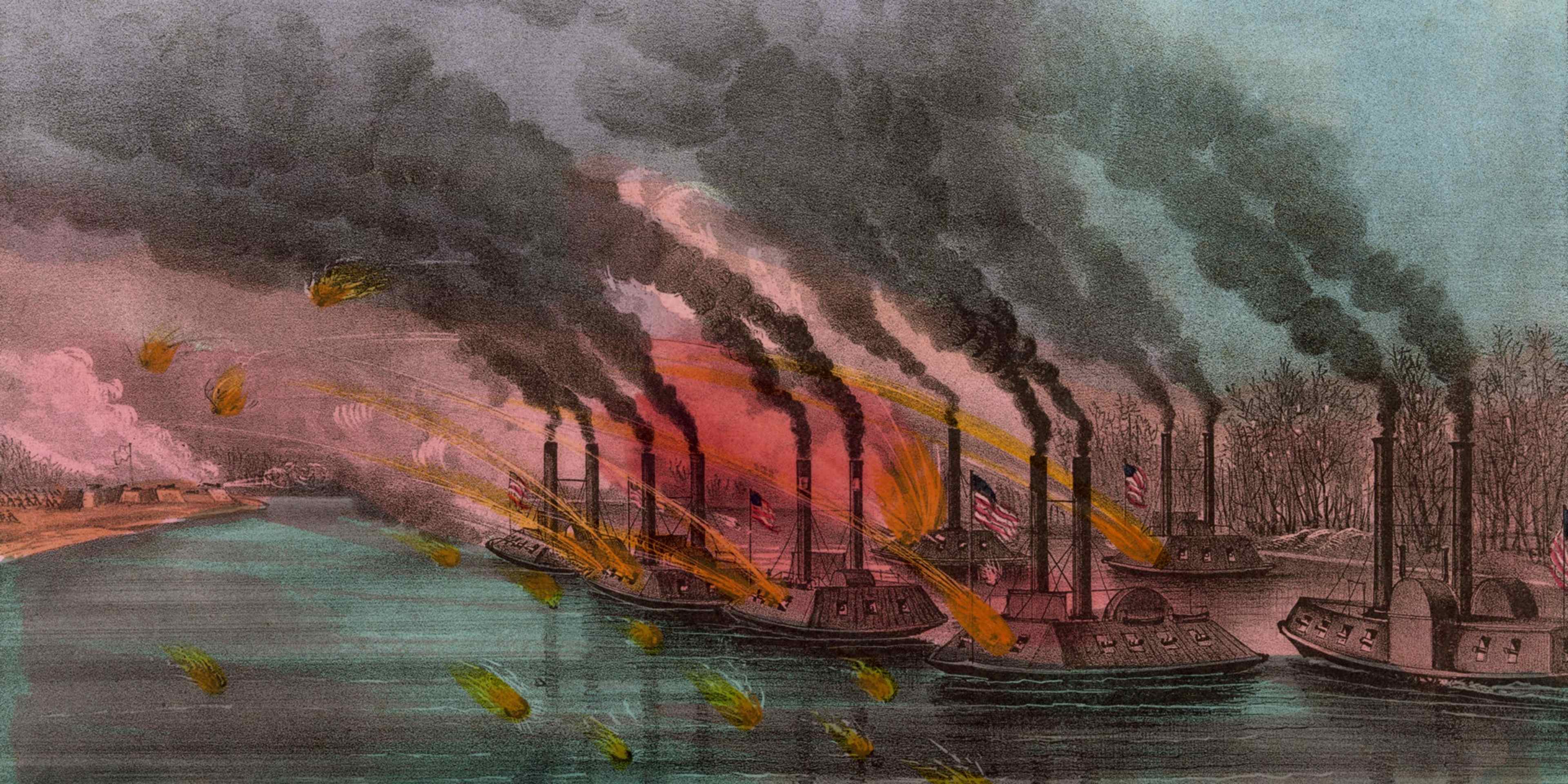
- February 6, 1862 (Noon): Flag Officer Foote’s Western Flotilla of seven gunboats (including four experimental ironclads) advances and opens a fierce bombardment from less than 300 yards away.
- February 6, 1862 (Early Afternoon): After nearly two hours of devastating naval gunfire that disables most of the fort’s heavy artillery, Tilghman surrenders the fort directly to Foote.
Important Figures and Their Lasting Impact
Several key figures left an indelible mark on American history through their actions during this brief but crucial engagement:
Brigadier General Ulysses S. Grant
At the start of 1862, Ulysses S. Grant was a relatively obscure officer whose military career had been plagued by pre-war failures and rumors of alcoholism. His aggressive planning and seamless cooperation with the Navy at Fort Henry showcased his operational brilliance. The victory catapulted Grant into the national spotlight, initiating a trajectory that would lead him to become the General-in-Chief of the Union Army and, eventually, the 18th President of the United States.

Flag Officer Andrew Hull Foote
A devout Christian and strict disciplinarian, Foote commanded the Union’s Western Flotilla. His tactical boldness at Fort Henry proved the combat viability of ironclad warships. Under his command, the gunboats bore the brunt of the fighting, demonstrating that naval power alone could reduce an earthen fortification under the right conditions. Foote’s aggressive leadership set a high standard for joint-service operations.
Brigadier General Lloyd Tilghman
Faced with overwhelming odds and a half-submerged fort, Tilghman executed a pragmatic withdrawal, sending over 3,000 of his men to nearby Fort Donelson. While not often studied alongside the most brilliant military retreats in history, this movement saved the bulk of his force to fight another day. Tilghman chose to remain behind with a small contingent of approximately 70 artillerymen to man the guns and cover the retreat, sacrificing his own freedom to save his army.
Major Turning Points: When Steam, Iron, and Mud Collided
The Battle of Fort Henry was decided by three critical turning points that sealed the fate of the Confederate defense:
First, the environmental factor was insurmountable. Unseasonably heavy rains had caused the Tennessee River to rise so high that parts of Fort Henry were literally underwater. The powder magazines were damp, several gun emplacements were flooded, and the soldiers were shivering and ill. The physical environment did more to weaken the fort’s defense than any Union infantry maneuver.
Second, the introduction of the Union’s “City-class” ironclad gunboats revolutionized naval warfare. These vessels, armored with thick iron plating, could steam directly into the teeth of enemy fire. Although a Confederate shell managed to penetrate the boiler of the USS Essex, filling the ship with scalding steam and causing severe casualties, the rest of the ironclad fleet pressed on relentlessly, hammering the fort’s earthen walls at point-blank range.
Third, the decision by Tilghman to evacuate his forces changed the strategic outcome. Rather than allowing his entire 3,400-man garrison to be captured or slaughtered, he recognized the futility of holding the drowned fort. His choice to send the infantry overland to Fort Donelson preserved vital Confederate manpower, ensuring that the upcoming Battle of Fort Donelson would be a far more formidable challenge for Grant’s forces.
Long-Term Impact on America
The fall of Fort Henry on February 6, 1862, had profound strategic, political, and societal consequences for a fractured United States. Strategically, it cracked the center of the Confederate defensive line in the West. With Fort Henry captured, the Tennessee River was fully opened to Union gunboats all the way to Muscle Shoals, Alabama. This effectively severed the Memphis and Charleston Railroad, a vital east-west supply artery for the South.
Politically, the victory provided a desperate morale boost to a Northern public weary of military setbacks in the East. It demonstrated that the Union had the industrial capacity and strategic vision to win decisive campaigns. Furthermore, it set up the subsequent capture of Fort Donelson just ten days later, which forced the Confederates to evacuate Nashville, making it the first Confederate state capital to fall into Union hands.
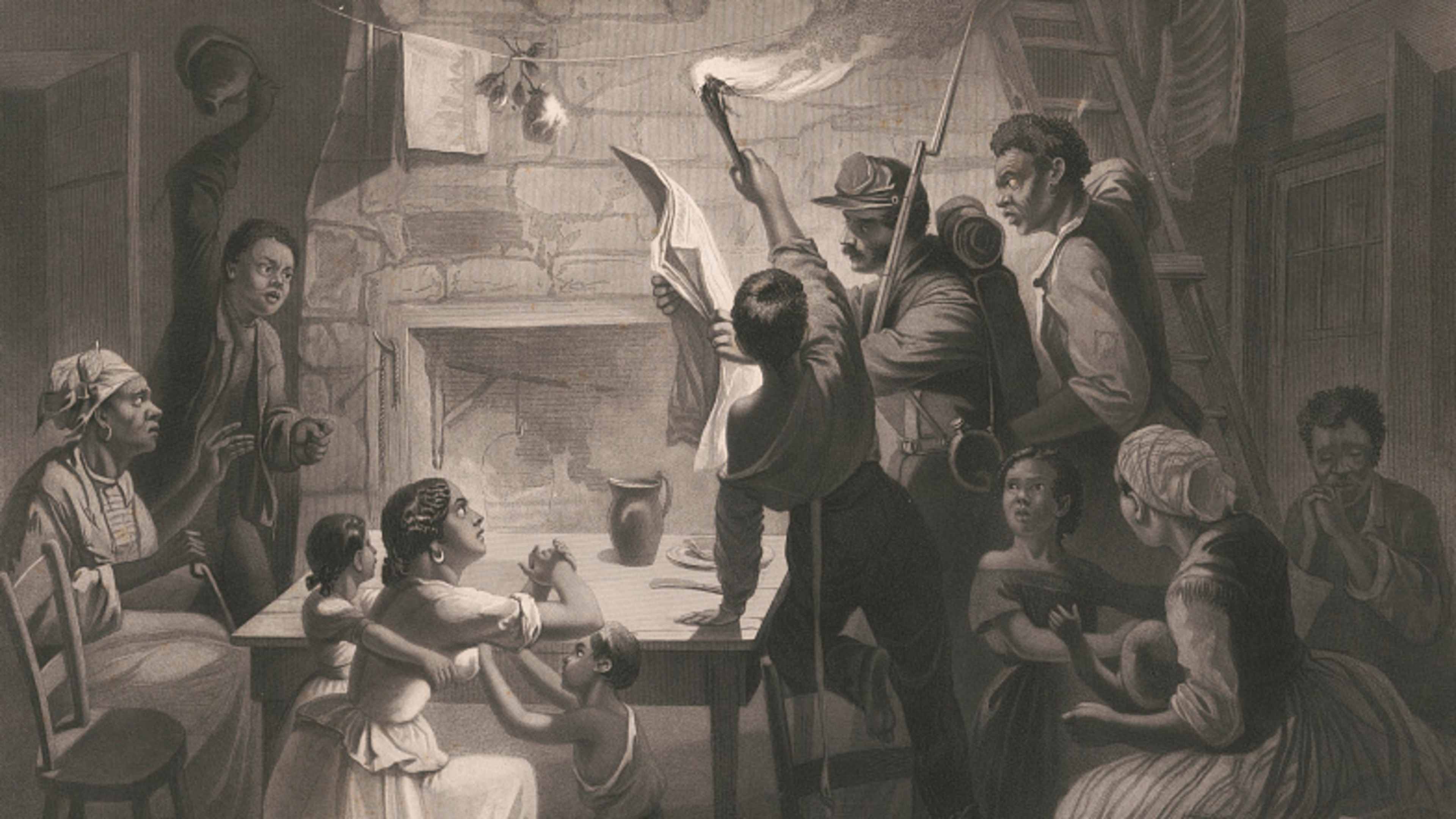
As the Civil War progressed from a war to preserve the Union into a revolutionary struggle for human liberation, the ranks of the Union military swelled with African American recruits who served with immense bravery. The legacy of these combatants is celebrated today alongside the many Black heroes throughout US military history who fought for freedom and equality.
Lesser-Known Facts About the Battle of Fort Henry
- The Fort is Now Completely Underwater: Today, the actual site of Fort Henry is submerged beneath the waters of Kentucky Lake. In the 1930s, the Tennessee Valley Authority constructed the Kentucky Dam for flood control, permanently drowning the historic fort. However, the outer entrenchments and nearby Fort Heiman remain above water and are preserved as part of the Fort Donelson National Battlefield.
- A Navy-Only Victory: Due to the terrible mud and flooded creeks, Grant’s infantry was completely delayed and did not arrive until after the battle was over. When Flag Officer Foote’s sailors rowed through the flooded sally port of the fort to accept General Tilghman’s surrender, not a single Union soldier had fired a shot on land.
- The Failed “Torpedoes”: The Confederates tried to deploy early contact mines, known then as torpedoes, in the river to blow up the approaching Union gunboats. However, due to poor manufacturing and wet gunpowder, the devices failed to detonate and simply floated harmlessly past the ironclads.
Why It Still Matters Today
The Battle of Fort Henry remains highly relevant to modern military historians and civil engineers alike. It serves as a classic textbook study in the dangers of poor site selection and engineering. The disaster of building a vital military stronghold on a known floodplain highlights how environmental awareness is just as critical as firepower in any strategic endeavor.
Furthermore, the battle showcases the power of technology and adaptability. The rapid development and deployment of ironclad gunboats represent an early example of the American military-industrial complex adapting to new challenges. Today, as global militaries navigate cyber warfare and drone technology, the transition from wooden ships to ironclads at Fort Henry stands as a timeless reminder of how technological superiority can completely rewrite the rules of conflict overnight.
People Also Ask
Who won the Battle of Fort Henry?
The Union won the Battle of Fort Henry on February 6, 1862. It was a joint army-navy victory, though the actual fighting was carried out almost entirely by Flag Officer Andrew H. Foote’s naval gunboats due to the Union army being delayed by muddy roads.
Where was Fort Henry located?
Fort Henry was located on the eastern bank of the Tennessee River in Stewart County, Tennessee, near the Kentucky border. Today, the site of the fort is submerged under Kentucky Lake, which was created by damming the river in the 1930s.
How many casualties occurred at the Battle of Fort Henry?
Casualties were relatively low compared to later Civil War battles. The Union suffered approximately 40 casualties (including those injured or killed by a boiler explosion on the USS Essex), while the Confederates suffered around 80 casualties, which included the captured garrison crew left behind to surrender.
Conclusion
The Battle of Fort Henry may have been a brief, lopsided engagement, but its ripples were felt across the entire landscape of the American Civil War. By proving the power of combined-arms river operations and exposing the structural vulnerabilities of the Confederate western defense, Grant and Foote set a relentless momentum in motion. The fall of Fort Henry was not just a localized victory; it was the opening salvo of a campaign that would eventually split the Confederacy, liberate thousands of enslaved individuals, and redefine the nature of modern American warfare forever.


