The American Revolutionary War remains one of the most transformative epochs in global history, representing a bold leap from colonial subservience to independent nationhood. Spanning from 1775 to 1783, this epic struggle was not merely a series of military engagements but a profound ideological battle for liberty, representation, and self-determination. To fully comprehend this monumental era, examining the Revolutionary War timeline, facts, and battles is essential. It reveals how a loosely organized coalition of provincial farmers and merchants challenged the world’s most formidable military empire, the Kingdom of Great Britain. This conflict laid the groundwork for modern constitutional democracy, altering the trajectory of global politics forever. Understanding this history means exploring the complex socio-political landscape, the unsung heroes of the battlefields, and the complicated alliances that shaped the birth of the United States.
The Seeds of Revolution: Historical Background and Causes
The roots of the American Revolution were planted in the fertile but turbulent soil of the mid-18th century. For over a century, Great Britain had practiced a policy of salutary neglect, allowing the North American colonies a high degree of local autonomy. However, the landscape shifted dramatically following the French and Indian War (1756–1763). While this conflict successfully ousted French power from North America, it left the British Treasury with a staggering national debt. To recover these costs, the British Parliament abandoned its hands-off policy and began imposing direct taxes on the colonies.
For the colonists, understanding the structural makeup of the 13 colonies provides essential context. These distinct regions had developed their own unique economies, cultures, and governance systems. When Britain introduced the Stamp Act of 1765, the Townshend Acts of 1767, and the Tea Act of 1773, it sparked widespread outrage. The colonists did not necessarily object to the concept of taxation itself, but rather to the absolute lack of colonial representation in the British Parliament. The rallying cry of “No taxation without representation” became the unifying doctrine of the rebellion.
Tensions escalated from heated rhetoric to physical violence. In 1770, the Boston Massacre resulted in the deaths of five colonists when British soldiers fired into an angry mob. Three years later, in December 1773, the Sons of Liberty executed the Boston Tea Party, dumping 342 chests of tea into the harbor. In retaliation, Parliament passed the Coercive Acts (referred to by colonists as the Intolerable Acts), closing Boston Harbor and suspending Massachusetts’ colonial charter. To fully grasp the socio-economic diversity and political climate of these regions, exploring these 13 facts about the 13 colonies is highly recommended, as it reveals how disparate communities consolidated into a unified force.
A Chronological Revolutionary War Timeline
The war progressed through distinct phases, moving from localized skirmishes in New England to a global war of attrition, and finally to a decisive campaign in the American South.
Phase 1: The Spark of Armed Rebellion (1774–1776)
- September 1774: The First Continental Congress meets in Philadelphia to draft a declaration of rights and organize a boycott of British goods.
- April 19, 1775: The Battles of Lexington and Concord erupt, marking the infamous “shot heard round the world.”
- June 17, 1775: The Battle of Bunker Hill occurs. Although technically a British victory, the heavy Redcoat casualties prove that the colonial militia can stand toe-to-toe with professional imperial soldiers.
- July 4, 1776: The Second Continental Congress adopts the Declaration of Independence. These revolutionary ideas did not appear out of thin air; they were deeply rooted in decades of localized self-governance, much of which began when the Mayflower Compact laid a foundation for democracy in early New England.
Phase 2: The Struggle for Survival and Global Intervention (1776–1778)
- August–September 1776: General William Howe routs Washington’s forces in the Battle of Long Island, forcing a desperate American retreat across New Jersey.
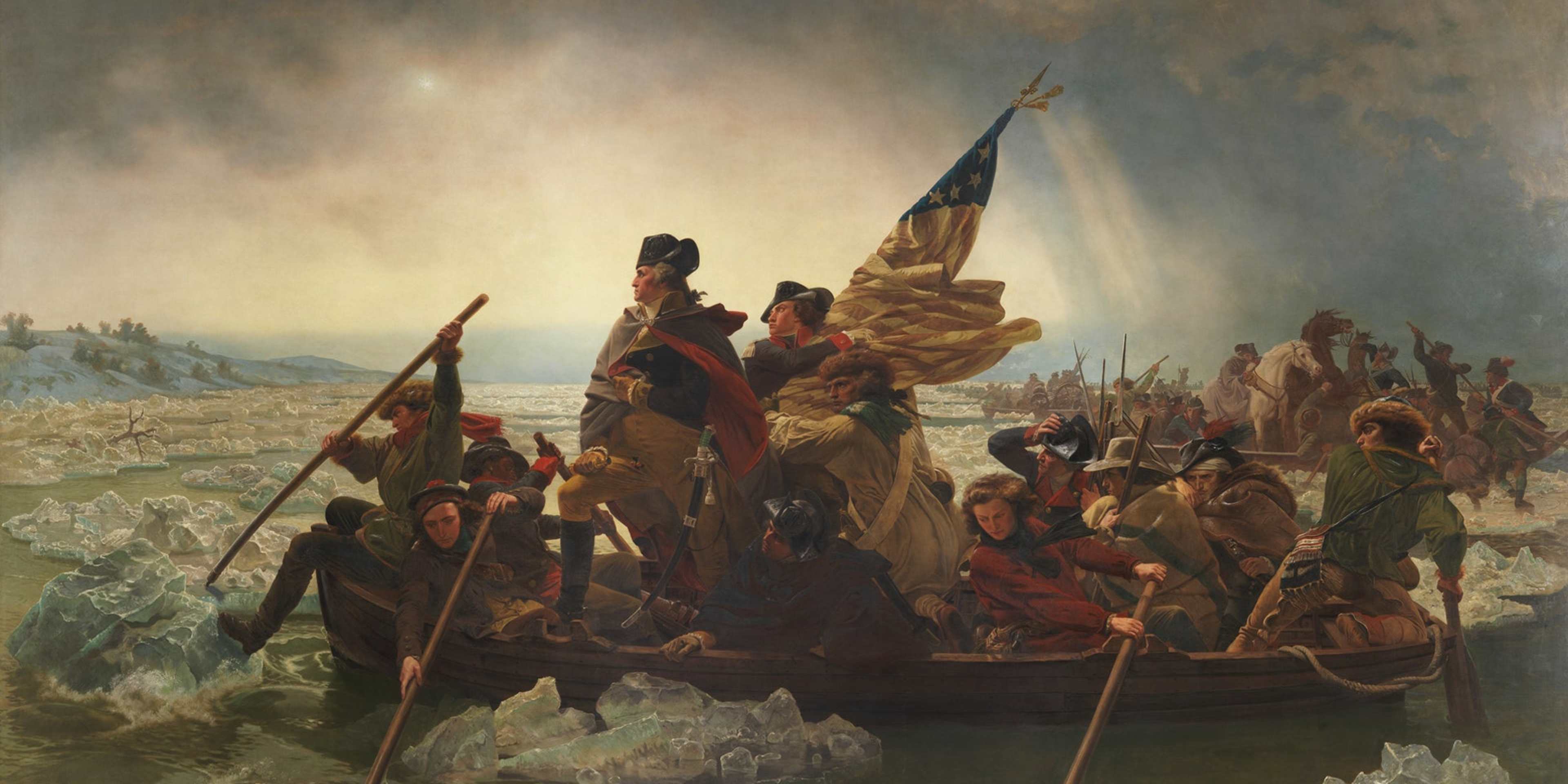
- December 25, 1776: Washington leads a daring night crossing of the icy Delaware River to secure a stunning surprise victory against Hessian mercenaries at Trenton, reviving the sagging morale of the revolution.
- September–October 1777: The Battles of Saratoga culminate in the surrender of British General John Burgoyne. This monumental victory convinces France to enter the war as an open ally of the United States.
- Winter 1777–1778: The Continental Army undergoes grueling, transformative training at Valley Forge under the strict guidance of Baron Friedrich von Steuben.
Phase 3: The Southern Campaign and Ultimate Victory (1778–1783)
- May 1780: The British capture Charleston, South Carolina, launching an aggressive southern offensive to exploit Loyalist sentiments.
- January 1781: American forces led by Brigadier General Daniel Morgan achieve a brilliant tactical victory over the British at the Battle of Cowpens.
- October 19, 1781: Joint French and American forces trap Lord Cornwallis at the Siege of Yorktown, forcing his surrender and effectively ending major combat operations in North America.
- September 3, 1783: The Treaty of Paris is signed, formally recognizing the independence of the United States.
Key Historical Figures and Their Legacies
The success of the American Revolution relied heavily on a diverse array of military commanders, diplomats, and theorists. Their unique contributions shaped not only the outcome of the war but the institutional foundations of the new nation.
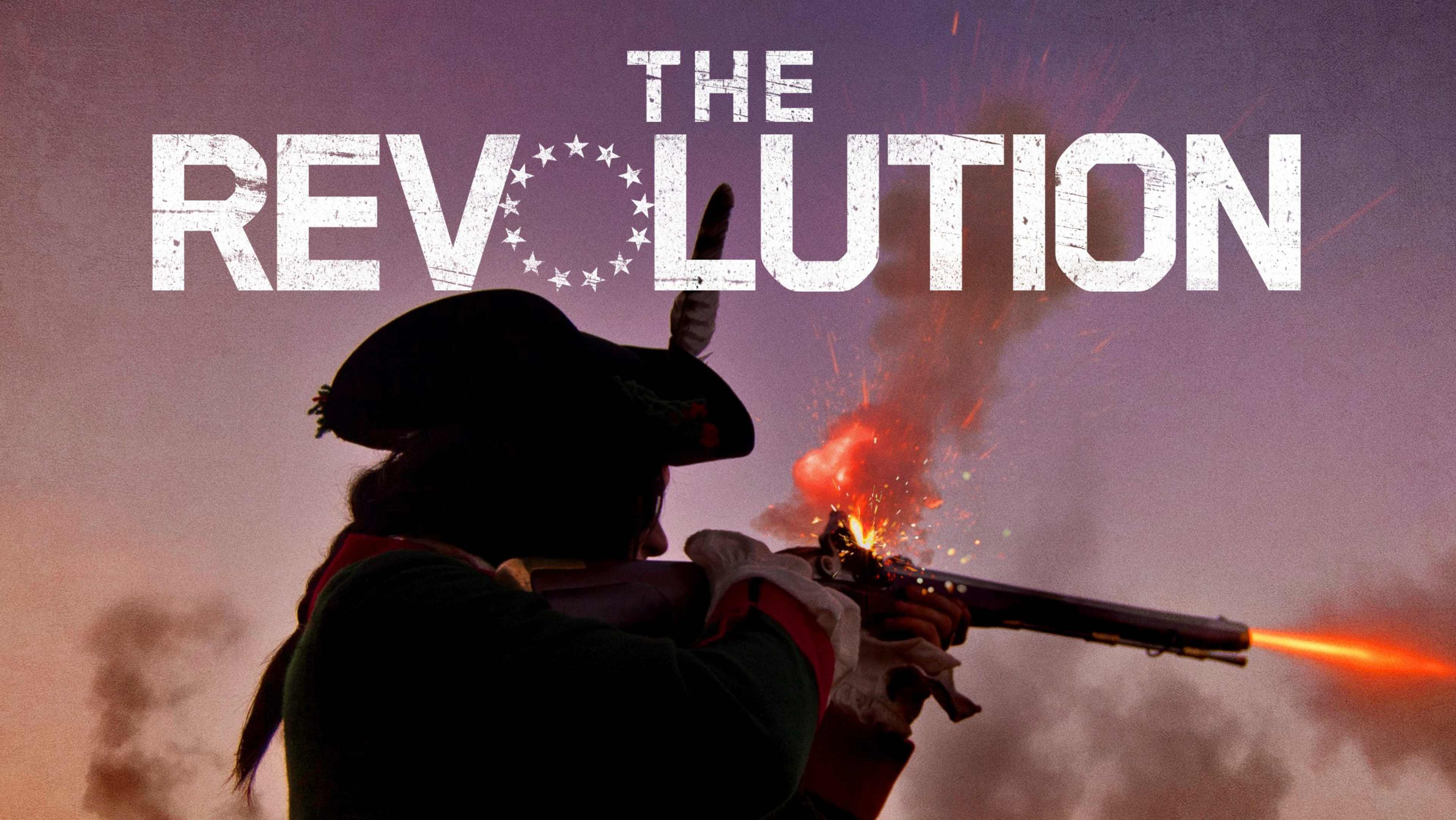
- George Washington: Serving as the Commander-in-Chief of the Continental Army, Washington’s greatest genius lay not in flawless tactical execution, but in his extraordinary resilience, administrative capability, and his understanding that keeping the army intact was more important than holding specific territory.
- Thomas Jefferson: As the primary author of the Declaration of Independence, Jefferson immortalized the Lockean principles of “life, liberty, and the pursuit of happiness,” articulating an ideological framework that would inspire liberation movements globally.
- Benjamin Franklin: The master diplomat who secured the French alliance. Without Franklin’s charm, political maneuvering, and influence in the French court, the Continental Army would have lacked the critical naval support, gunpowder, and financial backing needed to defeat Britain.
- Marquis de Lafayette: A young French aristocrat who volunteered his services, became a close confidant to Washington, and financed American troops out of his own pocket.
- Baron Friedrich von Steuben: A Prussian military officer who transformed the ragtag Continental Army into a disciplined, professional fighting force during the harsh winter at Valley Forge, introducing standardized drills and military hygiene.
The Indigenous and Global Dimensions of the War
A respectful and historically accurate evaluation of the Revolutionary War must acknowledge that it was a deeply complex, global conflict that had devastating consequences for Indigenous populations. Native American nations were forced to make difficult strategic decisions to protect their ancestral homelands and sovereignty. The powerful Haudenosaunee (Iroquois Confederacy) was fractured by the conflict; the Oneida and Tuscarora supported the American colonists, while the Mohawk, Seneca, Onondaga, and Cayuga allied with the British. This division ended centuries of peaceful confederate unity. For many Indigenous communities, the American victory resulted in massive territorial loss, forced displacement, and the systematic disregard of treaties, as the newly formed United States aggressively expanded westward.
Furthermore, the conflict grew far beyond a civil dispute between Britain and its colonies. Spain entered the war in 1779 as an ally of France, providing crucial financial aid and launching successful military campaigns against British forces in Florida and along the Mississippi River. The Dutch Republic also aided the Americans, turning the struggle into a truly global maritime war that stretched British resources to their absolute limits across Europe, the Caribbean, and India.
Pivotal Turning Points of the Conflict
Several key inflection points altered the course of the war. Foremost among these was the Battle of Saratoga in 1777. Prior to this engagement, European powers were hesitant to openly back the colonists. The decisive defeat of a major British army proved that the American cause was viable, prompting France to sign treaties of alliance. Another critical turning point was the winter at Valley Forge, where a starving, diseased army was forged into a professional force. Finally, the Battle of Yorktown demonstrated the devastating efficacy of joint French-American operations, as French naval supremacy cut off British escape routes, leaving Cornwallis with no choice but to surrender.
Fascinating and Lesser-Known Facts
- The Midnight Rides Were a Team Effort: While Henry Wadsworth Longfellow’s famous poem immortalized Paul Revere, he did not ride alone. Other riders, including Samuel Prescott, William Dawes, and a 16-year-old girl named Sybil Ludington—who rode twice as far as Revere through a rainy night—were instrumental in alerting the colonial militias.
- Submarine Warfare Made Its Debut: The world’s first combat submarine, a hand-powered, egg-shaped vessel named the Turtle, was utilized by the Continental Army in an attempt to attach an explosive charge to the hull of a British warship in New York Harbor in 1776.
- A Multicultural Continental Army: The revolutionary forces were far more diverse than often portrayed. The First Rhode Island Regiment, for instance, consisted largely of African American and Indigenous soldiers who fought courageously throughout the war, seeking the very freedom the nation’s founders were claiming for themselves.
Why the Revolutionary War Matters Today
The legacy of the American Revolution reverberates through modern institutions and political philosophy. The war established the precedent that governments derive their just powers from the consent of the governed—a concept that remains the cornerstone of democratic societies today. However, the conflict also initiated an ongoing struggle to reconcile the revolutionary promise that “all men are created equal” with the realities of slavery, the displacement of Indigenous peoples, and restricted civil rights. The history of the Revolutionary War serves as a perpetual reminder of the responsibilities of citizenship, the fragility of democratic institutions, and the continuous effort required to forge a more perfect union.
People Also Ask
Who fired the first shot of the Revolutionary War?
The exact individual who fired the first shot at the Battle of Lexington on April 19, 1775, remains unknown. Historically referred to as the “shot heard round the world,” it triggered an immediate exchange of gunfire between British Redcoats and colonial minutiamen, officially commencing the armed conflict.
Why did France help the Americans in the Revolutionary War?
France’s decision to aid the Americans was primarily driven by geopolitical strategy rather than pure idealism. Having suffered a humiliating defeat to Great Britain in the Seven Years’ War, France sought to weaken its primary imperial rival, reclaim lost global prestige, and secure valuable trade agreements with the emerging American nation.
How did the Revolutionary War end?
While the British surrender at the Siege of Yorktown in October 1781 effectively ended major land combat, the war did not formally conclude until the signing of the Treaty of Paris on September 3, 1783. In this treaty, Great Britain officially recognized the sovereignty and independence of the United States.
Conclusion
The American Revolutionary War was a complex, high-stakes struggle that reshaped the geopolitical landscape. From the initial protests against parliamentary taxation to the coordinated naval maneuvers at Yorktown, the war demonstrated the power of collective action, strategic diplomacy, and ideological conviction. By studying the complete timeline, critical figures, and structural impacts of this era, we gain a deeper appreciation for the arduous journey that established the American republic and the enduring ideals that continue to guide democratic aspirations worldwide.


