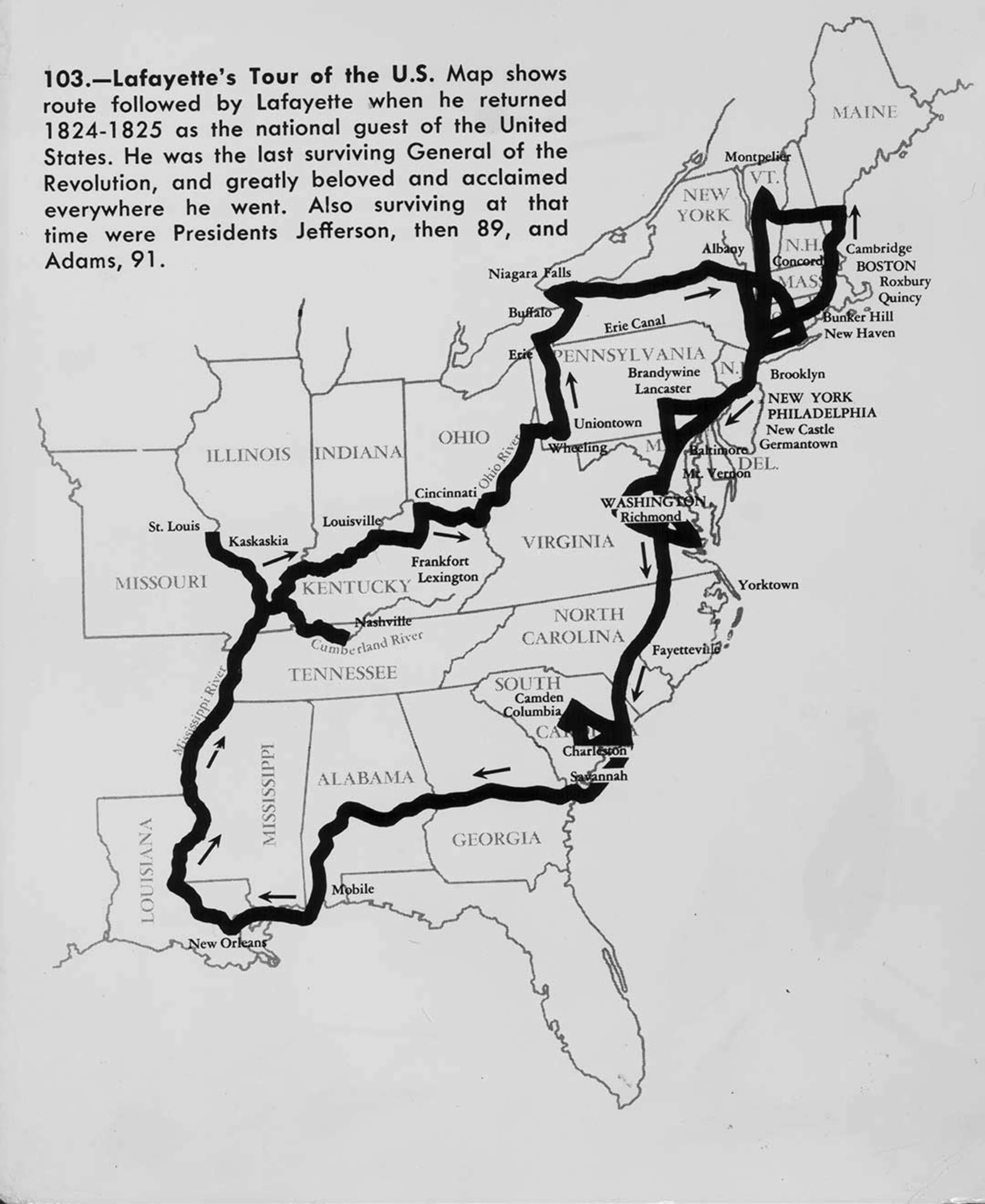
In the late summer of 1824, a wave of collective nostalgia and patriotic fervor swept across a rapidly growing but deeply divided United States. The catalyst for this national awakening was the return of the Marquis de Lafayette, the last surviving major general of the Continental Army. Dubbed “The Nation’s Guest,” Lafayette embarked on a historic 13-month journey across all 24 states. This journey, known to history as Lafayette’s Triumphant Farewell Tour, was not merely a sentimental victory lap for an aging French aristocrat. Instead, it served as a vital, unifying cultural phenomenon that arrived at a critical juncture in American history. As the revolutionary generation faded and the contentious presidential election of 1824 threatened to tear the young republic apart, Lafayette’s presence rekindled the “Spirit of ’76.” This monumental tour reminded Americans of their shared democratic foundations and celebrated the country’s astonishing transformation from a fragile group of colonies into a burgeoning continental power.
The Historical Background: Why America Needed Her Guest
To understand the sheer scale of the reception Lafayette received, one must examine the geopolitical and social landscape of the United States in 1824. Nearly fifty years had passed since the signing of the Declaration of Independence. The nation was undergoing a profound transition. The “Era of Good Feelings” was rapidly disintegrating under the weight of regional factionalism, disputes over tariffs, and the highly polarized expansion of slavery. Crucially, the presidential election of 1824 loomed, featuring a bitter four-way battle between John Quincy Adams, Andrew Jackson, Henry Clay, and William H. Crawford. For the first time in the nation’s history, none of the candidates was a member of the original Founding Fathers. The direct, living connection to the birth of the nation was slipping away.
Recognizing the need to foster national unity and revive the dwindling spark of revolutionary ideals, President James Monroe, with the authorization of Congress, extended an official invitation to Lafayette. The French war hero had first arrived on American shores in 1777 as an idealistic 19-year-old. Despite his youth, he quickly secured the trust of General George Washington and played a decisive role in securing French military and financial support—a critical turning point explored in depth in our look at the 5 ways the French helped win the American Revolution. Decades later, Lafayette’s return offered a nostalgic, non-partisan anchor that all Americans, regardless of their political alignments, could rally around.
Causes and Context: The Dual Motives Behind the Tour
The motivations behind Lafayette’s Triumphant Farewell Tour were complex and dual-sided. For the United States, Lafayette was a living monument, a flesh-and-blood relic of a heroic past. He was a symbol of selfless devotion to liberty who had spent his own fortune and spilled his own blood to secure American independence. His tour was designed to educate the younger generation of Americans who had no personal memory of the Revolutionary War, ensuring that the republican principles of the nation’s founding remained intact as leadership transitioned.
For Lafayette, the tour represented something equally profound. In his native France, the Bourbon Restoration had stifled the republican ideals he had spent his life defending. Politically marginalized at home and facing financial difficulties, the aging Marquis sought solace in the country that had long revered him. He hoped that by showcasing the immense success, prosperity, and stability of the American democratic experiment, he could inspire a resurgence of liberal, constitutional governance back in Europe.
Chronological Timeline of the Tour (1824–1825)
Lafayette’s itinerary was nothing short of miraculous given his age, physical limitations, and the rugged transportation infrastructure of the early 19th century. Below is the chronological breakdown of this epic 6,000-mile journey:
- August 15-16, 1824: Lafayette arrives at Staten Island and makes his triumphant entrance into New York City. A massive crowd of 80,000 people—nearly two-thirds of Manhattan’s population at the time—gathers to catch a glimpse of the hero.
- Fall 1824: He travels extensively through New England, making over 170 stops. He visits Boston, Salem, and Portsmouth, receiving keys to cities, attending lavish galas, and meeting with local veterans.
- October 1824: Lafayette makes a deeply emotional pilgrimage to Mount Vernon, where he descends into the tomb of his surrogate father, George Washington, weeping privately by the sarcophagus.
- December 10, 1824: Lafayette becomes the first foreign citizen to address a joint session of the United States Congress. In gratitude, Congress votes to grant him $200,000 and a massive tract of land in Florida to alleviate his financial struggles.
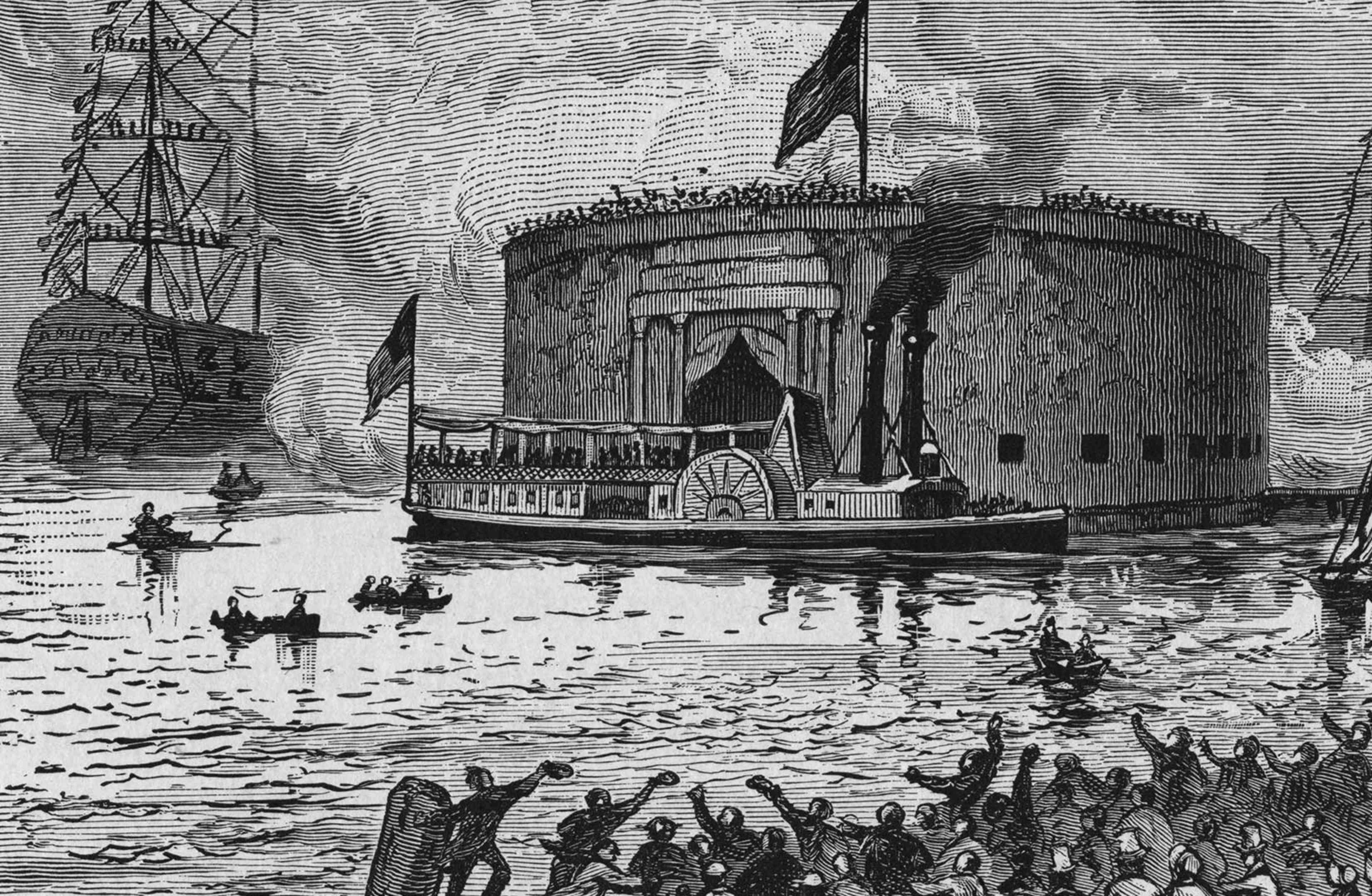
- Spring 1825: The tour shifts to the Southern and Western states. Lafayette travels by horse-drawn carriage and steamship down the Mississippi and Ohio Rivers, visiting New Orleans, St. Louis, and Nashville, where he meets Andrew Jackson.
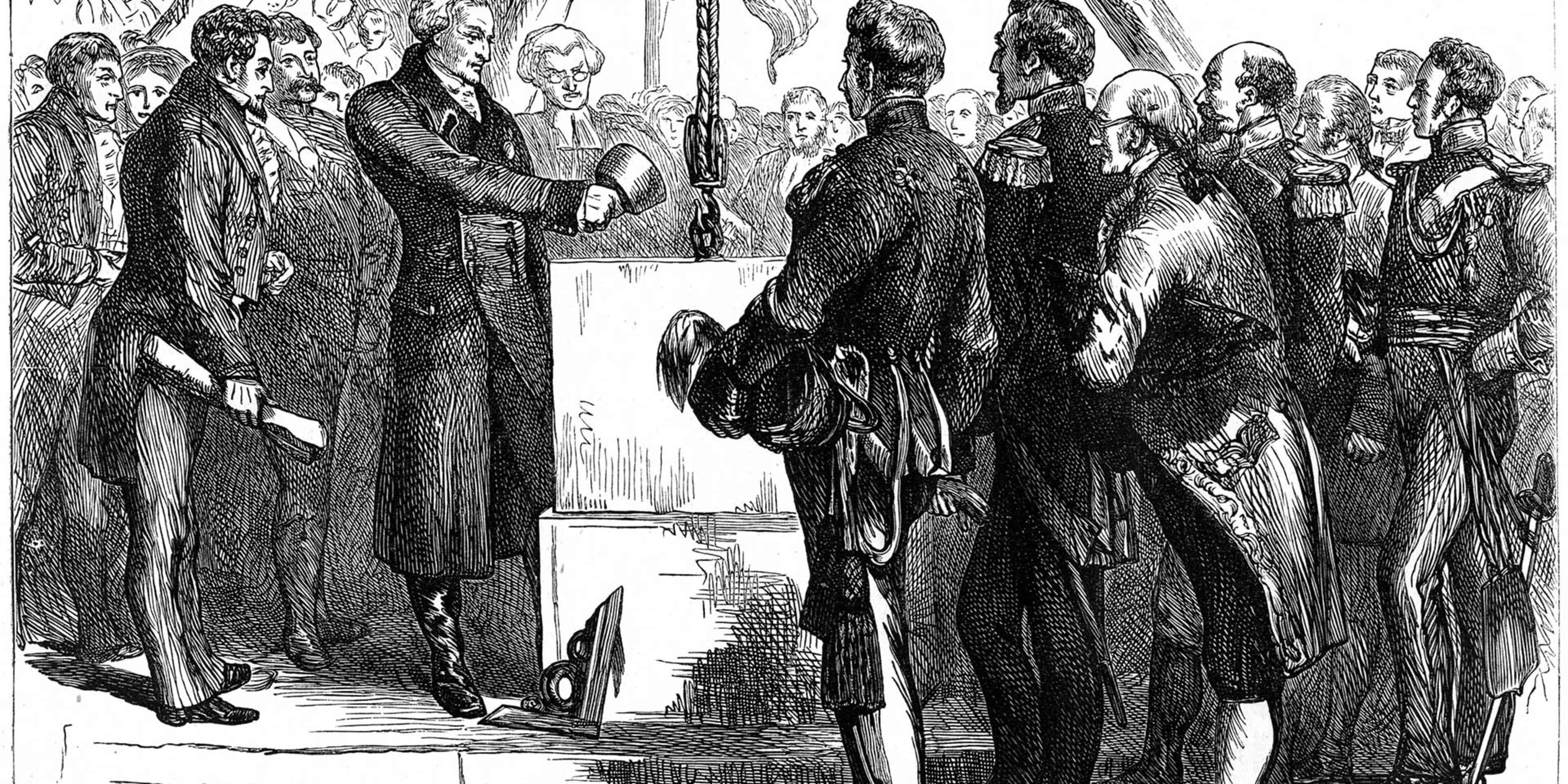
- June 17, 1825: On the 50th anniversary of the Battle of Bunker Hill, Lafayette lays the cornerstone for the Bunker Hill Monument in Boston, accompanied by a masterful oration by Daniel Webster.
- September 7, 1825: After celebrating his 68th birthday at the White House, Lafayette bids a final, emotional farewell to America and boards the newly christened frigate USS Brandywine, heading back to France.
Key Figures and Their Shared Moments
Lafayette’s tour was a masterclass in diplomacy, allowing him to reconnect with old comrades and forge bonds with the next generation of American leaders. Among the most notable interactions were:
- Thomas Jefferson & James Madison: Lafayette spent a quiet, reflective week at Monticello with Jefferson and Montpelier with Madison. These aging statesmen, who had once collaborated on the French Declaration of the Rights of Man and of the Citizen, discussed the future of the American republic and the moral stain of slavery.
- John Quincy Adams & Andrew Jackson: Lafayette witnessed the dramatic climax of the 1824 election. Following the highly contested presidential election that placed Adams in the presidency, Lafayette was present at a White House dinner where he observed Jackson magnanimously shake Adams’ hand, illustrating to the French visitor the peaceful transfer of power. This fragile balance of power and regional governance is a central theme in how the how the Founding Fathers divided power between states and federal governments.
- Elizabeth Schuyler Hamilton: During his stops, Lafayette also reunited with the widows of his former brothers-in-arms. He shared an emotional reunion with Eliza Hamilton, who was actively preserving her husband’s legacy. Discover more about how Alexander Hamilton’s widow Eliza carried on his legacy.
Major Turning Points and Cultural Paradoxes
While the tour was celebrated as a period of absolute national harmony, it also exposed the deep moral and political paradoxes of the young United States. The most significant turning point occurred during Lafayette’s journey through the American South. Lafayette was a lifelong, passionate abolitionist. He had consistently urged Washington and Jefferson to free their enslaved laborers and had even purchased a plantation in French Guiana to implement a gradual emancipation model.
As he traveled through slave-holding states, Lafayette had to balance his core convictions with his role as “The Nation’s Guest.” While he largely avoided public political denouncements of slavery to preserve national unity, he made quiet, powerful statements. He insisted on meeting with free Black veterans of the Revolutionary War, embraced African American citizens in public, and privately urged his Southern hosts to find a path toward universal emancipation. This tension underscored the fragile compromise upon which the United States was built.
The Long-Term Impact on America
Lafayette’s Triumphant Farewell Tour left an indelible mark on the American landscape, both literally and culturally. The tour triggered a massive wave of naming honors. Dozens of cities, counties, streets, and parks across the United States were named “Lafayette” or “Fayetteville” in his honor. Lafayette Square, directly across from the White House, received its name during this visit.
Culturally, the tour successfully preserved the legacy of the American Revolution for a new generation. It created a collective national memory that helped sustain the union through the growing pains of the Jacksonian era. By validating the American democratic experiment, this beloved French statesman reassured a self-conscious nation that their grand democratic experiment was not only viable but was the envy of the free world.
Lesser-Known Facts and Fascinating Anecdotes
The Shipwreck on the Ohio River
In May 1825, while traveling aboard the steamboat Mechanic on the Ohio River, the vessel struck a snag and quickly began to sink. Lafayette was rushed into a lifeboat in his nightgown, losing carriage horses, historical documents, and personal items. Despite the danger, the 67-year-old general remained calm, and luckily, no lives were lost in the incident.
An Alligator in the White House
During his stay in Washington, D.C., Lafayette was gifted a live alligator. Not quite knowing what to do with the reptile, he kept it temporarily in a bathtub in the East Room of the White House, much to the surprise of visitors and White House staff.
Resting under American Soil
Lafayette’s devotion to the United States extended beyond his lifetime. During his visit to the Bunker Hill Monument, he collected several barrels of American soil. When he died in Paris in 1834, his son, Georges Washington Lafayette, scattered this American dirt over his coffin, ensuring that the “Hero of Two Worlds” would eternally rest under both French and American soil.
Why Lafayette’s Tour Still Matters Today
Today, Lafayette’s Triumphant Farewell Tour serves as a powerful reminder of the importance of shared civic values and international alliances. In an era often marked by intense political polarization, Lafayette’s tour stands as a historical testament to the power of unity. He reminded Americans that despite their regional, economic, and political differences, they were bound by a revolutionary commitment to liberty and human rights. His legacy continues to serve as a bridge of friendship between the United States and France, reminding both nations of their shared revolutionary heritage.
People Also Ask
Why did the Marquis de Lafayette return to America in 1824?
Lafayette returned to the United States at the official invitation of President James Monroe and Congress. The goal was to celebrate the 50th anniversary of the nation’s independence, reunite the country during a period of intense political division, and pass the legacy of the American Revolution to a younger generation.
How many states did Lafayette visit during his farewell tour?
Lafayette visited all 24 states that existed in the United States at the time, traveling over 6,000 miles via carriage, horseback, canal boat, and steamboat over a 13-month period.
Where is Lafayette buried?
Marquis de Lafayette is buried in Picpus Cemetery in Paris, France. In accordance with his wishes, he was laid to rest under soil collected from the Bunker Hill battlefield in Boston, Massachusetts.
Conclusion
The Marquis de Lafayette’s Triumphant Farewell Tour was far more than a simple historical visit; it was a grand celebration of a young nation’s survival and growth. By reflecting on the struggles of the past, Lafayette helped a fractured America find its footing as it stepped into a complicated future. His legacy remains etched in the very geography of the United States, reminding us that the fight for liberty is a continuous, generational journey.


