The birth of the United States was not merely a battle for military independence; it was a profound intellectual experiment in governance. When the thirteen colonies threw off the yoke of British imperial rule in 1776, they faced an unprecedented political dilemma: how to build a unified nation without creating another centralized tyranny. The solution they eventually crafted in 1787—known as federalism—forever changed the course of global political theory. By dividing sovereign authority between a central national government and individual state governments, the Founding Fathers established a delicate, dynamic balance of power. This constitutional arrangement sought to guarantee local liberty while maintaining national unity, establishing a framework that allowed the original thirteen colonies to evolve into a resilient federal republic.
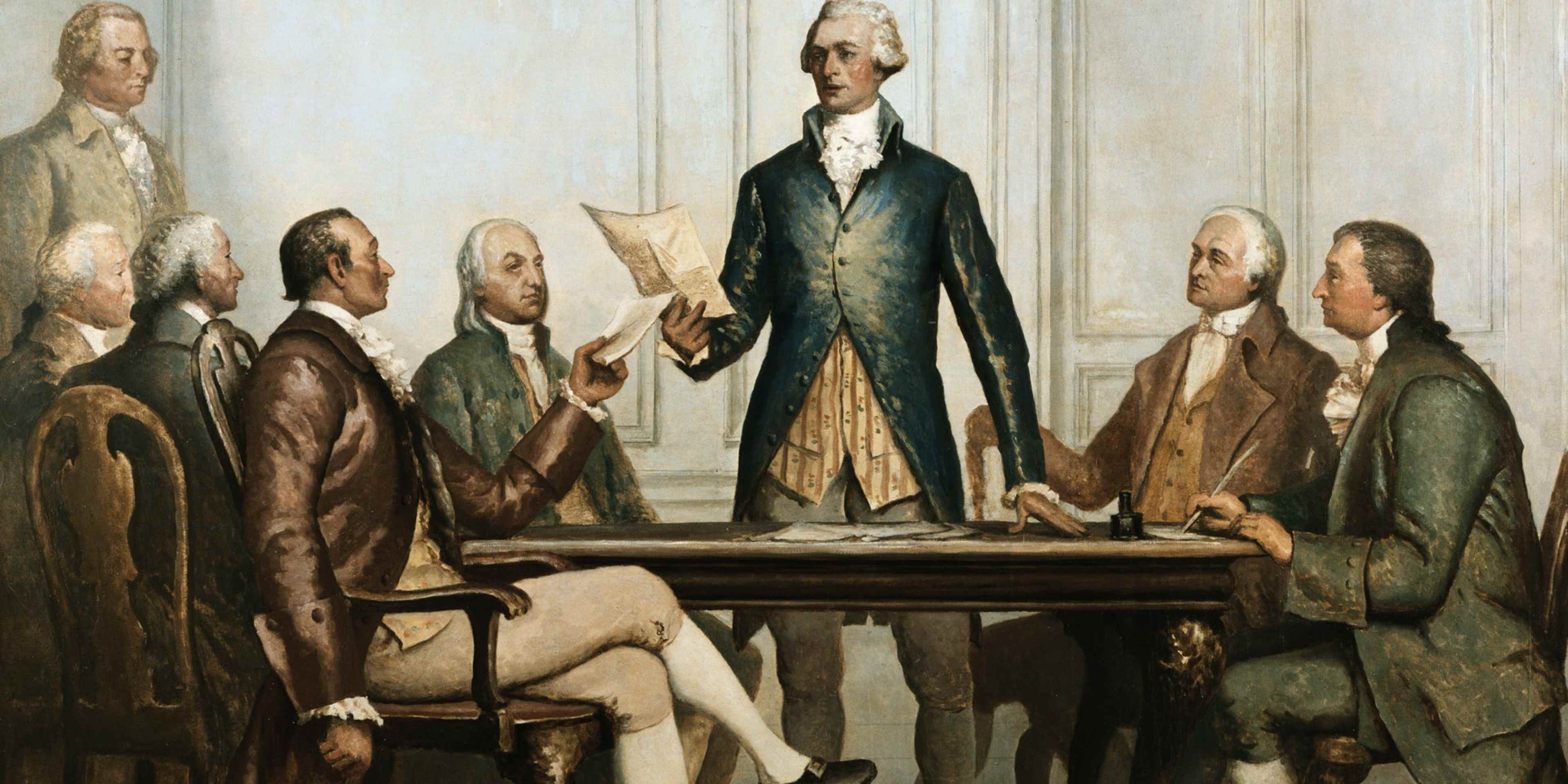
The Road to Philadelphia: The Collapse of the Articles of Confederation
Before the United States operated under its current Constitution, the nation’s first attempt at self-governance was framed by the Articles of Confederation. Drafted during the fires of the Revolutionary War and fully ratified in 1781, this document established a “firm league of friendship” among the sovereign states. The psychological trauma of British unitary rule—where all power flowed from the top down—made early Americans deeply suspicious of centralized executive authority. They preferred the tradition of localized self-rule, which had been developing since the establishment of early representative assemblies like the Virginia House of Burgesses decades prior.
However, the Articles of Confederation went too far in the opposite direction. They created a central government so weak that it lacked an executive branch, a national court system, and—most fatally—the power to levy taxes. To raise funds, the national Congress had to practically beg the states for money, a request that was routinely ignored. By the mid-1780s, the young nation was drowning in Revolutionary War debt, the domestic economy was in a deep depression, and individual states were engaged in ruinous trade disputes, even coining their own highly inflated paper currencies.
The breaking point came in western Massachusetts with Shays’ Rebellion (1786–1787). Led by Daniel Shays, a disgruntled Revolutionary War veteran, armed farmers shut down local courthouses to prevent the foreclosure of their debt-ridden properties. The national government found itself completely powerless to send troops or intervene. Massachusetts had to privately fund its own militia to suppress the uprising. Witnessing this breakdown of social order, leaders like George Washington and Alexander Hamilton realized that the nation was sliding into anarchy. Hamilton urgently called for a convention to reform the federal system before the fragile experiment in self-rule collapsed entirely.
The Constitutional Convention of 1787: A New Blueprint for Power
In May 1787, 55 delegates gathered at the Pennsylvania State House in Philadelphia. While their original mandate was simply to amend the Articles of Confederation, visionary thinkers like James Madison of Virginia quickly steered the convention toward designing an entirely new framework of government. This summer-long assembly, known as the Constitutional Convention, became an arena for fierce debates over sovereignty, representation, and the division of administrative power.
The core challenge was to design a government that was strong enough to preserve the union, defend the borders, and foster commerce, yet constrained enough to prevent the rise of an American monarchy. To achieve this, the delegates implemented two distinct dimensions of checks and balances:
- Horizontal Separation of Powers: Dividing the federal government into three distinct branches—the Executive (to enforce laws), the Legislative (to make laws), and the Judiciary (to interpret laws). Each branch possessed constitutional tools to check the actions of the others.
- Vertical Separation of Powers (Federalism): Sharing and dividing sovereignty geographically between the national government and individual state governments. While the national government managed matters of broad, collective interest, state legislatures retained authority over local affairs.
The Mechanics of Federalism: How Power is Separated and Shared
To prevent constant jurisdictional conflict, the framers of the Constitution carefully mapped out how power would be divided, though they also left some deliberate ambiguities. Under the federalist architecture established in 1787, governmental powers are divided into three primary categories:

1. Enumerated and Implied Powers (The Federal Realm)
Article I, Section 8 of the Constitution explicitly lists the enumerated (or delegated) powers granted to the federal government. These represent matters that require uniform national coordination, including the power to declare war, maintain a standing army, regulate interstate and foreign commerce, coin money, and establish post offices. However, the framers also included the “Elastic Clause” (or the Necessary and Proper Clause), which grants Congress the authority to pass all laws “necessary and proper” to carry out its enumerated responsibilities. This clause gave the federal government the flexibility to adapt to changing times, spawning implied powers that eventually authorized everything from the creation of a national bank to modern aviation regulations.
2. Reserved Powers (The State Realm)
Understanding that the states would not ratify a document that stripped them of all local autonomy, the anti-federalists demanded explicit protections. This resulted in the Tenth Amendment, ratified in 1791 as part of the Bill of Rights. It states: “The powers not delegated to the United States by the Constitution, nor prohibited by it to the States, are reserved to the States respectively, or to the people.” These reserved powers give states broad authority over public health, safety, education, local law enforcement, and the regulation of commerce within their own borders.
3. Concurrent Powers (The Shared Realm)
There are also areas of governance where both federal and state governments hold authority simultaneously. These are known as concurrent powers. Both levels of government have the power to establish courts, collect taxes, borrow money, build infrastructure (such as highways), and pass laws, provided the state actions do not conflict with federal mandates. When conflicts do arise, the Supremacy Clause of Article VI, Clause 2 declares that the Constitution, federal laws, and treaties constitute the “supreme Law of the Land,” overriding conflicting state statutes.
Key Turning Points in the Evolution of American Federalism
Federalism has never been a static system; rather, it has been a continuous battleground of political and legal interpretation. Several historic turning points have reshaped how power is balanced in America:
- McCulloch v. Maryland (1819): The Supreme Court, led by Chief Justice John Marshall, ruled that the state of Maryland could not tax the Second Bank of the United States. This landmark decision firmly established the doctrine of federal implied powers and solidified the supremacy of federal institutions over state-level interference.
- The Nullification Crisis (1832–1833): South Carolina attempted to declare federal protective tariffs null and void within its borders, asserting a radical view of states’ rights. President Andrew Jackson responded with military threats, establishing that states could not unilaterally ignore federal law.
- The American Civil War (1861–1865): The ultimate and bloodiest test of federalism. Southern states attempted to secede from the Union, arguing that their state sovereignty superseded national allegiance, primarily to preserve the institution of slavery. The Union’s victory fundamentally resolved the question of secession: the United States is an indestructible union of indestructible states, and federal sovereignty is supreme.
- The New Deal (1930s): In response to the Great Depression, President Franklin D. Roosevelt introduced sweeping federal economic reforms. This shifted the nation from “dual federalism” (where state and federal spheres are strictly separate) to “cooperative federalism,” characterized by joint state-federal programs, grants-in-aid, and an expanded federal regulatory footprint.
Prominent Figures in the Debate Over Federalism
The architecture of American federalism was forged through intense intellectual debates between brilliant, strong-willed historical figures:
- James Madison: Known as the “Father of the Constitution,” Madison was a key author of the Federalist Papers. He argued that the constitutional division of power was carefully balanced, explaining in Federalist No. 45 that federal powers are “few and defined,” while state powers remain “numerous and indefinite.”
- Alexander Hamilton: The first Secretary of the Treasury, Hamilton was a staunch advocate for a robust, energetic national government. He championed the establishment of a national bank and argued that a strong federal executive and treasury were essential for national survival, economic development, and international respect.
- Thomas Jefferson: Though not present at the Constitutional Convention, Jefferson became the intellectual leader of the Democratic-Republican Party, which fiercely defended states’ rights and championed agrarian interests against what he viewed as federal overreach.
Lesser-Known Facts About Federalism and the Constitutional Convention
History is full of surprising nuances that are often overlooked in standard textbooks. Here are a few fascinating details about the creation of American federalism:
- Rhode Island Boycotted the Convention: Terrified of losing its autonomy to a powerful centralized government, the small state of Rhode Island flatly refused to send delegates to Philadelphia in 1787. It was the last of the original thirteen states to ratify the Constitution, doing so only in 1790 under threat of economic isolation.
- The Word “Federalism” Never Appears: Despite being the defining characteristic of the United States government, the words “federalism,” “federalist,” or “federation” do not appear a single time in the text of the original U.S. Constitution.
- Early Elections Were Local Affairs: While we view federal elections as massive national events today, the framers left the mechanics of voting entirely up to the states. In the early republic, voting practices varied wildly, and colonial-style festive voting traditions continued to shape local political cultures for decades.
Why Federalism Still Matters Today
The complex division of power devised in 1787 remains at the heart of nearly every major political debate in modern America. When states pass laws legalizing recreational cannabis despite federal prohibitions, or when state governments enact differing policies on environmental standards, voting procedures, and healthcare, they are actively participating in the ongoing laboratory of federalism. Supreme Court Justice Louis Brandeis famously remarked that a single courageous state may, if its citizens choose, serve as a “laboratory” to try novel social and economic experiments without risk to the rest of the country. This decentralized system allows a vast and highly diverse nation to remain politically united under one flag, proving that the delicate balance engineered by the Founding Fathers remains as vital today as it was over two centuries ago.
People Also Ask (FAQ)
What is federalism in simple terms?
Federalism is a system of government where power is constitutionally divided and shared between a central national authority and regional or state governments. This prevents any single entity from gaining absolute control.
What is the difference between federalism and separation of powers?
Separation of powers refers to the division of national government authority horizontally among three branches: the Legislative, Executive, and Judicial. Federalism, on the other hand, is the vertical division of power between the national federal government and the individual state governments.
Why did the Articles of Confederation fail?
The Articles of Confederation failed because they created a central government that was too weak. It lacked an executive leader, a national judicial system, the power to collect taxes directly, and the authority to regulate interstate trade or raise a national army to maintain internal security.
Which clause establishes that federal law is superior to state law?
The Supremacy Clause, located in Article VI, Clause 2 of the U.S. Constitution, establishes that the Constitution, federal laws, and national treaties are the “supreme Law of the Land,” taking precedence over conflicting state laws.
Conclusion: An Indestructible Union of Indestructible States
The division of power engineered by the Founding Fathers was a masterpiece of political compromise and strategic genius. Faced with the collapse of their confederation and the threat of foreign intervention, the framers created a blueprint of shared sovereignty that successfully avoided both the tyranny of absolute centralization and the chaos of complete decentralization. Through civil war, economic depression, and massive societal shifts, federalism has adapted and endured. Ultimately, it stands as a testament to the foresight of the delegates of 1787, offering a flexible, resilient framework of governance that continues to shape the destiny of the American republic.


4 comments